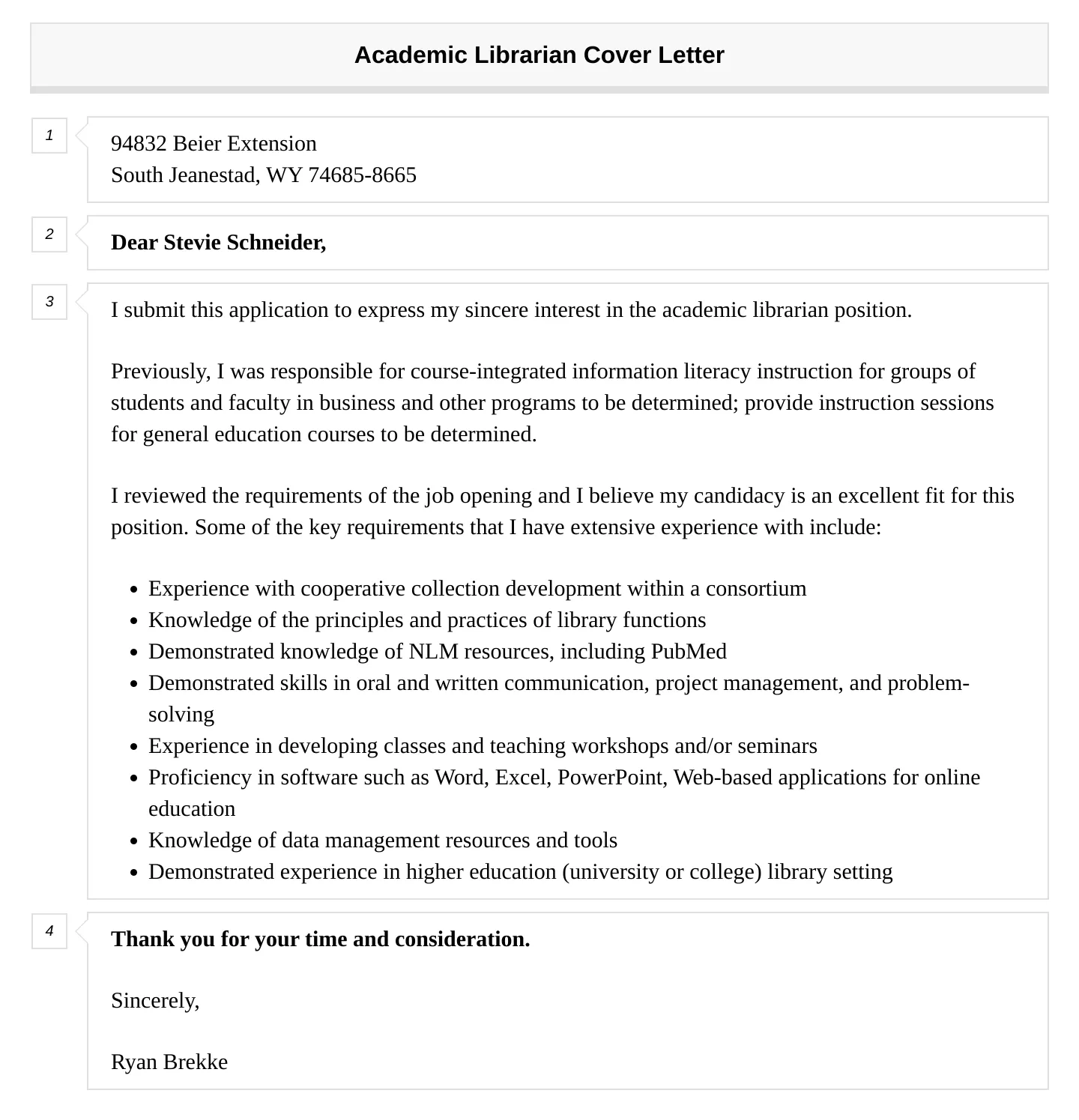
Understanding the Academic Librarian Cover Letter
An academic librarian cover letter is a crucial document in your job application process, serving as your first introduction to a potential employer. It’s your chance to make a strong impression and showcase why you’re the ideal candidate for the position. Unlike a resume, which provides a factual overview of your experience and skills, the cover letter allows you to articulate your enthusiasm, personality, and suitability for the specific role and institution. It’s an opportunity to connect your skills to the requirements of the job description and demonstrate your understanding of the library’s mission and values. Crafting a compelling cover letter is essential for standing out from the competition and securing an interview. This guide will provide you with the necessary tools and insights to create a cover letter that effectively highlights your qualifications and increases your chances of landing your dream job as an academic librarian.
Why is a Cover Letter Important?
The significance of a cover letter in the job application process cannot be overstated, especially for a role as specialized as an academic librarian. A well-written cover letter allows you to go beyond the surface level of your resume and delve into the specific reasons why you are the best fit for the position. It demonstrates your communication skills, attention to detail, and ability to tailor your application to the specific needs of the hiring institution. Moreover, a cover letter provides a platform to articulate your career goals and how they align with the library’s objectives. It enables you to address any potential gaps in your resume or explain unique circumstances, such as career changes or extended periods of inactivity. In essence, a cover letter allows you to tell a story about yourself, your skills, and your aspirations, making your application more memorable and compelling to the hiring committee. It sets the tone for your application and often determines whether your resume even gets a second glance.
Highlighting Relevant Skills and Experiences

When crafting your academic librarian cover letter, it’s crucial to highlight the skills and experiences that are most relevant to the position you’re applying for. Begin by carefully reviewing the job description, identifying the key skills and qualifications the employer is seeking. These may include expertise in areas such as cataloging, reference services, digital library management, information literacy instruction, or collection development. Next, pinpoint specific examples from your past experiences where you successfully demonstrated these skills. Quantify your achievements whenever possible; for example, you could mention the number of reference questions you answered per day or the percentage increase in student engagement in library workshops. Remember to use action verbs to describe your accomplishments, such as ‘managed,’ ‘developed,’ ‘implemented,’ and ’trained.’ By focusing on the skills and experiences that align with the employer’s needs, you can create a compelling cover letter that showcases your value and increases your chances of getting an interview.
Research and Tailoring Your Letter
One of the most critical aspects of writing an effective academic librarian cover letter is research and tailoring. Generic, one-size-fits-all cover letters rarely make a lasting impression. Instead, invest time in researching the specific library and institution to which you are applying. Explore their website, mission statement, strategic goals, and recent initiatives. Understand their values, services, and the types of users they serve. This knowledge will enable you to tailor your cover letter to the specific needs and priorities of the employer. In your letter, demonstrate your understanding of the library’s challenges and opportunities. Articulate how your skills and experiences align with their specific requirements and how you can contribute to their mission. Reference specific programs, services, or initiatives that resonate with your interests and expertise. This level of personalization shows the hiring committee that you are genuinely interested in the position and have taken the initiative to learn about their organization. This attention to detail can significantly increase your chances of success.
Key Sections of an Academic Librarian Cover Letter
A well-structured academic librarian cover letter typically includes several key sections, each serving a specific purpose in conveying your qualifications and interest in the position. Understanding these sections and their intended function is crucial for creating a compelling application. The following sections are the most common and critical in a cover letter.
Header Information

The header of your cover letter should include your contact information (name, phone number, email address, and professional social media profiles like LinkedIn), the date, and the recipient’s information. Make sure the recipient’s name and title are accurate. If a specific hiring manager is listed in the job posting, address the letter to them. Otherwise, you may address it to the hiring committee or the appropriate department head. Proper formatting and accuracy in this section set a professional tone for the rest of the document.
Greeting and Introduction
The greeting should be formal and polite, such as ‘Dear Mr./Ms./Mx. [Last Name]’ or ‘Dear Hiring Committee.’ The introduction is your opportunity to immediately capture the reader’s attention and state the purpose of your letter. Clearly state the position you are applying for and where you saw the job posting. Briefly mention your strongest qualifications or a compelling reason why you are interested in the position. Your introduction should be concise, engaging, and tailored to the specific role.
Body Paragraphs Showcasing Your Value
The body of your cover letter is where you provide detailed information about your skills, experience, and qualifications. Structure your body paragraphs logically, usually covering two to three key areas. In each paragraph, connect your skills and experiences to the job requirements outlined in the job description. Use specific examples and quantifiable achievements to demonstrate your value to the library. Show, don’t just tell; provide evidence of your ability to excel in the role. Tailor each paragraph to address the specific needs and priorities of the hiring institution.
Closing the Cover Letter Call to Action

The closing paragraph should reiterate your interest in the position and express your enthusiasm for the opportunity. Thank the hiring manager for their time and consideration. State your availability for an interview and provide your contact information. A strong closing paragraph is polite and professional, leaving the reader with a positive impression of your candidacy.
Specific Skills and Qualifications
As an academic librarian, your cover letter needs to showcase specific skills and qualifications relevant to the role. Highlight your experience in areas such as information literacy instruction, reference services, collection development, cataloging, and digital library management. If the position requires expertise in a specific subject area, be sure to mention your knowledge and experience in that field. Emphasize your proficiency with library technologies, databases, and online resources. Showcase your ability to communicate effectively with diverse audiences, including students, faculty, and staff. Additionally, demonstrate your knowledge of library principles, ethical standards, and professional best practices. Provide examples of how you’ve used these skills and qualifications to contribute to the success of previous libraries or projects. Remember to tailor your examples to align with the specific requirements of the job description, making your qualifications highly relevant to the employer’s needs.
Relevant Experience
Highlighting relevant experience is critical in your cover letter, demonstrating your ability to perform the duties of an academic librarian. Describe your previous roles, emphasizing experiences directly related to the job description. Use the STAR method (Situation, Task, Action, Result) to showcase how you handled specific challenges and achieved positive outcomes. For instance, if the job description mentions a need for experience in cataloging, describe your role in a cataloging project, the specific cataloging systems you used, and the results you achieved, such as improving the accuracy of catalog records. If the role involves reference services, mention your experience assisting patrons, answering reference questions, and providing information literacy instruction. If you have experience with collection development, describe your experience in selecting and acquiring materials, managing budgets, or assessing collection needs. Providing concrete examples of your accomplishments makes your cover letter more persuasive and memorable.
Closing the Cover Letter Call to Action

Your closing paragraph is your last opportunity to make a positive impression. Reiterate your interest in the position and express your enthusiasm for the opportunity. Thank the hiring manager for their time and consideration. State your availability for an interview and provide your contact information. Consider adding a brief statement summarizing why you are uniquely qualified for the role and what you can contribute to the library’s success. Always proofread your cover letter carefully before submitting it, ensuring that it is free of any errors in grammar, spelling, and punctuation. A well-crafted, professional cover letter can make a lasting impact and significantly increase your chances of getting an interview.
Proofreading and Editing
Proofreading and editing are essential steps in the cover letter writing process. Errors in grammar, spelling, and punctuation can detract from your qualifications and professionalism. Before submitting your cover letter, carefully review it for any mistakes. Use a spell checker and grammar checker, but don’t rely on them entirely. Read your cover letter aloud to catch any awkward phrasing or unclear sentences. Ask a friend, colleague, or career counselor to proofread your cover letter and provide feedback. Consider the overall tone and clarity of your letter, ensuring that it accurately reflects your personality and writing style. Ensure that all contact information is accurate and up-to-date. Proofreading and editing are crucial steps in demonstrating your attention to detail and commitment to excellence, significantly enhancing your chances of success.