
Crafting the Perfect Internship Cover Letter
Landing an internship is a crucial step in launching your career. A well-crafted cover letter is your first opportunity to make a positive impression and stand out from the competition. This guide will walk you through the essential elements of an effective cover letter, helping you showcase your skills, experience, and passion to secure your dream internship. Remember, a strong cover letter is not just a formality; it’s a powerful tool to demonstrate your suitability and enthusiasm for the role and the company. Follow this guide and tailor each element to fit the specific internship requirements and your unique qualifications. Your internship journey starts here!
Understanding the Internship Cover Letter’s Purpose
The primary purpose of an internship cover letter is to introduce yourself to the hiring manager, highlight your relevant skills and experience, and express your genuine interest in the internship opportunity. It’s your chance to explain why you’re a great fit for the role and the company. Unlike a resume, which provides a factual overview, a cover letter allows you to tell a story, demonstrating your personality, your motivations, and how you align with the company’s values and culture. Furthermore, it gives you the space to clarify any gaps in your resume, and explain why you are seeking internship. In short, it’s your personal sales pitch.
Highlighting Your Skills and Experience

Your cover letter should directly address the skills and experiences mentioned in the internship description. Carefully review the job posting and identify the key requirements. Then, provide specific examples from your academic projects, extracurricular activities, volunteer work, or previous part-time jobs that demonstrate you possess those skills. Use action verbs to describe your accomplishments and quantify your achievements whenever possible. For example, instead of saying “Managed social media,” say “Increased social media engagement by 25% through strategic content planning.” This approach will make your qualifications much more compelling.
Researching the Company and the Role
Before you start writing, thoroughly research the company and the specific internship role. Visit the company’s website, read recent news articles, and explore their social media presence. Understand their mission, values, and recent projects. This research allows you to tailor your cover letter, demonstrating that you understand the company’s goals and how your skills can contribute to their success. Similarly, research the role’s responsibilities to identify how your skills can address their needs. Mentioning specific projects, initiatives, or values that resonate with you will show your genuine interest and attention to detail. This proactive approach sets you apart from generic applications.
Structuring Your Internship Cover Letter
A well-structured cover letter is easy to read and helps the hiring manager quickly grasp your key qualifications. Follow a clear and logical format. A standard cover letter includes a header with your contact information, a greeting, an introductory paragraph, body paragraphs showcasing your skills and experience, a concluding paragraph expressing your interest, and a professional closing. Each section serves a specific purpose, contributing to your overall message. The visual layout, including font choice, margins, and spacing, also plays a role in readability. A clean, professional appearance conveys your attention to detail and commitment to excellence.
The Header — Contact Information
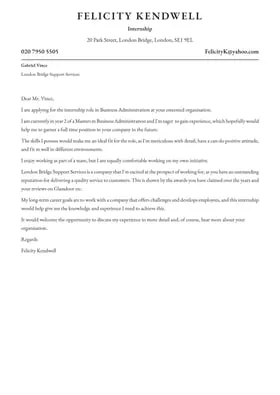
Your header should include your full name, address, phone number, and email address. Ensure your email address is professional; avoid using nicknames or informal addresses. This information makes it easy for the hiring manager to contact you if they’re interested in your application. The header should be placed at the top of the letter, typically left-aligned, and can include a small, professional design element for visual appeal. Double-check the information for accuracy, as any errors could lead to a missed opportunity. Make sure your contact details are up-to-date and that your voicemail is set up and ready to receive messages.
The Greeting — Addressing the Hiring Manager
Whenever possible, address the hiring manager by name. This shows that you have taken the time to research the company and personalize your application. If you can’t find the hiring manager’s name, use a professional salutation, such as “Dear Hiring Manager,” or “Dear [Department Name] Team.” Avoid generic greetings like “To Whom It May Concern,” as they can make your letter seem impersonal. Researching the hiring manager’s name demonstrates your initiative and attention to detail. Using the correct name can create a more engaging connection with the hiring manager from the start.
The Introduction — Grabbing Attention
Your introductory paragraph should grab the hiring manager’s attention and clearly state the position you’re applying for. Briefly mention where you found the job posting. Then, immediately highlight your most relevant skills or experiences and express your interest in the internship. Use a strong opening sentence that showcases your enthusiasm and sets the tone for the rest of the letter. Briefly explain why you are interested in the specific internship and the company. This is your chance to make a strong first impression and encourage the hiring manager to read on, immediately conveying your understanding of the role and your excitement about the opportunity.
The Body Paragraphs — Showcasing Your Value

The body paragraphs are the heart of your cover letter. Use these paragraphs to showcase your skills and experience in detail. Provide specific examples from your past experiences, highlighting relevant accomplishments and quantifiable results. Clearly explain how your skills align with the internship requirements. Use the STAR method (Situation, Task, Action, Result) to structure your examples and provide context, explaining the situation, the task you undertook, the actions you took, and the positive results achieved. Keep each paragraph focused and concise, making sure to use action verbs and keywords from the job description to emphasize your relevant capabilities. Make sure to show, don’t just tell, your abilities.
The Conclusion — Expressing Enthusiasm and Call to Action
Your concluding paragraph should reiterate your interest in the internship and the company. Briefly summarize your key qualifications and express your enthusiasm for the opportunity. Include a call to action, such as requesting an interview. Thank the hiring manager for their time and consideration. Close with a professional closing, such as “Sincerely” or “Best regards,” followed by your full name. Ensure your closing is professional, polite, and leaves a positive final impression. This is your last chance to reinforce your interest and encourage the next step in the hiring process.
Formatting and Presentation
A well-formatted cover letter demonstrates your attention to detail and professionalism. Use a standard font such as Times New Roman, Arial, or Calibri, with a font size between 10 and 12 points. Set margins to one inch on all sides. Use single-spacing within paragraphs and double-spacing between paragraphs. Ensure your letter is easy to read, with clear headings and subheadings to guide the reader. Proofread carefully for any spelling or grammatical errors. A clean and professional appearance increases the chances that your letter will make a positive impression. Consider using a template as a starting point, but make sure to tailor it to fit your personal style and the specific internship.
Essential Content for Your Internship Cover Letter

The content of your cover letter should be tailored to the specific internship and highlight your most relevant qualifications. Focus on the skills, experiences, and qualities that align with the internship requirements. Demonstrate your understanding of the company’s mission, values, and recent projects. Use specific examples to showcase your accomplishments, and quantify your achievements whenever possible. Express your genuine interest in the internship, explaining why you are interested in the role and the company. Customize the letter to reflect your personality and convey your enthusiasm and fit, making your application stand out to the hiring manager.
Tailoring Your Letter to the Internship
Never send a generic cover letter. Customize your letter for each internship you apply for. Carefully review the job description and identify the key requirements. Research the company to understand its values and goals. Then, tailor your letter to highlight the skills, experiences, and qualities that are most relevant to the specific internship. Demonstrate how your skills align with the company’s needs and express your genuine interest in the opportunity. Mention specific projects or initiatives you are eager to contribute to, showing that you’ve done your homework. Customizing your letter shows that you care about the position and understand the company’s requirements.
Skills to Emphasize
When writing your cover letter, highlight the skills most relevant to the internship. These skills will vary depending on the position, but some common skills to emphasize include: communication, problem-solving, teamwork, time management, technical proficiency, and any specific software or tools mentioned in the job description. Use action verbs to describe your accomplishments, such as “managed,” “developed,” “implemented,” and “analyzed.” Provide specific examples of how you have used these skills in the past. Tailor the skills you highlight to the specific requirements of the internship, ensuring they align with what the company is looking for.
Quantifiable Achievements

Whenever possible, quantify your achievements. Instead of saying “Improved customer service,” say “Improved customer satisfaction scores by 15%.” Using numbers and data demonstrates your impact and provides concrete evidence of your abilities. Quantifiable achievements make your cover letter more compelling and easier for the hiring manager to assess your skills. Consider how you can measure your accomplishments. Did you increase efficiency? Reduce costs? Improve sales? Presenting your achievements with numbers shows that you’re results-oriented and focused on making a difference. Quantitative examples speak volumes.
Demonstrating Your Passion and Fit
Your cover letter is an opportunity to demonstrate your passion for the field and your fit for the company’s culture. Express your enthusiasm for the specific internship and the opportunity to learn and grow. Explain why you are interested in the company and what attracts you to their mission, values, or recent projects. Show that you understand the company’s goals and how your skills and experiences align with their needs. Mentioning specific aspects of the company that resonate with you will showcase your genuine interest and make your application more memorable. Let your personality shine through and give them a reason to choose you.
Proofreading and Editing
Before submitting your cover letter, proofread it carefully for any spelling, grammar, and punctuation errors. Errors can undermine your credibility and make a negative impression. Use spell-check and grammar-check tools, but don’t rely on them entirely. Read your letter aloud to catch any awkward phrasing or typos. Ask a friend, professor, or career counselor to review your letter and provide feedback. Proofreading is critical; a polished, error-free cover letter demonstrates attention to detail and a commitment to excellence.
Common Mistakes to Avoid

There are common mistakes that can hurt your chances of landing an internship. Avoid sending generic cover letters; tailor each letter to the specific position and company. Don’t simply restate your resume; provide additional context and demonstrate your personality. Avoid using clichés or overly formal language. Ensure your letter is free of spelling and grammar errors. Don’t include irrelevant information or exceed one page in length. These mistakes can damage your impression and hinder your application. Careful attention to these common pitfalls will increase your chances of success.
Using Action Verbs
Action verbs make your cover letter more dynamic and engaging. They help you describe your accomplishments and showcase your skills. Instead of saying “Responsible for managing social media,” say “Managed social media campaigns, resulting in a 25% increase in engagement.” Use strong action verbs throughout your letter. Review the job description and identify the key skills and responsibilities. Then, choose action verbs that accurately describe how you have used those skills in the past. Incorporating action verbs ensures your letter is compelling and highlights your achievements effectively. Examples include: Developed, Implemented, Led, Managed, Created, and Analyzed.
Seeking Feedback
Before submitting your cover letter, seek feedback from others. Ask a friend, family member, professor, or career counselor to review your letter and provide constructive criticism. They can catch errors you might have missed and provide valuable insights. Ask them if the letter is clear, concise, and engaging. Does it effectively highlight your skills and experiences? Does it demonstrate your passion and fit for the internship? Use their feedback to refine your cover letter. Seeking feedback is a crucial step in the writing process and can significantly improve your chances of success. Multiple perspectives can help you create the best version of your letter.