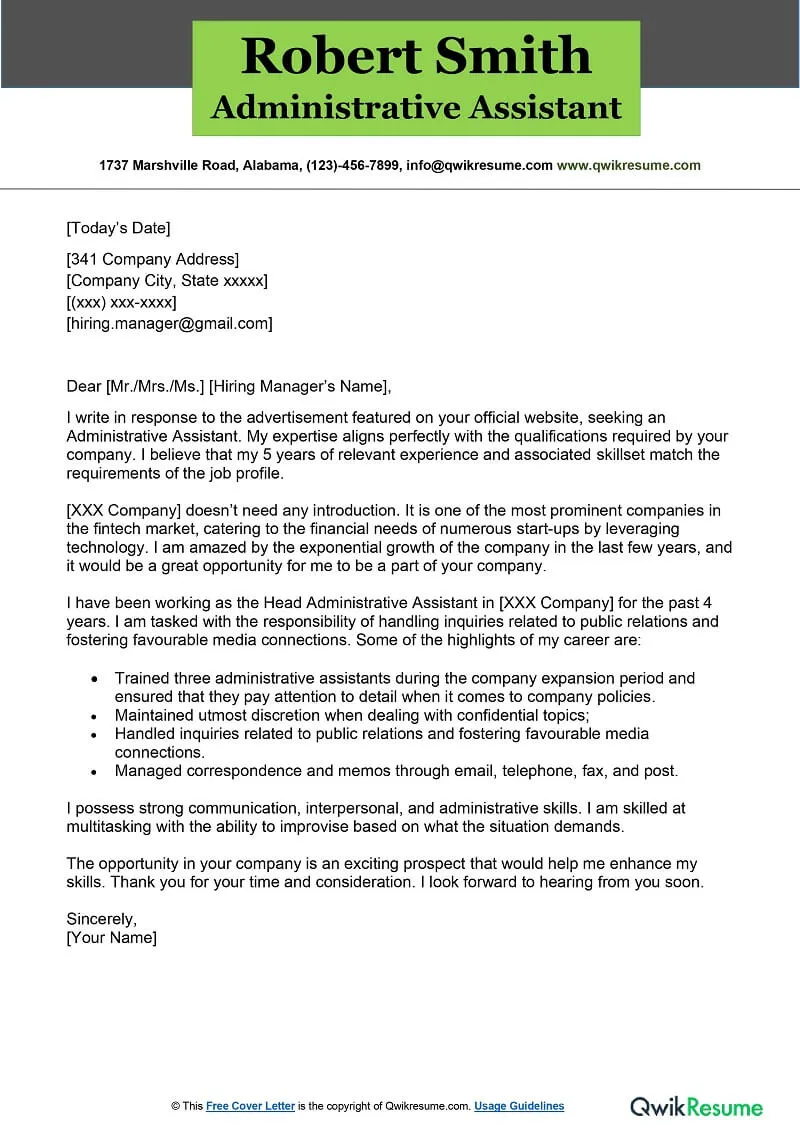
In the competitive job market, securing an admin assistant position requires more than just a strong resume. A well-crafted cover letter is your opportunity to make a compelling first impression and showcase why you’re the ideal candidate. This guide provides a comprehensive overview of creating an admin assistant cover letter that truly impresses, helping you stand out from the competition and land your dream job.
Why Your Admin Assistant Cover Letter Matters
Your cover letter serves as a crucial introduction, offering a glimpse into your personality, skills, and enthusiasm. It allows you to elaborate on your qualifications beyond what’s listed in your resume, demonstrating how your unique experiences and abilities align with the specific requirements of the role. A well-written cover letter sets the stage for a positive interview, highlighting your understanding of the company’s needs and your eagerness to contribute to their success. It’s your chance to make a connection with the hiring manager.
Highlighting Your Key Skills
Admin assistant roles demand a diverse skillset. Your cover letter should spotlight the skills most relevant to the position you’re applying for. Review the job description carefully and identify the key requirements. Then, weave examples of your skills into your cover letter, demonstrating how you’ve successfully applied them in previous roles or situations. Quantify your achievements whenever possible to make your impact more tangible.
Administrative Skills to Showcase

Emphasize your organizational prowess, time management abilities, and attention to detail. Mention your experience with scheduling, managing calendars, handling correspondence, and preparing reports. Highlight your ability to multitask and prioritize tasks effectively, ensuring smooth operations and efficient workflows. If you have experience with office management, such as ordering supplies or coordinating maintenance, be sure to include this as well.
Communication Skills for Success
Effective communication is paramount for admin assistants. Showcase your written and verbal communication skills. Mention your experience with drafting emails, memos, and letters. Highlight your ability to interact professionally with clients, colleagues, and vendors. If you’ve handled phone calls, taken meeting minutes, or managed internal communications, provide specific examples to illustrate your proficiency.
Technical Skills That Impress
In today’s digital world, technical proficiency is essential. List the software and tools you’re proficient in, such as Microsoft Office Suite (Word, Excel, PowerPoint, Outlook), CRM systems, and any other relevant applications. If you have experience with data entry, database management, or using specific office equipment, include these as well. Demonstrating your tech-savviness will significantly boost your candidacy.
Tailoring Your Cover Letter

A generic cover letter is easily dismissed. Customization is key to demonstrating your genuine interest and understanding of the specific role and company. Tailor your letter to each application, highlighting the skills and experiences that align most closely with the job description’s requirements. This shows that you’ve taken the time to understand the role and are genuinely interested in the opportunity.
Researching the Company
Before writing, research the company thoroughly. Visit their website, read news articles, and explore their social media presence. This will provide valuable insights into their mission, values, and culture. Use this information to demonstrate your understanding of their business and how your skills and experience can contribute to their goals. Mentioning specific projects or initiatives the company is involved in shows you’ve done your homework.
Customizing for the Role
Carefully review the job description and identify the key requirements. Highlight the skills and experiences that directly match those requirements. Use the same keywords and phrases from the job description to demonstrate that you understand the role’s specific needs. Address any specific challenges or responsibilities mentioned in the description, and explain how you would approach them. This targeted approach will make your application stand out.
Structuring Your Cover Letter

A well-structured cover letter is easy to read and highlights your key qualifications. Follow a standard format, including an opening paragraph, body paragraphs, and a closing paragraph. Ensure a logical flow of information, making it easy for the hiring manager to understand your qualifications and why you’re a good fit for the role.
The Opening Paragraph Make a Strong Start
Your opening paragraph is your first chance to grab the reader’s attention. Start with a strong statement that immediately conveys your interest in the position. Briefly mention where you saw the job posting and express your enthusiasm for the opportunity. You can also include a brief overview of your key skills or experience that make you a strong candidate. Keep it concise and focused.
The Body Paragraphs Showcase Your Value
The body paragraphs are where you showcase your skills and experience in detail. Use these paragraphs to provide specific examples of how you’ve successfully applied your skills in previous roles. Quantify your achievements whenever possible, using numbers and data to demonstrate your impact. Address the key requirements of the job description and explain how your qualifications align with their needs.
The Closing Paragraph Call to Action

In your closing paragraph, reiterate your interest in the position and express your enthusiasm for the opportunity. Thank the hiring manager for their time and consideration. Include a clear call to action, such as expressing your availability for an interview and providing your contact information. End with a professional closing, such as “Sincerely” or “Best regards.”
Formatting Your Cover Letter
Proper formatting makes your cover letter easy to read and visually appealing. Choose a professional font and layout that is clean and uncluttered. Ensure your letter is well-organized, with clear headings and concise paragraphs. Avoid any formatting errors that could distract the reader from your qualifications. A well-formatted letter demonstrates professionalism and attention to detail.
Professional Font and Layout
Select a professional font, such as Times New Roman, Arial, or Calibri, in a readable size (11 or 12 points). Use standard margins (1 inch on all sides) and single-space your text. Use clear headings and subheadings to break up the text and make it easier to scan. Ensure consistent formatting throughout the document.
Proofreading and Editing

Proofread your cover letter carefully for any typos, grammatical errors, or formatting inconsistencies. Read your letter aloud to catch any awkward phrasing or unclear sentences. Ask a friend or family member to review your letter as a second pair of eyes can often spot errors you might miss. A polished and error-free cover letter reflects professionalism and attention to detail.
Avoiding Common Mistakes
Be mindful of common mistakes that can undermine your application. Avoid using generic language, focusing too much on yourself, and making typos or grammatical errors. These mistakes can create a negative impression and decrease your chances of getting an interview.
Generic Language
Avoid using generic phrases that could apply to any candidate. Instead, provide specific examples and tailor your language to the specific role and company. Show, don’t tell, by providing concrete evidence of your skills and experience. Replace generic statements with specific details about your accomplishments.
Focusing on Yourself Too Much

While it’s important to highlight your skills and experience, avoid focusing solely on yourself. Instead, emphasize how your skills and experience can benefit the company. Frame your accomplishments in terms of the value you can bring to the role. Focus on what you can do for the employer, not just what you’ve done in the past.
Typos and Grammatical Errors
Typos and grammatical errors can create a negative impression and make you appear careless. Always proofread your cover letter carefully before submitting it. Use a grammar checker to identify any errors you may have missed. Ask someone else to review your letter as a second check for any mistakes. A polished and error-free cover letter demonstrates professionalism.
Admin Assistant Cover Letter Templates
Using a cover letter template can be a great starting point, but remember to customize it to fit your specific skills and the job requirements. Here are some template ideas to help you get started, with emphasis on adapting these to your own experience. Remember to personalize each template for the specific job you are applying for, tailoring the language and details to match the job description.
Template 1 Focus on Experience

This template is ideal if you have significant experience as an admin assistant. Start by highlighting your years of experience and key responsibilities in previous roles. Include examples of your achievements, such as streamlining processes, improving efficiency, or managing complex projects. Showcase your skills in areas such as scheduling, communication, and office management.
Template 2 Highlighting Skills
If you want to focus on your key skills, this is the template for you. Identify the top skills needed for the specific role. Use examples to illustrate how you have utilized these skills effectively. Include your proficiency in relevant software and tools. You can discuss how your skills have contributed to previous successes.
Template 3 Emphasizing Achievements
Focus on achievements that showcase your accomplishments, not just your responsibilities. Use quantifiable results to demonstrate your impact. Highlight any improvements you made in previous roles. For instance, mention how you reduced costs, improved efficiency, or increased productivity through your efforts. Tailor your achievements to fit the role’s needs.
Final Thoughts Creating a Winning Cover Letter
Crafting a compelling admin assistant cover letter requires careful planning, research, and attention to detail. By highlighting your key skills, tailoring your letter to each role, and avoiding common mistakes, you can significantly increase your chances of landing an interview and securing the job. Remember to always proofread your letter, present a professional image, and let your enthusiasm shine through. Good luck with your job search!