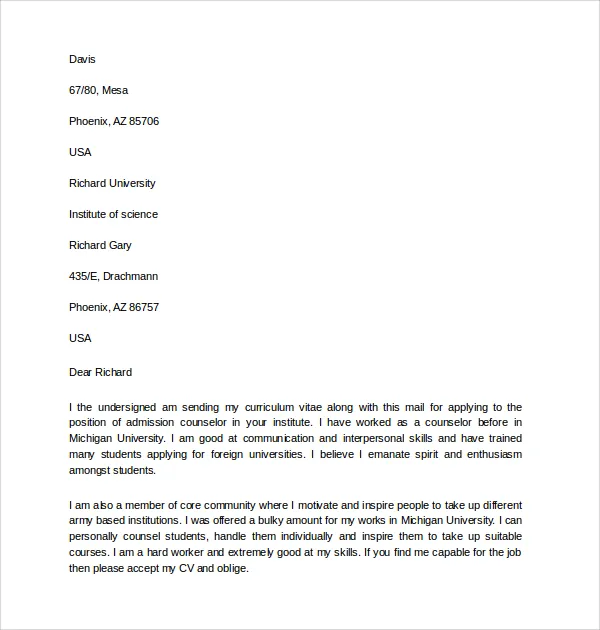
Crafting the Perfect Admissions Counselor Cover Letter
A well-crafted cover letter is your first opportunity to make a strong impression on a potential employer. For an admissions counselor, this letter serves as more than just an introduction; it’s a showcase of your understanding of the role, your relevant skills, and your passion for higher education. This guide provides comprehensive insights to help you write a compelling cover letter that highlights your qualifications and increases your chances of landing an interview. By following these steps, you can effectively communicate your suitability for the position and demonstrate your commitment to helping students achieve their academic goals. This guide aims to provide you with a roadmap to create a cover letter that not only meets the expectations of hiring managers but also sets you apart from other applicants. It’s crucial to remember that your cover letter is a direct reflection of your attention to detail and your ability to communicate clearly and persuasively. So, let’s begin crafting a cover letter that opens doors to exciting opportunities in the field of admissions.
Understanding the Role of an Admissions Counselor
Before diving into the specifics of your cover letter, it’s essential to understand the responsibilities and expectations of an admissions counselor. This role involves much more than simply reviewing applications; it encompasses a wide range of activities aimed at attracting, evaluating, and enrolling students. Comprehending these facets allows you to tailor your cover letter to resonate with the specific needs of the institution. Demonstrating this understanding in your cover letter will showcase your awareness of the job’s intricacies, making you a more appealing candidate. Highlighting your ability to perform these duties is crucial for conveying your readiness for the role, which makes you a more suitable applicant overall. By illustrating your knowledge of what an admissions counselor truly does, you highlight your proactive approach to the job, which immediately separates you from other candidates.
Key Responsibilities and Skills

Admissions counselors are tasked with several key responsibilities. Primarily, they assess applications, which involves evaluating academic records, standardized test scores, and extracurricular activities. They also provide guidance to prospective students, answering their questions about the application process, financial aid, and campus life. Furthermore, admissions counselors often represent their institutions at college fairs and high school visits, marketing the school to potential applicants. They should be highly organized, as they juggle multiple applications and deadlines, requiring exceptional time-management skills. Excellent communication skills, both written and verbal, are essential for conveying information clearly and persuasively to various stakeholders. Strong interpersonal skills are crucial for building relationships with students, parents, and colleagues. Additionally, counselors should possess a deep understanding of their institution’s programs and values. Finally, they should be adept at using CRM software and data analysis tools to manage and track applications efficiently.
Why a Cover Letter Matters
A well-written cover letter offers a personalized introduction, allowing you to expand on your resume and highlight relevant skills and experiences. It’s your chance to show why you’re the perfect fit for the specific institution. It serves as a critical opportunity to show your understanding of the role and your passion for higher education. A cover letter allows you to demonstrate your ability to communicate effectively, which is a crucial skill for admissions counselors who interact with students, parents, and colleagues. It also helps you address any potential gaps in your resume or career path and explain how your skills and experiences align with the job requirements. Your cover letter can set you apart from other applicants, who may have similar qualifications, by showing your personality and enthusiasm.
Highlighting Your Qualifications and Experience
When highlighting your qualifications, it’s important to focus on the skills and experiences most relevant to the job. Start by identifying the key requirements listed in the job description and tailor your letter to address them directly. Provide specific examples of how you have demonstrated those skills in previous roles. For example, if the job requires experience with application review, describe a time you managed a high volume of applications, detailing the processes you followed and the outcomes achieved. If communication is a key skill, provide an instance where you successfully communicated with students or parents, resolving a complex issue or answering challenging questions. Quantitative achievements can also be compelling; for instance, if you increased student enrollment or improved yield rates in a previous role. Always provide supporting evidence, such as reports or testimonials, to validate your claims.
Writing the Header

The header is the very first element of your cover letter, and it is pivotal in creating a professional impression. Include your full name, contact information (phone number and email address), and the date. Below this, add the recipient’s name and title, and the institution’s name and address. Use a professional font and ensure the layout is clean and easily readable. Double-check for any typos or errors in names, titles, or addresses, as any such errors immediately signal a lack of attention to detail. Keep the header concise but complete, enabling the hiring manager to quickly identify who you are and how to contact you. This is the first step to making a positive impression, so take your time and make sure it’s flawless. The right header shows respect for the person you are addressing and illustrates your organizational skills. Therefore, a well-crafted header paves the way for the rest of your letter.
Formatting the Body Paragraphs
The body of your cover letter should be logically structured, including an introductory paragraph, several body paragraphs that highlight your skills and experiences, and a concluding paragraph. Start with a strong opening, expressing your interest in the position and referencing where you found the job posting. Use the body paragraphs to discuss your relevant skills and experiences. Each paragraph should focus on a specific skill or achievement, providing specific examples and quantifiable results. Ensure you are following a simple, clear and easily understandable language. Use active voice and concise sentences to improve readability. Use bullet points or numbered lists to highlight key skills or achievements. In your concluding paragraph, reiterate your interest in the position and express your availability for an interview. Proofread meticulously to make sure your letter is free of grammatical errors and typos. Well-formatted body paragraphs are important for demonstrating your communication skills and the value you would bring to the position.
Showcasing Your Passion for Education
Showcasing your passion for education is vital in a cover letter for an admissions counselor position. This passion often involves a genuine desire to support student success and foster an inclusive academic environment. To effectively display your enthusiasm, consider providing specific examples of how you have supported student success in the past. This could include mentorship roles, volunteer work, or previous experience within the education sector. Expressing your personal values and how they align with the institution’s mission can also resonate with hiring managers. Highlighting your knowledge of the institution’s values will demonstrate your genuine interest and will help you to show your understanding of the role. Moreover, mentioning any professional development activities, like webinars or workshops, related to education can emphasize your commitment to the field. Demonstrating your passion goes beyond stating it – it’s about illustrating it with concrete examples and a proactive approach.
Common Mistakes to Avoid

When writing a cover letter, it’s crucial to avoid common pitfalls that can undermine your application. One frequent mistake is sending a generic cover letter that’s not tailored to the specific job or institution. Hiring managers can easily spot a generic cover letter, so personalize it and address it to the specific hiring manager. Typos and grammatical errors are also a significant red flag. Proofread your letter meticulously before submitting it. Another mistake is focusing too much on yourself instead of highlighting how your skills and experiences can benefit the institution and its students. Do not exceed the recommended length and keep your letter concise and to the point. Finally, avoid negative language or complaining about previous jobs. Highlighting these mistakes helps you create a cover letter that increases your chances of a successful application.
Proofreading and Editing
Proofreading and editing your cover letter is an essential step in the process. This helps to ensure that your letter is polished and professional. Begin by checking for grammatical errors, spelling mistakes, and punctuation errors. Use a grammar checker tool, but do not rely on it entirely; always proofread manually. Check for clarity and conciseness; ensure your sentences are well-structured and easy to understand. Verify that the tone of your letter is appropriate for the position and institution. Ask a friend, family member, or career counselor to review your cover letter for feedback. This external perspective can often catch errors you might have missed. Before submitting your cover letter, confirm that it aligns with the requirements of the job description and that it effectively highlights your key qualifications and experiences. Remember, a well-edited cover letter shows a high level of attention to detail and commitment to the application process.
Tailoring Your Letter
Tailoring your cover letter to each job application is critical for demonstrating your genuine interest and suitability for the role. First, thoroughly research the institution and the specific requirements of the position. Understand the institution’s mission, values, and the specific needs of the admissions department. Modify your cover letter to address these specific needs and highlight the skills and experiences most relevant to the job description. Use keywords from the job description to show your understanding of the role. Include information about why you are interested in the specific institution and how your goals align with its mission. Consider reaching out to someone in the department to gain insights. By personalizing your cover letter for each job, you enhance your chances of making a strong impression.
Finding Admissions Counselor Cover Letter Examples

Utilizing cover letter samples can be an effective way to gain inspiration and ideas for your own cover letter. Search online for “admissions counselor cover letter samples” to find examples from various sources. Websites such as Indeed, Glassdoor, and LinkedIn offer examples you can review. When reviewing samples, pay attention to how the applicants highlight their skills, experiences, and passion for higher education. Examine the language, formatting, and the overall structure of the letters. Remember, you should not copy the samples directly. Instead, use them as a guide to create a cover letter that reflects your unique qualifications and experiences. Tailor the examples to your specific situation and the requirements of the job. By carefully analyzing these examples, you can improve your letter and highlight your strengths. Use these samples as a tool to create a compelling cover letter that increases your chances of landing an interview.
Resources for Cover Letter Writing
Numerous resources are available to assist you in writing a compelling cover letter for an admissions counselor position. Many universities and career services provide online templates, guides, and tutorials. Websites such as The Muse, and Jobscan offer comprehensive resources on cover letter writing and resume creation. Career counselors also offer personalized feedback and guidance on cover letter content, format, and style. You can also find helpful information on the websites of professional organizations like the National Association for College Admission Counseling (NACAC). Consider using cover letter-checking tools and applications that analyze your letter. They can help identify areas for improvement in your writing. Additionally, review sample cover letters and articles on effective communication strategies. Remember to take advantage of these resources to refine your cover letter and showcase your skills and experience effectively.
In conclusion, crafting a compelling cover letter is crucial to securing an admissions counselor position. By understanding the role, highlighting your qualifications, and tailoring your letter to the specific job, you can increase your chances of success. Following the guidelines and utilizing the resources provided can equip you with the tools necessary to write a cover letter that will open doors to your career aspirations in higher education. Good luck with your job search!