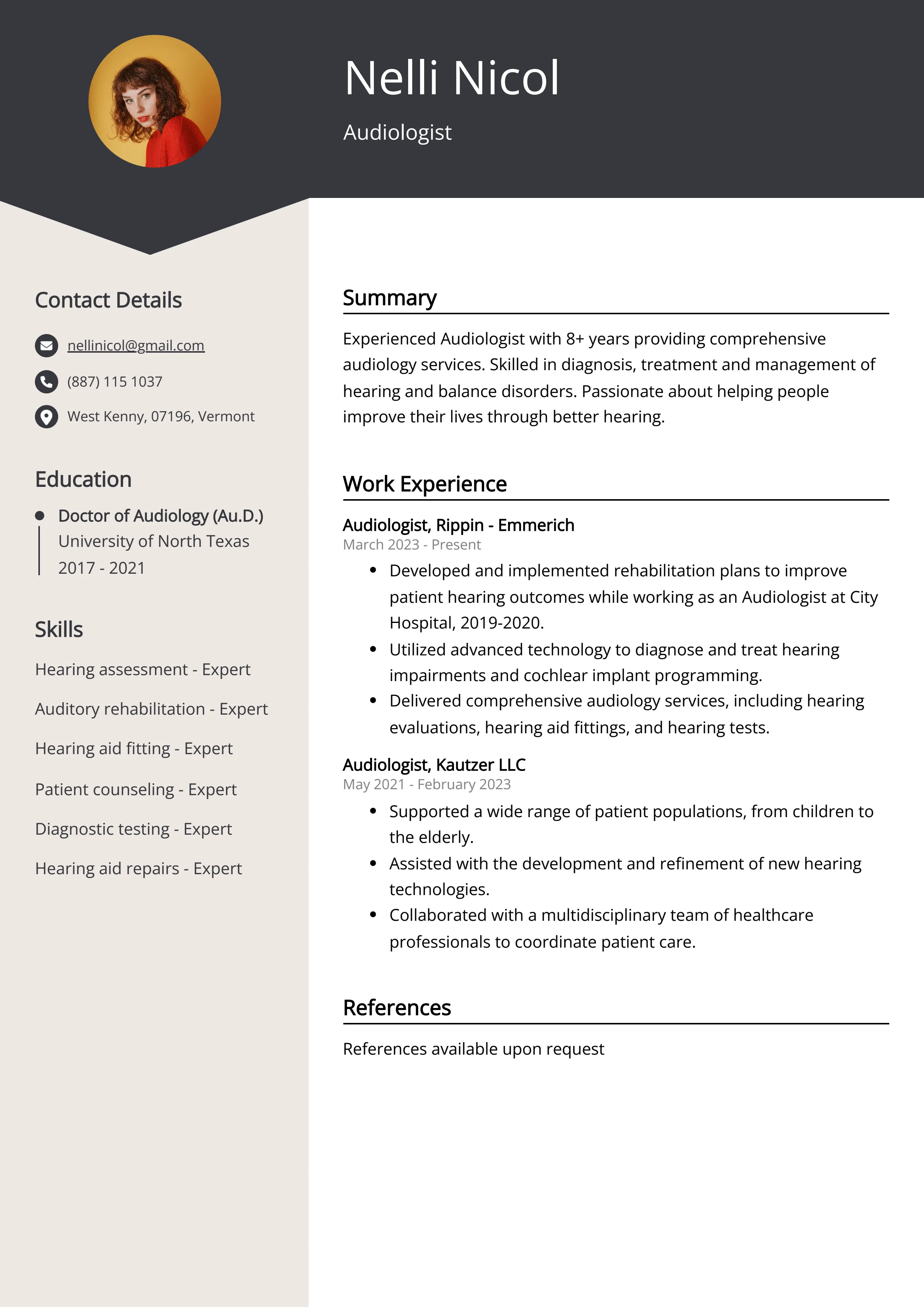
Crafting Your Audiologist Cover Letter
A compelling audiologist cover letter is your first step towards securing your dream job. It’s more than just a formality; it’s your chance to make a strong first impression, showcase your expertise, and demonstrate why you’re the perfect fit for the role. This guide will walk you through every aspect of writing a cover letter that gets noticed, from the essential elements to common mistakes to avoid. By following these guidelines, you can significantly increase your chances of landing an interview and ultimately, the job. Remember, the goal is to present yourself as a knowledgeable, passionate, and highly qualified professional ready to contribute to their team.
Essential Elements of an Audiologist Cover Letter
A well-structured cover letter should include several key components that work together to create a comprehensive and persuasive application. Each element plays a vital role in conveying your qualifications, experience, and enthusiasm for the position. Pay close attention to each section, ensuring that your cover letter is complete, professional, and tailored to the specific job you’re applying for. Omitting any of these parts can weaken your application and make it less likely to stand out to hiring managers. So, let’s examine those aspects that build your professional image.
Header & Contact Information

The header of your audiologist cover letter sets the stage for professionalism and provides essential contact details. It’s the first piece of information the hiring manager sees, so it must be accurate, clear, and easily accessible. A well-formatted header saves the reader time by clearly indicating who you are and how to reach you, which streamlines the hiring process and makes a positive first impression. Don’t make it difficult for them to contact you; put the important details at the beginning.
Applicant’s Contact Details
At the top of your letter, include your full name, address, phone number, and professional email address. Make sure your email address is professional and appropriate for job applications. Avoid using nicknames or informal language. Your contact details should be easily readable and well-organized. Consider using a font that is easy on the eyes and appropriate for the document. Double-check all the information to ensure there are no typos or errors that could prevent the employer from contacting you. Accurate contact information is critical for the hiring manager.
Hiring Manager’s Contact Details
If possible, address your cover letter to a specific person. Research the hiring manager’s name and title and include it in your header. If you cannot find a specific name, use the title of the hiring manager, such as “Hiring Manager.” This shows that you have taken the time to research the organization and personalize your application. Finding the name is a great way to show genuine interest. This attention to detail demonstrates your initiative and makes your application stand out from generic submissions. The correct details establish you have done your research on the position and the company.
Professional Greeting

Start your cover letter with a professional greeting, such as “Dear Mr./Ms. [Last Name]” if you know the hiring manager’s name. If not, use a general greeting like “Dear Hiring Manager.” Avoid informal greetings such as “Hello” or “Hi.” Your opening sets the tone for the entire letter, and a professional greeting shows respect and attention to detail. This simple step can make a big difference in how your application is perceived. This also gives the reader the impression that you care about the company.
Body Paragraph 1 Making a Strong Opening
Your opening paragraph is your chance to grab the reader’s attention and make them want to learn more about you. It should be concise, engaging, and clearly state the position you are applying for and where you found the job posting. This opening should highlight the key aspects of your qualifications and express your enthusiasm for the role. Make it short and sweet. If you can mention something specifically that attracted you to the role, that shows extra interest. This initial statement can set the tone for the rest of your letter, making it an effective introduction to your professional self.
Expressing Enthusiasm and Interest
Convey your genuine interest in the position and the company. Mention what excites you about the opportunity and why you are interested in working there. Your enthusiasm can make a big difference in how your application is received. It shows the hiring manager that you are not just looking for any job, but one that you are truly passionate about. A sincere expression of interest can distinguish you from other applicants. Showing enthusiasm allows them to know that you have passion in the role.
Highlighting Relevant Skills and Experience

Briefly mention your most relevant skills and experience that align with the job requirements. Focus on qualifications that directly match what the employer is looking for. If you have experience with specific audiological equipment, clinical settings, or patient populations, highlight these details. Doing so demonstrates that you understand the job and have the capabilities to succeed in it. Referencing specific experiences and showcasing your experience from your resume or portfolio strengthens your introduction and grabs the reader’s attention.
Body Paragraph 2 Showcasing Your Expertise
This is where you delve deeper into your qualifications and demonstrate your value. Provide specific examples of your accomplishments and how they align with the job requirements. Use this paragraph to illustrate your expertise and show the hiring manager what you can bring to their team. Showcase your abilities, and you are one step closer to being hired. The details here can be what seals the deal, so make sure you’re honest.
Mentioning Specific Accomplishments
Describe your key accomplishments and how you’ve made a positive impact in previous roles. Focus on achievements that are relevant to the audiologist position. Give examples of how you’ve improved patient outcomes, increased clinic efficiency, or contributed to team success. These accomplishments should be quantifiable, whenever possible. This provides concrete evidence of your capabilities. Showing the potential employee what you can do will make you stand out against other applicants. Use specific achievements in any way possible.
Quantifying Achievements with Data

Whenever possible, quantify your achievements with data and metrics. Instead of saying you “improved patient satisfaction,” state that you “increased patient satisfaction scores by 15%.” Using numbers adds credibility to your claims and provides concrete evidence of your skills. Metrics help the hiring manager understand the impact you can make in their organization. Quantifiable achievements are very important. If you can prove that you did something great in the past, they’ll be more likely to believe you can do it again. Show them your strengths.
Body Paragraph 3 Tailoring to the Job Description
In this section, you demonstrate that you understand the job’s specific requirements and have the skills to fulfill them. Customize your letter to show a clear understanding of the needs of the specific position. Doing so ensures that your application resonates with the employer’s expectations and increases your chances of being invited for an interview. Demonstrate your commitment to the position by including specific details from their job listing. The most important part of this paragraph is connecting the dots for the employer.
Matching Skills to Requirements
Carefully review the job description and identify the key skills and qualifications required for the role. Then, highlight how your skills and experience align with these requirements. Provide examples of how you have used these skills in the past. This targeted approach shows that you’ve put in the effort to understand the role and that you have the capabilities to succeed in it. This makes you look like a perfect fit for the role because you’ve matched the needs with your resume.
Using Keywords from the Job Posting

Incorporate keywords from the job posting into your cover letter, but avoid keyword stuffing. Naturally integrate these terms to demonstrate that you understand the job’s needs and have the right qualifications. Keywords can help your application get past applicant tracking systems (ATS) and make it to the hiring manager. Use the keywords that matter, but make sure you do it naturally. You don’t want to sound like a robot when you’re trying to get hired. You need to show that you have the needed skills in the most natural way possible.
Closing Paragraph and Call to Action
Your closing paragraph should leave a lasting positive impression and encourage the hiring manager to take the next step. Be sure to express gratitude, reiterate your interest, and state your availability. The closing is where you leave the hiring manager with a call to action. They should know what to do next, which increases your odds of getting the job. Making it easy for them to make a decision means you’re making it easier for them to hire you.
Expressing Gratitude
Thank the hiring manager for considering your application and for taking the time to read your cover letter. Expressing gratitude shows that you appreciate their time and effort. It is a professional courtesy and leaves a positive impression. You can express gratitude by saying something like, “Thank you for your time and consideration.” This shows that you are grateful for their consideration. It can also set the tone for a respectful dialogue.
Stating Availability for Interview

Clearly state your availability for an interview. Let the hiring manager know that you are available and eager to discuss your qualifications further. This simple step signals your interest and willingness to proceed with the hiring process. Including your availability is a call to action, which encourages them to move forward with you. Making it easy for the hiring manager is critical.
Proper Formatting and Presentation
The visual appearance of your cover letter is just as important as the content. A well-formatted letter demonstrates professionalism and attention to detail. Choose a clean, easy-to-read format, and ensure that your presentation is neat and organized. It shows that you take pride in your work and that you care about the quality of your application. You want the reader to be impressed with both your skills and your ability to present yourself professionally. The formatting makes your application stand out.
Font and Font Size
Choose a professional font, such as Times New Roman, Arial, or Calibri. Use a font size between 10 and 12 points. A professional font size improves readability. Avoid using overly decorative or unconventional fonts, which can be distracting. If you are using a less common font, consider how the reader will perceive it. You want them to be able to read it easily. The point is to create a visually appealing document that is easy to read. You want to make the process easier for the hiring manager.
Margins and Spacing
Use standard one-inch margins on all sides of your cover letter. Use single-spacing within paragraphs and double-spacing between paragraphs. Proper spacing makes your letter easier to read and ensures that it looks neat and organized. This makes your document look less cluttered and more professional. Proper spacing can create the perception that you are a professional who takes their work seriously. It also helps the reader to process information more easily.
Proofreading and Editing Your Letter
Before submitting your cover letter, carefully proofread and edit it for any errors in grammar, spelling, and punctuation. Errors can undermine your credibility and make you appear unprofessional. Proofreading ensures that your message is clear and polished. It is a crucial step in the application process. Always double-check your work. This is a great way to find errors. It will improve your chances of getting an interview.
Proofreading and Editing Your Letter
Use a grammar and spelling checker, but also read your letter carefully. Read it aloud to catch awkward phrasing or typos. Have a friend or family member review your letter for a fresh perspective. Getting a second opinion can help you catch any mistakes. The goal is to submit a letter that is flawless and accurately represents your skills and experience. A clean and professional document makes a positive impression.
Common Mistakes to Avoid
Avoiding common mistakes can significantly improve the quality of your cover letter and increase your chances of getting hired. Steer clear of generic language, typos, and other pitfalls that could negatively impact your application. Always pay attention to the details and take the time to create a compelling letter. Many people undermine their applications. Knowing and avoiding these problems will help you stand out from the crowd.
Generic and Vague Language
Avoid using generic and vague language that could apply to any job. Tailor your cover letter to the specific position and the company. Use specific examples and details to demonstrate your qualifications. Showing specific details that illustrate your qualifications will make you stand out and increase your chances of getting the job. This is critical in any job application. Make sure your wording is specific to your application.
Typos and Grammatical Errors
Typos and grammatical errors make you appear unprofessional and can damage your credibility. Always proofread your cover letter carefully before submitting it. Use a grammar and spelling checker. Have a friend review your letter. Even small errors can give a bad impression, so always take the time to review your document. The process of proofreading and editing will improve your chances of being hired. Making sure your document is flawless is extremely important.
Providing a Strong Portfolio/Resume
Your resume should provide a concise summary of your education, experience, and skills. Highlight your achievements with measurable results. Your resume is a critical document. Make sure it represents your career accomplishments accurately and professionally. This will ensure that you are able to make a good impression on the hiring manager. Showing them your previous work experience is critical.
Showcasing Your Audiology Certifications
List all relevant certifications, licenses, and professional memberships in your resume. Include the issuing organization and the dates of certification. Demonstrating certifications lets the hiring manager know that you have the needed qualifications for the role. Including them in your resume is also a great way to prove your abilities. Do what you can to impress the hiring manager. Highlighting any certifications will do the trick.
Highlighting Clinical Experience
Detail your clinical experience. Include the names of clinics or hospitals, the dates of employment, and your specific responsibilities. Describe the populations you have worked with and the audiological services you have provided. It allows you to showcase your practical knowledge and skills. The details will help demonstrate your value as a candidate. Showcasing these details will help your application stand out. Make the most out of this experience by clearly stating what you’ve done.
Examples of Successful Audiologist Cover Letters
Reviewing successful audiologist cover letter examples can provide valuable inspiration and guidance. Analyzing these examples helps you understand how to structure your letter, highlight your strengths, and tailor your application to the specific job. They show you how to present yourself effectively and increase your chances of landing an interview. Always use them as a great example. You can improve your cover letter by following their guidelines. You will get a better understanding of what the hiring manager is looking for. Be sure to research what’s out there.