Understanding Cover Letter Font Basics
The font you choose for your cover letter might seem like a minor detail, but it significantly impacts how your potential employer perceives you. A well-chosen font enhances readability, making it easier for the hiring manager to digest your qualifications and experience. Conversely, a poorly chosen font can detract from your message, making you appear unprofessional or even unpolished. This guide will provide you with a comprehensive understanding of how to select the best cover letter font to make a positive impression.
Why Font Choice Matters in a Cover Letter
Your cover letter is your first introduction to a potential employer, and it serves as more than just a summary of your resume; it’s an opportunity to showcase your personality and professional approach. The font you choose plays a crucial role in this, influencing both the readability and the overall impression you make. A thoughtful font choice demonstrates attention to detail, a critical skill in any professional setting. The correct font ensures that your cover letter is not just read, but also well-received, giving you an advantage in the competitive job market.
Impact on Readability and Impression

Readability is paramount. A font that is easy on the eyes encourages the reader to spend more time reviewing your qualifications. A clear and readable font makes it easier for the hiring manager to focus on the content of your letter rather than struggling to decipher the text. The font also contributes significantly to the overall impression your cover letter creates. A clean, professional font suggests competence and attention to detail, while an overly stylized or difficult-to-read font can make you appear less serious or even unprofessional. Choosing the right font is therefore a matter of making your cover letter easy to read and demonstrating your professional style.
Key Considerations for Choosing a Font
Selecting the ideal font for your cover letter involves balancing readability, professionalism, and style. The goal is to choose a font that makes your letter easy to read, projects a professional image, and subtly reflects your personal brand. Several key factors will help you narrow your choices, ensuring your cover letter makes the right impression and effectively communicates your message to potential employers. Focusing on these details will significantly improve your chances of success in the job application process.
Readability and Legibility
The most important aspect of your font choice is its readability. A font must be easily legible to ensure the hiring manager can quickly and comfortably read your cover letter. Fonts that are clear, with distinct letterforms, are ideal. Avoid overly ornate or stylized fonts that might look interesting but are difficult to read at a glance. Ensure the font you select is readable even in different formats and when printed. A good test is to print a sample of your cover letter to see how the font appears in hard copy and adjust your choice accordingly. Poor readability can lead to a negative first impression, so prioritize clarity in your selection process.
Font Size and Spacing

In addition to the font itself, font size and spacing play a critical role in readability. A font size between 10 and 12 points is generally recommended for cover letters. This range provides a balance between fitting enough text on the page and ensuring the text is easy to read. Consistent line spacing (typically 1.0 or 1.15) prevents the text from appearing cramped, and adequate spacing between paragraphs helps separate ideas clearly. Adjust these settings to ensure your cover letter is both visually appealing and easy to navigate. Poor spacing or incorrect size can strain the reader’s eyes and detract from your message.
Professionalism and Style
Your chosen font should reflect professionalism. Stick to classic, well-established fonts that convey competence and seriousness. Fonts that are too playful or trendy can undermine your credibility. Consider the industry you are applying to when choosing a font. For example, a more conservative font might be appropriate for finance or law, while a slightly more modern font could be acceptable for creative fields. Ensure that your chosen font aligns with the overall tone you are aiming to create for your job application. Professionalism is key to making a positive impact.
Top Font Choices for Cover Letters
Several fonts consistently perform well in cover letters, striking the right balance between readability and professionalism. These fonts are widely available and generally well-received by hiring managers across various industries. Choosing one of these options is a safe bet and will help ensure your cover letter is easy to read and makes a positive impression. The following are some of the best choices, offering a good starting point when selecting the best font for your cover letter.
Times New Roman

Times New Roman is a classic, serif font that has been a staple of professional documents for decades. Its familiarity makes it a reliable choice for cover letters. The serifs (the small strokes at the end of each letter) guide the eye across the page, enhancing readability. This font conveys a sense of formality and tradition. It is suitable for virtually any industry and is almost universally accepted. Consider Times New Roman if you want to project a classic and professional image.
Pros and Cons
- Pros Readability and familiarity
- Cons Can appear dated to some
Arial
Arial is a sans-serif font that offers a clean and modern look. Its straightforward design ensures high readability, even at smaller sizes. Arial is a versatile font that works well in a variety of settings, from conservative industries to more modern fields. It’s a good choice if you want to project a professional yet contemporary image. Its simplicity makes it easy on the eyes, ensuring the hiring manager can focus on the content rather than the font itself.
Pros and Cons

- Pros Modern and easy to read
- Cons Can be too common and lack distinctiveness
Calibri
Calibri is a sans-serif font and is a default font in many word processors, making it accessible and widely used. It has a soft, rounded appearance, which lends a slightly friendlier tone to your cover letter. Calibri is suitable for most industries and gives a clean, modern look that is easy to read on screen and in print. It is a practical choice that conveys both professionalism and approachability.
Pros and Cons
- Pros Modern, easy to read, and widely available
- Cons Can appear too casual to some
Helvetica

Helvetica is another sans-serif font known for its clarity and neutrality. It is a highly versatile font often favored for its clean lines and straightforward design, making it a great option for a professional cover letter. It’s easy to read and conveys a sense of modernity and sophistication. Helvetica is widely accepted and appropriate for nearly any industry, particularly those that value a clean and modern aesthetic.
Pros and Cons
- Pros Highly readable and professional
- Cons Can sometimes appear generic
Georgia
Georgia is a serif font designed specifically for readability on computer screens. It’s slightly more condensed than Times New Roman, which allows you to fit more text on a page while maintaining excellent readability. It strikes a balance between classic and contemporary, making it suitable for various professional settings. Georgia’s distinct letterforms make it easy to distinguish individual characters, even at smaller sizes, which enhances its suitability for cover letters.
Pros and Cons

- Pros Designed for screen readability, stylish
- Cons May appear slightly less formal than Times New Roman
Fonts to Avoid in Cover Letters
While many fonts are appropriate for cover letters, some should be avoided to maintain professionalism and ensure readability. Certain fonts can undermine your application by appearing unprofessional or difficult to read. Knowing which fonts to avoid is as important as knowing which to select. These are fonts that are generally not suitable for professional documents, and their use can negatively impact the impression you make on potential employers.
Overly Decorative Fonts
Fonts that are excessively decorative, such as those with elaborate swirls, unusual serifs, or handwritten styles, should be avoided. These fonts are distracting and can be difficult to read, making your cover letter appear unprofessional. The priority of a cover letter is to convey information clearly and concisely, and decorative fonts hinder this goal. Save these artistic choices for creative projects and stick to clean, professional fonts in your job application.
Fonts That Are Difficult to Read

Some fonts, regardless of their style, can be inherently difficult to read. These include fonts with overly thin strokes, condensed letterforms, or inconsistent spacing. It is essential to choose fonts that are clear and easy on the eyes, even at smaller sizes. If a font requires the reader to strain or squint to decipher the text, it is unsuitable for a cover letter. Prioritize fonts known for their legibility, such as those discussed earlier.
Font Combinations to Avoid
While some documents benefit from using multiple fonts, cover letters are generally best kept simple, using only one font throughout. Avoid combining multiple fonts unless you are a design professional and are using them intentionally and with specific reasoning. Multiple fonts can distract the reader and give your cover letter an amateurish appearance. Stick to a single, professional font to maintain consistency and project a professional image.
How to Implement Your Chosen Font
Once you’ve chosen the best font for your cover letter, the next step is to implement it effectively. Proper formatting and consistency across your document are essential to ensure a professional appearance. Paying attention to these details demonstrates attention to detail and commitment to your application. Implementing your chosen font correctly is crucial to maximizing its impact.
Font Size and Formatting
Set your font size between 10 and 12 points for optimal readability. Use consistent line spacing, typically 1.0 or 1.15, to prevent the text from appearing cramped. Pay attention to the alignment, and keep your text left-aligned, except for your contact information. Ensure consistent spacing between paragraphs to create visual breaks and make your cover letter easy to scan. Correct formatting creates a polished look and ensures your cover letter is easy to read.
Consistency Across the Document
Use the same font throughout your entire cover letter. This includes the body text, headings, and any other elements. Avoid switching fonts, as this can be distracting and make your cover letter look unprofessional. Consistency creates a sense of professionalism and shows that you are detail-oriented. Make sure that your cover letter matches the font style used in your resume to establish a unified and professional appearance. Consistency is key to a professional presentation.
Proofreading and Review
Before submitting your cover letter, always proofread it carefully. Review your chosen font in the document and check for any formatting inconsistencies or errors. Read the letter aloud to catch any typos or awkward phrasing. Consider having a friend or colleague review your cover letter, as a fresh pair of eyes can often catch mistakes you may have missed. Proper proofreading ensures your cover letter is polished and professional, reinforcing your attention to detail and commitment.
Additional Cover Letter Tips
While choosing the best font is a critical part of writing an effective cover letter, there are other factors to consider. These additional tips can further enhance your cover letter and increase your chances of landing an interview. Taking a holistic approach and considering all aspects of your cover letter will help you make a strong impression on potential employers. Use the following to improve your application.
Tailoring Your Letter
Customize your cover letter for each job application. Generic cover letters are easily identifiable and show a lack of effort. Research the company and the specific job requirements. Tailor your letter to highlight the skills and experiences that align with the job description. Mention the specific company and the position you are applying for. Showing that you are genuinely interested in the opportunity will make your application more appealing.
Highlighting Achievements
Focus on your accomplishments, rather than just listing your responsibilities. Use the STAR method (Situation, Task, Action, Result) to structure your examples, providing context and quantifiable results. For example, rather than saying “Managed social media,” state “Increased social media engagement by 30% through targeted content and campaigns.” Providing concrete examples of your achievements helps demonstrate your value to the potential employer.
Call to Action
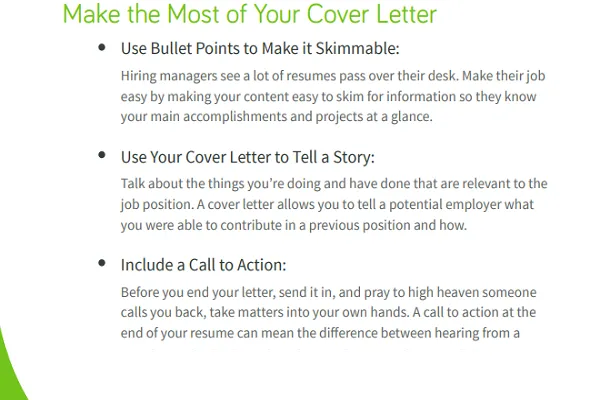
End your cover letter with a clear call to action. Express your enthusiasm for the opportunity and state that you are available for an interview. Thank the hiring manager for their time and consideration. Providing a call to action encourages the reader to take the next step and increases your chances of receiving a positive response. A well-crafted call to action can be the final element to encourage an interview.