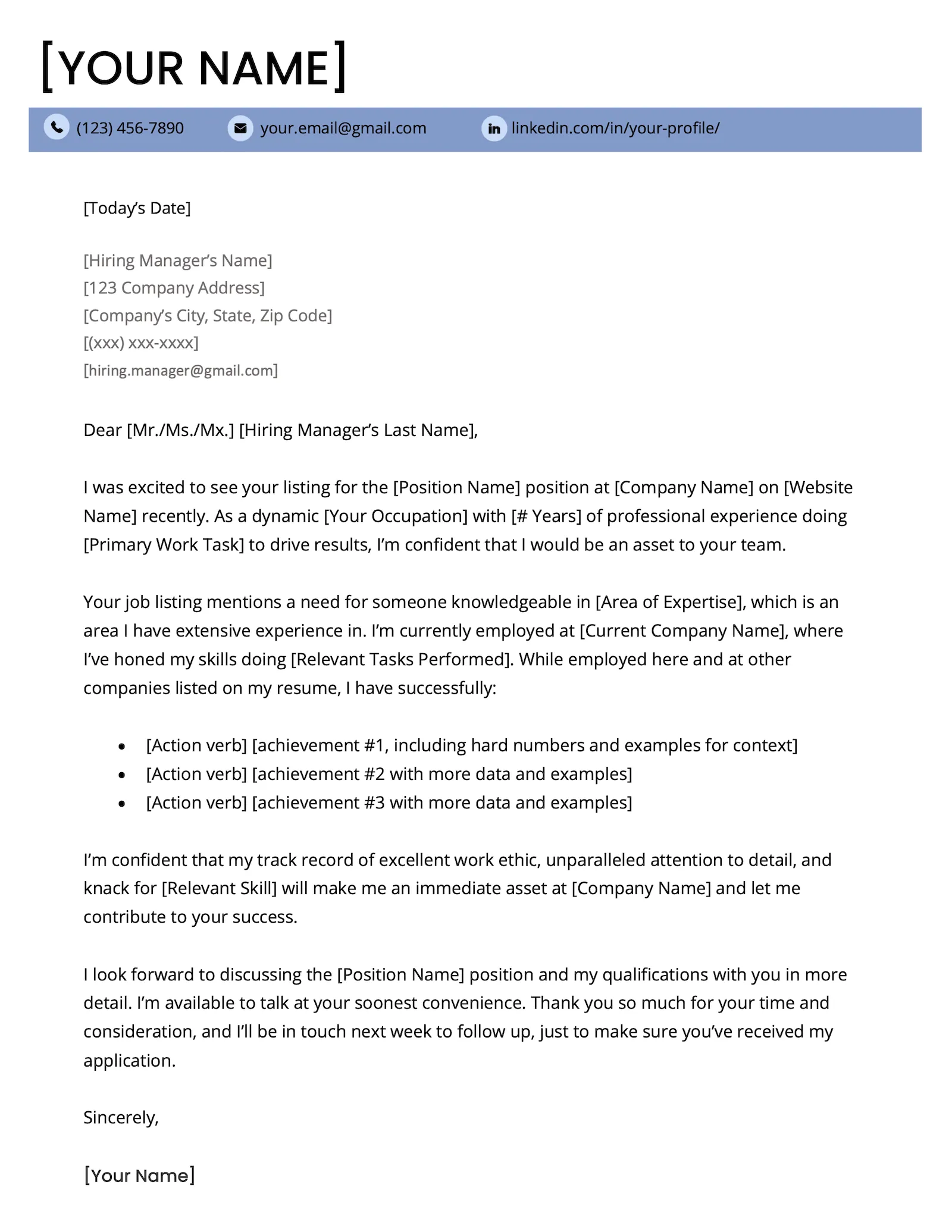
In the competitive world of job applications, a well-crafted cover letter can be the deciding factor in whether you land an interview or your application gets overlooked. Cover letter samples provide invaluable insights into how to effectively communicate your qualifications and personality to potential employers. This guide delves into what makes a great cover letter, offering a collection of best practices and sample examples to help you craft a document that stands out. From the essential elements to industry-specific templates, this comprehensive resource will equip you with the knowledge to create a compelling cover letter that opens doors to your dream job. By studying and adapting the provided samples, you’ll significantly increase your chances of making a positive first impression and securing an interview. Using cover letter samples effectively is not about plagiarism it is about understanding the structure and adapting your information in a way that represents you.
What Makes a Great Cover Letter
A great cover letter is more than just a formality; it’s your personal introduction to a potential employer, a chance to showcase your personality, and highlight your qualifications. It should be concise, compelling, and tailored to the specific job and company. A well-written cover letter demonstrates that you’ve done your research, understand the role, and are genuinely interested in the opportunity. It also shows your communication skills, attention to detail, and ability to articulate your value proposition. A great cover letter focuses on what you can bring to the table, emphasizing your skills and experiences in a way that resonates with the employer’s needs. Your application, resume and cover letter should represent your brand and tell a story, which is why it is crucial to make sure you write a personalized cover letter.
Essential Elements of a Cover Letter
Every effective cover letter should include the following core elements. First, clear and accurate contact information, including your name, phone number, email address, and optionally, your LinkedIn profile or online portfolio. Secondly, a professional salutation addressing the hiring manager by name whenever possible. Next comes a captivating opening paragraph that immediately grabs the reader’s attention by stating the position you’re applying for and expressing your enthusiasm. The main body of the letter should highlight your relevant skills and experiences, demonstrating how they align with the job requirements. The closing paragraph should reiterate your interest in the position and include a call to action, such as requesting an interview. Lastly, always proofread your cover letter carefully for any errors in grammar, spelling, or punctuation.
Contact Information & Salutation

Begin your cover letter by providing your full name, address, phone number, and email address at the top. It’s crucial to make it easy for the hiring manager to contact you. Ensure that your email address is professional; avoid using nicknames or informal language. Next, address the hiring manager directly by name if possible; research the company website or LinkedIn to find this information. If you can’t find a name, a general salutation like “Dear Hiring Manager” is acceptable. Using the correct name demonstrates attention to detail and shows that you’ve taken the time to research the company, making a positive first impression. Always double-check the spelling of the recipient’s name. These small details can make a big difference in how your application is perceived.
How to Write a Compelling Opening
The opening paragraph of your cover letter sets the tone for the rest of your application, so it’s important to get it right. Start by clearly stating the position you’re applying for and where you found the job posting. Then, hook the reader’s attention by expressing your enthusiasm for the role and the company. Briefly mention a key achievement or skill that aligns with the job requirements to immediately demonstrate your suitability. Make sure to tailor your opening to each specific job, showing that you understand the company’s needs and the role’s expectations. Consider using a strong statement about your passion for the industry or the impact you want to make in the role to make your opening memorable. It’s your first chance to stand out, so make it count!
Highlighting Your Skills & Experience
The body of your cover letter is where you showcase your skills and experience, demonstrating your value to the employer. Start by selecting 2-3 key skills and experiences that directly align with the job description. Provide specific examples of how you’ve used these skills in previous roles, using the STAR method (Situation, Task, Action, Result) to structure your responses. Quantify your achievements whenever possible, using numbers and data to illustrate the impact you’ve made. Show how your experience has prepared you for the responsibilities of the new role, emphasizing your ability to solve problems, work in a team, and achieve goals. Avoid simply listing your skills; instead, tell a story that brings them to life and convinces the hiring manager that you are the right fit for the job. Relate your skills to the needs of the company.
Quantifying Achievements

Quantifying your achievements is a powerful way to make your cover letter more impactful and demonstrate your value to the employer. Instead of simply stating that you ‘improved sales’, provide specific numbers, such as ‘increased sales by 15% in one quarter’. Similarly, if you ‘managed a team’, state the size of the team and any specific achievements, such as ‘managed a team of 10 and reduced project completion time by 20%’. Using numbers helps the hiring manager quickly understand the scope of your accomplishments and the value you can bring to the company. Be specific, factual, and use metrics that directly relate to the job requirements. When possible, include percentages, dollar amounts, and other relevant data to support your claims. This will make your cover letter more credible and memorable.
Demonstrating Company Knowledge
Showing that you’ve researched the company is a must. Before submitting your cover letter, take the time to understand the company’s mission, values, and recent accomplishments. In your cover letter, mention specific aspects of the company that resonate with you, demonstrating your genuine interest. You can mention how the company’s values align with yours or discuss a recent project or initiative that you admire. If possible, tailor your examples to the specific role you’re applying for, highlighting how your skills and experiences can help the company achieve its goals. This shows you’re not just sending out a generic application, but that you’re genuinely interested in the opportunity. Remember that research is the foundation of a great cover letter, and understanding the company is the cornerstone of that research.
Expressing Enthusiasm & Personality
While a cover letter is a professional document, it’s also a chance to show your personality and enthusiasm for the role. Use a confident and positive tone throughout the letter, and avoid being overly formal or generic. Inject a bit of your personality by including a brief, relevant anecdote or a personal touch that shows your passion for the industry or the work. However, be mindful of the company’s culture and the tone of the job description; tailor your personality accordingly. Demonstrate your eagerness to contribute by mentioning specific aspects of the job that excite you or by highlighting how your skills align with the company’s mission. By letting your personality shine through, you increase the chances of making a memorable impression and standing out from the competition. Showing your personality makes you more memorable.
Crafting a Strong Closing

The closing paragraph is your final opportunity to leave a lasting impression. Start by reiterating your interest in the position and the company, and thank the hiring manager for their time and consideration. Then, include a call to action, such as requesting an interview or stating your availability for a follow-up discussion. Be confident in your ability to meet the requirements of the role. It is important to make it easy for the hiring manager to take the next step by providing clear instructions on how to contact you. Keep it concise, professional, and tailored to the specific job. A well-crafted closing reinforces your enthusiasm and leaves the hiring manager with a clear understanding of your qualifications and interest.
Reviewing and Proofreading Your Cover Letter
Before submitting your cover letter, always review and proofread it carefully to catch any errors. Start by checking for any grammatical errors, spelling mistakes, or punctuation issues. Make sure that your sentences flow smoothly and that your thoughts are clearly expressed. Check the formatting to ensure that the letter is easy to read and visually appealing. Verify that your contact information is correct, and double-check the name and title of the hiring manager. Ask a friend or colleague to review your cover letter for a fresh perspective. Having another person read your cover letter can help you identify any mistakes you might have missed. Proofreading your cover letter is a must to prevent an unprofessional appearance. The time you spend proofreading is just as important as the time you spent writing.
Types of Cover Letter Samples
There are several types of cover letter samples available, each designed for different purposes and career stages. Knowing the different types can help you pick the one that best fits your needs. This section explores the different cover letter types and how to use them to your advantage. Cover letter samples are a great way to get ideas and get an understanding of what the hiring managers are looking for. By using these templates, you can quickly adapt and write your cover letter.
Cover Letter for Entry-Level Positions

For entry-level positions, cover letters should focus on highlighting any relevant internships, volunteer work, or academic projects. Since you may lack extensive professional experience, emphasize transferable skills such as communication, teamwork, problem-solving, and time management. Tailor your cover letter to the specific job, highlighting skills and experiences that align with the job description. Consider including a brief summary of your career goals and how this entry-level position fits into your long-term plans. Proofread and highlight your achievements in school and show your excitement to transition into a professional setting. Using a cover letter sample is a must-do for those who have limited work experience to make a great first impression.
Cover Letter for Experienced Professionals
Experienced professionals should leverage their cover letters to showcase a proven track record of success. Provide detailed examples of how you’ve solved problems, increased revenue, or improved efficiency in previous roles. Use quantifiable achievements to demonstrate the impact of your work. Tailor your cover letter to the specific job, highlighting skills and experiences that directly align with the requirements of the role. This is the perfect time to sell yourself and showcase the value you bring to the table. Emphasize leadership skills, management experience, and any relevant certifications or training. Ensure your cover letter reflects the specific goals of the job and how your past experiences have prepared you to perform at a high level. Use a cover letter sample that is aligned to your specific industry.
Cover Letter for Career Change
When changing careers, your cover letter is crucial for bridging the gap between your past experiences and your new career goals. Start by clearly stating your career transition objective and explaining your reasons for the change. Focus on transferable skills that are relevant to the new field, such as problem-solving, communication, or project management. Use your cover letter to explain how your skills and experiences can be applied in the new role. Highlight any relevant training, certifications, or coursework you’ve completed to demonstrate your commitment to the new field. This is a chance to address any gaps in your experience and showcase your enthusiasm and adaptability. It is important to demonstrate a genuine interest in the new career path.
Cover Letter Samples by Industry

Cover letter samples vary by industry because the expectations for each field differ. Some industries, like marketing and design, may require more creative cover letters, while others, like finance and engineering, may require a more structured approach. Analyzing industry-specific cover letter samples can provide valuable insights into what employers are looking for in that field. Make sure you select a cover letter that aligns with your industry and goals. Using industry-specific samples helps you tailor your letter to the specific language, style, and requirements of that industry. It allows you to showcase your understanding of industry-specific practices and conventions. Researching the industry will help you to determine what employers are expecting.
Cover Letter Sample for Marketing Jobs
Marketing cover letters often benefit from a creative and engaging approach. Highlight your understanding of marketing principles, your ability to analyze data, and your experience with various marketing tools and strategies. Showcase your creativity and problem-solving skills, and provide examples of successful marketing campaigns you’ve worked on. Quantify your achievements with data whenever possible, and demonstrate your knowledge of industry trends and best practices. Tailor your cover letter to the specific job and company, showcasing your ability to align marketing strategies with business goals. Use industry-specific terminology, and highlight your understanding of the target audience. Showcasing your creative side is as important as your marketing skills. Samples will help you show your ideas and express yourself.
Cover Letter Sample for Tech Jobs
Tech cover letters should focus on your technical skills, experience with specific technologies, and ability to solve complex problems. Use industry-standard terminology, and demonstrate your understanding of software development, coding, and other tech-related concepts. Highlight your experience with relevant programming languages, frameworks, and tools. Showcase your ability to work independently, as well as in a team, and provide examples of projects you’ve completed or contributions you’ve made. Quantify your achievements by providing specific examples of your impact on previous projects. Demonstrate your passion for technology and your commitment to staying up-to-date with industry trends. A great cover letter shows your skills and your ability to learn.
Cover Letter Sample for Healthcare Jobs

Healthcare cover letters should emphasize your experience, skills, and compassion. Highlight your qualifications and experience in healthcare, including any certifications or licenses. Demonstrate your knowledge of medical terminology and healthcare procedures. Showcase your communication and interpersonal skills, as well as your ability to work under pressure. Provide examples of how you’ve provided excellent patient care and contributed to a positive work environment. Focus on your ability to work collaboratively, follow protocols, and maintain patient confidentiality. Show your understanding of healthcare regulations and ethical practices. A good healthcare cover letter has to be both professional and emotional.
Cover Letter Sample for Education Jobs
Education cover letters should showcase your teaching philosophy, experience, and commitment to student success. Highlight your teaching credentials, degrees, and certifications. Demonstrate your ability to create engaging lesson plans, manage a classroom, and assess student progress. Showcase your experience with different teaching methodologies and your ability to adapt to diverse learning styles. Provide examples of successful teaching experiences and how you’ve helped students achieve their academic goals. Demonstrate your passion for education and your commitment to creating a positive and supportive learning environment. Use a cover letter sample that will help show the hiring manager your value.
Using Cover Letter Samples Effectively
Cover letter samples can be a valuable resource, but it’s important to use them effectively. View the samples as inspiration rather than a template to copy and paste. Adapt the content to reflect your unique skills, experiences, and personality. Tailor each cover letter to the specific job and company, highlighting the skills and experiences most relevant to the role. Don’t be afraid to make changes and customize the samples to your own needs. A well-adapted cover letter demonstrates your understanding of the job requirements and your genuine interest in the opportunity. It’s all about crafting a personalized document that represents your unique brand and speaks to the employer’s needs. Remember that the goal is to create a unique application.
Adapting Samples to Your Needs
When adapting cover letter samples, start by identifying the key elements and structure of the sample. Then, replace the sample content with your own information, ensuring that your skills and experiences align with the job requirements. Customize the language and tone to match your personality and the company’s culture. Review the sample to ensure that it reflects your personal and professional brand. Don’t hesitate to rewrite sections to better represent your unique qualifications. Tailor the sample to your individual experiences and qualifications by quantifying your achievements and providing specific examples of your work. Use the sample as a starting point, not a rigid template, and make it your own to stand out. It is important to adapt to your brand and personality, which is why it is important to create a unique cover letter.
Avoiding Common Cover Letter Mistakes
There are some common cover letter mistakes to avoid. One is failing to tailor your cover letter to the specific job and company. Sending a generic letter will not get you noticed. Second, omitting essential information such as your skills, experiences, or achievements. Make sure to show the hiring manager your value. Thirdly, not proofreading for errors in grammar, spelling, or punctuation. Errors damage your credibility and make you look unprofessional. Fourthly, being too long or using overly formal language. Keep your cover letter concise, and use a tone that is appropriate for the company and the role. Lastly, not following the specific instructions provided in the job posting. Ensure you meet all requirements to increase your chances of landing an interview.
In conclusion, the best cover letter samples provide a solid foundation for crafting a compelling document. By studying these samples, you can gain insights into the essential elements, industry-specific requirements, and effective writing techniques. Remember to adapt these samples to your unique skills and experiences, ensuring that your cover letter reflects your personality and showcases your value. By avoiding common mistakes and tailoring your letter to each job opportunity, you’ll significantly increase your chances of making a strong first impression and securing an interview. Mastering the art of the cover letter will empower you to stand out from the competition and take the next step toward your dream job. Use your cover letter as an opportunity to sell yourself!