Understanding the Call Center Role
Before you even begin drafting your call center cover letter, it’s crucial to grasp the core responsibilities of the role. Call center agents are the frontline representatives of a company, and their interactions directly impact customer satisfaction and brand reputation. They handle a variety of tasks, including answering customer inquiries, resolving issues, processing orders, and providing technical support. A clear understanding of these duties will enable you to tailor your cover letter to highlight your relevant skills and experiences, making you a more compelling candidate. This initial understanding sets the stage for a targeted and effective cover letter, increasing your chances of landing an interview. Remember, the goal is to demonstrate that you understand the customer service landscape and how you fit in.
Key Responsibilities of a Call Center Agent
The responsibilities of a call center agent are multifaceted and require a unique blend of skills. Primarily, agents address customer queries, which may involve providing product information, troubleshooting technical issues, or processing transactions. They must also effectively resolve customer complaints, ensuring customer satisfaction and loyalty. Agents document all interactions, maintaining accurate records of customer interactions and resolutions. Furthermore, they often handle outbound calls, such as sales calls or customer follow-ups. Multitasking is a critical skill, as agents frequently switch between various tasks and systems while maintaining a professional and helpful demeanor. Successful agents are adept at problem-solving, communication, and active listening, creating a positive customer experience.
Essential Skills for Success

To excel in a call center role, candidates must possess a specific set of skills. Excellent communication skills, both verbal and written, are paramount, as agents must effectively convey information and understand customer needs. Active listening is crucial for understanding customer concerns and providing appropriate solutions. Problem-solving abilities enable agents to quickly and efficiently resolve customer issues. Computer literacy, including proficiency with CRM software and other relevant tools, is essential for managing customer interactions and data. Patience and empathy are vital, allowing agents to handle difficult customers and stressful situations calmly and professionally. Time management and multitasking skills are also important, enabling agents to handle multiple tasks and maintain productivity. Moreover, a positive attitude and the ability to work well under pressure are highly valued in a call center environment.
Crafting Your Cover Letter
Now that you understand the call center role, it’s time to craft your cover letter. This is where you showcase your qualifications and demonstrate why you’re the perfect fit. The cover letter isn’t just a formality; it’s your opportunity to make a strong first impression, highlighting your key skills, experiences, and personality. A well-written cover letter should be tailored to the specific job and company, demonstrating your genuine interest and understanding of their needs. Be sure to avoid generic templates and instead create a personalized letter that reflects your unique qualities. Your cover letter should complement your resume, providing context and depth to your experience. Remember, your cover letter is your chance to sell yourself to the hiring manager and to make them want to call you for an interview.
Header and Contact Information
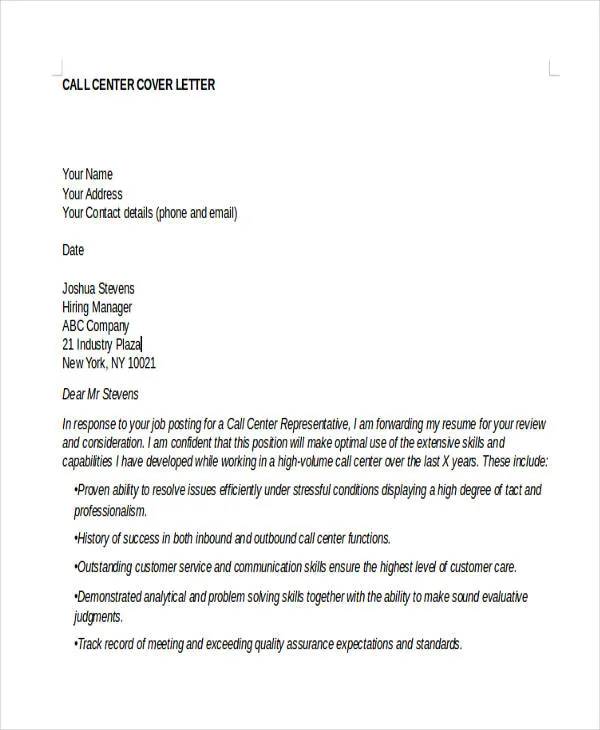
The header of your cover letter should include your full name, address, phone number, and email address. It is essential that this information is accurate and up-to-date. You should also include the date and the hiring manager’s name (if you know it), along with the company’s name and address. Using the hiring manager’s name, when possible, shows you’ve done your research and are making a personalized effort. Ensure your email address is professional; avoid using nicknames or casual addresses. The header sets the tone for the rest of the letter, so it should be clean, organized, and easy to read. This section ensures that the employer knows how to contact you if they are interested in your application and is the first impression, so make it count.
Professional Greeting

Start your cover letter with a professional greeting. If you know the hiring manager’s name, use ‘Dear Mr./Ms. [Last Name]’. If you don’t know the name, a suitable alternative is ‘Dear Hiring Manager’ or ‘Dear [Company Name] Hiring Team’. Avoid generic greetings like ‘To Whom It May Concern’, which can make your letter feel impersonal. A professional greeting immediately establishes a positive tone. It shows that you are respectful and have paid attention to the details. A well-chosen greeting can also help you stand out from other applicants. Proofread the greeting to make sure you have the correct name and spelling. It’s a small detail, but it demonstrates your attention to detail, which is critical in customer service.
Opening Paragraph Grab Attention
The opening paragraph is your first opportunity to capture the hiring manager’s attention and create a positive impression. Start with a concise and compelling statement that highlights your enthusiasm for the position and the company. Mention the specific job you are applying for and where you saw the job posting. Briefly state your key qualifications and how they align with the job requirements. You can also include a brief personal anecdote that demonstrates your customer service skills or your understanding of the call center environment. The goal is to make the hiring manager want to read more. Avoid generic opening lines; instead, personalize your approach to demonstrate your interest in the role.
Highlighting Relevant Experience
This section is where you emphasize your relevant experience and skills. Focus on your previous experiences that align with the call center job requirements. Describe your experience in customer service roles, including your responsibilities and accomplishments. Use action verbs to demonstrate your abilities, such as ‘managed,’ ‘resolved,’ ‘assisted,’ or ‘communicated.’ Tailor your descriptions to match the specific requirements of the job posting. If you have experience with any specific CRM software or phone systems, mention them. Provide concrete examples of how you have handled difficult customers, resolved issues, or exceeded expectations. This section should give the hiring manager a clear picture of your suitability for the role.
Quantifying Achievements

Instead of just listing your responsibilities, quantify your achievements to demonstrate your impact. Use numbers and data to showcase your accomplishments. For example, instead of saying ‘Improved customer satisfaction,’ say ‘Increased customer satisfaction by 15% through effective problem-solving.’ If you have experience with sales, mention the number of calls you made or the revenue you generated. If you have experience with resolving customer complaints, state the number of complaints you resolved per day or the percentage of issues you resolved on the first call. Quantifying your achievements makes your claims more credible and provides concrete evidence of your skills and abilities. These numbers provide the hiring manager with a clear understanding of your performance.
Showcasing Skills
Explicitly showcase the skills that make you an excellent candidate for the call center job. Highlight skills like communication, active listening, problem-solving, and computer literacy. Provide examples of how you have used these skills in previous roles. If you have experience with customer relationship management (CRM) software or phone systems, mention it. Demonstrate your ability to handle difficult customers and resolve issues efficiently and effectively. Emphasize your ability to multitask and manage your time. Furthermore, highlight your ability to remain calm under pressure and your positive attitude. By directly showcasing these skills, you make it easy for the hiring manager to see your fit within their team.
Demonstrating Soft Skills
Soft skills are just as crucial as hard skills in a call center environment. Highlight your soft skills, such as empathy, patience, and a positive attitude. Provide examples of how you have used these skills in previous roles. Show how you’ve adapted to different customer personalities and handled difficult situations with grace. For example, describe a time when you turned a negative customer experience into a positive one. Demonstrate your ability to work in a team and your willingness to learn. Soft skills are essential for building strong relationships with customers and colleagues, and they contribute to overall customer satisfaction and company success. Showcasing these skills will highlight your fit within the organization’s culture.
Expressing Enthusiasm

Express your enthusiasm for the position and the company throughout your cover letter. Show that you are genuinely excited about the opportunity to join their team. Mention specific aspects of the company or role that appeal to you. Explain why you are interested in the company’s mission or values. This demonstrates that you have done your research and are not simply sending out generic applications. Expressing enthusiasm shows you are motivated to work in the call center. Your enthusiasm will help you stand out from the other applicants. Moreover, your positive attitude will be considered a valuable asset. A genuine expression of interest makes the hiring manager more likely to invite you for an interview.
Closing the Letter
Your closing paragraph should summarize your interest in the position and reiterate your key qualifications. Express your confidence in your ability to contribute to the company’s success. Include a call to action, such as ‘I am eager to discuss my qualifications further in an interview’ or ‘I look forward to hearing from you soon.’ Thank the hiring manager for their time and consideration. Provide your contact information once more, including your phone number and email address. Ensure the closing is polite, professional, and leaves a lasting positive impression. A strong closing will reinforce your application and increase your chances of getting an interview. Double-check for any errors before submitting your letter.
Proofreading and Formatting
Before submitting your cover letter, carefully proofread it for any errors. Check for grammar, spelling, and punctuation mistakes. Ensure that your formatting is consistent and easy to read. Use a professional font, such as Times New Roman or Arial, and maintain a consistent font size. Keep your paragraphs concise and well-organized. Use bullet points or lists to highlight key skills and accomplishments. Ensure your letter is free from typos. A well-proofread and formatted cover letter demonstrates your attention to detail and professionalism. Your cover letter reflects your overall professionalism, and any errors could negatively affect your application. So, ensure you check your cover letter for any errors before submitting it. Proofreading is essential and makes a strong impression.
In conclusion, a well-crafted cover letter is a key to securing a call center job. By understanding the role, highlighting your skills and experience, and following these secrets, you can significantly increase your chances of landing an interview. Remember to tailor your letter to each specific job and company and showcase your enthusiasm and professionalism. Good luck with your job search!