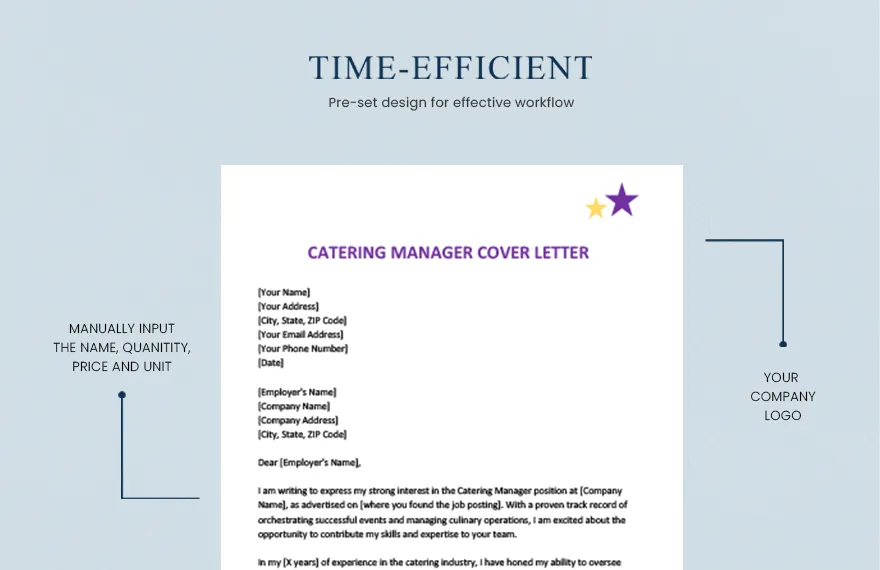
Crafting a Catering Manager Cover Letter
A well-crafted catering manager cover letter is your first impression on a potential employer. It is a crucial document that complements your resume, providing an opportunity to highlight your qualifications, skills, and enthusiasm for the role. Unlike your resume, which is a factual summary of your experience, your cover letter allows you to showcase your personality and explain why you are the perfect fit for the position. This guide will walk you through the essential components of a compelling cover letter, ensuring you make a lasting positive impact on the hiring manager. Whether you are a seasoned professional or just starting your career, mastering the art of the cover letter is key to securing your dream job in catering management. Remember, the cover letter is not just about listing your achievements; it’s about telling a story and demonstrating your value.
Understanding the Importance of a Cover Letter
The importance of a cover letter cannot be overstated. It serves as a crucial introduction to your qualifications and aspirations. A cover letter allows you to explain any gaps in your employment history, elaborate on your achievements, and express your genuine interest in the catering manager position and the company. It’s an opportunity to stand out from the crowd of applicants by showcasing your personality and communication skills. Furthermore, a well-written cover letter demonstrates your attention to detail, your professionalism, and your ability to communicate effectively – all essential qualities for a catering manager. It’s an initial screening tool; many recruiters will discard a resume without a cover letter. Ignoring this critical step can significantly diminish your chances of getting an interview.
Key Elements of a Winning Cover Letter

A winning cover letter should be clear, concise, and compelling. It needs to capture the reader’s attention from the start and maintain their interest throughout. The letter should be tailored to the specific job and company, highlighting the skills and experiences that are most relevant to the role. Use action verbs to describe your achievements and quantify your results whenever possible. Demonstrate your understanding of the company’s needs and explain how you can help them achieve their goals. A professional tone, proper grammar, and a well-organized structure are essential. Consider what makes you unique and how you can bring value to the organization, and ensure that your personality shines through while maintaining a professional demeanor.
Contact Information and Professional Greeting
Begin your cover letter with your contact information at the top, including your name, phone number, email address, and optionally, your LinkedIn profile URL. Following this, include the date and the hiring manager’s name (if known), their title, and the company’s address. Address the hiring manager by name, if possible; this personal touch shows that you have done your research and are genuinely interested in the position. Use a professional greeting such as “Dear Mr./Ms. [Last Name],” or if the name is unknown, use a general greeting like “Dear Hiring Manager.” Avoid generic greetings like “To Whom It May Concern,” as they can make your letter feel impersonal. This section is the first impression and sets the tone for the rest of your letter. See image: catering-manager-cover-letter-header.
Highlighting Your Catering Management Experience
In the body of your cover letter, start by clearly stating the position you are applying for and where you saw the job posting. Then, provide a brief overview of your relevant experience. Focus on the achievements that align with the job requirements. Mention any experience with menu planning, food preparation, event management, staff supervision, budgeting, and vendor relations. Provide specific examples of how you have successfully managed catering operations, such as increasing sales, reducing costs, or improving customer satisfaction. Make sure to tailor your experience to the job description, emphasizing the skills and qualifications that the employer is looking for. See image: catering-manager-cover-letter-experience.
Quantifying Achievements with Data

Whenever possible, quantify your achievements with data and metrics. Instead of saying “Increased sales,” say “Increased catering sales by 20% in one year.” Instead of “Managed a team of staff,” say “Supervised a team of 20 catering staff, ensuring efficient service during peak hours.” Using numbers and percentages makes your accomplishments more impactful and demonstrates the tangible value you brought to previous employers. It provides concrete evidence of your abilities and shows that you are results-oriented. Use examples of how you improved efficiency, customer satisfaction, or profitability in past roles. These quantifiable achievements make your cover letter more persuasive and memorable to the hiring manager.
Demonstrating Skills and Abilities
Clearly demonstrate the skills and abilities that make you a strong candidate for the catering manager position. Highlight skills such as leadership, communication, problem-solving, organization, and attention to detail. Mention any specific software or tools you are proficient in, such as catering management software or inventory systems. Provide examples of how you have used these skills to overcome challenges or achieve success in previous roles. This is where you should showcase your ability to manage a team, handle customer complaints, and ensure the smooth operation of catering events. Showcase your ability to multi-task, manage stress, and adapt to changing situations. See image: catering-manager-cover-letter-skills.
Showcasing Relevant Soft Skills
Soft skills are just as important as hard skills in the catering industry. Highlight your interpersonal skills, such as your ability to build relationships, work well in a team, and communicate effectively with both staff and clients. Demonstrate your problem-solving skills by describing how you handled difficult situations, such as resolving customer complaints or managing unexpected events. Show your adaptability by explaining how you adjust to different work environments and take on new challenges. Discuss your ability to motivate and train your team members, as well as your leadership capabilities. Highlight your customer service skills, and show that you are friendly and approachable. The ability to handle pressure and make quick decisions under pressure are highly desirable soft skills.
Tailoring the Cover Letter to the Job

Customize your cover letter to match the specific requirements and keywords mentioned in the job description. Review the job posting carefully and identify the most important skills and qualifications that the employer is seeking. Use these keywords throughout your cover letter, especially when describing your experience and achievements. This shows the hiring manager that you have read the job description and understand the needs of the company. Tailoring your letter demonstrates that you have taken the time to research the position and are genuinely interested in the specific role. The more relevant your cover letter is to the job description, the better your chances of getting an interview. See image: catering-manager-cover-letter-tailoring.
Researching the Company and its Needs
Before writing your cover letter, research the company to understand its mission, values, and current projects. Visit the company’s website, read industry articles, and check their social media profiles. Understanding the company’s culture and needs will help you tailor your cover letter more effectively. Show that you are familiar with the company’s work by mentioning specific projects, clients, or events. Demonstrate how your skills and experience align with their goals and objectives. When you show that you are knowledgeable about the company, the hiring manager will be more impressed. It shows that you’re not just sending out generic applications but are genuinely interested in joining their organization.
Customizing the Letter for Each Application
Avoid sending a generic cover letter to multiple employers. Tailor each letter to the specific job and company you are applying to. This means reviewing the job description carefully and customizing your letter to highlight the skills and experiences that are most relevant to that position. Use the company’s name throughout the letter and refer to specific projects, events, or clients if possible. Make sure that your cover letter complements your resume and supports the information provided there. While it takes more time and effort, customizing your cover letter significantly increases your chances of getting noticed and landing an interview. Remember, a customized letter shows that you care and put in the effort.
Formatting and Proofreading Your Letter

Proper formatting and proofreading are essential for creating a professional cover letter. Use a standard font, such as Times New Roman or Arial, in a readable size (11 or 12 points). Use clear and concise language, and keep paragraphs short and easy to read. Avoid using jargon or overly complex sentences. Proofread your letter carefully for any grammatical errors, spelling mistakes, or typos. Ask a friend or family member to review it for you as well. Errors in your cover letter can create a negative impression and undermine your credibility. A well-formatted and error-free cover letter shows that you are detail-oriented and professional. See image: catering-manager-cover-letter-formatting.
Ensuring Clarity and Readability
Ensure your cover letter is easy to read and understand. Use clear and concise language, avoiding unnecessary jargon or complex sentences. Break up long paragraphs into shorter ones to improve readability. Use bullet points to highlight key skills, achievements, or responsibilities. Focus on the most important information and avoid including irrelevant details. The hiring manager should be able to quickly grasp your qualifications and understand why you are a good fit for the position. A clear and well-organized cover letter will make a positive impression and increase your chances of getting an interview.
Avoiding Common Mistakes
Several common mistakes can undermine your cover letter and decrease your chances of getting hired. Avoid generic greetings, such as “To Whom It May Concern.” Instead, address the hiring manager by name. Do not repeat information that is already included in your resume. Use your cover letter to elaborate on your skills and experiences. Avoid typos, grammatical errors, and spelling mistakes; proofread your letter carefully. Avoid using a negative tone or criticizing previous employers. Keep your tone positive and enthusiastic. Do not include any irrelevant information or personal opinions. Focus on showcasing your qualifications and demonstrating your interest in the position. See image: catering-manager-cover-letter-mistakes.
Closing with a Strong Call to Action

End your cover letter with a strong call to action. Express your enthusiasm for the catering manager position and the company. Indicate that you are eager to learn more about the opportunity and discuss your qualifications further. Thank the hiring manager for their time and consideration. Include a statement that you are available for an interview at their convenience. Make it clear that you are interested in moving forward in the hiring process. The call to action is a critical final step that encourages the hiring manager to take action and contact you. See image: catering-manager-cover-letter-call-to-action.
Expressing Enthusiasm and Interest
Throughout your cover letter, express your genuine enthusiasm and interest in the position and the company. Use positive language and convey your passion for the catering industry. Show that you are excited about the opportunity to contribute to their team. Highlight why you are interested in the specific role and what you can bring to the organization. Your enthusiasm should be evident in your tone, and it can make a lasting impression on the hiring manager. This enthusiasm shows that you are not just looking for a job, but that you are genuinely interested in the company and the position.
Following Up on Your Application
After submitting your cover letter and resume, follow up with the hiring manager to express your continued interest and inquire about the status of your application. Send a brief email or make a phone call within a week or two of submitting your application. Thank the hiring manager for their time and reiterate your interest in the position. Use this opportunity to ask any remaining questions you may have about the role or the company. Following up demonstrates your persistence and interest in the position. Be polite, professional, and brief in your follow-up communication. See image: catering-manager-cover-letter-follow-up.