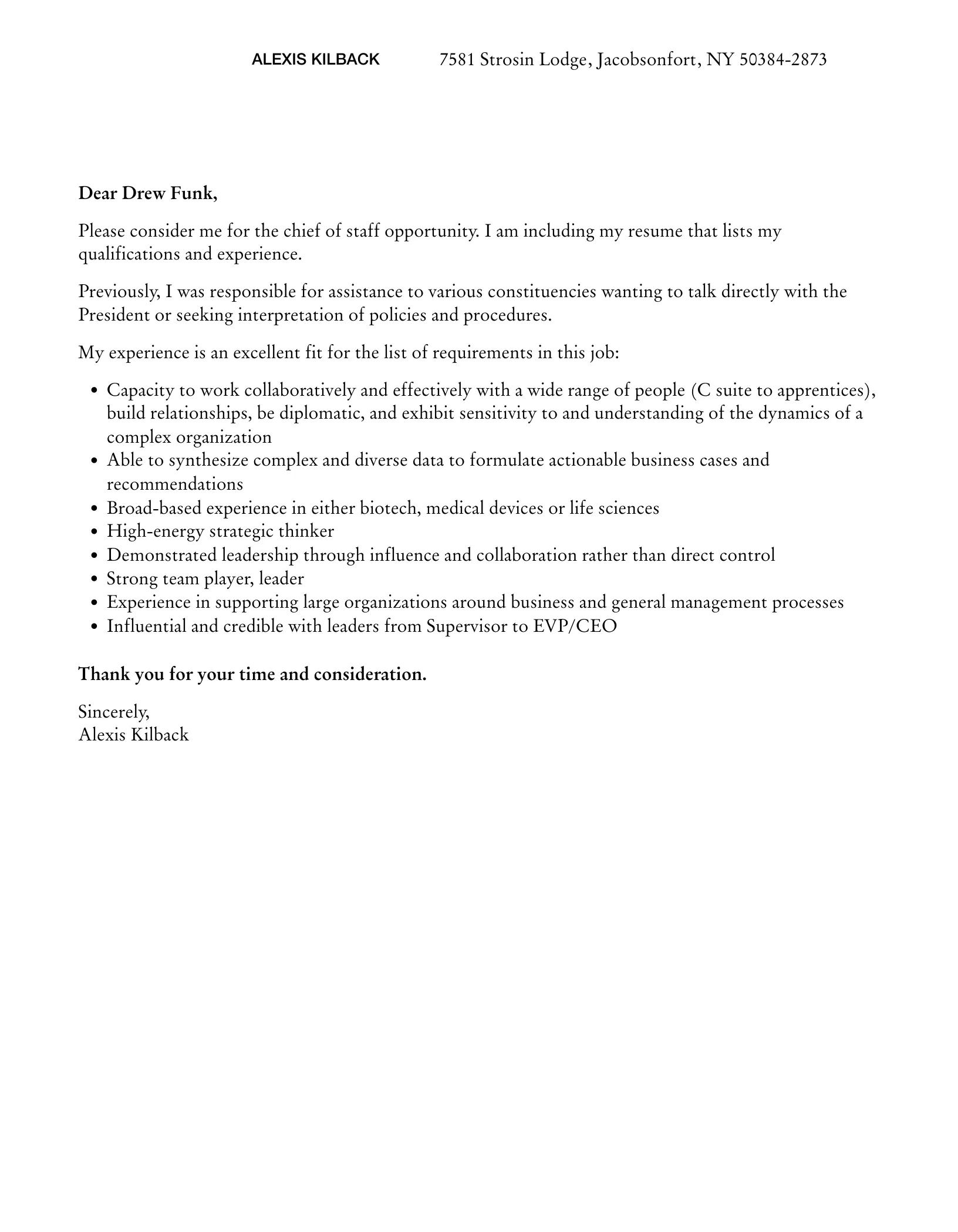
Crafting a Compelling Cover Letter
A cover letter is your first opportunity to make a strong impression. For a Chief of Staff position, it’s crucial to demonstrate your understanding of the role, your ability to handle complex responsibilities, and your alignment with the organization’s goals. This guide will walk you through the secrets of creating a cover letter that grabs attention and sets you apart from other applicants. The goal is not just to list your qualifications, but to tell a compelling story that convinces the hiring manager you are the perfect fit. Effective cover letters go beyond the resume, providing context, personality, and a clear vision of how you will contribute to the organization’s success. This process involves careful planning, strategic writing, and a keen understanding of the role.
Understanding the Chief of Staff Role
Before you start writing, it’s essential to understand the nuances of the Chief of Staff role. This position is multifaceted, acting as a strategic advisor, a project manager, and a key liaison between the CEO and various departments. Understanding the scope of the job involves recognizing the diverse responsibilities, including strategic planning, operational oversight, and communication management. It often requires exceptional organizational skills, a high degree of emotional intelligence, and the ability to navigate complex political landscapes within the organization. Research the specific responsibilities associated with the role in the target organization to tailor your cover letter effectively, showing your immediate value. A strong Chief of Staff is a problem-solver and a trusted confidant who can drive the CEO’s agenda forward efficiently.
Key Responsibilities and Skills

Your cover letter must highlight your expertise in core areas that are essential for a Chief of Staff. These responsibilities include strategic planning, where you assist in setting and executing organizational goals; operational management, overseeing internal operations to ensure efficiency; and communication management, keeping stakeholders informed. The skills needed encompass excellent organizational and project management skills; strong communication and interpersonal skills to navigate relationships effectively; and analytical and problem-solving capabilities. Furthermore, your letter should emphasize your proficiency in strategic thinking, decision-making, and leadership. Ensure that your skills align directly with the specific requirements mentioned in the job description to demonstrate that you are a perfect fit.
Highlighting Relevant Experience
Your cover letter should showcase experience that directly relates to the requirements of a Chief of Staff. Focus on experiences that demonstrate your ability to handle responsibilities. Provide specific examples of your involvement in strategic planning, project management, or operational improvements. For example, if you have experience managing complex projects, describe the scope, your role, and the successful outcomes. If your background involves working closely with senior executives, highlight your experience and ability to manage their needs. The aim is to show how your past experience aligns with the role and your capacity to step in and thrive in the given environment.
Tailoring Your Cover Letter
One size does not fit all. Customize your cover letter for each position. Review the job description and tailor your letter to match the specific requirements and preferences. If the job description mentions specific projects or initiatives, highlight your relevant experience. Show that you have taken the time to understand the needs of the organization. Tailoring includes using the company’s language and values in your writing and demonstrating that you understand the role’s expectations. Customization is key to creating a cover letter that gets noticed. Generic cover letters go unnoticed; tailored ones demonstrate your interest and suitability for the role.
Researching the Organization

Researching the company is a critical step in writing a compelling cover letter. Understand the organization’s mission, values, and recent achievements. Visit the company’s website, read press releases, and follow their social media accounts to understand its culture. Demonstrate this knowledge in your cover letter by referencing the organization’s recent projects, goals, or values. Showing that you understand the company’s direction and how you can contribute to its success will impress the hiring manager. Such insights prove you have invested time and are genuinely interested in the role and the company’s future.
Showcasing Achievements
Highlighting your achievements is key to making a strong impression. Instead of simply listing your job duties, focus on your accomplishments. Use the STAR method Situation, Task, Action, Result. For example, instead of stating, “Managed projects,” say, “Managed a cross-functional team to complete a project ahead of schedule, resulting in a 15% increase in efficiency.” Quantifiable results make your achievements more impactful. Achievements show potential employers what you bring to the table, demonstrating a track record of success and the ability to generate tangible benefits for the organization. Include examples that highlight your leadership, problem-solving skills, and strategic thinking abilities.
Quantifying Your Impact
Use numbers and data to quantify your impact. Instead of saying “Improved team performance,” say, “Improved team performance by 20%.” Metrics provide objective evidence of your capabilities and highlight your value. Quantifying your impact shows how you have added value in previous roles and provides hiring managers with concrete data that they can reference. Including statistics, percentages, and specific numbers that support your claims provides credibility and showcases your competence. Specific examples of your successes offer the best insight into your abilities and provide a clear picture of your potential contributions to the company.
Formatting and Structure

A well-formatted cover letter is important for readability. Use a professional font, such as Arial or Times New Roman, in a readable size. Maintain consistent formatting throughout the letter and use clear, concise language. Divide the cover letter into logical sections such as an opening paragraph, body paragraphs, and a closing paragraph. Keep your cover letter concise, aiming for a maximum of one page. Ensure that your cover letter is visually appealing and easy to scan. Use bullet points and headings to improve readability. Formatting shows attention to detail, reflecting your professionalism and commitment.
Writing a Strong Opening
The opening paragraph should capture the hiring manager’s attention and establish your interest in the position. Start by mentioning the position you are applying for and where you saw the job posting. State the specific reasons for your interest in the role and the company. Consider including a compelling statement that demonstrates your understanding of the role. The opening should highlight your most relevant skills and experiences, setting the stage for the rest of your letter. Your aim is to quickly grab their interest and encourage them to read the rest of the letter.
Developing Your Body Paragraphs
Body paragraphs should provide details about your experiences, skills, and accomplishments, which align with the job requirements. Support your claims with specific examples, and use the STAR method to structure your stories. Connect your experiences with the needs of the role. Show how you have handled past situations and the results you achieved. Aim to tell a story that highlights your ability to succeed as a Chief of Staff. Focus on the key responsibilities of the role, such as strategic planning, operational management, and communication management. Show how your experience prepares you to excel in this role and make a positive impact on the company.
Creating a Powerful Closing

Your closing paragraph should reiterate your interest in the position and summarize your key qualifications. Thank the hiring manager for their time and consideration. Include a call to action, such as expressing your enthusiasm for an interview. Be confident and professional in your tone. Restate your value proposition, highlighting your capacity to bring value to the company. Ending with a confident statement encourages the hiring manager to take the next step. Your closing paragraph leaves a lasting impression, reinforcing your suitability for the role and expressing eagerness for further steps.
Proofreading and Editing
Proofreading and editing are essential. Errors can damage your chances of getting hired. Carefully check for any grammatical errors, typos, or formatting inconsistencies. Read your cover letter aloud to catch any awkward phrasing or sentences. Ask a friend or family member to review your cover letter for clarity and correctness. Pay close attention to details, such as correct grammar and spelling, and to the overall flow of the text. A polished cover letter shows attention to detail and professionalism, which are critical traits for a Chief of Staff.
Essential Action Words
Use action verbs to strengthen your cover letter. Action verbs make your statements more dynamic and compelling. Some essential action verbs include: Led, managed, developed, implemented, improved, streamlined, coordinated, and achieved. Select words that highlight your strengths and make your achievements sound powerful. Action verbs convey confidence and demonstrate your ability to take initiative and generate results. They illustrate how you have made a difference in your past roles and how you will contribute to the company.
Reviewing and Refining

Review and refine your cover letter to create the best possible presentation. Assess each sentence to ensure it aligns with the role and emphasizes your skills. Consider the overall flow of your letter and whether it tells a cohesive story that highlights your strengths. Make changes as needed to reflect the company’s language, your achievements, and your value proposition. Always tailor your cover letter to each position. Review your cover letter multiple times. Continuously improve your cover letter to ensure it reflects your capabilities and demonstrates your interest.