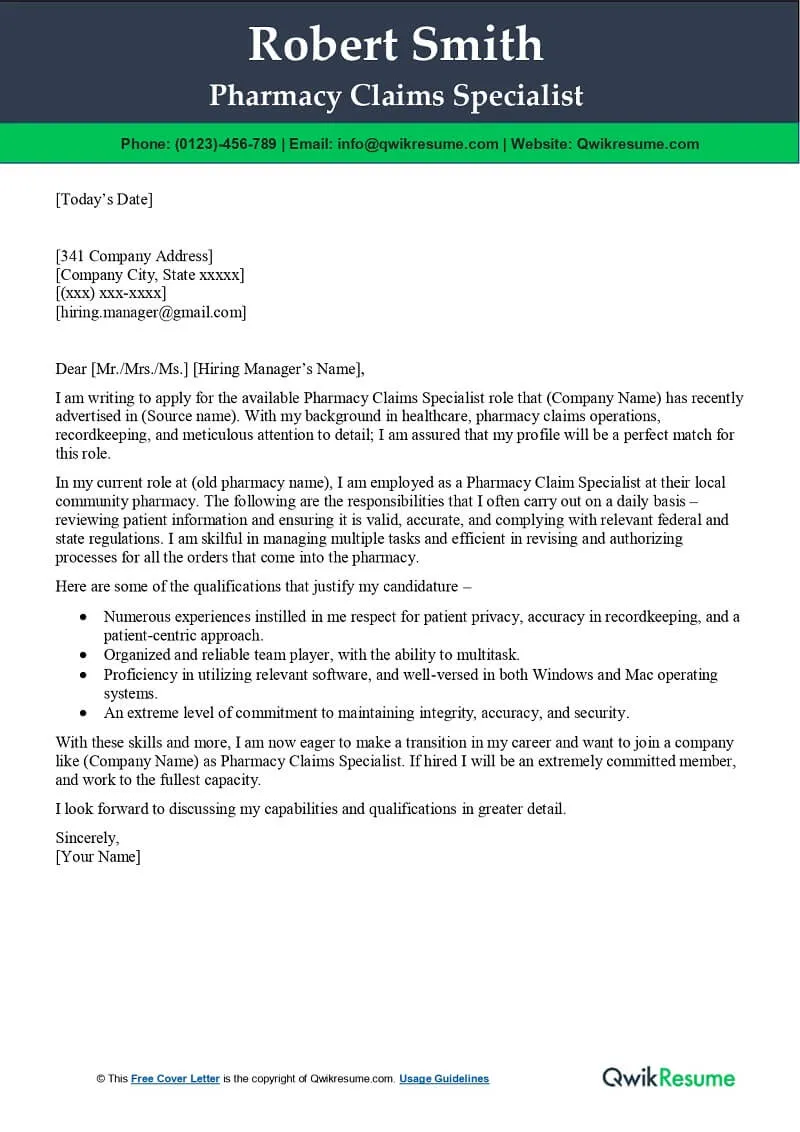
A well-crafted claims specialist cover letter is your key to unlocking new career opportunities. It’s your first impression, a chance to showcase your skills and experience in a compelling way. In a competitive job market, standing out is crucial. This guide provides actionable strategies and insights to help you create a cover letter that grabs attention and increases your chances of landing an interview. By focusing on key areas such as highlighting relevant skills, quantifying achievements, proper formatting, tailoring the letter, and meticulous proofreading, you can create a cover letter that resonates with hiring managers and sets you apart from the competition. This guide offers a comprehensive approach to crafting a cover letter that reflects your qualifications, enthusiasm, and commitment to excel as a claims specialist.
Crafting a Standout Claims Specialist Cover Letter
Your cover letter is more than just a formality; it’s a powerful marketing tool. It gives you an opportunity to go beyond the bullet points of your resume and tell a story. It’s a chance to express your passion for the role and demonstrate your understanding of the company’s needs. To truly stand out, your cover letter needs to be tailored, engaging, and focused on what you can bring to the table. Make sure to use a professional tone and avoid generic language. Focus on your unique skills and experiences that align with the job requirements. The goal is to make the hiring manager eager to learn more about you and see you as the ideal candidate.
Highlighting Your Relevant Skills
Claims specialists need a diverse skill set to succeed. Your cover letter must highlight the skills that make you an ideal candidate. The most relevant skills to highlight include communication, analytical abilities, and attention to detail. Provide concise examples to demonstrate your capabilities. Don’t just list your skills; show how you’ve used them to achieve results. Refer to specific situations where you utilized these skills to solve problems, improve processes, or exceed expectations. Tailor your skills to match the job description, emphasizing the areas the employer values most. This personalized approach will make your cover letter more persuasive.
Communication Skills

Effective communication is the cornerstone of a claims specialist’s role. You must clearly and concisely convey information to various parties, including policyholders, healthcare providers, and other stakeholders. Highlight your ability to listen actively, ask clarifying questions, and explain complex information in an easy-to-understand manner. Mention any experience you have in resolving conflicts or negotiating settlements. Showcase your skills in written communication by demonstrating excellent grammar, spelling, and punctuation. Your writing should be clear, professional, and tailored to the audience. When you emphasize your strong communication skills, it increases the confidence in your ability to manage complex cases.
Analytical Skills
Claims specialists often analyze large amounts of data to determine claim eligibility and assess the validity of claims. This involves reviewing medical records, policy documents, and other relevant information to identify discrepancies and inconsistencies. Your cover letter should emphasize your skills in critical thinking and problem-solving. Mention your experience in interpreting complex data, identifying patterns, and drawing accurate conclusions. Show examples where you’ve used your analytical skills to identify fraudulent claims or reduce costs. Emphasize your ability to make sound judgments based on available information, and your capacity to work independently and with precision.
Attention to Detail
Accuracy and precision are essential in claims processing. Attention to detail is vital to ensure that all claims are processed correctly and that no errors are made. Demonstrate your ability to work with accuracy and care. Highlight any experiences in tasks requiring meticulousness, such as data entry, document review, or financial reconciliation. Showcase your commitment to accuracy and your understanding of the importance of detail in claim management. Mention specific strategies you use to avoid errors, such as double-checking your work, following established procedures, and utilizing technology to minimize mistakes. Emphasizing attention to detail enhances your credibility and highlights your suitability for the role.
Quantifying Your Achievements

Instead of simply listing your responsibilities, use your cover letter to quantify your accomplishments. This means using numbers and data to illustrate your impact on previous roles. Use metrics such as the number of claims processed, the amount of money saved, or the percentage of claims resolved efficiently. Providing specific numbers allows the hiring manager to gauge your performance and the value you can bring to their company. For example, state how you have reduced claim processing times or improved customer satisfaction. Use the STAR method (Situation, Task, Action, Result) to structure your examples and provide a clear and concise account of your achievements.
Providing Specific Examples
Back up your claims with specific examples that demonstrate your abilities. Generic statements are less impactful than concrete examples that showcase your skills in action. Describe how you handled challenging claims, resolved disputes, or improved processes. Include specific details about the situations, the actions you took, and the results you achieved. Make sure these examples align with the requirements of the job description and highlight the skills that the employer values. The more specific and detailed your examples are, the more convincing your cover letter becomes. By illustrating your experiences, you show, rather than just tell, the value you bring to the table.
Formatting Your Claims Specialist Cover Letter
The format of your cover letter is just as important as its content. A well-formatted cover letter shows professionalism and attention to detail. Use a clear, easy-to-read font, such as Arial or Times New Roman, and maintain a consistent font size. Keep the letter concise and avoid lengthy paragraphs. Use bullet points to highlight key skills and achievements. Ensure the cover letter is well-structured, with clear headings and sections to improve readability. A well-formatted cover letter makes a good impression and allows the hiring manager to quickly find the information they are looking for.
Contact Information and Date

Include your contact information at the top of your cover letter, including your name, phone number, email address, and LinkedIn profile URL. Add the date below your contact information, along with the hiring manager’s name and title, if known, and the company’s address. Be sure to use a professional email address. Ensure the information is accurate to enable employers to contact you promptly for interviews.
Professional Salutation
Start your cover letter with a professional salutation. If possible, address the hiring manager by name. This shows that you have done your research and are personally interested in the position. If you don’t know the hiring manager’s name, use a general salutation such as “Dear Hiring Manager” or “Dear [Company Name] Hiring Team.” Avoid using generic salutations like “To Whom It May Concern.” Using a specific name creates a personalized and engaging approach.
Body Paragraph Structure
The body of your cover letter should consist of a few well-structured paragraphs. The first paragraph should introduce yourself and state the position you are applying for. In the following paragraphs, highlight your relevant skills, quantify your achievements, and provide specific examples. Each paragraph should focus on a specific aspect of your qualifications. Conclude with a paragraph summarizing your key qualifications and expressing your enthusiasm for the opportunity. Structure your content logically, creating a smooth flow from one point to the next.
Closing and Call to Action

End your cover letter with a strong closing paragraph that reiterates your interest in the position and expresses your willingness to be interviewed. Include a call to action, such as “I am eager to discuss my qualifications further” or “I am available for an interview at your earliest convenience.” Use a professional closing, such as “Sincerely” or “Best regards,” followed by your name. Proofread your cover letter meticulously before sending it. A well-crafted closing paragraph leaves a lasting positive impression on the hiring manager.
Tailoring Your Cover Letter
Generic cover letters are easily identified and often discarded. To make your cover letter stand out, you need to tailor it to the specific job and the company. This personalization shows that you have taken the time to understand the role and are genuinely interested in the opportunity. Tailoring demonstrates your enthusiasm and increases your chances of getting an interview.
Researching the Company
Before writing your cover letter, research the company. Understand their mission, values, and culture. Identify their recent achievements and challenges. Mention your knowledge of the company and how your skills align with their goals. Demonstrating your understanding of the company shows you’ve invested time and effort and increases your appeal as a candidate. Look at their website, social media presence, and news articles to gain insights into their operations.
Matching Skills to Job Description

Carefully review the job description and identify the key skills and requirements. Then, match your skills and experiences to those requirements. Use the same keywords and phrases that the employer uses in the job description. This alignment shows that you are a good fit for the role and have the necessary qualifications. Highlight the skills and experiences that are most relevant to the position. Show how you have applied those skills in previous roles to achieve positive results.
Proofreading and Editing
Proofreading and editing your cover letter is essential. Errors in grammar, spelling, and punctuation can undermine your credibility and make you appear unprofessional. Always proofread your cover letter multiple times, and consider having a friend or colleague review it. Use a grammar checker and spell checker. Ensure that your cover letter is clear, concise, and free of errors. A polished cover letter reflects your attention to detail and increases your chances of getting an interview.
By following these tips, you can write a claims specialist cover letter that stands out. Remember to highlight your skills, quantify your achievements, and tailor your letter to the specific job and company. Proofread your cover letter carefully to ensure it is free of errors. A well-crafted cover letter will increase your chances of landing an interview and securing your dream job. Good luck with your job search!