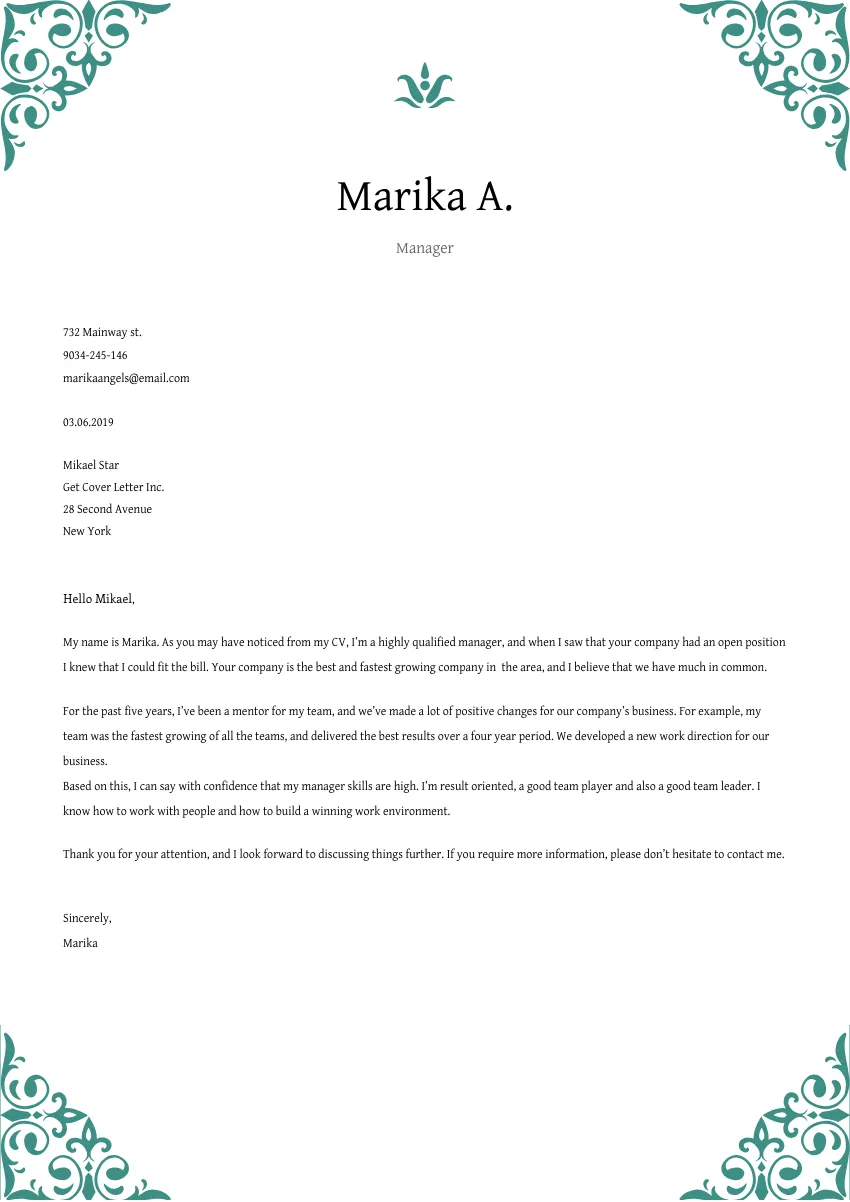
Crafting the Perfect Cover Letter for Construction Managers
In the competitive field of construction management, a well-crafted cover letter can be the key to unlocking your dream job. It’s your first opportunity to make a strong impression on potential employers, showcasing not only your skills and experience but also your personality and enthusiasm. This guide provides a comprehensive overview of how to create a compelling cover letter that will grab the attention of hiring managers and set you apart from the competition. We’ll cover everything from essential elements and formatting tips to examples and key skills that employers are looking for. By following these guidelines, you’ll be well-equipped to write a cover letter that effectively communicates your qualifications and increases your chances of landing an interview.
Understanding the Importance of a Cover Letter
A cover letter serves as your personal introduction to the hiring manager, and it’s often the first impression you’ll make. While your resume provides a detailed overview of your professional history, the cover letter gives you the opportunity to elaborate on your accomplishments, explain your career goals, and demonstrate your genuine interest in the specific role and company. It’s a crucial component of your job application, providing context and personality to your qualifications. The cover letter allows you to highlight the skills and experiences most relevant to the job, making a case for why you’re the perfect fit.
Why a Cover Letter Matters

A cover letter is more than just a formality. It’s a chance to make your application stand out. It allows you to personalize your application, demonstrating that you’ve taken the time to understand the company and the position. In construction management, where projects are complex and teamwork is essential, a well-written cover letter can highlight your communication skills, your ability to lead, and your understanding of the challenges and demands of the role. It’s your chance to show that you are not just qualified, but also a good fit for the company culture.
Highlighting Your Key Skills and Experience
The cover letter is an ideal place to highlight the key skills and experience that make you an exceptional construction manager. Focus on the skills and experiences that align with the job description. Instead of simply listing your responsibilities, provide specific examples of how you’ve used your skills to achieve positive results. Quantify your achievements whenever possible to demonstrate the value you brought to previous projects. Explain how your skills, such as project management, technical expertise, or problem-solving abilities, make you an ideal candidate for the position.
Essential Elements of a Construction Manager Cover Letter
A well-structured cover letter includes several essential elements that work together to create a compelling narrative. These elements should be clearly organized and presented in a professional manner. Following these guidelines will ensure your cover letter is easy to read, informative, and effectively highlights your qualifications. This ensures your application stands out and makes a positive impression on the hiring manager, increasing your chances of securing an interview. Every part of the cover letter has a specific purpose.
Your Contact Information and Date

At the top of your cover letter, include your full name, phone number, email address, and optionally, your LinkedIn profile URL. The date should follow, indicating when you are sending the letter. This information ensures that the hiring manager can easily reach you if they want to learn more about your qualifications. Make sure your contact details are current and professional to avoid any delays in communication. This helps the hiring manager contact you quickly if they are impressed with your application and want to discuss job opportunities.
The Hiring Manager’s Information and Salutation
Address your cover letter to a specific person whenever possible. Research the hiring manager’s name and title, and use a formal salutation such as ‘Dear Mr. Smith’ or ‘Dear Ms. Jones.’ If you can’t find a specific name, use a professional greeting such as ‘Dear Hiring Manager.’ This personal touch shows that you have taken the time to research the company and are genuinely interested in the role. Avoid generic greetings like ‘To Whom It May Concern,’ as they lack personalization. Demonstrating that you’ve researched the company shows initiative and interest.
Writing a Compelling Opening Paragraph
The opening paragraph is your first opportunity to grab the hiring manager’s attention. Start with a strong statement that immediately captures their interest. Briefly mention the position you are applying for and where you found the job posting. State your most relevant qualifications and express your enthusiasm for the opportunity. Clearly state your objective and why you are a good fit for the company. Tailor your opening to match the specific requirements and company culture.
Showcasing Your Relevant Experience and Achievements
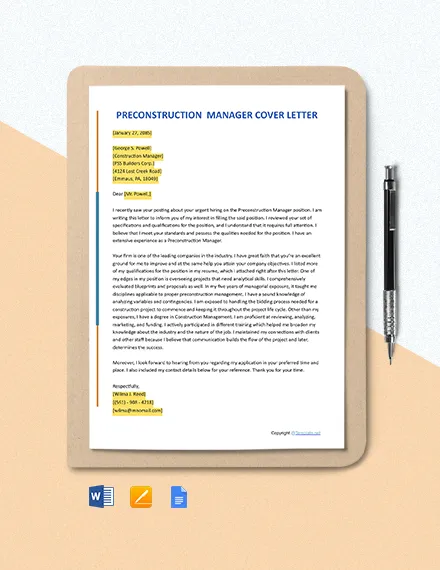
In the body of your cover letter, provide specific examples of your experience and achievements. Focus on experiences relevant to the construction management role. Use the STAR method (Situation, Task, Action, Result) to describe your accomplishments, providing context and showcasing the impact of your work. Highlight your skills, such as project management, budgeting, and team leadership. When describing your achievements, use action verbs to make your descriptions more dynamic and engaging, highlighting your capabilities.
Quantifying Your Accomplishments
Whenever possible, quantify your achievements to demonstrate the value you brought to your previous roles. Use numbers to illustrate your accomplishments, such as the number of projects completed, the budget managed, or the percentage of projects completed on time and under budget. Quantifiable results make your accomplishments more concrete and demonstrate your ability to deliver results. By including specific data, you offer clear evidence of your experience and capabilities in relation to project success.
Tailoring Your Cover Letter to the Job Description
Carefully review the job description and tailor your cover letter to match the specific requirements and keywords mentioned. Highlight the skills and experiences that align with the job requirements. Use the same language as the job description to demonstrate your understanding of the role and your ability to meet its demands. Customize each cover letter for each job application, showing the employer that you have done your homework and are truly interested in the role. This also helps the hiring manager to easily see how your qualifications match the requirements of the open position.
Expressing Your Enthusiasm and Interest

Demonstrate your genuine interest in the position and the company. Explain why you are excited about the opportunity and what attracts you to the company’s mission or values. Show that you have done your research and understand the company’s projects and reputation. Express your enthusiasm for the challenges and opportunities the role presents. A sincere and passionate tone can make a positive impression and show that you’re invested in the company’s success. This conveys that you’re more than just a qualified candidate but someone who is eager to contribute.
Concluding Your Cover Letter with a Call to Action
End your cover letter with a clear call to action. Thank the hiring manager for their time and consideration. Reiterate your interest in the position and express your willingness to discuss your qualifications further. Provide your contact information again, making it easy for them to reach out. End with a professional closing such as ‘Sincerely’ or ‘Best regards.’ A clear and concise ending ensures a professional impression, signaling the next steps in the application process. The concluding call to action encourages the hiring manager to take the next step.
Formatting and Proofreading Your Cover Letter
The formatting and proofreading of your cover letter are critical. A polished and error-free document demonstrates attention to detail and professionalism. Proper formatting makes your cover letter easy to read and helps you make a positive impression. Reviewing and correcting your cover letter is essential to ensure your professionalism. Paying attention to details shows the hiring manager that you care about your application and are committed to excellence. Poorly formatted letters and grammatical errors can damage your chances of landing an interview.
Choosing the Right Font and Formatting

Select a professional and easy-to-read font, such as Times New Roman, Arial, or Calibri. Use a font size between 10 and 12 points. Use consistent formatting throughout your cover letter, including margins, spacing, and bullet points. Use a standard business letter format, with proper spacing between paragraphs and sections. A well-formatted cover letter is easy to read and enhances the overall presentation of your application. A clean, uncluttered format demonstrates professionalism and attention to detail.
Proofreading for Grammar and Spelling Errors
Carefully proofread your cover letter for any grammatical errors or spelling mistakes. Errors can create a negative impression and undermine your credibility. Use spell-check and grammar-check tools, but also manually review your letter. Ask a friend or colleague to review your cover letter as well, as a fresh pair of eyes can often catch mistakes you may have missed. Proofreading ensures your cover letter reflects your professionalism and attention to detail.
Using Action Verbs Effectively
Action verbs are essential for creating a dynamic and engaging cover letter. They make your accomplishments more vivid and demonstrate your ability to take initiative and achieve results. Action verbs bring your experiences to life and show potential employers what you are capable of. Incorporate action verbs throughout your cover letter to clearly highlight your actions and achievements and demonstrate your accomplishments. Action verbs help portray you as a proactive and results-oriented candidate.
Examples of Strong Action Verbs

Use strong action verbs to describe your skills and experience. Some examples include: Managed, Led, Supervised, Coordinated, Oversaw, Developed, Implemented, Negotiated, Achieved, Improved, Reduced, Increased, and Resolved. Use a variety of action verbs to avoid repetition and make your descriptions more engaging. These action verbs highlight your achievements and abilities and create a dynamic and engaging narrative.
Key Skills to Include in Your Cover Letter
Highlighting the right skills is crucial for demonstrating your suitability for a construction management role. Focus on skills that align with the specific requirements of the job. Ensure your cover letter includes a balance of hard and soft skills to demonstrate your capability and suitability for the role. Including these skills can significantly enhance your cover letter, making it more appealing to hiring managers. Make sure you include all the important key skills in your cover letter, showing how they align with the job description.
Project Management Skills
Project management is a core skill for construction managers. Highlight your experience in planning, organizing, and executing construction projects. Mention your ability to manage budgets, schedules, and resources effectively. Showcase your experience in risk management, quality control, and ensuring projects are completed on time and within budget. Emphasize your ability to utilize project management software and methodologies. Project management skills are very important to showcase your experience.
Technical Expertise

Demonstrate your technical expertise by mentioning your knowledge of construction methods, materials, and building codes. Highlight your experience with blueprints, construction drawings, and specifications. Include any specialized skills, such as proficiency in specific software or equipment. Technical expertise shows that you have the skills and knowledge to effectively manage construction projects. Technical expertise is very important to showcase your experience.
Communication and Leadership Skills
Construction management requires strong communication and leadership skills. Emphasize your ability to communicate effectively with team members, subcontractors, and clients. Highlight your experience in leading and motivating teams. Showcase your ability to resolve conflicts, negotiate contracts, and build positive relationships. Strong communication and leadership skills help ensure projects run smoothly and successfully. Communication and leadership are very important to showcase your experience.
Problem-Solving Abilities
Construction projects often present unexpected challenges. Highlight your ability to identify and resolve problems quickly and effectively. Provide examples of situations where you successfully overcame obstacles. Showcase your critical thinking skills and your ability to make sound decisions under pressure. Problem-solving abilities show your ability to adapt and ensure projects stay on track. Problem-solving skills help with the successful and timely project completion.
Cover Letter Examples
Reviewing cover letter examples can provide valuable guidance and inspiration. By studying different examples, you can gain insights into how to structure your letter, showcase your skills, and effectively communicate your qualifications. These examples can help you tailor your letter to a construction management role. Tailor these examples to match your unique experience and the specific requirements of the job. The examples shown below provide a basis for your cover letter.
Example 1 Project Management Cover Letter
Dear [Hiring Manager Name],
I am writing to express my interest in the Construction Manager position at [Company Name], as advertised on [Platform]. With over [Number] years of experience in project management within the construction industry, I am confident in my ability to lead and deliver successful projects. In my previous role at [Previous Company], I successfully managed [Number] projects, consistently completing them on time and within budget. I have experience in all phases of construction, including planning, execution, and closeout. My project management skills, coupled with my ability to lead cross-functional teams, make me an ideal candidate. I am proficient in project management software, including [Software Names].
Sincerely, [Your Name]
Example 2 Technical Expertise Cover Letter
Dear [Hiring Manager Name],
I am writing to express my interest in the Construction Manager position at [Company Name]. I possess strong technical expertise in construction methods, materials, and building codes. In my previous role at [Previous Company], I was responsible for overseeing complex construction projects and ensuring all projects adhered to the highest standards. I have extensive experience in blueprint reading, construction drawings, and specifications. I am proficient with [Software Names] and other relevant software. I have a proven track record of delivering high-quality projects, and I am eager to apply my skills and experience to the projects at [Company Name].
Sincerely, [Your Name]
Example 3 Leadership Skills Cover Letter
Dear [Hiring Manager Name],
I am writing to express my interest in the Construction Manager position at [Company Name]. I possess strong leadership skills, with a proven ability to lead and motivate teams. In my previous role at [Previous Company], I successfully led a team of [Number] construction professionals, fostering a collaborative and productive work environment. I have experience in conflict resolution, negotiation, and building strong relationships with stakeholders. My ability to effectively communicate with team members, subcontractors, and clients has been essential to my success. I am confident in my ability to lead and contribute to the success of the team.
Sincerely, [Your Name]