The Importance of Addressing Your Cover Letter
The address of your cover letter might seem like a small detail, but it’s a crucial element that can significantly impact how your application is perceived. A well-addressed cover letter demonstrates attention to detail, professionalism, and a genuine interest in the specific opportunity. It shows that you’ve taken the time to research the company and the role, making a positive first impression on the hiring team. Conversely, a poorly addressed or generic cover letter can send the message that you haven’t put much effort into your application, potentially leading to your resume being overlooked. This initial contact sets the tone for your entire application, so make sure it’s accurate and tailored to the recipient.
A properly addressed cover letter also makes your application stand out from the crowd. In a sea of applications, the ability to personalize your message and address it to the right person is a strong indicator of your commitment. It indicates that you are not just sending out a generic application, but that you are truly interested in the specific position and the company. It’s the first step toward building a personal connection, which can make a significant difference in the hiring process. The goal is to show that you understand the role, the company’s needs, and that you have specifically tailored your cover letter to address them, making you a more attractive candidate.
Researching the Right Person
Before you start writing your cover letter, you must identify the correct person to address it to. The best way to do this is to research the hiring manager or the person who will be reviewing applications for the specific role you’re applying for. Start by checking the job posting itself; it might mention the name of the hiring manager or the department to which applications should be submitted. If the job posting doesn’t provide this information, explore the company’s website, looking for an ‘About Us’ or ‘Our Team’ section, which may list relevant contacts.
Another powerful resource is LinkedIn. Search for the company and the specific job title to see if you can identify the hiring manager or someone in the HR department. LinkedIn profiles often include contact information or allow you to send a direct message, which you can use to confirm the correct person’s name. If you have connections who work at the company, reach out to them and ask for their help in identifying the correct contact. Your network can be a great asset in this process, offering insights and possibly even referrals. Taking the time to research demonstrates your commitment to the application and increases your chances of getting noticed.
Using the Hiring Manager’s Name

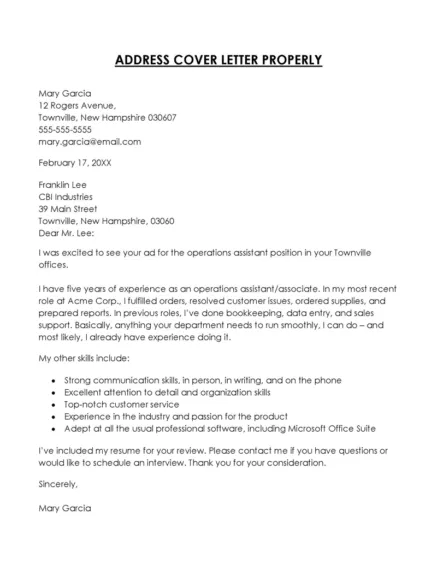
When you have the hiring manager’s name, use it in your cover letter address. For example, “Dear Mr. / Ms. [Last Name]” is the most effective way to address your cover letter. This personal touch shows that you’ve done your homework and makes your application stand out. It is also important to ensure you have the correct spelling and title; a misspelled name or wrong title can create a negative first impression. If you’re unsure of the person’s gender, use their full name or address the letter to their title. For example, “Dear [First Name] [Last Name]” or “Dear Hiring Manager” are safe alternatives. Using the hiring manager’s name creates a more personal and engaging introduction to your application.
If the Hiring Manager’s Name is Unknown
It is not always possible to find the hiring manager’s name. In such cases, you’ll need alternative approaches. Instead of using a generic greeting, you can try to address the letter to a specific role or department. For example, “Dear Hiring Manager” or “Dear [Department Name] Team” is often appropriate. If the job posting specifies a contact person, use their name. However, make sure this is the most relevant option; addressing the letter to a department might be better than addressing it to an irrelevant contact. Also, avoid simply writing “To Whom It May Concern” – this is considered outdated and impersonal, suggesting that the applicant has not made an effort to personalize their application.
Addressing Your Cover Letter to a Department
If you are unable to find the specific name of the hiring manager, addressing your cover letter to the relevant department is a good second option. This approach is particularly useful when applying for larger organizations where the specific hiring manager might be difficult to identify. For example, if you’re applying for a marketing role, you could address the letter to “The Marketing Team” or “The Hiring Manager, Marketing Department.” Make sure the department name is accurate; double-check the job posting and the company website to ensure you’re using the correct terminology. This shows that you understand the organizational structure and are making an effort to direct your application to the appropriate people.
Addressing your letter to a department is better than using a generic greeting because it shows that you understand where your application should go. This also gives the hiring team a sense that you understand the roles within the company. If you are unsure which department is responsible for hiring for the role, you may contact the company directly. You can email them asking about the hiring manager’s name or to which department to send your application. This proactive approach is helpful when the information is unavailable on the job posting or the company website. This effort will show initiative and interest in the position.
Avoid Generic Greetings

The most important rule is to avoid generic greetings, as they often suggest a lack of effort or interest. Phrases like “To Whom It May Concern” or “Dear Sir/Madam” are outdated and don’t convey a sense of personalization. They make it seem that your cover letter is part of a mass mailing. Instead, always try to find the hiring manager’s name or, at the very least, address the letter to a specific department or role, such as “Dear Hiring Manager” or “Dear [Department Name] Team.” This personalization helps to make your application more memorable.
If you’re struggling to find the right contact, try using a more direct approach. Use the job posting or company website to gather information. Another effective method is to contact the company directly via phone or email to ask for the name of the hiring manager. This shows initiative and a genuine interest in the role. You can also look up the department that is likely in charge of the hiring process and use that as your address. It is better to show you made an effort to research the appropriate recipient than to use a generic greeting.
Proofreading and Formatting Your Address
Once you’ve chosen the appropriate address, it’s important to carefully proofread and format it. Ensure the recipient’s name and title are spelled correctly. Errors in this area can quickly undermine your credibility. Check the format and grammar, and make sure everything is consistent with professional standards. Use a clear, easy-to-read font and maintain consistent spacing and alignment. A well-formatted address reflects your attention to detail and professionalism, while any errors or inconsistencies can send the wrong message.
Another step is to make sure your address is positioned correctly on your cover letter. The address should align with the rest of your letter, generally on the left side. Also, ensure that it matches the resume and your contact details. These details must also be accurate and current. Using the correct address, formatting, and proofreading your cover letter shows your attention to detail and commitment to professional standards. In a pile of applications, these details will make your cover letter stand out as the best.
When to Use ‘To Whom It May Concern’
The phrase “To Whom It May Concern” should be avoided unless you have exhausted all other options. It’s best to reserve it only when you absolutely cannot find the hiring manager’s name or the name of a specific department. The best approach is to find out the hiring manager’s name, and if you are unable to do this, address the cover letter to the hiring manager or relevant team. If you must use “To Whom It May Concern,” try to make the rest of your cover letter as personalized as possible. This shows you put thought and effort into your application.
Adapting Your Address for Different Situations

Different situations might require different approaches to addressing your cover letter. For instance, when applying for a remote position, you might not know the exact location of the hiring manager or the department. In such cases, you should still try to find a name or, at a minimum, address the letter to the hiring manager. Also, when applying through a recruitment agency, you can address the cover letter to the recruiter or the contact person specified in the job posting. Always follow the guidelines of the job posting, and tailor the address to the specific circumstances.
When applying for internal positions, the process can be a bit different. You may have existing contacts within the company, so you can reach out to them for advice or to find the hiring manager’s name. Ensure the cover letter reflects that you’re an internal applicant by emphasizing your contributions to the company and expressing your interest in moving to the new role. The goal is to make it seem that you have tailored your letter to the situation. Every application presents a unique set of circumstances, and you must be able to adapt your cover letter address.
Final Thoughts on Cover Letter Addressing
Addressing your cover letter correctly is a critical step in the job application process. It is an opportunity to make a positive first impression, demonstrate your attention to detail, and show that you’re truly interested in the role. Always aim to find the hiring manager’s name, but if that’s not possible, address the letter to the relevant department or use a professional alternative to generic greetings. Remember to proofread and format your address carefully, as a small detail such as the address can greatly impact how you are viewed by the hiring team. By following these guidelines, you can increase your chances of having your application noticed and of landing the job.