What is a Cover Letter
A cover letter is an essential document that accompanies your resume when applying for a job. It serves as a personalized introduction, allowing you to highlight your skills, experience, and qualifications in a way that directly relates to the specific position and the company you’re applying to. Unlike a resume, which provides a factual overview of your work history, a cover letter offers an opportunity to showcase your personality, express your enthusiasm for the role, and explain why you’re the perfect fit for the job. It’s a chance to make a strong first impression and persuade the hiring manager to take a closer look at your resume and consider you for an interview. A well-crafted cover letter can significantly increase your chances of landing an interview and ultimately securing the job you desire.
Cover Letter Essentials
To write a successful cover letter, it’s crucial to focus on several key areas. First, your cover letter should clearly state the position you’re applying for and where you saw the job posting. This helps the hiring manager quickly understand the purpose of your letter. Second, you must highlight your relevant skills and experiences that align with the job requirements. Provide specific examples that demonstrate how you’ve successfully handled similar responsibilities in the past. Third, tailor your letter to the specific job and company. Research the company and understand its values and goals. This shows that you’ve taken the time to learn about the organization and are genuinely interested in the opportunity. Finally, ensure your cover letter is free of errors and easy to read. Proofread carefully for any typos or grammatical mistakes, and use a professional tone throughout. Your cover letter is a reflection of your attention to detail and professionalism.
Highlight Your Skills and Experience

When crafting your cover letter, make sure you emphasize your most relevant skills and experiences. The goal is to show the hiring manager that you possess the qualifications they’re seeking. Start by carefully reviewing the job description and identifying the key skills and experiences required. Then, within your cover letter, provide specific examples of how you’ve demonstrated these skills in previous roles or projects. Use action verbs to describe your accomplishments and quantify your achievements whenever possible. For instance, instead of saying “Managed a team,” you could say “Managed a team of 10 employees, resulting in a 15% increase in productivity.” This provides concrete evidence of your abilities and makes your cover letter more compelling. Tailor your skills and experience to the specific job by focusing on the aspects that are most relevant to the role, demonstrating your understanding of the requirements and your suitability for the position.
Tailor Your Letter to the Job
One of the most important aspects of writing an effective cover letter is tailoring it to each specific job application. Generic cover letters often fail to impress hiring managers because they lack the personalization needed to make a strong connection. Before you begin writing, carefully review the job description and research the company to gain a better understanding of their values, culture, and needs. Use this information to customize your letter. Address the specific requirements outlined in the job posting and explain how your skills and experience align with those needs. Show that you understand the company’s mission and values, and explain why you’re particularly interested in working for them. By demonstrating that you’ve taken the time to research the role and the company, you significantly increase your chances of making a positive impression and standing out from other applicants.
Proofread and Edit Meticulously
Before submitting your cover letter, it’s crucial to proofread and edit it meticulously. Errors in grammar, spelling, or punctuation can create a negative impression and suggest a lack of attention to detail. Always read your cover letter multiple times, ideally after taking a break from writing, to ensure you catch any mistakes. Consider using spell-check and grammar-check tools, but don’t rely on them entirely. These tools can sometimes miss errors or make suggestions that aren’t appropriate for the context. Ask a friend, family member, or career counselor to review your letter as well. A fresh pair of eyes can often spot errors that you might have missed. Paying close attention to detail and ensuring your cover letter is free of errors demonstrates your professionalism and increases your chances of making a positive impression.
Showcase Your Personality

While it’s important to maintain a professional tone, your cover letter is also an opportunity to showcase your personality and enthusiasm. Let your genuine interest in the role and the company shine through. Use a conversational tone, avoiding overly formal language that can sound robotic or impersonal. Write in your own voice and let your personality come through in the way you express yourself. Share a brief anecdote that demonstrates your skills or a particular achievement. Show your passion for the industry and the specific role you’re applying for. By adding a touch of personality, you make your cover letter more engaging and memorable, which can help you stand out from the crowd. Remember, the hiring manager is looking for someone who will be a good fit for the team and the company culture, so let your personality shine through.
Key Elements of a Cover Letter
Contact Information
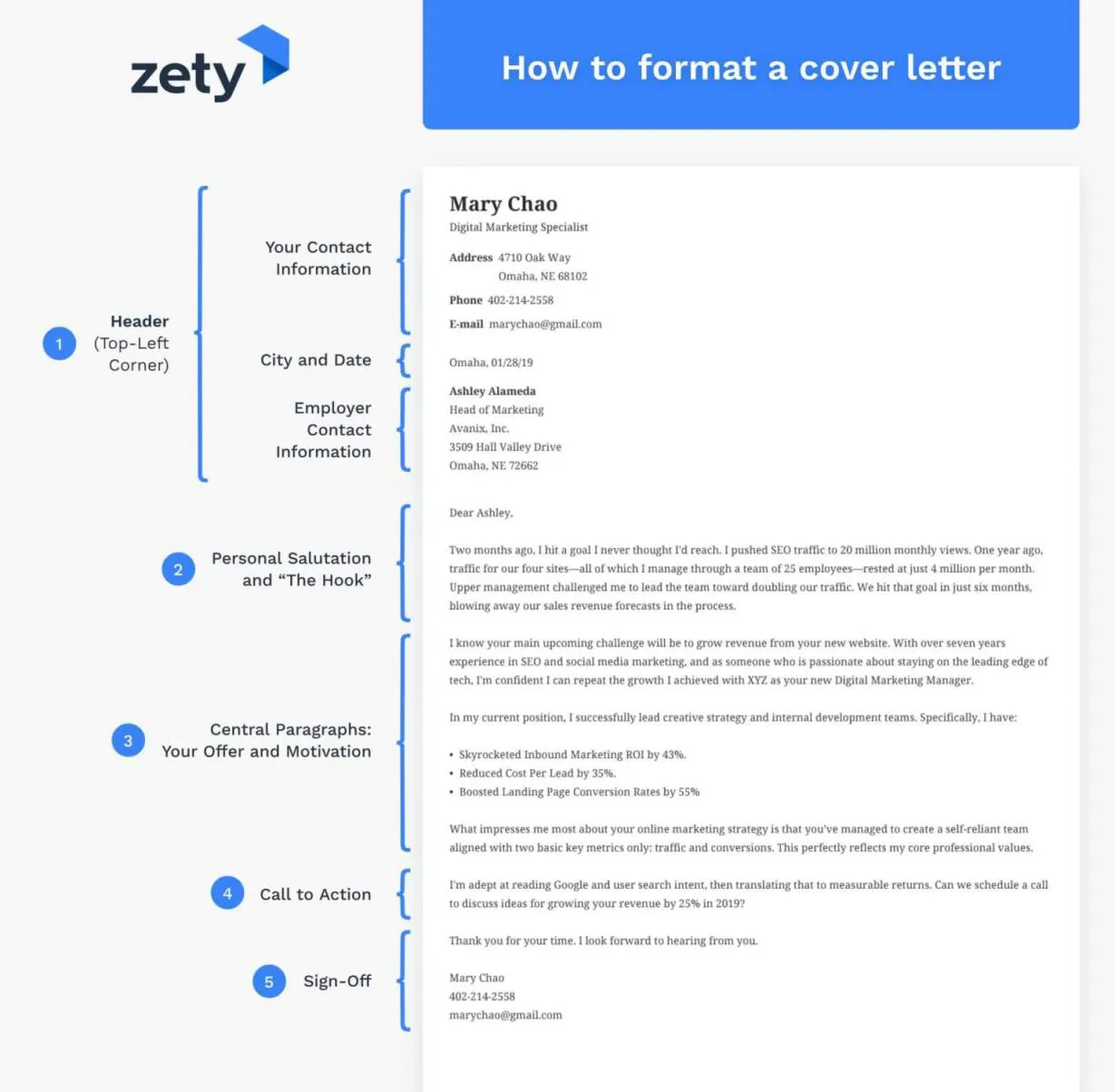
Your contact information should be prominently displayed at the top of your cover letter. This typically includes your full name, address, phone number, and email address. Make sure your email address is professional-sounding; avoid using informal or outdated email addresses. It is important to ensure all of your contact information is accurate and up-to-date so that the hiring manager can easily reach you. Consider using a standard professional font such as Arial or Times New Roman. Consistency in formatting is essential for a polished and professional look.
Greeting and Introduction

The greeting is the first thing the hiring manager will read. Start with a professional greeting such as “Dear Mr./Ms./Mx. [Last Name],” if you know the hiring manager’s name. Researching the hiring manager’s name beforehand shows initiative. If you are unable to find the hiring manager’s name, use a general greeting like “Dear Hiring Manager.” Your introduction should state the position you are applying for, where you saw the job posting, and a brief overview of your interest and qualifications. It sets the tone for the rest of the letter, so make it engaging and compelling. Clearly stating the job you are applying for helps the hiring manager quickly understand your purpose, making your application process more streamlined.
Body Paragraphs
The body paragraphs are the core of your cover letter, where you highlight your skills, experience, and how they align with the job requirements. Use this space to elaborate on your qualifications, providing specific examples of your achievements and how you have contributed to previous companies. Tailor each paragraph to address the specific requirements listed in the job description. Quantify your accomplishments whenever possible. For example, instead of saying “Improved customer satisfaction,” you could write “Increased customer satisfaction scores by 20% through implementing a new feedback system.” Focus on the most relevant skills and experiences that match the needs of the role, demonstrating your understanding of the company’s needs and your ability to make a positive impact.
Call to Action
A call to action is an essential component of a cover letter as it encourages the hiring manager to take the next step. In your call to action, express your enthusiasm for the opportunity and reiterate your interest in the position. Make it clear that you are eager to discuss your qualifications further. Include a polite and professional statement, like “I am eager to learn more about this opportunity and discuss how my skills and experience align with your needs.” This is also a good place to indicate your availability for an interview. By including a call to action, you actively guide the hiring manager and show your strong interest in the position.
Sign-off and Signature

The sign-off concludes your cover letter, offering a final touch of professionalism. Use a formal and appropriate sign-off like “Sincerely,” “Best regards,” or “Thank you.” Following your sign-off, leave space for your signature if you are submitting a hard copy of the letter. If you are submitting a digital copy, simply type your name. Ensure the sign-off matches the tone of the rest of your letter, maintaining a professional and respectful demeanor. This final element leaves a lasting impression of your attention to detail and professionalism, which can make your application stand out.
Cover Letter Format
Cover Letter Length and Structure
A well-formatted cover letter typically adheres to a specific structure and length. The cover letter should be concise, ideally no longer than one page. Use a professional font such as Times New Roman or Arial, with a font size of 11 or 12 points. Maintain single spacing with a blank line between each paragraph to enhance readability. The structure of a cover letter generally follows a standard format: contact information, a greeting, an introductory paragraph, body paragraphs that highlight your skills and experiences, a closing paragraph or call to action, and a formal sign-off. Adhering to these formatting guidelines ensures that your cover letter is easily readable and professional.
Using Keywords

Optimizing your cover letter with relevant keywords can significantly increase its chances of success, especially in today’s job market where Applicant Tracking Systems (ATS) are frequently used. Carefully review the job description and identify the keywords and phrases that are most important. Naturally incorporate these keywords throughout your cover letter, especially in the body paragraphs where you highlight your skills and experiences. This helps your application pass through the ATS and ensures that the hiring manager can quickly identify your qualifications. While incorporating keywords, maintain a natural and readable flow. Avoid keyword stuffing, which can make your letter sound unnatural. The goal is to optimize your letter without sacrificing the quality and clarity of your message.
Cover Letter Examples
Reviewing cover letter examples can offer valuable insights and guidance for crafting your own. Search online for cover letter templates and examples that align with your industry, the type of role you’re applying for, and your level of experience. Pay attention to the structure, tone, and language used in these examples. Notice how the applicants highlight their skills, tailor their letters to specific job descriptions, and incorporate keywords. However, do not copy these examples directly. Instead, use them as inspiration and adapt them to your unique skills, experiences, and the specific job you’re applying for. The best cover letters are those that reflect your individual voice and highlight your personal strengths.
Cover Letter Dos and Don’ts
When writing a cover letter, there are several dos and don’ts to keep in mind. Do tailor your letter to each job, highlighting relevant skills and experiences. Do proofread your letter carefully for any errors. Do showcase your personality and enthusiasm. Do use a professional tone and formatting. On the other hand, don’t use generic language or copy-paste from other cover letters. Don’t exceed one page in length. Don’t include irrelevant information. Don’t use slang or unprofessional language. Avoiding these common pitfalls ensures that your cover letter is effective and increases your chances of making a positive impression.