Cover Letter Example Basics
A cover letter is a crucial component of any job application, serving as your introduction to a potential employer. It’s your chance to showcase your personality, highlight your relevant skills and experience, and express your genuine interest in the position. Unlike your resume, which provides a factual overview of your qualifications, the cover letter allows you to tell a story, connecting your past experiences to the specific requirements of the job. A well-crafted cover letter can significantly increase your chances of getting an interview, setting you apart from other applicants and demonstrating your professionalism and communication skills. Think of it as your personal marketing document, designed to persuade the hiring manager that you’re the ideal candidate.
Understanding the Purpose of a Cover Letter
The primary purpose of a cover letter is to secure an interview. It’s not just a formality; it’s your opportunity to elaborate on your resume, explaining why you’re a good fit for the company and the specific role. The cover letter should provide context to your application, connecting your skills and experience to the job’s requirements. It also allows you to express your enthusiasm and demonstrate your understanding of the company’s mission, values, and the challenges it faces. A well-written cover letter helps the hiring manager see beyond your qualifications, recognizing your potential contributions to the team and the organization. A cover letter is essential to demonstrate your personality and your ability to communicate effectively. The goal is to create a positive first impression and encourage the hiring manager to want to learn more about you.
Key Components of a Cover Letter Example

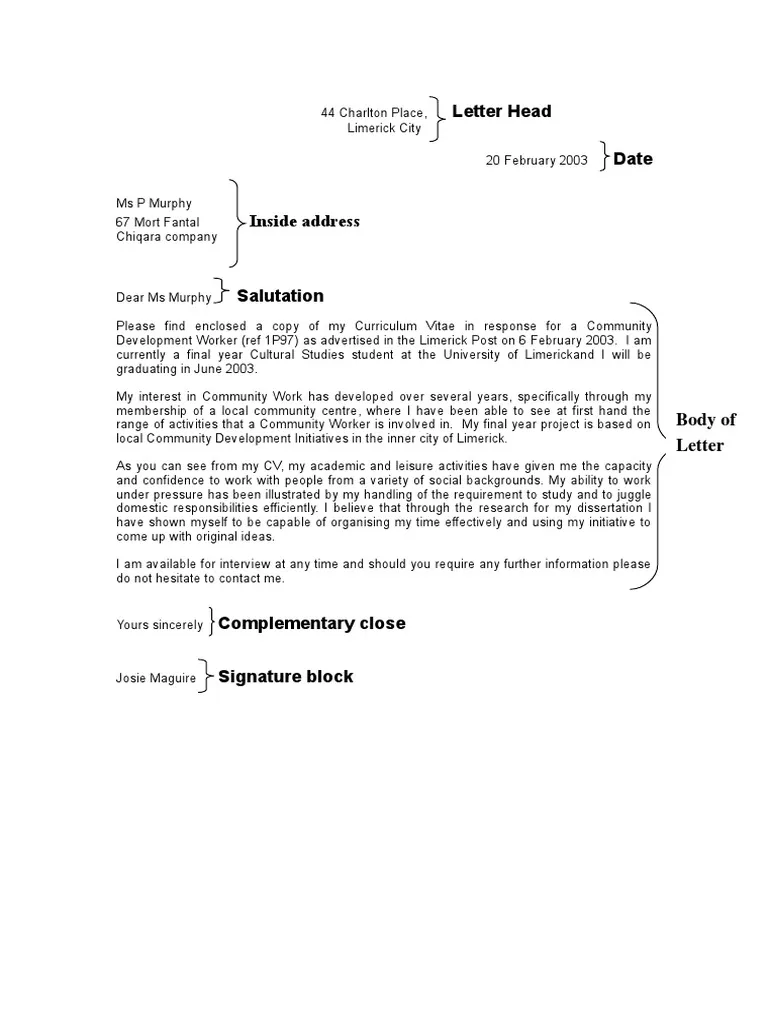
A strong cover letter example generally includes a header with your contact information, a personalized salutation, an engaging opening paragraph, a body that highlights your skills and experience, and a compelling closing statement. The header should be at the top of the page and should include your name, phone number, email address, and, optionally, your LinkedIn profile URL. The salutation should address the hiring manager by name whenever possible. The body of the letter should be concise and specific, using examples to demonstrate how your skills align with the job requirements. The closing should express your gratitude for the reader’s time and reiterate your interest in the position, including a call to action like requesting an interview.
Header Essentials Contact Information
The header of your cover letter is crucial because it provides the hiring manager with your contact information. Make sure your name, phone number, email address, and optionally, your LinkedIn profile URL, are prominently displayed at the top of the page. Use a professional email address, avoiding any informal or unprofessional names. The phone number should be one where you can be easily reached. Double-check all the contact details for accuracy; a small error here can prevent the hiring manager from reaching you. Ensure that your header is formatted consistently with your resume, creating a professional and cohesive presentation of your application materials. The header provides an efficient way for the hiring manager to connect with you if they decide to offer you an interview.
Formatting Your Cover Letter Example
Formatting is key to making your cover letter readable and professional. Use a standard font like Times New Roman, Arial, or Calibri, in a size between 10 and 12 points. Maintain consistent spacing throughout the document. Use single spacing within paragraphs and double spacing between paragraphs. Left-align your text, and avoid justifying the text, as this can create uneven spacing. Keep the margins at one inch on all sides. This ensures your letter looks clean and organized. Use bullet points or numbered lists when appropriate to highlight key skills or achievements. Aim for a concise and well-organized layout. This will make it easier for the hiring manager to read and grasp your key points quickly. Be sure your cover letter fits on one page.
Crafting a Compelling Opening Cover Letter Example

The opening paragraph is your first chance to grab the hiring manager’s attention. Start with a strong opening that immediately states the position you’re applying for and where you saw the job posting. This demonstrates your directness and attentiveness to the job requirements. Briefly explain why you’re interested in the role and the company, showing that you have done your research. State a key achievement or skill that directly relates to the job’s requirements. This will instantly grab their attention and make them want to read more. Avoid generic openings like ‘I am writing to apply for the position’. Instead, aim for something that is engaging and personal, clearly showing why you are the best candidate for the job.
How to Address the Hiring Manager
Always address the hiring manager by name. Research the company’s website or LinkedIn to find the name of the hiring manager or the person responsible for recruitment. If you can’t find a name, try to find a contact at the company or call the company and ask. Addressing your letter to a specific person shows that you’ve taken the time to research the company and that you’re genuinely interested in the position. Use a formal salutation, such as ‘Dear Mr./Ms. [Last Name]’. Avoid generic salutations like ‘To Whom It May Concern’, as they indicate a lack of personalization. If you are unsure about the person’s gender, use their full name, for example, ‘Dear [First Name] [Last Name]’. If you can’t find a name, use a title like ‘Dear Hiring Manager’.
Highlighting Your Skills Cover Letter Example
In the body of your cover letter, focus on highlighting the skills and experiences that align with the job requirements. Carefully review the job description and identify the key skills and qualifications the employer is looking for. Use specific examples from your previous work or projects to demonstrate these skills. Instead of simply listing your skills, show how you have used them to achieve results. Use the STAR method (Situation, Task, Action, Result) to provide concise and compelling examples. For instance, describe a situation, the task you were assigned, the action you took, and the positive result you achieved. Quantify your achievements whenever possible by using numbers or data to show the impact of your work. This will make your accomplishments more persuasive.
Showcasing Relevant Experience Cover Letter Example

Your cover letter should showcase your relevant experience and how it aligns with the job. Select experiences that are most pertinent to the position. Explain how your previous roles have prepared you for the new opportunity. Use specific examples to illustrate your skills and accomplishments. Provide details about your responsibilities and the outcomes of your work. Focus on transferable skills that you have gained from past roles. Even if your previous experience is not directly related to advertising, identify the skills that are valuable to the position. For example, if you’ve managed projects, led teams, or worked with clients, highlight these experiences. These are valuable in any role.
Quantifying Achievements in Your Cover Letter
Quantifying your achievements is key to making your cover letter impactful. Instead of making vague statements about your skills or experience, use numbers and data to demonstrate your accomplishments. Use metrics such as percentages, sales figures, or the amount of money saved or earned. For example, you might say, ‘Increased website traffic by 30% in six months’ or ‘Managed a budget of $100,000 with a 15% reduction in costs’. Provide specific examples that highlight your contributions and the impact of your work. This will prove your capabilities to the hiring manager. Quantifiable results are always more convincing than general statements. Make your achievements stand out by using numbers and precise figures.
The Power of Tailoring Cover Letter Example
Tailoring your cover letter to each specific job is essential. Don’t use a generic cover letter for every application; customize each letter to match the job description and the company’s needs. Carefully review the job description and identify the key skills and qualifications the employer is looking for. Then, highlight the experiences and skills that directly match these requirements. Research the company’s website, mission, and values to show that you understand their business. Use the same keywords and language as the job posting to demonstrate that you are a good fit. Your tailored cover letter should demonstrate that you’ve taken the time to understand the role and the company. This will make you stand out as a serious and well-prepared candidate.
Adapting to the Specific Job

Adapt your cover letter to the specific requirements of each job. Each job has its own unique set of qualifications and expectations. Review the job description carefully and identify the key skills and experiences the employer is seeking. In your cover letter, focus on these aspects and provide examples that showcase your capabilities. Tailor the tone and language to match the job’s industry and the company culture. If the job requires a specific skill, such as experience with a particular software or platform, highlight your proficiency and provide specific examples. Avoid using a generic cover letter for multiple applications, and ensure that your letter clearly addresses the job’s specific needs. Make sure it highlights you are the best candidate.
Researching the Company
Researching the company is an important step in writing a compelling cover letter. Understand the company’s mission, values, products, services, and recent news. Visit the company’s website, read their blog, and follow them on social media to get a sense of their culture and current activities. If possible, research the hiring manager or the person who will be reviewing your application. Finding out their background and interests can help you personalize your letter. Showing that you’ve taken the time to research the company demonstrates your genuine interest in the role and can set you apart from other applicants. This research enables you to write a more compelling cover letter.
Writing a Strong Closing Cover Letter Example
Your closing paragraph is your last opportunity to make a positive impression. Express your enthusiasm for the position and reiterate your interest in the company. Thank the hiring manager for their time and consideration. State your availability for an interview and include a call to action. Instead of simply saying, ‘Thank you for your time,’ try something more specific like, ‘Thank you for considering my application. I am very interested in the opportunity and eager to discuss how my skills and experience can benefit your team. I am available for an interview at your earliest convenience.’ Make sure your contact information is readily available. Close with a professional sign-off, such as ‘Sincerely’ or ‘Best regards,’ followed by your name.
Expressing Enthusiasm and Gratitude

Expressing enthusiasm and gratitude in your cover letter will boost your chances. Show your genuine interest in the position and the company by stating how excited you are about the opportunity. Be sure that you have researched the company, so you understand its mission and values. Express your appreciation for the hiring manager’s time and consideration, which shows respect for their time. Avoid generic statements and tailor your expression of enthusiasm to the specific role and company. Let your enthusiasm shine through by using positive language and highlighting the aspects of the job that excite you. Expressing gratitude and enthusiasm will make a great impression.
Proofreading and Editing Cover Letter Example
Proofreading and editing are critical to making sure your cover letter is polished and professional. Carefully review your cover letter for any grammatical errors, spelling mistakes, and typos. Always read it aloud to catch any awkward phrasing or errors. Check for consistency in formatting, such as font size, spacing, and margins. Ask a friend, family member, or career advisor to review your cover letter as well. A second pair of eyes can help you identify errors that you might have missed. Avoid using slang or colloquialisms, and ensure that your tone is professional throughout the document. A well-proofread cover letter demonstrates attention to detail and professionalism.
Avoiding Common Mistakes Cover Letter Example
There are several common mistakes to avoid in a cover letter. Avoid generic greetings and closings; personalize your letter whenever possible. Do not repeat the information that is already on your resume; use your cover letter to expand on your qualifications and provide context. Avoid overly formal or casual language; aim for a professional and engaging tone. Do not write a cover letter that is too long. Keep it concise, ideally within one page. Avoid exaggerating your skills or experience and be truthful in your statements. Do not include any negative information about past employers or colleagues. Focusing on these mistakes will set you apart from other candidates.
Overused Phrases

Avoid using overused phrases that can make your cover letter sound generic and unoriginal. Steer clear of phrases such as ‘I am writing to express my interest,’ ‘Please find attached my resume,’ and ‘I am a team player.’ Instead, use more engaging language that highlights your unique skills and experiences. Replace these phrases with specific details about how your skills align with the job requirements. Use action verbs and provide examples of your accomplishments. Write your cover letter to reflect your personality and showcase your qualifications in a memorable way.
Typos and Grammatical Errors
Typos and grammatical errors can undermine your credibility and give the impression that you are not detail-oriented. Proofread your cover letter carefully for any spelling mistakes, punctuation errors, and grammatical inconsistencies. Read your cover letter aloud to catch any awkward phrasing or mistakes. Ask a friend, family member, or career advisor to proofread your letter. Make sure you have written clearly, and use correct grammar and punctuation. Use a grammar checker, but be sure to review the suggestions carefully. Ensure that you do not rely solely on technology for your proofreading.
Cover Letter Example Best Practices
Follow these best practices for writing a compelling cover letter. Tailor your letter to each job, customizing it to match the job requirements. Use clear and concise language, avoiding jargon or overly complex sentence structures. Highlight your skills and experiences using specific examples and quantify your achievements whenever possible. Show your enthusiasm for the role and the company, and research the company before you write. Proofread and edit your cover letter carefully to ensure there are no errors. Keep it concise, ideally within one page, and use a professional tone and format. Focus on the points above to create the best cover letter possible.
Formatting and Design
Formatting and design play an important role in making your cover letter look professional and easy to read. Use a standard font such as Times New Roman, Arial, or Calibri, and set the font size to 11 or 12 points. Maintain a consistent font throughout the document. Use one-inch margins on all sides of the page, which makes your letter visually appealing. Use a clean and organized layout. Use white space effectively to make your content appear more readable. Avoid using decorative fonts or excessive formatting, and always keep your cover letter on a single page. Make the design and formatting of the letter consistent with your resume.
Keeping It Concise
Keep your cover letter concise and to the point. Your cover letter should be one page in length. Use your cover letter to highlight your key qualifications and experiences. Avoid including unnecessary details or long paragraphs. Focus on the information that is most relevant to the job requirements. Use concise language and strong action verbs to communicate your ideas effectively. Make sure that you use bullet points or short paragraphs. Proofread your letter carefully to eliminate any unnecessary words or phrases. You will stand out from the crowd if you follow this advice.