Understanding the Importance of a Career Change Cover Letter
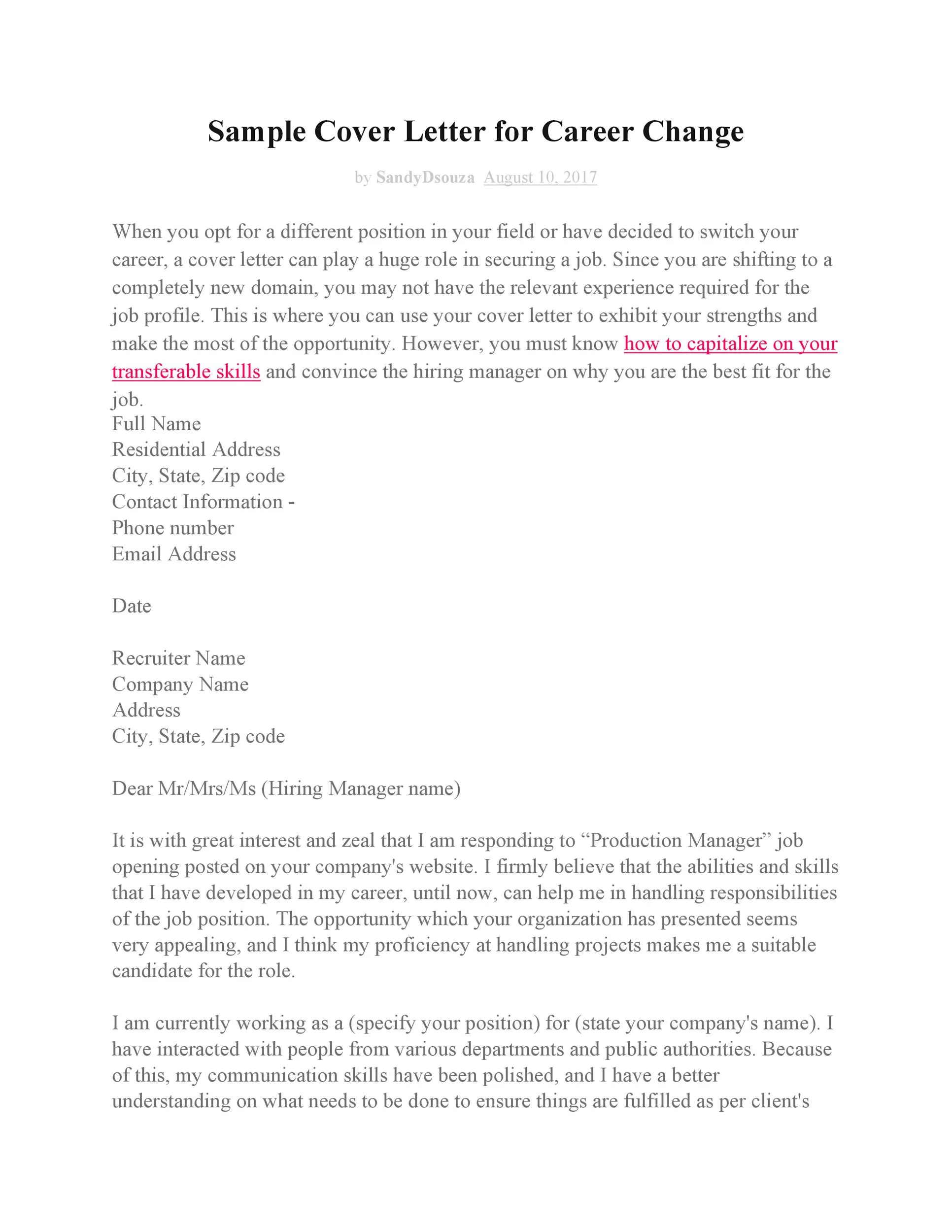
Embarking on a career change is a significant step, and your cover letter is your primary opportunity to make a positive first impression on a potential employer. Unlike a resume, which provides a factual overview of your experience, a cover letter offers a chance to tell your story and explain why you’re making the transition, and why you’re a great fit for the new role. This document provides context, showcasing your understanding of the new field and your eagerness to contribute. It bridges the gap between your past experiences and your future aspirations. A well-crafted cover letter shows that you’ve done your homework and are genuinely interested in the position and the company. It helps you stand out from other applicants. A cover letter is your chance to introduce yourself and convince the hiring manager to read your resume.
Why a Cover Letter Matters for Career Changers
For individuals seeking a career change, a cover letter becomes even more vital. It gives you a platform to address the elephant in the room - the career shift itself. The primary purpose of the cover letter is to explain your motivations for the switch and assure the recruiter or hiring manager that you are serious about this new career path. A compelling cover letter can alleviate concerns the employer may have about your lack of direct experience in the field. It allows you to articulate how your existing skills, while not directly matching the job description, are highly transferable and relevant to the new role. It demonstrates proactive effort and a willingness to learn and adapt to the job at hand. The letter needs to demonstrate that you have considered what it takes to transition into this new field and how your existing skills can assist in a productive outcome.
Highlighting Transferable Skills

One of the most important aspects of a cover letter for a career change is showcasing your transferable skills. These are the abilities you’ve developed in previous roles that can be applied to your new field. Begin by identifying these skills. Think about the tasks you excel at and the positive feedback you’ve received in past positions. These can include leadership, communication, problem-solving, project management, and technical proficiencies. Then, analyze the job description and pinpoint the skills that the employer is looking for. Match your skills to those requirements. Give specific examples of how you’ve used these skills in the past and how they can benefit the company in the new role. This demonstrates that you can adapt to new challenges and deliver valuable contributions, regardless of your previous industry. Focusing on your transferable skills helps bridge the gap between your past experience and the requirements of the new role.
Identifying Your Key Skills
To effectively highlight your transferable skills, start by making a comprehensive list of your strengths. Don’t just list the skills; try to quantify them. For example, instead of saying ‘Managed projects’, you can say ‘Managed projects, consistently delivering them on time and under budget.’ Consider all aspects of your work experience, including soft skills like teamwork, communication, and leadership, as well as hard skills like software proficiency or technical knowledge. Use action verbs when describing your skills. For instance, instead of ‘Responsible for customer service,’ use ‘Provided exceptional customer service, resolving issues and increasing customer satisfaction by 15%.’ Review the job description carefully and identify the specific skills that the employer values most. Then, map your skills to those requirements, providing concrete examples of how you’ve demonstrated those skills in the past.
Showcasing Relevant Experience
While you may be changing careers, it’s likely you still have experience that’s relevant to the new role. Think beyond direct industry experience and consider the aspects of your previous roles that can be adapted to the new field. For example, if you’re transitioning from marketing to project management, emphasize your experience in managing campaigns, meeting deadlines, and collaborating with cross-functional teams. Focus on the tasks and responsibilities that align with the requirements of the new role. Quantify your achievements whenever possible. Instead of saying ‘Managed social media accounts,’ you might say ‘Increased social media engagement by 30% within six months.’ Use the STAR method (Situation, Task, Action, Result) to provide specific examples of how you’ve applied your skills in the past and what the results were. This demonstrates your ability to deliver tangible outcomes and gives the hiring manager confidence in your abilities.
Adapting Experience to the New Field

Even if your experience isn’t directly aligned with the new career, you can adapt it to show its relevance. Break down your previous roles into transferable skills. Then, explain how these skills apply to the new field. For instance, if you’re moving from teaching to instructional design, highlight your presentation skills, ability to explain complex concepts, and curriculum development experience. Translate your achievements into the language of the new industry. Replace industry-specific jargon with terms that resonate with the target audience. Demonstrate your understanding of the new field by using relevant terminology. Show that you have researched the industry and understand its requirements and challenges. Focus on the impact of your work. Even if your experience is in a different field, highlight the results you achieved and how those results would be valuable in the new role. This will make your application more compelling.
Structuring Your Career Change Cover Letter
A well-structured cover letter is crucial for making a strong first impression. The layout should be clear, concise, and easy to read. Start with a professional header that includes your contact information, the date, and the hiring manager’s name (if you know it). Address the letter to the hiring manager or the specific person mentioned in the job posting. Then, the cover letter should be divided into sections that address your motivations for the career change, your relevant skills and experience, and your enthusiasm for the position. Use concise paragraphs and bullet points to highlight key information and make it easy for the reader to grasp the essential details. The structure should demonstrate clarity and professionalism, reflecting the value you would bring to the new role. It must be easy for the reader to digest your application and see your interest.
Opening Paragraph Tips
The opening paragraph is your chance to grab the reader’s attention and make them want to read more. State the position you’re applying for and where you found the job posting. Briefly mention why you’re interested in the role and the company. In the opening, state your career change objective directly. Avoid clichés and generic phrases. Make it clear why you’re interested in the role. If you have a personal connection to the company or its mission, mention it. This shows genuine interest and can make your application more memorable. Focus on the value you can bring to the company. Avoid simply restating your resume. Make it clear what you can contribute to the organization and how you’ll add value. This helps you avoid sounding like everyone else.
Body Paragraph Strategies

The body paragraphs should focus on showcasing your skills and experience, and how they relate to the new role. Highlight 2-3 key skills or experiences that align with the job requirements. For each point, provide specific examples and quantify your achievements whenever possible. Show how you’ve applied your skills in the past and what the results were. Frame your experience in the context of the new career. For example, if you’re transitioning from customer service to sales, highlight your communication skills, ability to build relationships, and experience in resolving customer issues. Focus on the benefits you can bring to the new role. Explain how your skills and experience will help the company achieve its goals. Use a positive and enthusiastic tone throughout the body paragraphs. This shows your eagerness to start this new chapter in your career.
Closing the Letter Effectively
The closing paragraph is your last chance to make an impression. Express your enthusiasm for the opportunity and reiterate your interest in the role. Thank the hiring manager for their time and consideration. Make it clear that you’re available for an interview and how they can contact you. Keep the closing brief and to the point. Avoid repeating information that you’ve already mentioned in the cover letter. Use a professional and confident tone. This ensures that your cover letter ends on a strong note, leaving a lasting impression on the hiring manager. Make it clear that you are excited to start the next chapter in your career, and how your skill will help the team at large.
Tailoring Your Cover Letter
A generic cover letter is unlikely to impress a hiring manager. Instead, tailor your cover letter to each job you apply for. Research the company and the role thoroughly before you start writing. Customize your cover letter to match the specific requirements and keywords mentioned in the job description. Highlight the skills and experiences that are most relevant to the role. Show your understanding of the company’s mission, values, and culture. Include information about any relevant projects or achievements that demonstrate your abilities. Use the same tone and language as the company. This demonstrates that you’ve taken the time to get to know the organization and its needs. Tailoring the cover letter gives the reader the impression that you are a great fit for the role.
Researching the Target Company

Before writing your cover letter, take the time to research the company. Visit their website, read their ‘About Us’ page, and check out their social media presence. Understand their mission, values, and culture. Learn about their products or services and the target audience. Find out what they’re looking for in a candidate, and tailor your cover letter to meet those requirements. Research the hiring manager or the person who will be reading your cover letter. If possible, find out their name and title. This will allow you to address the cover letter directly to them. Use the information you’ve gathered to customize your cover letter. Reference the company’s values and goals and explain how your skills and experience align with their needs. Your application needs to demonstrate that you are not just applying for a job, but that you want to work for that company.
Customizing Content for Each Application
Once you’ve researched the company, it’s time to customize your cover letter. Analyze the job description carefully and identify the key skills and qualifications that the employer is seeking. Use those keywords throughout your cover letter to demonstrate that you possess the required skills. Tailor your content to match the company’s tone and culture. If the company is more formal, use a professional tone. If they’re more informal, you can use a slightly more conversational approach. Show how your skills and experience align with the specific requirements of the role. Provide concrete examples of how you’ve applied your skills in the past and what the results were. This demonstrates that you understand the job requirements and have the ability to deliver results. Adjust your content for the specific company, and the job, every time you apply.
Avoiding Common Mistakes
When writing a cover letter for a career change, it’s essential to avoid common mistakes that can hurt your chances. Make sure that your cover letter is free of grammatical errors, typos, and spelling mistakes. Proofread your cover letter carefully, or have someone else review it. Ensure you address the letter to the correct person. Research and find out the hiring manager’s name. Avoid generic language and clichés. Instead, use clear and concise language and provide specific examples. Make sure you don’t over-explain or justify your career change. Provide a concise and positive explanation, and focus on your relevant skills and experience. These mistakes can cause doubt with the reader, which makes them less likely to read through your application.
Generic Language and Clichés

Avoid using generic language and clichés that make your cover letter sound like everyone else’s. Phrases such as ‘I am a team player,’ ‘I am a hard worker,’ and ‘I am a results-oriented individual’ are overused and don’t provide any real value. Instead, use specific examples and quantifiable achievements to demonstrate your skills and qualifications. Avoid clichés such as ’thinking outside the box’ or ‘going the extra mile.’ They’re vague and don’t provide any meaningful information. Use strong action verbs and clear, concise language to describe your experience and accomplishments. Provide concrete examples of how you’ve applied your skills in the past and what the results were. Focus on what makes you unique and what you can bring to the table.
Failing to Highlight Transferable Skills
One of the biggest mistakes career changers make is failing to highlight their transferable skills. Recruiters often overlook cover letters that don’t clearly explain how previous experiences apply to the new role. Identify the skills you’ve developed in your previous roles that are relevant to the new field. Make a list of your key skills, such as communication, problem-solving, leadership, or project management. Provide specific examples of how you’ve applied these skills in the past. Use the STAR method (Situation, Task, Action, Result) to provide a clear and concise explanation of your accomplishments. Focus on the impact of your work and the results you achieved. Make the reader feel like you are the best candidate for the job, even if you are changing careers.
Proofreading and Editing Your Cover Letter
Before submitting your cover letter, it’s crucial to proofread and edit it carefully. Errors in grammar, spelling, or punctuation can make a negative impression and undermine your credibility. Start by reviewing your cover letter for any obvious errors. Check the grammar and spelling using a grammar and spell-checking tool. Read your cover letter out loud to catch any awkward phrasing or sentences. Break up long paragraphs and use bullet points to make the content easier to read. Make sure that your cover letter flows logically and tells a cohesive story. Ensure your cover letter is clear, concise, and easy to read. Be sure that the language used is appropriate and fits the job that you are applying for.
Reviewing for Grammar and Spelling

Grammar and spelling mistakes can quickly undermine your chances of getting an interview. Proofread your cover letter carefully, or have someone else review it. Check for any typos, grammatical errors, or spelling mistakes. Use a grammar and spell-checking tool, but don’t rely on it completely. Read your cover letter out loud to catch any awkward phrasing or sentences. Make sure you’re using the correct tense and that your sentences are grammatically correct. Pay attention to punctuation, such as commas, semicolons, and periods. Ensure that all of your contact information is accurate. By reviewing your cover letter for mistakes, you can catch problems and increase your chances of an interview.
Seeking Feedback From Others
One of the best ways to improve your cover letter is to seek feedback from others. Ask a friend, family member, career counselor, or mentor to review your cover letter. Provide them with the job description and ask them to evaluate your cover letter based on how well it meets the requirements. Ask them to check for clarity, grammar, spelling, and overall effectiveness. Be open to their suggestions and incorporate their feedback to improve your cover letter. Make sure that your cover letter is as strong as possible. You can also ask them to provide you with their initial impressions of your cover letter. What did they like? What did they dislike? Getting a fresh perspective can help you identify areas for improvement that you might have missed. Don’t be afraid to ask for help. After all, you are starting a new career and getting an interview matters.
In conclusion, writing a successful cover letter for a career change requires careful planning, strategic highlighting of transferable skills, and a strong focus on tailoring your application to each specific job. By understanding the importance of a cover letter, structuring it effectively, avoiding common mistakes, and proofreading meticulously, you can significantly increase your chances of landing an interview and successfully transitioning into your desired career. Remember to always show your genuine interest, demonstrate your value, and present yourself as the ideal candidate for the role.