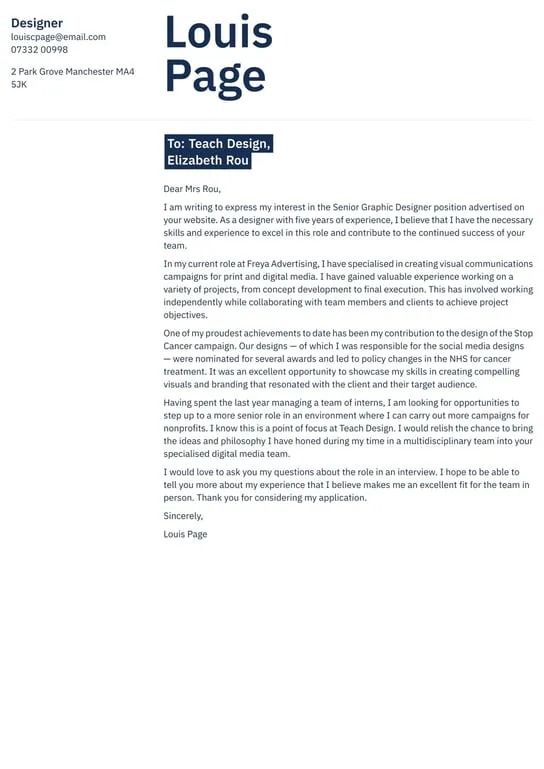
What is a Cover Letter and Why It Matters?
A cover letter is your first introduction to a potential employer. More than just a formality, it’s your opportunity to showcase your personality, passion for design, and why you are the perfect fit for the role. Unlike a resume, which is a static list of your accomplishments and skills, the cover letter allows you to tell a story. It gives you the chance to explain your design philosophy, what inspires you, and how your past experiences align with the specific job and the company’s goals. A well-crafted cover letter can significantly increase your chances of landing an interview and ultimately, the job. It’s your chance to stand out from the crowd and make a lasting impression, demonstrating your ability to communicate effectively, a crucial skill for any graphic designer. Remember to personalize your cover letter to each job application.
Cover Letter Key Elements
A successful cover letter includes several key components. These elements, when combined, create a compelling narrative that captures the attention of the hiring manager and highlights your suitability for the position. Structure your cover letter properly to show you’re detail-oriented. Be sure you incorporate all the elements of a successful graphic design cover letter. This will allow you to show your best qualities and ensure a successful application.
Your Contact Information

At the top of your cover letter, include your full name, phone number, email address, and, ideally, a link to your online portfolio or website. Make it easy for the hiring manager to contact you or view your work instantly. This section should be clearly formatted and visually appealing to reflect your design sensibilities. Ensure all information is current and accurate to prevent any missed opportunities.
The Hiring Manager’s Information
Address your cover letter to the specific hiring manager or recruiter if possible. Research the company’s website or LinkedIn to find the correct name and title. Addressing the letter to a specific person shows that you’ve taken the time to do your homework and that you’re genuinely interested in the role. If you can’t find a specific name, use a professional salutation like “Dear Hiring Manager” to maintain a professional tone. This personalized touch demonstrates attention to detail and initiative, which are critical traits for a graphic designer.
A Compelling Opening
Start with a captivating opening that immediately grabs the reader’s attention. Instead of a generic greeting, try something unique that demonstrates your enthusiasm for the role and the company. Mention something specific about the company’s work that resonates with you, or briefly state how your skills align with their needs. This shows you’ve researched the company and are not just sending out a generic application. Clearly state the position you are applying for to avoid any confusion.
Showcasing Your Skills

In the body of your cover letter, highlight your relevant skills and experience. This is where you connect your abilities to the job requirements and show why you are the perfect candidate. Focus on the skills mentioned in the job description and use specific examples to demonstrate your proficiency. Avoid simply listing your skills; instead, showcase how you’ve applied them in past projects and the results you achieved. It’s essential to tailor this section to each application to ensure it resonates with the specific job requirements.
Highlight Relevant Experience
Describe your work experience in detail, focusing on the roles and projects most relevant to the job. Use action verbs to describe your responsibilities and achievements. Quantify your accomplishments whenever possible, such as the number of projects completed, the clients served, or any improvements you made. Briefly explain the design process you follow and how you approach design challenges. Showcase your design process and ability to work collaboratively within a design team.
Quantify Your Achievements
Whenever possible, quantify your achievements with numbers and data. This provides concrete evidence of your impact and demonstrates your value. Instead of saying “Improved website design,” say “Redesigned the website, resulting in a 20% increase in user engagement.” Quantifiable achievements make your cover letter more compelling and demonstrate your ability to deliver results. It helps employers understand your contribution and the positive impact you can make on their team.
Demonstrating Your Personality

Let your personality shine through! While maintaining a professional tone, add a touch of your unique style to your cover letter. This shows your enthusiasm and helps the hiring manager get a sense of who you are beyond your skills. Showcase your design style by using good formatting and a visually appealing layout. Keep the language engaging and try to infuse a bit of your design philosophy or what motivates you. This will make your application stand out from the many generic cover letters, demonstrating that you’re not just a designer, but also an individual with creativity and passion.
Tailoring Your Cover Letter to the Job
One of the most critical aspects of a successful cover letter is tailoring it to each job application. Avoid sending out a generic cover letter for every role. Customize your letter to address the specific requirements and expectations of the job. This shows you’ve taken the time to understand the role and are genuinely interested in the opportunity. Tailoring makes your cover letter more relevant, highlights your most pertinent skills, and demonstrates your dedication to the potential employer.
Researching the Company and the Role
Before writing your cover letter, research the company and the specific role. Understand their mission, values, and recent projects. This will allow you to tailor your letter to their specific needs and demonstrate your interest. Identify the key skills and qualifications the company is looking for and emphasize how your experience aligns with those requirements. Incorporate keywords from the job description to make your application more likely to get noticed by Applicant Tracking Systems (ATS).
Using Keywords Strategically

Use keywords from the job description throughout your cover letter, but avoid keyword stuffing. Integrate the keywords naturally into your sentences to showcase your skills and experience in the context of the job requirements. Focus on using the relevant keywords to demonstrate a solid understanding of what the employer is looking for. This also helps your application pass through Applicant Tracking Systems (ATS) and increases the chances of your letter being reviewed by a human reader.
Formatting and Design Tips
As a graphic designer, your cover letter is an opportunity to showcase your design skills and attention to detail. The formatting and design of your cover letter are just as important as the content. It demonstrates your aesthetic sense and your ability to create visually appealing materials. Pay close attention to the layout, font choice, and overall visual presentation.
Choosing the Right Font
Choose a professional and readable font for your cover letter. Avoid overly decorative or distracting fonts that can make your letter difficult to read. Recommended fonts include Arial, Calibri, Helvetica, or Times New Roman. Maintain a consistent font throughout the document for a polished look. Font size should be easy to read, generally between 11 and 12 points.
Keeping it Concise and Readable

Keep your cover letter concise and easy to read. Aim for a maximum of one page, focusing on the most important information. Use clear and concise language, avoiding jargon or overly complex sentences. Break up the text with headings, bullet points, and white space to improve readability. A well-formatted cover letter demonstrates your ability to present information clearly and efficiently, a critical skill for a graphic designer.
Review and Proofread Your Cover Letter
Before submitting your cover letter, review and proofread it carefully. Check for any grammatical errors, spelling mistakes, or typos. A poorly written cover letter can damage your credibility and make a negative impression. Have a friend, colleague, or mentor review your letter to catch any errors you may have missed. Ensuring your cover letter is free from errors demonstrates your attention to detail and professionalism.
Common Mistakes to Avoid
Avoiding common mistakes can significantly improve the effectiveness of your cover letter. Be aware of what to avoid to ensure your application makes a positive impression. Common mistakes include errors in formatting and structure. Take care in formatting as a Graphic Designer to ensure a professional and appealing application.
Typos and Grammatical Errors

Typos and grammatical errors are a major turn-off for potential employers. These errors suggest a lack of attention to detail and a lack of professionalism. Always proofread your cover letter carefully, and consider using spell-check and grammar-check tools. Ask a friend or colleague to review your letter for errors you might have missed. Errors are easily avoided with proofreading.
Generic Cover Letters
Sending a generic cover letter is a missed opportunity to impress the hiring manager. Tailor your cover letter to each job application by highlighting your skills and experience that align with the job requirements. Avoid using generic phrases that could apply to any role, and show a genuine interest in the specific company and the position. Personalize your cover letter to show that you have taken the time to understand the role.
Lack of Enthusiasm
Your cover letter should exude enthusiasm for the role and the company. Show your excitement by using engaging language and emphasizing your interest in the company’s work. Explain why you are passionate about graphic design and why you believe you would be a great fit for the team. Avoid sounding indifferent or uninspired; let your passion shine through! The cover letter should have enthusiasm for the job and the company.
Cover Letter Examples to Inspire You
Reviewing cover letter examples can provide inspiration and guidance for writing your own. Look for examples that showcase effective formatting, compelling content, and strong writing skills. Analyzing successful cover letters can help you understand what works and provide a template to adapt to your own experience. Use these samples as a starting point to guide your process.