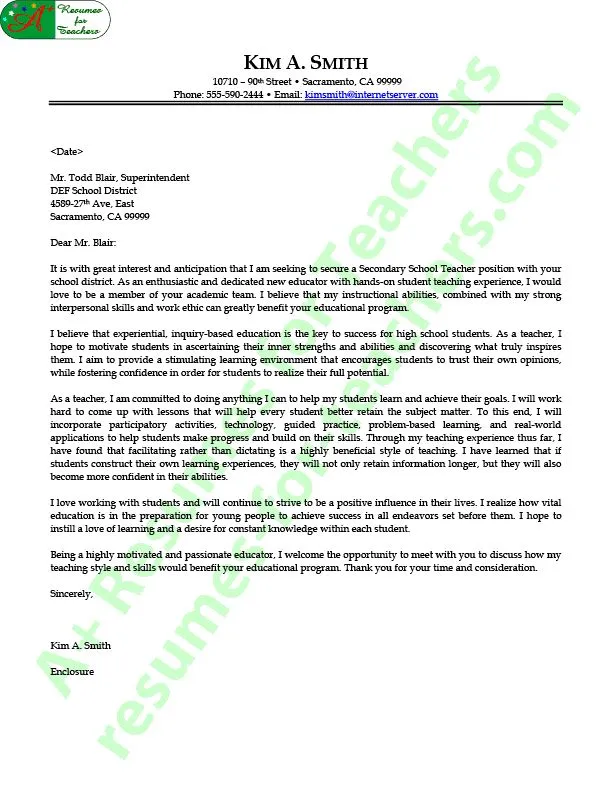
Understanding the Importance of a High School Teacher Cover Letter
A cover letter is a crucial component of any high school teacher’s application, serving as your introduction to a potential employer and providing an opportunity to showcase your qualifications and personality. Unlike a resume, which provides a chronological overview of your experience, a cover letter allows you to explain why you’re the ideal candidate for a specific role. It’s your chance to connect your skills and experiences directly to the needs of the school, demonstrating your genuine interest and suitability. A well-crafted cover letter can significantly increase your chances of securing an interview by making a positive first impression and highlighting what makes you unique.
Key Components of a Winning Cover Letter
To create a winning cover letter, it’s essential to include several key components that effectively communicate your qualifications and enthusiasm. These components work together to create a compelling narrative that grabs the reader’s attention and encourages them to learn more about you. From the opening greeting to the closing call to action, each element plays a vital role in demonstrating your suitability for the position.
Header and Contact Information

Start with a professional header that includes your full name, phone number, email address, and professional social media profiles if applicable (e.g., LinkedIn). Ensure your contact information is accurate and up-to-date. Include the date and the hiring manager’s name and title (if known) along with the school’s address. This section immediately provides the necessary details for the recipient to contact you, and demonstrates attention to detail.
Personalized Greeting
Always address the hiring manager by name if possible. Research the school’s website or LinkedIn to find the appropriate contact person. If you cannot find a specific name, use a professional salutation like “Dear Hiring Committee.” Avoid generic greetings like “To Whom It May Concern,” as they suggest a lack of effort. Personalizing your greeting immediately shows you’ve taken the time to learn about the school and its staff.
Opening Paragraph Making a Strong First Impression
The opening paragraph is your chance to grab the reader’s attention and establish your enthusiasm. State the specific position you’re applying for, where you found the job posting, and a brief statement of your qualifications or what excites you about the role. Consider including a compelling sentence that summarizes your key skills or highlights a relevant accomplishment that aligns with the school’s needs. Make it clear why you are interested in the specific school and not just any teaching position.
Highlighting Your Teaching Experience

In the body of your cover letter, provide detailed information about your teaching experience. Focus on experiences that are relevant to the position and the school. Quantify your accomplishments whenever possible. For example, mention the percentage increase in student test scores or the number of students you mentored. Describe your teaching methods, classroom management strategies, and any special programs or initiatives you’ve been involved in. Tailor the experience section to address the specific needs and priorities mentioned in the job description.
Showcasing Your Skills and Qualifications
Showcase your skills by providing concrete examples. This includes curriculum development, lesson planning, differentiated instruction, and student assessment. Mention any specialized training or certifications you possess, such as experience with specific software or educational technologies. Use action verbs to describe your skills and accomplishments. For example, instead of saying “I was responsible for lesson planning,” say “Developed and implemented engaging lesson plans.” Demonstrate your proficiency in creating inclusive and engaging learning environments.
Mentioning Relevant Certifications and Licenses
Explicitly mention your teaching certifications and licenses. Include the specific certifications you hold, the issuing state or organization, and the expiration dates (if applicable). Ensure that your certifications align with the requirements of the position and the state’s teaching standards. This section confirms your eligibility to teach and assures the hiring manager that you meet the necessary qualifications.
Focusing on Curriculum Development and Classroom Management

Highlight your skills in curriculum development and classroom management. Describe any experience you have in designing and implementing lesson plans, developing assessments, and creating engaging learning materials. Explain your approach to classroom management, including how you establish a positive learning environment, manage student behavior, and create a supportive classroom culture. Showcase your ability to adapt teaching methods to meet diverse student needs. Include how you create a conducive learning environment.
Emphasizing Your Passion for Education
Express your genuine passion for education. Share what inspires you to teach and what you enjoy most about working with high school students. Describe your teaching philosophy and how it aligns with the school’s mission and values. Demonstrate your commitment to student success and your belief in the transformative power of education. Show that you are not just looking for a job, but a career that you are truly enthusiastic about.
Tailoring Your Cover Letter to the Specific School
Customizing your cover letter for each school is essential. Generic cover letters are easily recognizable and less likely to impress hiring managers. Take the time to research each school, understand its culture, and identify its specific needs. Tailoring your cover letter demonstrates your genuine interest and shows that you’ve put in the effort to understand the school’s priorities.
Researching the School’s Mission and Values

Visit the school’s website to learn about its mission, values, and goals. Read about the school’s programs, initiatives, and achievements. Identify how your skills and experiences align with the school’s values and how you can contribute to its mission. Mention specific aspects of the school that resonate with you and explain why you are particularly drawn to the opportunity. Understanding the school’s culture will help you demonstrate you are a good fit.
Addressing the Specific Needs of the School
Carefully review the job description and identify the school’s specific needs and requirements. Address these needs directly in your cover letter by highlighting the relevant skills and experiences you possess. For example, if the school emphasizes technology integration, describe your experience using educational software and online learning platforms. If the school is looking for someone with experience in a particular subject area, emphasize your expertise in that subject. Tailor your letter to show you are the ideal candidate for what the school is looking for.
Formatting and Proofreading Your Cover Letter
A well-formatted and error-free cover letter demonstrates professionalism and attention to detail. Take the time to ensure your cover letter looks polished and easy to read. Poor formatting and grammatical errors can undermine your credibility and make a negative impression on the hiring manager. Correct presentation is almost as important as the content.
Choosing the Right Font and Formatting Style

Use a professional and easy-to-read font, such as Times New Roman, Arial, or Calibri, with a font size between 11 and 12 points. Use standard margins (1 inch on all sides) and double-space between paragraphs. Use clear headings and subheadings to break up the text and make it easier to scan. Keep your cover letter concise, ideally within one page. Use consistent formatting throughout the document for a professional look. Be mindful of the visual appeal.
Proofreading for Grammar and Spelling Errors
Carefully proofread your cover letter for any grammatical errors, spelling mistakes, and punctuation errors. Use a spell checker, but also read the letter aloud to catch any mistakes the spell checker might miss. Ask a friend, colleague, or mentor to review your cover letter for feedback. Ensure that all your sentences are grammatically correct and that your language is clear and concise. Proofreading is one of the most critical steps.
Closing and Next Steps
The closing of your cover letter is your final opportunity to make a strong impression and encourage the hiring manager to contact you. Make sure you end on a positive note and demonstrate your enthusiasm for the opportunity.
Expressing Gratitude and Offering Availability

Express your gratitude to the hiring manager for considering your application. Reiterate your interest in the position and the school. State your availability for an interview and provide your contact information again. You might mention your flexibility regarding interview times or any other relevant details. Ensure you end the letter on a positive and professional note.
Including a Call to Action
Conclude your cover letter with a clear call to action. Encourage the hiring manager to contact you to schedule an interview. You might suggest a specific timeframe for a follow-up call or email. Make it easy for the hiring manager to take the next step. A strong call to action demonstrates your initiative and eagerness to learn more about the opportunity. Make sure the call to action is polite and professional.