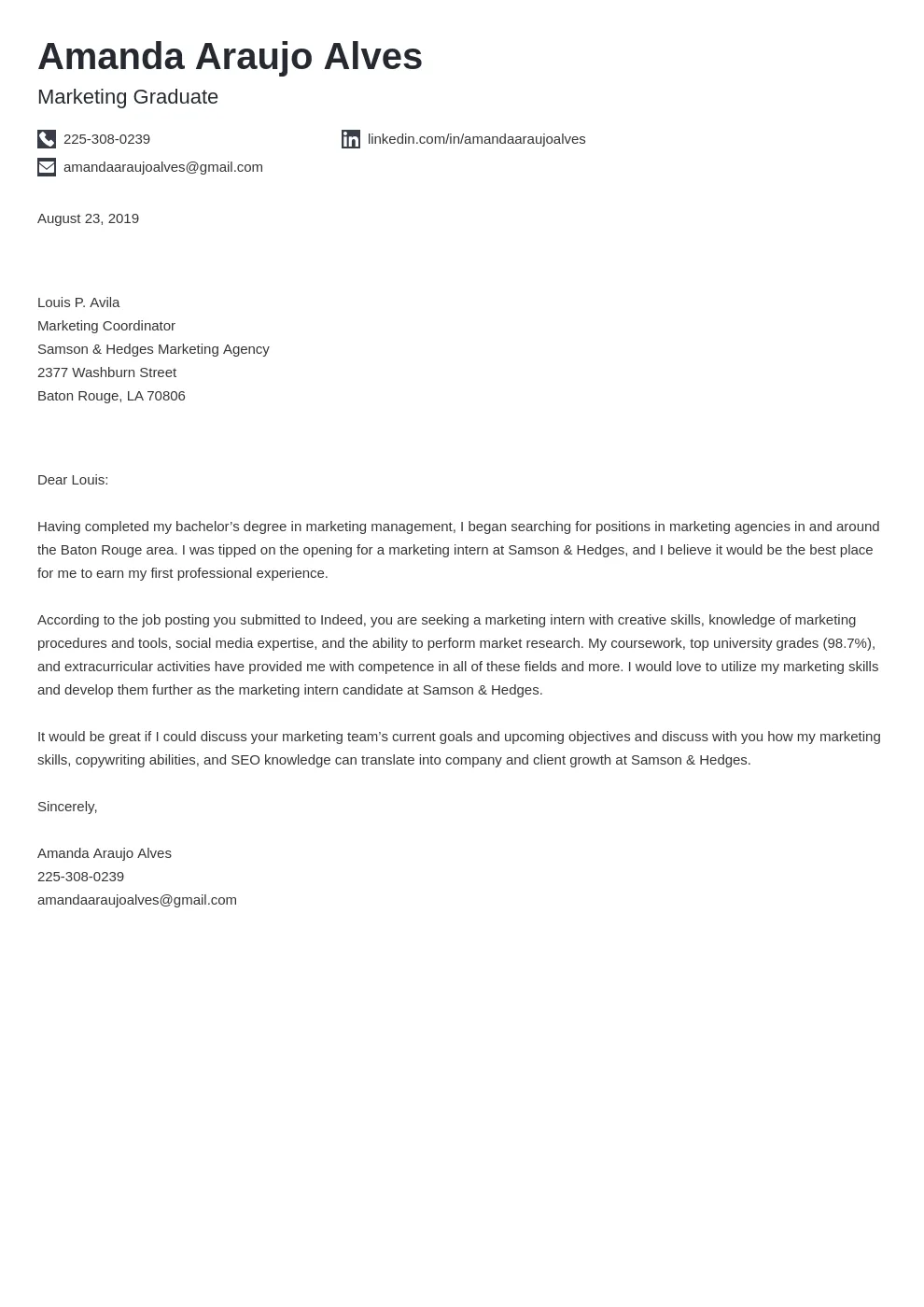
Understanding the Importance of a Marketing Cover Letter
In the competitive landscape of marketing, a well-crafted cover letter is not just a formality; it’s a powerful tool that can significantly boost your chances of landing a job. It’s your first opportunity to make a positive impression on a potential employer, setting the stage for your resume and ultimately, your interview. The cover letter allows you to go beyond the bullet points of your resume, providing a narrative that showcases your personality, passion for marketing, and how your skills and experience align with the specific role and company. It’s your chance to demonstrate that you’re not just qualified, but also a great fit for the company culture. Failing to submit a cover letter, or submitting a poorly written one, can be a missed opportunity, as it signals a lack of attention to detail and a lack of genuine interest in the position. A strong cover letter is an essential piece of your job application, helping you stand out from other applicants and catch the attention of hiring managers.
Why a Cover Letter is Crucial in Marketing
A cover letter is crucial in marketing because it allows you to tell a story. It’s a chance to connect your experience with the job requirements in a compelling way. Marketing is all about communication and storytelling, and a cover letter provides a platform to demonstrate these skills. It’s your opportunity to show how you approach marketing challenges, what results you have achieved, and how your unique skills and experiences make you the ideal candidate. Unlike a resume, which primarily lists facts and achievements, a cover letter offers the space to provide context, explain your thought processes, and express your enthusiasm for the role and the company. Consider it as your first marketing campaign, designed to persuade the hiring manager that you’re the best fit for the job. In a field that values creativity and innovation, a well-crafted cover letter showcases your ability to think strategically and communicate effectively, proving that you are the ideal candidate for any marketing role.
Highlighting Your Unique Value Proposition

Your cover letter is the perfect place to highlight your unique value proposition. What sets you apart from other marketing professionals? What specific skills, experiences, or perspectives do you bring to the table? The aim is to clearly articulate what makes you the perfect fit for the role and how you can contribute to the company’s success. Instead of simply listing your qualifications, you should demonstrate how those qualifications translate into tangible results. Back up your claims with specific examples, like campaigns you led, metrics you improved, or innovative strategies you implemented. Show the hiring manager not just what you can do, but what you have already done, and the positive impact you had on previous employers. This includes highlighting your understanding of the target audience, your creativity in problem-solving, your ability to analyze data, and your proficiency in the latest marketing tools and technologies. Make it clear that you are not just looking for a job; you are offering a solution to their marketing challenges.
Key Components of a Winning Marketing Cover Letter
Contact Information and Professional Greeting
Start with your contact information—your name, address, phone number, and professional email address—at the top of the letter. This makes it easy for the hiring manager to contact you. Following this, address the letter to a specific person whenever possible. Research the company website or LinkedIn to find the name of the hiring manager or the relevant contact person. A personalized greeting, such as “Dear Mr./Ms. [Last Name],” shows that you’ve taken the time to learn about the company and demonstrates a level of professionalism. Avoid generic greetings like “To Whom It May Concern.” If you are unable to find a specific name, a professional alternative is to address the hiring team with “Dear Hiring Manager.”
Crafting a Compelling Opening Paragraph

The opening paragraph is your first chance to grab the reader’s attention. It should be concise, engaging, and immediately communicate your interest in the role and the company. State the position you’re applying for and where you found the job posting. Then, briefly highlight what makes you an ideal candidate. Rather than just saying you have experience, provide a quick overview of a key achievement or skill that aligns with the job requirements. This might include a successful marketing campaign, expertise in a specific marketing channel, or a proven track record of driving results. For example, you could start by saying, “I am writing to express my keen interest in the Marketing Manager position at [Company Name], as advertised on [Platform Name]. With over five years of experience in developing and executing successful digital marketing strategies, I am confident in my ability to enhance your brand’s online presence and drive significant growth.”
Showcasing Relevant Skills and Experience
In the body of your cover letter, you should provide a more detailed overview of your relevant skills and experience. Tailor this section to match the job description. Carefully review the job requirements and highlight the skills and experiences that align with those requirements. Provide specific examples to illustrate how you’ve used these skills to achieve results in the past. When describing your experience, focus on quantifiable achievements, like increasing website traffic, improving conversion rates, or growing social media engagement. Demonstrate your understanding of marketing principles, such as SEO, content marketing, social media marketing, email marketing, and data analysis. Show how you have successfully used these tools and strategies to achieve your marketing goals. By connecting your past experiences to the specific needs of the job, you’re positioning yourself as a strong candidate who can make an immediate impact.
Quantifying Achievements and Results
Quantifying your achievements is essential for demonstrating the impact of your work. Instead of simply saying you “managed social media,” state that you “increased social media engagement by 30% in six months.” Use numbers, percentages, and specific metrics to highlight your accomplishments. Mention the campaigns you’ve run, the revenue you’ve generated, the cost savings you’ve achieved, and any other relevant performance indicators. For example, if you’ve worked on an SEO campaign, state how you improved search rankings for key terms. If you managed an email marketing campaign, mention the open and click-through rates. Include data wherever possible to provide solid proof of your effectiveness. Quantifying your achievements helps potential employers quickly understand the value you bring to the table and how you can contribute to their organization’s success.
Tailoring Your Letter to the Specific Job

A generic cover letter is a surefire way to get your application rejected. You must customize each cover letter to the specific job you are applying for. Before you start writing, carefully read the job description and understand the company’s needs and values. Research the company to learn more about its products, services, and marketing strategies. Then, tailor your letter to showcase how your skills and experience align with the job requirements and the company’s goals. This means highlighting the skills and experiences that are most relevant to the position and using keywords from the job description. Customizing your cover letter shows that you have taken the time to understand the role and the company, and that you are genuinely interested in the opportunity.
Expressing Enthusiasm and Interest
Convey your enthusiasm for the role and the company throughout your cover letter. Show that you are genuinely interested in the opportunity and that you are excited about the prospect of contributing to their team. Use strong, positive language to express your passion for marketing and your eagerness to learn more about the company. Describe why you are interested in this particular role and why you believe you would be a good fit for the company culture. Do some research about the company to show your understanding of their mission, values, and goals. Showcasing genuine interest and enthusiasm helps you stand out from other candidates and demonstrates your commitment to the position.
Structuring Your Cover Letter for Maximum Impact
Formatting and Design Best Practices

The format and design of your cover letter are as important as the content itself. A well-formatted cover letter is easy to read and makes a positive impression on the hiring manager. Use a professional font, such as Arial or Times New Roman, and choose a font size that is easy to read (typically 11 or 12 points). Use a clear and consistent layout, with appropriate margins and spacing. Divide your letter into distinct sections to make it easy for the reader to scan and find the information they need. Use bullet points or numbered lists to highlight key achievements and skills. Ensure that your cover letter is visually appealing and free from clutter.
Length and Tone Considerations
Keep your cover letter concise and to the point. Aim for one page, or a maximum of two pages if you have extensive experience. The tone of your cover letter should be professional, enthusiastic, and confident. Avoid overly formal language or jargon. Use a conversational tone that reflects your personality and writing style. Be positive and proactive in your approach. Proofread your letter carefully to ensure that the tone is consistent throughout.
Proofreading and Editing Checklist
Proofreading and editing are critical steps in ensuring that your cover letter is polished and professional. Before submitting your cover letter, carefully proofread it to catch any spelling, grammar, and punctuation errors. Read your letter aloud to identify any awkward phrasing or unclear sentences. Ask a friend or family member to review your letter and provide feedback. Check for consistency in your formatting and tone. Ensure that all your contact information is accurate and up-to-date. A well-proofread cover letter demonstrates attention to detail and reflects positively on your professionalism.
Common Mistakes to Avoid in Marketing Cover Letters

Generic and Uninspired Language
Avoid using generic phrases and clichés that don’t convey any specific information about your skills or experience. Phrases like “team player,” “hard worker,” and “detail-oriented” are overused and don’t set you apart from other candidates. Replace generic language with specific examples of your achievements and the impact you’ve made in previous roles. Instead of saying you are a good communicator, describe a specific instance where you successfully communicated a complex marketing strategy to a team. The key is to use a unique voice and demonstrate your personality.
Focusing Solely on Job Requirements
While it’s essential to address the job requirements, avoid the mistake of simply repeating the job description. Focus on the value you can bring to the role. Rather than just listing the skills mentioned in the job posting, highlight your specific accomplishments and how they align with the company’s needs. Show how your experiences and skills can benefit the company and help them achieve their goals. Tailor your letter to showcase your understanding of the company and the specific requirements of the position, but don’t forget to communicate your unique value proposition.
Grammatical Errors and Typos

Grammatical errors and typos can make a negative impression on the hiring manager, as they suggest a lack of attention to detail. Before submitting your cover letter, carefully proofread it to catch any mistakes. Use a grammar checker to catch any errors you might have missed. Ask a friend or colleague to review your letter. If you’re unsure about grammar rules, consult a style guide or online resources. Remember that even a small error can undermine your credibility, so always ensure that your cover letter is polished and professional.
Actionable Steps to Write a Standout Marketing Cover Letter
Researching the Company and the Role
Before you start writing, take the time to thoroughly research the company and the role. Visit the company website, read their blog, and check out their social media profiles to gain a better understanding of their brand, products, and target audience. Analyze the job description carefully, paying close attention to the required skills, experiences, and qualifications. Identify the key areas where your skills and experience align with the job requirements. If possible, try to learn more about the company culture and values. Researching the company will enable you to tailor your cover letter effectively.
Personalizing Your Letter to the Hiring Manager

Personalizing your cover letter demonstrates that you have taken the time to understand the company and the role. Whenever possible, address your letter to a specific person, such as the hiring manager. If you can’t find a specific name, use “Dear Hiring Manager.” In the body of your letter, reference specific projects, campaigns, or initiatives that the company is working on. Show that you understand their current challenges and how you can contribute to their success. Mention any relevant connections or experiences that demonstrate your passion for the company and the industry. Personalization makes your letter more engaging and shows that you are genuinely interested in the opportunity.
Including a Call to Action
End your cover letter with a clear call to action. Let the hiring manager know that you are interested in an interview and that you would welcome the opportunity to discuss your qualifications further. Provide your contact information again in the closing paragraph. Use a strong closing, such as, “I am eager to learn more about this opportunity and discuss how my skills and experience can benefit [Company Name]. Thank you for your time and consideration. I look forward to hearing from you soon.” Including a call to action increases the likelihood of getting a response.
Finalizing and Submitting Your Marketing Cover Letter
Before submitting your cover letter, review and proofread it one last time. Ensure that it is free of any errors and that it is tailored to the specific job and company. Save your cover letter in a professional format, such as PDF, to ensure that your formatting is preserved. Attach your cover letter to your application along with your resume. Follow the instructions in the job posting carefully. Sending a well-crafted cover letter can make a huge difference. By putting in the extra effort to craft a compelling cover letter, you significantly increase your chances of landing a marketing job.