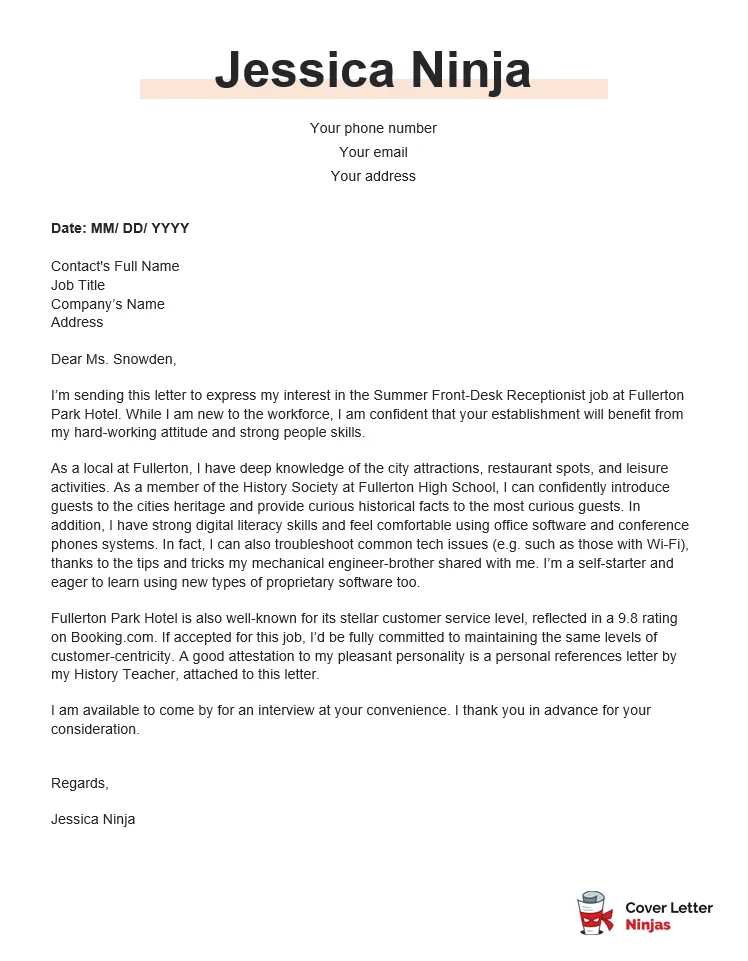
What is a Cover Letter for School?
A cover letter for school is a crucial document that accompanies your application. It serves as your first introduction to the admissions committee, providing them with a snapshot of who you are, what you’ve accomplished, and why you’re a great fit for their institution. Unlike a resume, a cover letter allows you to personalize your application, express your passion, and explain any unique circumstances. It’s your opportunity to make a strong first impression and set yourself apart from other applicants. Think of it as your personal pitch, designed to convince the school that you’re the right choice.
Why is a Cover Letter Important?
A well-crafted cover letter is more than just a formality; it’s a powerful tool in the admissions process. First, it demonstrates your genuine interest in the school. By taking the time to write a personalized letter, you show that you’ve done your research and are truly invested in attending. Secondly, a cover letter allows you to highlight your strengths and explain how your experiences and skills align with the school’s values and programs. It gives you the chance to elaborate on your resume, providing context and depth to your qualifications. Finally, a cover letter can address any potential weaknesses in your application, such as gaps in your education or a lower GPA, by providing a clear and concise explanation. Essentially, it provides the applicant an opportunity to explain the background of the student, showing their interest and the reason why he or she would be perfect for the college.
Key Components of a School Cover Letter

A successful cover letter is well-structured and includes specific elements. These key components work together to create a compelling narrative that showcases your suitability for the school. Each section plays a vital role in conveying your message effectively, from the initial contact information to the final expression of gratitude. Let’s dive into each of these components to help you create a cover letter that stands out from the crowd and increase your chances of getting admitted.
Header and Contact Information
The header provides essential information for easy communication. The header helps to establish professionalism from the start and make it simple for the admissions office to respond. A properly formatted header ensures the recipient can quickly identify you and know how to reach you. It also shows attention to detail, which is crucial in any application.
Applicant’s Name and Contact Details
Begin with your full name, ensuring it matches the name on your application. Below your name, include your current address, phone number, and professional email address. Make sure that your email address sounds professional. Double-check all details for accuracy; even a small error can cause issues.
Recipient’s Information

Directly under your contact information, provide the recipient’s name, title, and department (e.g., Admissions Committee, Admissions Office). Include the school’s name and address. If you know the name of the admissions officer, use it; it personalizes the letter. If not, use a general greeting like ‘Admissions Committee’ or ‘Dear Admissions Office’. This attention to detail shows you’ve researched the school and are committed to a professional presentation.
The Salutation
Your salutation sets the tone for the entire letter. Use a professional greeting like “Dear Mr./Ms./Mx. [Last Name]” if you know the admissions officer’s name. If not, “Dear Admissions Committee” or “Dear Admissions Office” are appropriate. Avoid overly casual greetings. Always double-check the spelling of the name and the title; errors in this section can create a negative impression from the start. It is your first opportunity to make a positive impression.
Crafting the Opening Paragraph
The opening paragraph is your hook—it’s your first chance to grab the reader’s attention. State the purpose of your letter clearly and concisely. Express your interest in the school and mention the specific program or opportunity you’re applying for. Briefly highlight what makes you a strong candidate. Make a bold statement about your goals and tie them into the school’s objectives. This paragraph should establish the tone for the rest of your letter and immediately convey your enthusiasm and suitability.
Highlighting Your Interest and Goals
In the body of your letter, explain why you’re interested in this specific school. Show that you’ve researched the institution and understand its values, programs, and culture. Describe how your academic and personal goals align with the school’s offerings. If possible, mention specific professors or courses that appeal to you. Express your passion for your field of study and your desire to learn and grow at this particular institution. This section is where you demonstrate that you’re a good fit and offer what the school needs.
Showcasing Your Qualifications and Skills
This section is your chance to highlight your strengths. Discuss your academic achievements, relevant skills, and experiences that make you a strong candidate. Provide specific examples that demonstrate your abilities. Use action verbs to describe your accomplishments and quantify your results whenever possible. This is where you convince the admissions committee that you have the skills needed to be successful in their program.
Academic Achievements
Mention your GPA, any honors or awards you’ve received, and any relevant coursework. If you have a high GPA or have excelled in particular subjects, highlight them. Include any research projects, academic competitions, or presentations that showcase your academic abilities. This evidence proves your commitment to learning.
Extracurricular Activities

Describe your involvement in clubs, sports, volunteer work, or other extracurricular activities. Explain the skills you’ve gained, such as leadership, teamwork, and time management. Show how these experiences have shaped you and contributed to your personal growth. This will display that the applicant can manage time and the responsibilities that come with it.
Skills and Abilities
Focus on skills relevant to your field of study. Include both hard skills (like programming or data analysis) and soft skills (such as communication and problem-solving). Provide examples of how you’ve used these skills in the past. Tailor your skill set to match the requirements and values of the school and program you are applying for. The purpose of this section is to prove your ability to excel.
Addressing Specific Requirements
If the school’s application requires specific information, make sure to address it clearly. For example, you may need to explain any gaps in your education, provide additional context for your grades, or address any special circumstances. Be honest, concise, and straightforward. This section proves the applicant can follow instructions and is transparent.
Writing the Closing Paragraph

Conclude your letter by reiterating your interest in the school and expressing your enthusiasm for the opportunity. Briefly summarize your key qualifications and reiterate your commitment to the program. This is your final opportunity to leave a lasting impression. Make sure you end with a strong closing statement that reinforces your desire to attend the school and achieve your academic and professional goals.
Expressing Gratitude and Offering Contact
Thank the admissions committee for their time and consideration. Include a polite offer to provide any further information or answer any questions they may have. Provide your contact information again, so they can easily reach you. This shows gratitude and a willingness to engage further in the application process.
Formatting and Proofreading
Formatting and proofreading are crucial steps. A polished and professional-looking cover letter reflects your attention to detail and commitment to quality. Poor formatting and errors can undermine your application. Make sure the formatting is clean and the document is error-free.
Cover Letter Formatting Best Practices

Use a standard font like Times New Roman, Arial, or Calibri, and ensure your font size is easy to read (11-12 points). Set consistent margins (1 inch on all sides) and use single-spacing. Use a clear and organized layout with headings, bullet points, and ample white space to make your letter easy to read. Maintain consistency in all aspects of formatting throughout the document. Ensure your letter is visually appealing and professional.
Proofreading and Editing for Clarity
Proofread your cover letter carefully for any grammatical errors, spelling mistakes, and punctuation issues. Read the letter aloud to catch any awkward phrasing or unclear sentences. Ask a friend, family member, or career counselor to review your cover letter for feedback. Ensure your language is clear, concise, and professional. Edit your letter multiple times to perfect its content and ensure its effectiveness. Proofreading proves attention to detail.
Examples of Effective School Cover Letters
Reviewing examples of successful cover letters can help you understand the best practices. Search online for sample cover letters for school applications. Focus on how the writers highlight their qualifications, express their interest, and format their letters. Analyze the language, tone, and structure of the examples. Use these examples as a guide, but always personalize your letter to reflect your unique background and goals. Study how other applicants write and prepare.
Cover Letter Template for School

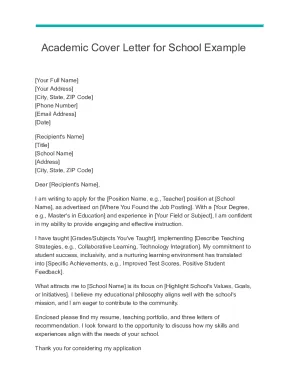
Utilizing a cover letter template can streamline the writing process. Several templates are available online, including those offered by universities and career services websites. Templates provide a basic structure for your letter, including sections for contact information, salutation, body paragraphs, and closing. However, avoid using a generic template. Customize the template by adding your unique experiences, skills, and passions to reflect your personality and goals. Personalize the template to fit your application. The image illustrates the example of a basic template to follow.
Common Mistakes to Avoid
Avoid generic cover letters by tailoring each letter to the specific school and program. Proofread carefully to eliminate any grammatical errors and spelling mistakes. Do not use overly casual language or slang. Avoid vague statements and instead provide concrete examples to support your claims. Don’t repeat information from your resume; instead, use the cover letter to elaborate on your experiences and skills. Avoid any negative comments about other schools or programs, and always focus on what you can contribute. Reviewing the points can save you from making simple mistakes.
Final Thoughts and Next Steps
Writing a compelling cover letter requires effort, but it is an important aspect of any school application. Start by researching the school and the program you are applying to. Make sure to highlight your unique qualifications, and tailor your letter to fit the specific requirements and values of the institution. Proofread the letter for accuracy and clarity. Use the cover letter to make a positive first impression and increase your chances of success. Following the steps will increase your chances of getting accepted into the college of your dreams!