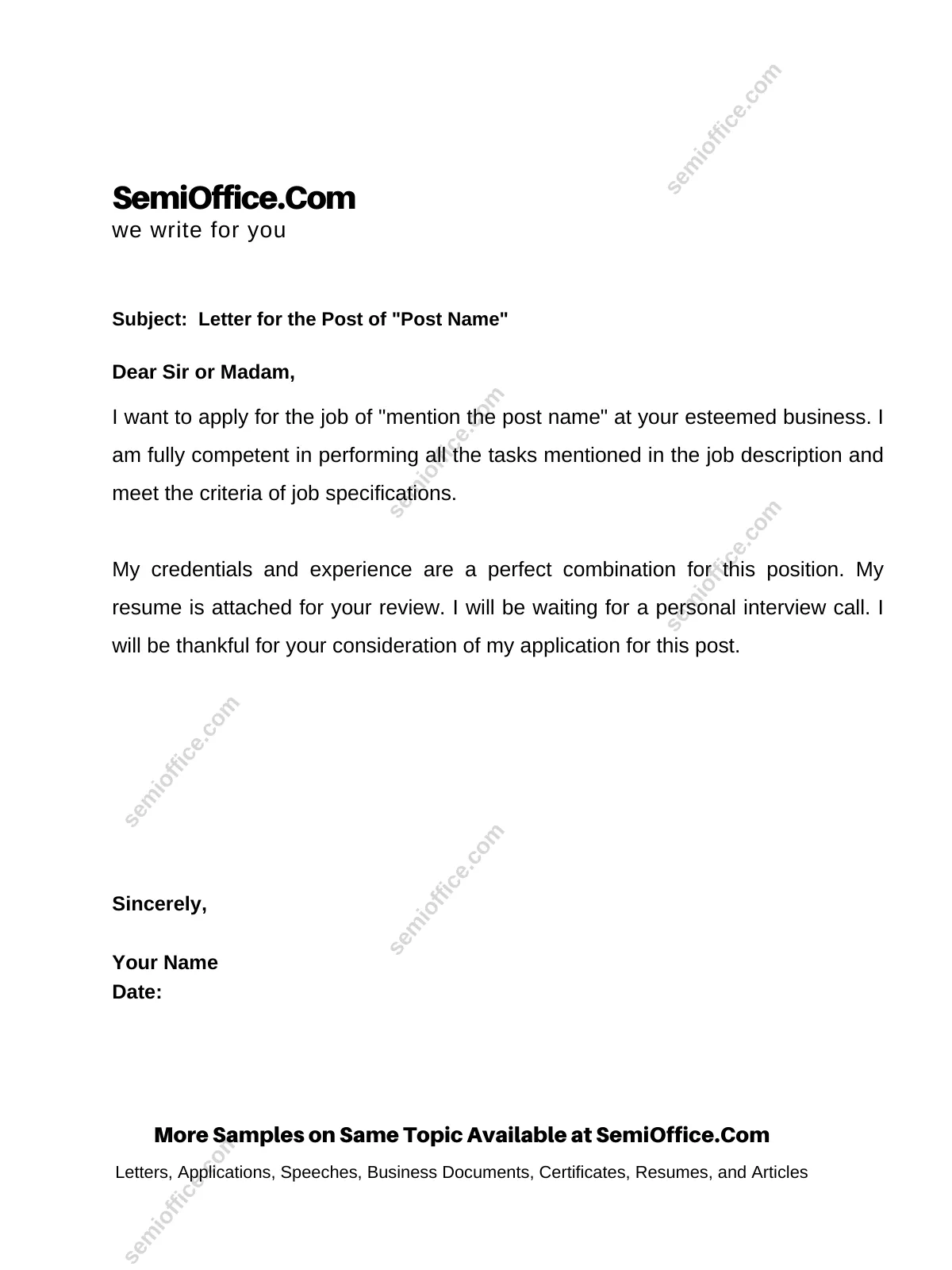
Understanding the Cover Letter
The cover letter is your first opportunity to make a strong impression on a potential employer. It serves as a crucial introduction, offering you the chance to highlight your key skills, experience, and enthusiasm for a specific job opening. Unlike a resume, which provides a factual summary of your background, a cover letter allows you to articulate your personality, explain why you’re the ideal candidate, and express your genuine interest in the role. Mastering the art of cover letter writing is essential for anyone aiming to advance their career and secure their dream job.
What is a Cover Letter?
A cover letter is a one-page document submitted with your resume during a job application. Its primary purpose is to introduce you to the hiring manager, explain why you’re applying for a specific position, and summarize how your skills and experiences align with the job requirements. A well-crafted cover letter should complement your resume, providing more detail about your qualifications and expressing your enthusiasm for the opportunity. This is your chance to go beyond the facts presented in your resume and show your unique value proposition.
Why is a Cover Letter Important?

In today’s competitive job market, a cover letter is more important than ever. It gives you the chance to personalize your application and demonstrate that you’ve taken the time to understand the role and the company. Employers often use cover letters to assess your communication skills, attention to detail, and ability to express yourself clearly and concisely. A compelling cover letter can significantly increase your chances of getting an interview, even if your resume isn’t perfect. Ignoring this crucial document could mean missing out on opportunities.
Essential Components of a Cover Letter
A successful cover letter comprises several key elements working together to create a persuasive introduction. These components must be present and correctly formatted. Every element is essential for showing you are the right candidate. Each section contributes to making a strong application that impresses the hiring manager and increase your chances of landing an interview.
Contact Information
At the top of your cover letter, include your contact information. This should include your full name, phone number, email address, and optionally, your LinkedIn profile URL. Ensure that the contact details are up-to-date and professional. Using a clear and easy-to-read format makes it easy for the hiring manager to reach out to you. Incorrect or missing contact information can lead to missed opportunities.
Date

Below your contact information, include the date you are submitting the application. This provides a record of when you applied and gives the letter a sense of timeliness. Formatting the date correctly, usually in a standard format such as month, day, and year (e.g., June 15, 2024), is important for professionalism. The date shows when you’re active in applying for new jobs and is essential for the employer.
Recipient’s Information
Address the letter to the hiring manager or the appropriate contact person if possible. Researching the company’s website or LinkedIn to find the name of the hiring manager can make the letter more personal. If you can’t find a specific name, use a professional title such as ‘Hiring Manager’. Addressing the letter directly shows that you’ve done your homework and are serious about the opportunity. Avoid using generic greetings if a specific name can be found.
Salutation
Begin your cover letter with a professional salutation. ‘Dear Mr./Ms./Mx. [Last Name]’ is standard. If you don’t know the name, use ‘Dear Hiring Manager’. Avoid casual greetings like ‘Hi’ or ‘Hello’. Ensure your salutation matches the tone of the letter. The salutation sets the tone for the entire letter. A professional salutation is very important for the first impression. A good first impression starts with a good salutation.
Opening Paragraph Crafting

The opening paragraph is your chance to grab the reader’s attention and create a positive first impression. This section should quickly capture the reader’s interest. It needs to be concise, compelling, and relevant to the job. This first paragraph should spark curiosity and prompt them to read further.
Highlighting Your Interest
Start by expressing your enthusiasm for the position and the company. Briefly state why you are excited about the opportunity. If something specific about the role or the company caught your attention, mention it. This could be a specific project, their mission, or their culture. Showing genuine interest makes you stand out. Mentioning something personal or specific about the company will make you look better.
Mentioning the Job
Clearly state the specific job you are applying for. Include the job title and, if possible, the job posting number. This ensures the hiring manager knows exactly which position you are targeting and makes your application organized. Make it clear that you are applying for the role mentioned in the job opening. Make it easy for the hiring manager to understand your application.
Showcasing Your Skills & Qualifications

This is where you highlight your relevant skills, experience, and accomplishments. To successfully show your qualifications, tailor the content to match the job description. This will show the hiring manager that you are a great fit for the job. Provide concrete examples and metrics to support your claims. Provide strong evidence to illustrate why you are the best candidate.
Relevant Skills and Experience
Identify the key skills and experiences required for the job. Then, provide examples of how you’ve demonstrated those skills in previous roles. Use the job description as your guide, focusing on the qualifications the employer seeks. Avoid listing every skill. Instead, focus on the ones that align with the job requirements. Make a connection between your past experience and the job requirements. This will help you make a great impact on the hiring manager.
Quantifiable Achievements
Whenever possible, quantify your achievements with numbers and data. For example, instead of saying ‘Improved customer service,’ say ‘Improved customer satisfaction scores by 20%.’ Quantifiable achievements make your claims more credible. Numbers show the impact of your work and provide concrete evidence of your abilities. This demonstrates your value and the value you can bring to the new company.
Tailoring to the Job Description

Carefully review the job description and tailor your cover letter to match. Use keywords from the job description and address specific requirements. Show that you understand the job’s demands and have the skills to succeed. Tailoring shows that you are truly interested in this specific role and are not sending a generic application. Personalizing your application makes you more memorable.
Closing Your Cover Letter
The closing paragraph is your last chance to leave a lasting impression. This section should summarize your interest, reiterate your qualifications, and encourage further action. This final impression is just as crucial as the introduction. Use the closing to show the value you bring to the team. A strong close can increase your chances of getting an interview.
Expressing Gratitude
Thank the hiring manager for their time and consideration. Expressing gratitude shows professionalism and courtesy. It also signals that you value the opportunity and are serious about the application. Gratitude will make a positive impression and help you stand out from other candidates. A simple thank you shows your appreciation for the time spent reviewing your application.
Call to Action

Include a call to action, such as stating your availability for an interview or mentioning your willingness to discuss your qualifications further. A clear call to action encourages the hiring manager to take the next step. Make it easy for them to move forward with your application. Give the hiring manager a clear step they can take to contact you and schedule an interview. Giving the hiring manager a clear step makes the whole process easier.
Professional Closing and Signature
End your cover letter with a professional closing, such as ‘Sincerely’ or ‘Best regards’. Type your full name below the closing. If submitting a physical copy, leave space for your signature above your typed name. Your closing should reflect the tone of your letter and project professionalism. Always use a professional closing, and be sure to include your full name. A signature adds a personal touch to your cover letter.
Formatting and Design
The formatting and design of your cover letter play a crucial role in its overall presentation. A well-formatted cover letter is easy to read and demonstrates professionalism. Ensuring a clean and organized layout enhances readability and makes it easier for the hiring manager to focus on your content. Attention to detail in formatting shows professionalism and respect for the hiring manager’s time. Make sure you make a good first impression by using a professional layout.
Font and Size

Choose a professional and easy-to-read font, such as Times New Roman, Arial, or Calibri. Use a font size between 10 and 12 points for the body text. Make sure the font is readable both on paper and on a screen. Avoid using overly decorative fonts that can distract the reader. Consistency in font and size throughout your cover letter makes it look professional. Select a font that is visually appealing.
Layout and Structure
Use clear headings and subheadings to organize your content. Maintain consistent spacing and margins throughout the document. The document should be no more than one page long. Using a clean layout helps the reader to easily navigate the letter. Avoid excessive use of bolding, italics, or underlining. A well-structured layout enhances readability and makes your cover letter look professional. Always use a clean layout to showcase your skills.
Proofreading and Editing
Thorough proofreading and editing are essential to ensure your cover letter is free of errors. Proofreading can make or break an interview. This step involves checking for grammatical errors, typos, and inconsistencies. A polished cover letter demonstrates attention to detail and professionalism. Always proofread and edit your cover letter before submitting it. Making sure the letter is error-free is just as important as the content.
Common Mistakes to Avoid
Avoiding common mistakes can significantly improve your cover letter’s effectiveness. These mistakes can often make or break your chances of landing an interview. Common errors can damage your credibility and make you look unprofessional. Identifying and addressing these common issues is vital. Preventing these mistakes is important for landing your dream job. Avoid common errors and mistakes by being vigilant.
Grammatical Errors
Grammatical errors can undermine your credibility and make you appear unprofessional. Always proofread your cover letter carefully for any errors in grammar, punctuation, and sentence structure. Use spell-check and grammar-check tools, but also read through your letter manually. A well-written cover letter demonstrates your communication skills and attention to detail. Proofread your cover letter to avoid grammatical errors. You can also ask someone else to proofread your letter.
Generic Content
Avoid using generic cover letters that could apply to any job. Tailor your cover letter to each specific job opening, highlighting relevant skills and experiences. Customize your content to the specific job description. Generic content signals a lack of genuine interest. Demonstrate that you understand the role and have the specific qualifications they need. Generic content is the biggest mistake that people make. Customize the letter to match the job opening.
Typos and Spelling Errors
Typos and spelling errors can make your cover letter look sloppy and unprofessional. Always proofread your cover letter multiple times to catch any errors. Use spell-check and grammar-check tools, but also have someone else review your letter. Typos and spelling errors show a lack of attention to detail. Ensure your cover letter is error-free. Typos and spelling errors are a deal-breaker for some hiring managers.