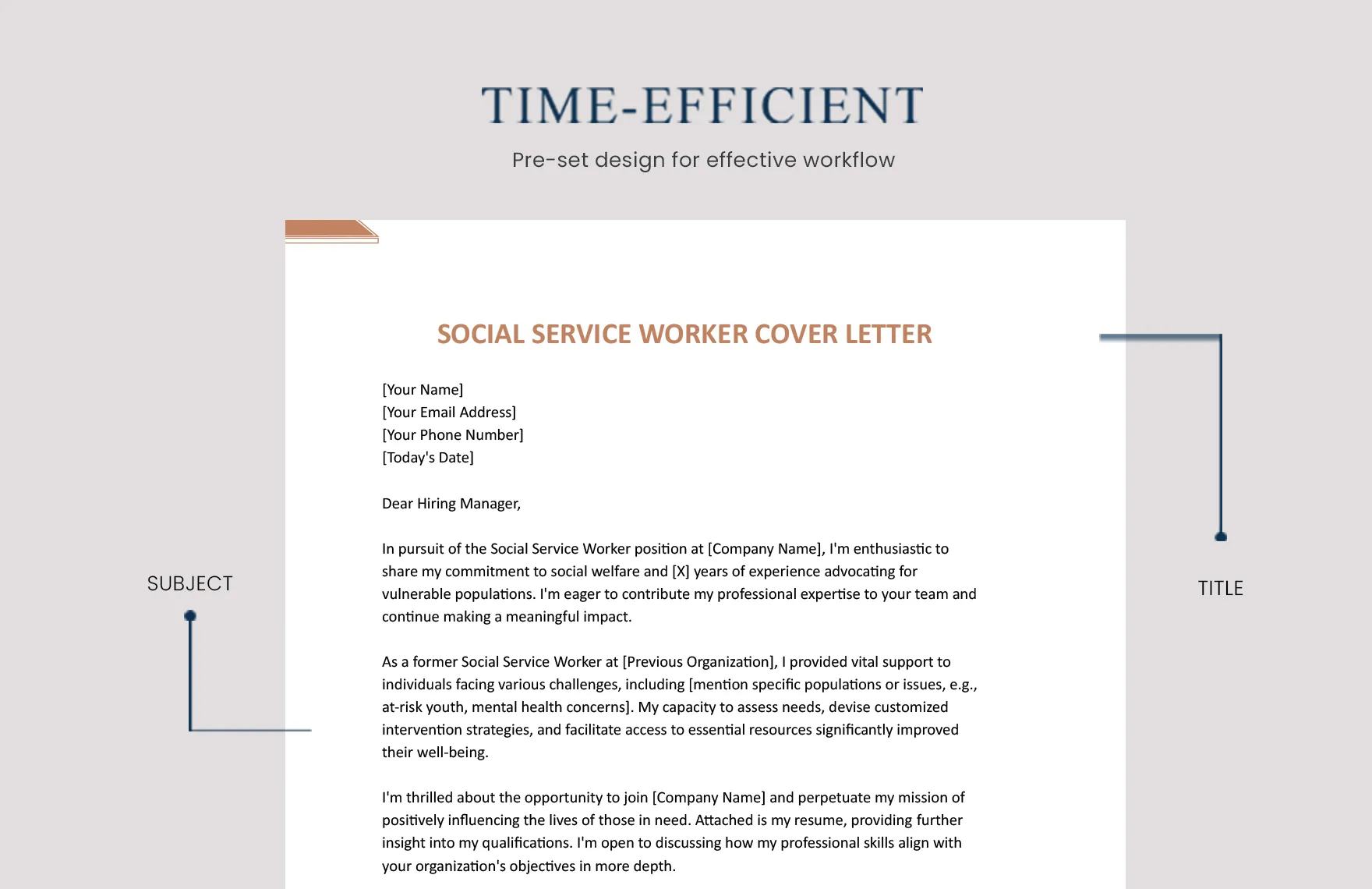
Understanding the Importance of a Strong Cover Letter
In the competitive field of social services, a well-crafted cover letter is your first opportunity to make a positive impression. It’s not just a formality, but a critical tool that can significantly impact your chances of landing an interview. This document provides a platform to introduce yourself, showcase your unique skills and experience, and express your genuine interest in the specific role and organization. A strong cover letter complements your resume, providing context, and highlighting the achievements and qualities that make you a standout candidate. It allows you to elaborate on your qualifications, demonstrating how your background aligns with the job’s requirements and the organization’s mission. A poorly written cover letter, on the other hand, can be a major drawback, potentially leading to your application being overlooked.
Researching the Social Services Organization
Before you even begin to write, dedicate time to researching the social services organization. Understanding their mission, values, programs, and recent initiatives demonstrates your genuine interest and commitment. Visit their website, explore their social media presence, and read any available reports or publications. This research will enable you to tailor your cover letter to specifically address the organization’s needs and demonstrate how your skills align with their goals. Mentioning specific programs or initiatives the organization is involved in shows you’ve taken the initiative to learn about their work and that you are genuinely interested in contributing to their mission. This level of preparation will significantly enhance the impact of your application and set you apart from candidates who submit generic cover letters. Knowing the organization also helps you personalize your letter, addressing specific challenges or opportunities they face.
Highlighting Relevant Skills and Experience

Your cover letter is your chance to showcase the skills and experience most relevant to the specific social services role. Carefully review the job description and identify the key requirements, such as case management, crisis intervention, program development, or advocacy. Then, in your cover letter, provide specific examples that demonstrate how you’ve successfully utilized these skills in previous roles or experiences. Quantify your achievements whenever possible. Instead of saying “Managed a caseload,” specify “Managed a caseload of 40 clients, resulting in a 15% improvement in client outcomes.” This level of detail adds credibility to your claims and paints a clear picture of your capabilities. Focus on the experiences that directly relate to the job’s requirements, even if you have other relevant experiences.
Tailoring Your Cover Letter to the Job Description
One of the biggest mistakes you can make is sending out a generic cover letter. Each cover letter should be customized to the specific job you’re applying for. Carefully review the job description, noting the key skills, qualifications, and responsibilities. Then, tailor your letter to directly address these points. Use the same keywords and phrases from the job description in your letter, but be sure to do so naturally. Highlight how your skills and experience align with the requirements outlined in the job description. Explain how you can contribute to the organization’s success in the specific role. This approach shows that you have carefully considered the position and are a good fit. This also gives the impression that you are highly interested in the role and have the required skill set.
Showcasing Your Passion for Social Work
Social services is a field driven by compassion and a genuine desire to help others. Your cover letter should reflect this passion. Articulate why you are drawn to social work and what motivates you to make a difference in the lives of individuals and communities. Share any personal experiences or anecdotes that have fueled your passion for social justice and helping vulnerable populations. This emotional connection demonstrates authenticity and creates a memorable impression on the hiring manager. Convey your understanding of the challenges faced by the target population, and your commitment to addressing these issues. This includes any volunteer work you may have completed. You also might want to include any extracurricular activities that involved community service.
Demonstrating Your Understanding of Social Issues

Social workers must be well-informed about the complex social issues they address. Demonstrate your awareness of current trends, challenges, and best practices in the field. Mention relevant legislation, policies, or social movements you follow. If the job focuses on a specific population or area of need, such as child welfare, mental health, or homelessness, show that you understand the unique challenges faced by that population. This includes the ability to articulate the social, economic, and political factors contributing to these issues. You can also mention any professional development courses, workshops, or conferences you have attended to stay current. This knowledge will position you as a knowledgeable and committed professional.
Using Action Verbs to Describe Accomplishments
Instead of simply stating your responsibilities, use strong action verbs to describe your accomplishments and achievements in previous roles. This is the key to presenting your qualifications in a dynamic and compelling manner. Start each bullet point or paragraph with an action verb, such as “managed,” “coordinated,” “developed,” “implemented,” “advocated,” “counseled,” “assessed,” or “facilitated.” These verbs immediately convey a sense of initiative and impact. Provide quantifiable results whenever possible. For example, instead of “Provided counseling,” say “Provided counseling to 50+ clients, resulting in a 20% reduction in reported stress levels.” This shows concrete evidence of your effectiveness. This makes your experience more specific and memorable, demonstrating your skills and abilities clearly.
Structuring Your Cover Letter Effectively
A well-structured cover letter is easy to read and highlights your key qualifications. Start with a strong opening paragraph that immediately grabs the reader’s attention. In the body paragraphs, address the specific requirements of the job and showcase your skills and experience. Use clear and concise language, and break up the text into short paragraphs to make it more readable. Use bullet points or numbered lists to highlight key achievements and skills. Make sure the formatting is professional, with consistent font and margins. The structure should be logical and easy to follow. Use headings and subheadings if needed, to make it easy for the reader to understand the information. Proofread your letter carefully to eliminate any grammatical errors or typos.
Writing a Compelling Opening Paragraph

The opening paragraph is your first chance to make a strong impression, so it should immediately grab the reader’s attention. Start by stating the position you are applying for and where you found the job posting. Briefly mention why you are interested in the role and the organization. Highlight a key skill or accomplishment that is directly relevant to the job. You can also show enthusiasm and excitement for the position. Avoid generic phrases like “I am writing to express my interest.” Instead, try something more engaging, such as “I am writing to express my enthusiastic interest in the Social Worker position at [Organization Name], as advertised on [Platform].” The opening paragraph should be brief and get straight to the point. It should also set the tone for the rest of the letter.
Crafting Strong Body Paragraphs
The body paragraphs are where you provide details about your qualifications and how they align with the job requirements. Each paragraph should focus on a specific skill, experience, or accomplishment. Provide specific examples that support your claims, and quantify your results whenever possible. Refer back to the job description and use the same keywords and phrases. Show how your skills and experience can benefit the organization. Tailor your body paragraphs to the specific requirements of the job. Include details about any relevant projects, tasks, or initiatives. This will demonstrate your ability to perform the required duties of the role. Support your claims with evidence.
Creating a Powerful Closing Statement
Your closing statement should reiterate your interest in the position and thank the reader for their time and consideration. Express your confidence in your ability to contribute to the organization. State that you are eager to discuss your qualifications further in an interview. Provide your contact information, including your phone number and email address, and be sure to thank the hiring manager for their consideration. A polite and professional closing statement leaves a lasting impression. It reinforces your enthusiasm and reinforces your professionalism. Avoid vague phrases like “I look forward to hearing from you.” Instead, use a more specific and engaging closing, such as “Thank you for your time and consideration. I am eager to discuss how my skills and experience can contribute to [Organization Name]’s mission.”.
Proofreading and Editing Your Cover Letter

Before submitting your cover letter, proofread it carefully for any errors in grammar, spelling, and punctuation. Even minor errors can detract from your professionalism and make you appear careless. Read your cover letter aloud to catch any awkward phrasing or unclear sentences. Ask a friend or colleague to review your cover letter. A fresh pair of eyes can often spot errors that you might have missed. Make sure the formatting is consistent and visually appealing. Use a professional font and appropriate margins. Check for any inconsistencies in the layout. It’s very important to correct all errors before submitting the letter.
Reviewing Cover Letter Examples for Inspiration
Reviewing cover letter examples can provide valuable inspiration and guidance. Search online for examples of cover letters for social services roles. Pay attention to the structure, language, and tone used in successful cover letters. Identify any skills, achievements, or qualities that are highlighted. You can also use cover letter templates as a starting point. Tailor the templates to reflect your individual experience and the specific job. Be aware, however, that you should not copy any part of the letter, even if you are using the template. The goal is to get ideas, not to copy and paste. This will help you gain a better understanding of how to present yourself effectively.
Cover Letter Examples for Different Social Services Roles
Cover letter examples for different social services roles can show you how to tailor your application. A cover letter for a case manager position will emphasize experience in direct client services, assessment, and care planning. An application for a community outreach worker might highlight experience in program promotion, community engagement, and collaboration. A cover letter for a social work supervisor position will emphasize leadership, staff development, and program management. Analyzing these examples provides valuable insight into the key skills, experiences, and qualities that employers seek for these positions. Consider the different requirements and responsibilities of each role. Customize your cover letter to align with the specific job. Tailor your cover letter to showcase the skills and experience that are most relevant to the position. Pay close attention to the language and style used.
Cover Letter Examples for Entry-Level Positions

When applying for entry-level positions, such as social work assistants or interns, your cover letter can demonstrate your potential, your enthusiasm, and your passion for the field. Highlight any relevant coursework, volunteer experiences, or internships that you have completed. Focus on your transferable skills, such as communication, empathy, and problem-solving. Show your understanding of the challenges and issues faced by the client population that you’re interested in serving. Emphasize your willingness to learn and your eagerness to contribute to the organization. Even if you have limited professional experience, you can still showcase your potential by highlighting relevant skills, experiences, and achievements. Demonstrate your passion for the field.
Cover Letter Examples for Experienced Professionals
For experienced professionals, your cover letter should focus on your accomplishments, your leadership skills, and your expertise in the field. Highlight your key achievements and the impact you’ve made in previous roles. Quantify your results whenever possible. Showcase your management experience, if applicable. Demonstrate your ability to work collaboratively, lead teams, and manage projects. If you are seeking a leadership role, emphasize your experience in program development, staff training, and budget management. Also highlight your skills in strategic planning and problem-solving. Show how you have contributed to the success of the organization. Tailor your cover letter to the specific requirements of the job. This will demonstrate the impact you have made over the course of your career.
Avoiding Common Mistakes in Cover Letters
There are some common mistakes that can undermine your application. Avoid sending a generic cover letter that is not tailored to the job. Failure to research the organization or highlight relevant skills and experiences. Grammatical errors, typos, and poor formatting can make a bad impression. Overly long cover letters are a big turn-off. Keep your letter concise. Neglecting to tailor your letter to the specific job. Focus on your achievements and quantifiable results. Lack of passion or enthusiasm. Being too casual in your language. Not proofreading your letter carefully. Overstating your qualifications. Not including your contact information. These mistakes can make the difference between a successful application and getting your application overlooked.
Formatting Your Cover Letter Professionally

A professionally formatted cover letter is easy to read and makes a good first impression. Choose a professional font, such as Times New Roman or Arial, and use a font size of 11 or 12 points. Use consistent margins of one inch on all sides. Use a standard business letter format, with your contact information, the date, the hiring manager’s name and title, and the organization’s address. Keep the tone professional and respectful. Use clear and concise language. Use bullet points or numbered lists to highlight key achievements. Proofread your letter carefully to ensure that there are no errors. Make sure that your letter is easy to read. A well-formatted letter shows that you pay attention to detail.