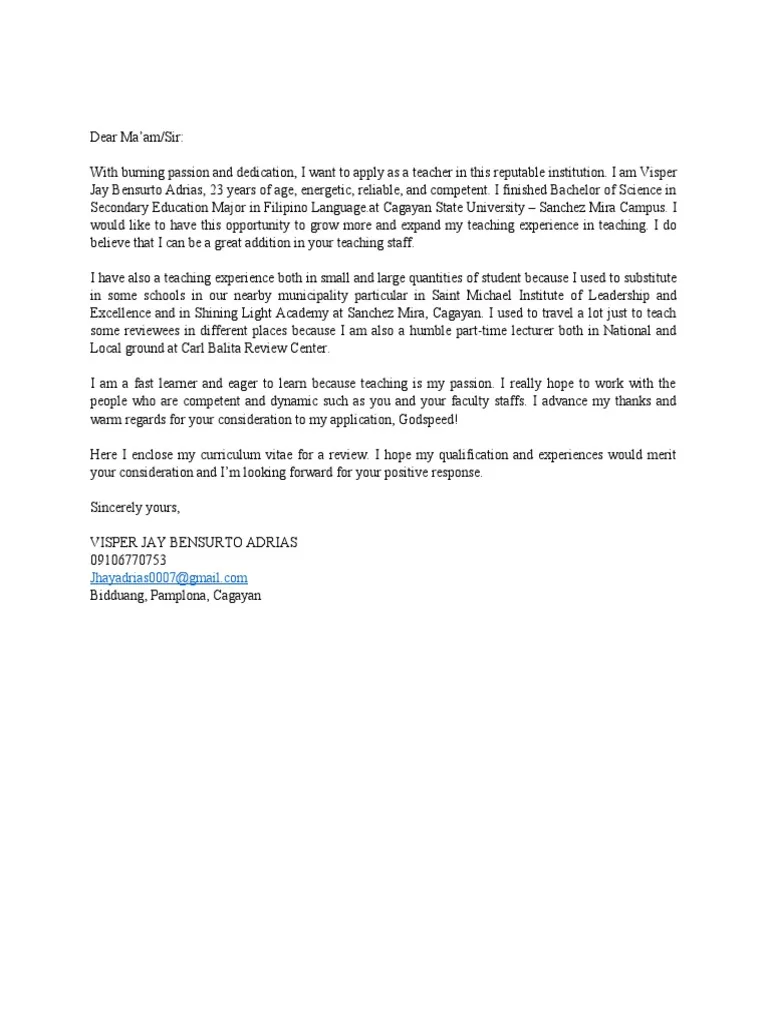
Why a Cover Letter Matters for Online Applications
In today’s competitive job market, especially when applying online, a well-crafted cover letter can be your secret weapon. It’s your first opportunity to make a strong impression and differentiate yourself from the hundreds or even thousands of other applicants. While a resume provides a summary of your qualifications, the cover letter allows you to tell your story, demonstrate your personality, and express your genuine interest in the position and the company. It’s a chance to move beyond the bullet points and create a compelling narrative that captures the hiring manager’s attention and encourages them to delve deeper into your qualifications. Ignoring this crucial element can mean your application is overlooked, even if you’re a perfect match on paper. Online applications often involve automated systems that screen applications, and a cover letter, with the right keywords, can help you get past those initial filters and into the hands of a human reader. A targeted cover letter shows you’ve taken the time to understand the role and the company, indicating a level of commitment and enthusiasm that can set you apart.
Grabbing Attention in Seconds
The opening of your cover letter is absolutely critical. You have only a few seconds to capture the reader’s attention and convince them to keep reading. Start with a strong hook—something that immediately intrigues the reader. This could be a relevant achievement, a shared connection, or a concise statement of why you’re excited about the opportunity. Avoid generic openings like “I am writing to express my interest.” Instead, try something more engaging, such as highlighting a specific company project you admire, a problem you’re eager to solve, or a unique skill you bring to the table. The goal is to spark curiosity and make the hiring manager want to learn more. Make sure your opening paragraph is concise, focused, and directly relevant to the job and the company. Showing that you understand the company’s needs and can contribute to their success will make your application stand out, signalling that you’ve done your research and are not just sending out a generic application.
Highlighting Key Skills and Experiences

Your cover letter is the perfect place to elaborate on the skills and experiences that directly align with the job requirements. Go beyond simply listing your qualifications; instead, provide specific examples that showcase your abilities and achievements. Quantify your accomplishments whenever possible. Instead of saying “Managed social media campaigns,” say “Increased social media engagement by 30% in six months.” Use action verbs to describe your responsibilities and accomplishments, and tailor your examples to match the specific keywords and requirements mentioned in the job description. Focus on the most relevant experiences and demonstrate how your skills and expertise can benefit the company. This is your opportunity to paint a clear picture of how you can contribute to the team and make a positive impact. By providing concrete examples, you transform your resume into a compelling narrative and show the hiring manager you are a results-oriented candidate.
Cover Letter Structure for Online Applications
Structuring your cover letter effectively is essential for readability and impact. A well-organized cover letter is easier to understand and more likely to keep the reader engaged. The standard structure typically includes a header, a personalized greeting, body paragraphs, and a closing. Each section plays a specific role in conveying your qualifications and enthusiasm. Maintaining a professional tone and clear layout throughout is critical for demonstrating your attention to detail and communication skills. Using clear headings, concise paragraphs, and proper formatting will help the hiring manager quickly grasp your qualifications and appreciate the value you bring to the table. A well-structured cover letter demonstrates professionalism and makes a strong positive impression, enhancing your chances of landing an interview. Pay close attention to the visual presentation, including font choice and spacing, to create a polished and easy-to-read document.
Header Essentials
Your header should include your contact information, the date, and the hiring manager’s name and title if you know it. This information is essential for the hiring manager to easily reach out to you. Always include your name, phone number, email address, and optionally, your LinkedIn profile URL. Ensure that the date is current and that you’re using the appropriate formal formatting for the recipient. If you know the hiring manager’s name, make sure to use it, this shows you’ve done your research and are putting in the extra effort. Double-check all details for accuracy to avoid any errors that could hinder your application. If you are unsure of the hiring manager’s name, use a general greeting, such as “Dear Hiring Manager,” but always strive to find the specific person’s name if possible. A professional and accurate header is a crucial first step to making a positive impression and demonstrating that you pay attention to detail, critical to any successful application.
Personalized Greeting

A personalized greeting sets the tone for the entire cover letter. Addressing the hiring manager by name immediately demonstrates that you’ve researched the company and are genuinely interested in the position. Using “Dear Mr./Ms./Mx. [Last Name]” is the standard. Avoid generic greetings such as “To Whom It May Concern,” which can make your application feel impersonal. If you’re unable to find the hiring manager’s name, use a general greeting, such as “Dear Hiring Manager.” However, always make the effort to find the specific person, as this small detail can make a significant difference. This level of personalization shows that you are proactive and willing to go the extra mile, making you a stronger candidate. Always double-check the spelling of the name to avoid any embarrassing errors, which might reflect poorly on your attention to detail. A personalized greeting immediately conveys professionalism and respect, setting the foundation for a positive first impression.
Body Paragraphs: Show, Don’t Tell
The body paragraphs are where you showcase your value and convince the hiring manager that you’re the right fit for the role. This section is your opportunity to elaborate on your skills and experiences, providing specific examples and quantifiable results. Each paragraph should address a key aspect of your qualifications and directly align with the job requirements. Don’t just list your skills; demonstrate them through examples. Structure the body of your letter to highlight your achievements, explaining how you have helped previous employers or projects. Use the STAR method (Situation, Task, Action, Result) to provide clear and concise examples of your accomplishments. Show, don’t tell, is a crucial principle here: demonstrate your ability to perform the job by showcasing past successes. By providing concrete evidence of your capabilities, you make a more compelling case for your candidacy and capture the reader’s attention, setting you apart from other applicants.
First Paragraph: Hook the Reader
Your first paragraph is crucial for capturing the reader’s attention. Begin with a strong hook that immediately intrigues the hiring manager and encourages them to keep reading. This could be a brief statement of your enthusiasm for the role, a relevant accomplishment, or a shared connection. Focus on the company’s needs or a specific problem that you’re excited to solve. Mentioning something specific about the company or the role shows that you’ve done your research and are not sending a generic application. Avoid generic opening lines, such as “I am writing to express my interest.” Instead, try something more engaging, like, “I was thrilled to see the opening for a Marketing Manager at [Company Name] because I’ve been a longtime admirer of your innovative campaigns…” Keep the first paragraph concise, focused, and directly relevant to the job and the company. The hook should immediately communicate why you are interested in the position and what value you bring.
Second Paragraph: Showcase Your Value

In the second paragraph, focus on highlighting your key skills and experiences. Provide specific examples of your achievements and how they align with the job requirements. Use action verbs to describe your responsibilities and quantify your accomplishments whenever possible. This paragraph is where you demonstrate how you have contributed to your previous employers and the key value you bring to the position. Discuss specific projects, tasks, and accomplishments that relate to the job’s responsibilities. Focus on achievements and results, using the STAR method or other storytelling techniques. By providing concrete examples of your capabilities, you make a more compelling case for your candidacy, setting you apart from other applicants. Ensure the examples are relevant to the role and demonstrate how you can solve problems or contribute to the company’s goals. The value you present should focus on your abilities, skills, and what you can bring to the company.
Third Paragraph: Call to Action
Your third paragraph should include a clear and compelling call to action. Reiterate your interest in the position and express your enthusiasm for the opportunity. State that you have attached your resume for their review and that you are available for an interview. Make it easy for the hiring manager to take the next step. In your call to action, indicate your availability for an interview and provide your contact information. A strong call to action demonstrates confidence and initiative. Thank the hiring manager for their time and consideration, but do not be overly verbose. Keep the call to action brief, direct, and focused on the next steps. This ensures that the hiring manager knows you are eager and ready to move forward in the application process, increasing your chances of receiving a response.
Closing and Formatting
Your closing should be professional, courteous, and reiterating your interest in the position. Use a professional closing such as “Sincerely” or “Best regards,” followed by your full name. Avoid casual closings like “Thanks” or “Cheers.” Proofread your cover letter multiple times for any grammatical errors or typos. Ensure that your formatting is consistent throughout the document. Pay attention to font choice, font size, and spacing. Use a standard font such as Arial, Calibri, or Times New Roman, with a font size between 10 and 12 points. Ensure the letter has a professional appearance. Save your cover letter as a PDF to maintain your formatting across different devices. A well-formatted and error-free cover letter demonstrates your attention to detail and professionalism, further enhancing your chances of making a positive impression. A professional closing solidifies your interest and leaves the hiring manager with a positive final thought.
Cover Letter Examples for Various Roles

Different roles require different approaches. Here are some example structures, although always adjust to fit your specific situation and tailor to the exact job posting. Use these examples as a guide and modify them to highlight your unique qualifications and the specific requirements of each role. Remember to replace the bracketed information with your own details and tailor the examples to your personality and the tone of the company. These diverse examples provide a starting point and offer valuable insights into crafting an effective cover letter for your specific application. These examples offer a better overview on what to include.
Example 1 Tech Position
Dear [Hiring Manager Name],
I am writing to express my keen interest in the Software Engineer position at [Company Name], as advertised on [Platform]. With my extensive experience in [relevant technologies] and a proven track record of developing high-performance applications, I am confident that I can make a significant contribution to your team.
In my previous role at [Previous Company], I was responsible for [briefly describe key responsibilities]. One notable achievement was [quantifiable accomplishment], which demonstrates my ability to deliver results. I am particularly drawn to [Company Name]’s work on [specific project or technology] and believe my skills in [relevant skills] align perfectly with your needs.
I am excited about the opportunity to leverage my expertise to solve challenging problems and contribute to [Company Name]’s continued success. My resume provides further details on my qualifications. I look forward to the opportunity to discuss how I can contribute. Thank you for your time and consideration.
Sincerely, [Your Name]
Example 2 Marketing Role
Dear [Hiring Manager Name],
I am excited to apply for the Marketing Manager position at [Company Name], which I discovered on [Platform]. With a passion for innovative marketing strategies and a proven track record of driving brand growth, I am confident that I can significantly contribute to your team’s success.
During my time at [Previous Company], I spearheaded [key marketing initiatives], which resulted in a [quantifiable result]. My expertise in [marketing areas] aligns perfectly with [Company Name]’s current needs and future goals. I am particularly inspired by your recent campaign, [specific campaign], and I believe my creative and analytical skills will be invaluable.
I am eager to bring my expertise in content marketing, social media strategy, and data analysis to help your brand connect with customers. My resume provides further details on my qualifications. Thank you for your time and consideration. I look forward to hearing from you.
Sincerely, [Your Name]
Example 3 Entry Level Position

Dear [Hiring Manager Name],
I am writing to express my interest in the Entry-Level position at [Company Name], as advertised on [Platform]. As a recent graduate with a [Degree] in [Field], I am eager to begin my career and believe my skills and enthusiasm make me a strong fit for your team.
During my studies, I developed a strong foundation in [relevant skills], and I gained practical experience through [internships or projects]. I was particularly successful in [quantifiable accomplishment]. I am impressed by [Company Name]’s commitment to [values or mission] and believe this opportunity aligns perfectly with my career aspirations.
I am eager to grow professionally and contribute to [Company Name]’s mission. My resume provides further details on my qualifications. I look forward to the opportunity to discuss how I can contribute. Thank you for your time and consideration.
Sincerely, [Your Name]
Common Cover Letter Mistakes to Avoid
Several common mistakes can undermine your cover letter and diminish your chances of getting an interview. Avoiding these pitfalls is crucial for making a strong first impression. Make sure to proofread the document and get a second opinion from someone else. Review these points to minimize the risk of errors and omissions. These are frequent errors that might stop a recruiter from reading further, potentially costing you the job. Eliminating these mistakes improves the likelihood of getting noticed by the hiring manager. Careful attention to detail and proper presentation are essential for success.
Generic Content
Avoid using a generic cover letter that could be sent to any company. Tailor each cover letter to the specific job and company. This includes referencing the company’s mission, values, and current projects. If you are using a template, make sure to customize it with details specific to the job requirements and company. Do not use generic phrases. Instead, demonstrate your understanding of the role and the company’s goals. Tailoring a cover letter shows your genuine interest and attention to detail. Highlight what makes you a unique candidate and describe how your skills and experiences specifically match the requirements. Generic letters often lack impact and can be easily dismissed. The goal is to showcase that you’ve done your research and have a genuine interest in the company. This will help your application stand out among the many others, significantly increasing your chances of success. By focusing on the specific needs of the company, you show you’ve taken the time to prepare a personalized application.
Typos and Grammatical Errors

Typos and grammatical errors can immediately damage your credibility. Proofread your cover letter multiple times, and use grammar and spell-check tools. Consider having someone else review your letter for any mistakes that you might miss. Errors create the impression of carelessness and a lack of attention to detail. Even minor mistakes can detract from the strength of your application and make the hiring manager question your professionalism. A clean, error-free cover letter demonstrates that you are a careful and thoughtful communicator. This simple step will go a long way in establishing a positive first impression. Double-check the spelling of the hiring manager’s name and company names. Accuracy is extremely important, as even minor errors can detract from the overall quality of your application. The extra effort to ensure your document is free of errors is a worthwhile investment.
Lack of Personalization
A lack of personalization is another common mistake. Address the hiring manager by name and reference specific aspects of the company that resonate with you. Do not simply state that you are interested in a job. Instead, explain why you are interested in working for that specific company and the role. The goal is to show that you’ve done your research and are genuinely interested in the opportunity. Mention specific projects, company values, or initiatives that appeal to you. A generic cover letter can make it seem as if you’re sending out the same application to every company. The extra effort to personalize your cover letter shows that you are truly enthusiastic about the opportunity. Personalization can significantly increase your chances of making a positive first impression. Emphasize how your skills and experiences align with the job requirements and the company’s goals. This personalized approach will help make your application stand out.
Final Thoughts and Resources
Writing a standout cover letter for online applications requires careful planning and attention to detail. By following these guidelines, tailoring your cover letter, and avoiding common mistakes, you can significantly increase your chances of getting noticed and landing an interview. Always remember to tailor each cover letter to the specific job and company. Your cover letter is an important part of your job application, and it allows you to present yourself in a clear, professional, and personable way. Resources like online cover letter builders, career counselors, and sample cover letters can provide valuable support. Proofread carefully, seek feedback, and take the time to create a compelling cover letter that showcases your unique skills and experiences. Using the right keywords, showing examples of your previous successes, and following formatting best practices are critical. Remember that a great cover letter can make all the difference.