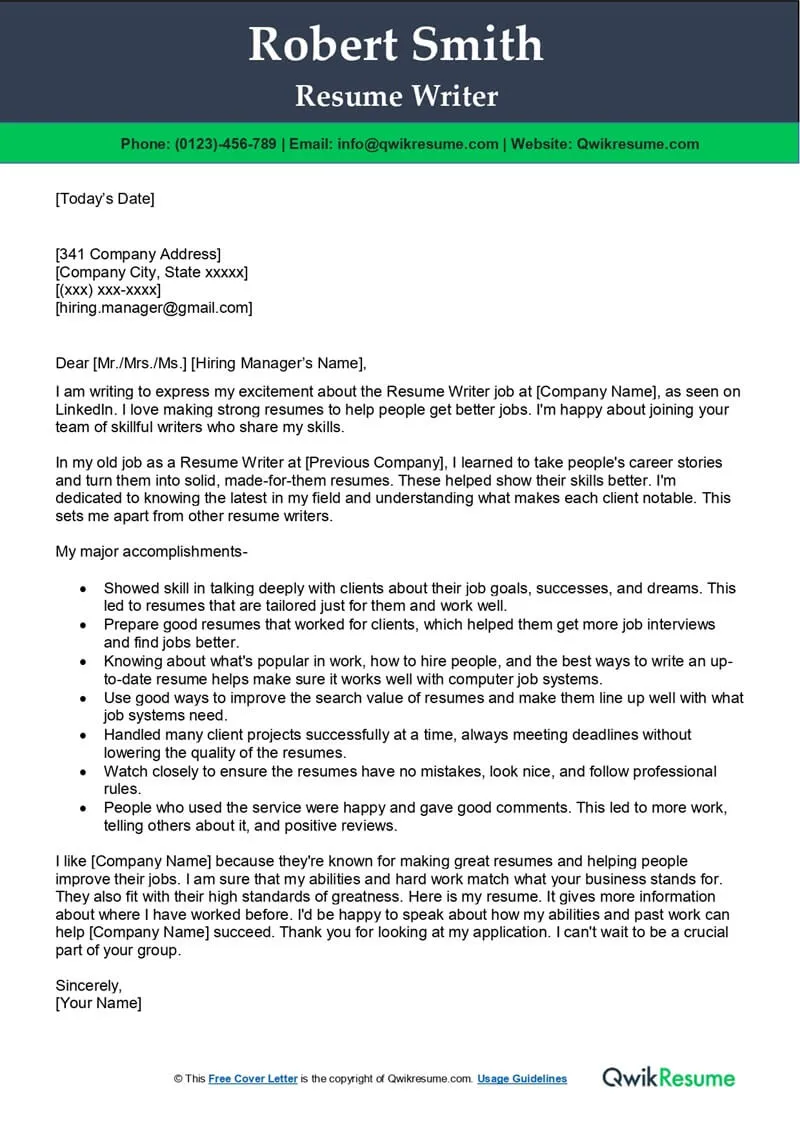
As a writer, your resume showcases your skills and experience, but a well-crafted cover letter is your opportunity to make a compelling first impression and truly stand out. It’s not merely a formality; it’s a crucial tool that can significantly increase your chances of landing your dream writing job. A cover letter allows you to tell your story, highlight your passion, and demonstrate why you are the perfect fit for the role.
Cover Letter Structure Essentials
A structured cover letter is easy to read and shows professionalism. This structure helps you organize your thoughts and present them logically. It should include a header, a greeting, body paragraphs, a closing, and your signature. Each section plays a vital role in conveying your message effectively. By following a clear structure, you ensure that the hiring manager can easily understand your qualifications and why you are the right candidate.
Header Section Details
The header of your cover letter is the first thing a potential employer sees, so it’s crucial to get it right. It establishes your professionalism and makes it easy for the recipient to contact you. Accuracy and clarity in this section are essential, as any mistakes can undermine your credibility before the reader even delves into your content.
Your Contact Information

At the top of your header, include your full name, phone number, email address, and optionally, your LinkedIn profile URL. Ensure that your email address is professional; avoid using any informal or childish email addresses. Double-check all the information for accuracy to ensure that the hiring manager can reach you easily. This allows them to quickly find your contact details if they are interested in moving forward with your application.
Employer Contact Information
Below your contact information, include the date, and the hiring manager’s name and title, as well as the company’s name and address. If you don’t know the hiring manager’s name, research the company website or LinkedIn to find it. Addressing the letter to a specific person shows you’ve taken the time to do your homework and demonstrates your attention to detail. If the name is unavailable, use a generic greeting like ‘Dear Hiring Manager’.
Greeting and Salutation
Use a professional greeting such as ‘Dear Mr./Ms. [Last Name]’ if you know the hiring manager’s name. If the name is unavailable, use ‘Dear Hiring Manager’. Avoid overly casual greetings. Make sure your salutation matches the formality of the company and role you are applying for. Your greeting sets the tone for the rest of the letter, so choosing the right one is important.
Body Paragraphs Crafting

The body of your cover letter is where you showcase your skills, experience, and enthusiasm for the position. Each paragraph should have a clear purpose and contribute to your overall message. The body should be concise, yet compelling, highlighting the value you bring to the table. Structure it logically to ensure easy readability and understanding by the reader.
First Paragraph Purpose
The first paragraph should immediately grab the reader’s attention. Its purpose is to state the position you are applying for and where you found the job posting. Make a strong opening statement that briefly highlights your key qualifications or a compelling reason why you are interested in the role. Show your enthusiasm and interest in the company. This establishes your purpose and sets the stage for the rest of the letter.
Opening Statement
Start with a hook, a sentence that immediately grabs the reader’s attention. Briefly explain why you are excited about the opportunity. Show you have researched the company or the specific role. Example ‘I am writing to express my keen interest in the Writer position at [Company Name], as advertised on [Platform].’ This quickly tells the reader what you are applying for and where you saw the opening, while setting the stage for what follows.
Second Paragraph Highlighting Skills

The second paragraph should provide evidence of your skills. This is where you showcase your writing abilities and explain why you are a great fit for the job. Connect your skills with the job requirements, providing examples of your experience and how they align with the company’s needs. Use specific examples and avoid generic statements. The focus should be on demonstrating the value you bring to the company.
Showcasing Writing Abilities
Include examples of your writing projects, highlighting your experience with different types of content, such as blog posts, articles, or website copy. Mention any specialized writing skills such as SEO, technical writing, or creative writing. Demonstrate how your previous experiences have equipped you with the skills needed to succeed in the specific role. Quantify your results whenever possible.
Quantifiable Achievements
Whenever possible, quantify your achievements. Use numbers and metrics to demonstrate the impact of your work. For example, ‘Increased website traffic by 30% by implementing SEO strategies’ or ‘Wrote over 100 articles that generated X leads’. This approach adds credibility to your claims and shows the hiring manager the value you bring. Statistics make your achievements more tangible and easier to measure.
Third Paragraph Expressing Interest

Express your enthusiasm for the company and the role. Explain why you are interested in the specific company and what attracts you to it. Tailor this part to demonstrate you’ve researched the company and understand its values and goals. Clearly state your interest in contributing to their success and how your skills align with their needs. Explain your understanding of the company’s mission and your excitement to be part of the team.
Call to Action and Next Steps
Conclude your letter with a clear call to action. Express your availability for an interview and provide your contact information. Thank the hiring manager for their time and consideration. Mention that you are available for a meeting at their earliest convenience. Provide clear instructions on how they should contact you. End with a positive and professional tone, and express your excitement about the opportunity.
Closing Your Letter
The closing of your cover letter should leave a lasting positive impression. It is important to maintain a professional tone while reiterating your interest in the position. Ensure your closing statement is concise and effective, leaving the reader with a clear understanding of your enthusiasm and readiness for the next step.
Formal Closing

Use a formal closing, such as ‘Sincerely’, ‘Best regards’, or ‘Yours faithfully’. Avoid casual closings. Make sure the tone matches the formality of your greeting and the company culture. Follow the closing with your typed name and your signature if submitting a hard copy. Double-check your signature to make sure it is easily readable and matches your professional image.
Proofreading and Editing
Before submitting your cover letter, proofread it carefully. Check for any grammatical errors, spelling mistakes, and typos. Ensure that the formatting is consistent and professional. Ask someone else to read the letter for you; a second pair of eyes can often catch errors you might have missed. A polished cover letter demonstrates your attention to detail, an essential quality for a writer.
Formatting and Style Guidelines
Pay attention to formatting and style. Use a professional font, such as Times New Roman, Arial, or Calibri, and maintain a consistent font size. Use single spacing within paragraphs and double spacing between paragraphs. Keep the letter concise, aiming for one page maximum. Use bullet points or numbered lists to make information easy to read. Ensure your cover letter is easy to read and visually appealing. Choose a layout that highlights the most important aspects of your application.
Cover Letter Templates and Examples

Use cover letter templates and examples as a starting point. There are many templates available online, so choose one that suits your needs and the specific role you are applying for. Review examples of cover letters written by other writers to get inspiration. Customize the template to reflect your unique skills, experience, and the specific requirements of the job. Use these resources to create a compelling cover letter that will get you noticed. Remember to tailor each cover letter to each job application for maximum impact.