Why Cover Letters Still Matter in 2024
In a job market that’s constantly evolving, the cover letter remains a critical tool for job seekers. While some may argue about their relevance, cover letters provide a unique opportunity to go beyond your resume and connect with potential employers on a more personal level. In 2024, a well-crafted cover letter demonstrates your genuine interest in the role and the company. It’s a chance to highlight specific skills and experiences that align with the job requirements, showcasing why you’re the ideal candidate. A strong cover letter can significantly increase your chances of getting an interview. It helps you stand out from the competition and make a lasting impression on the hiring manager. Remember, it’s not just about listing your qualifications; it’s about telling your story and demonstrating your enthusiasm.
Highlight Your Value
Don’t just repeat what’s on your resume. Instead, focus on what you can bring to the company. Identify the key requirements of the job and provide specific examples of how your skills and experiences meet those needs. Quantify your achievements whenever possible. Use data and numbers to demonstrate the impact you’ve made in previous roles. For example, instead of saying you ‘managed social media,’ mention that you ‘increased social media engagement by 30% in six months.’ Show the employer how you can solve their problems and contribute to their success. Focus on the value you can offer. The cover letter should be a preview of the contributions you would bring to the company, based on the company’s needs and expectations.
Tailor to Each Job

Generic cover letters are easily spotted and often discarded. Customize each letter to the specific job and company you are applying for. Research the company’s mission, values, and recent achievements. Show that you understand the company culture and are genuinely interested in the opportunity. Reference specific keywords and phrases from the job description. This demonstrates that you have carefully read the requirements and are a good fit. Mention specific projects or initiatives you’re excited about and explain how your skills can contribute to those areas. Tailoring your cover letter shows you’ve put in the effort and are serious about the role. It is the simplest way to demonstrate your interest in the role, which in turn could increase your chances of getting hired.
Showcase Your Personality
Your cover letter is your chance to let your personality shine through. Use a professional tone, but don’t be afraid to inject some of your unique voice. Share a brief anecdote or a relevant story that highlights your enthusiasm and personal qualities. Be authentic. Let your passion for the industry and the role come through in your writing. This will make you more memorable and help you connect with the hiring manager on a deeper level. Be yourself! Writing with authenticity will help you stand out from the competition and create a positive first impression. Showing personality adds a human touch and makes you more relatable.
Optimize for Applicant Tracking Systems (ATS)
Many companies use Applicant Tracking Systems (ATS) to screen applications. To ensure your cover letter gets past these systems, use relevant keywords from the job description. Structure your letter in a clear, easy-to-read format. Use headings and bullet points to highlight key information. Avoid complex formatting or graphics that ATS systems may not be able to read. Always save your cover letter in a compatible format like .doc or .pdf. Properly formatted cover letters increase your chances of being noticed by a real person. They improve the likelihood of your application being considered. Your application will be automatically filtered and rejected if you fail to optimize your cover letter for ATS.
Proofread Carefully

Typos and grammatical errors can undermine your credibility and damage your chances of getting hired. Proofread your cover letter meticulously before submitting it. Use a grammar checker and spell checker. Have a friend or colleague review your letter for any errors. Check the company name, the hiring manager’s name, and any other specific details to ensure accuracy. Errors show a lack of attention to detail and a lack of seriousness. Make sure to review everything before sending your cover letter to a potential employer, including contact information, the job title, and the company name. Proofreading is a critical step. Ensure that your cover letter is polished and professional. A polished cover letter reflects professionalism and attention to detail, which significantly boosts your chances of making a positive impression.
Cover Letter Structure and Formatting
Header
Include your contact information at the top of the cover letter. This should include your name, phone number, email address, and LinkedIn profile URL. Add the date and the hiring manager’s name and title if you know it. Always use a professional font such as Times New Roman, Arial, or Calibri, and keep the font size between 10 and 12 points. Proper headers will immediately allow the hiring manager to contact you and confirm their interest in you. Be sure to make sure that the header information is clearly visible and easy to read.
Opening

Start with a strong opening paragraph. State the position you are applying for and how you learned about the opportunity. Immediately capture the reader’s attention by mentioning something specific about the company or the role that excites you. Avoid generic greetings like ‘Dear Hiring Manager.’ If possible, address the hiring manager by name. A compelling opening sets the tone for the rest of the letter. It is your chance to make a great first impression.
Body Paragraphs
The body paragraphs should highlight your relevant skills and experiences. Use specific examples to demonstrate your achievements. Quantify your results whenever possible, and show how you have successfully overcome challenges in the past. Tailor each paragraph to the specific requirements of the job. Explain why you are a good fit for the role. Use bullet points or numbered lists to break up large blocks of text, making it easier to read. Make sure that you are only focusing on the information that is relevant to the role you are applying for. The body paragraphs provide detailed information about your skills and accomplishments.
Closing
End with a call to action. Reiterate your interest in the position and express your enthusiasm for the opportunity. Thank the hiring manager for their time and consideration. State that you look forward to hearing from them soon. Proofread your closing paragraph to ensure that it has the right impact on the hiring manager. A professional closing leaves a lasting positive impression.
Formatting Tips

Use a professional and easy-to-read font such as Times New Roman, Arial, or Calibri. Keep the font size between 10 and 12 points. Use single spacing and left-alignment for the body of the letter. Use one-inch margins on all sides. Keep the letter concise, ideally no more than one page. Use bullet points or numbered lists to make it easy to scan key information. Proper formatting makes your cover letter visually appealing and easy to read. It enhances your professionalism and shows that you pay attention to detail.
Common Cover Letter Mistakes to Avoid
Generic Content
Avoid using a generic cover letter that can be used for any job. Instead, tailor each letter to the specific role and company. Show that you have done your research and understand the company’s needs. Generic content makes you appear uninterested in the specific opportunity. Make sure that you are writing for that specific job. This is a huge mistake that can result in immediate rejection by the hiring manager. Customize your letter to show that you are genuinely interested in the role.
Typos and Grammatical Errors

Proofread your cover letter carefully for typos, grammatical errors, and spelling mistakes. Errors create a negative impression and suggest a lack of attention to detail. Use a grammar checker and spell checker, and have a friend or colleague proofread your letter for you. Errors can completely ruin a good cover letter. Make sure that you take the time to review your cover letter before submitting it.
Too Long
Keep your cover letter concise and to the point. Aim for a one-page letter. Hiring managers are busy and may not have time to read a lengthy letter. Focus on the most relevant information and highlight your key skills and experiences. If your cover letter is too long, the hiring manager may lose interest. A concise letter shows that you respect the hiring manager’s time.
Focusing on Yourself Too Much
While it’s important to highlight your skills and experiences, avoid making your cover letter all about yourself. Focus on how you can contribute to the company and solve their problems. Show that you understand the company’s needs and are excited about the opportunity to contribute to their success. Your cover letter must be focused on the company’s needs rather than just your own. Highlight the value that you can bring to the company, as well as the accomplishments that you have achieved.
Cover Letter Examples and Templates

Template Resources
Use online resources to find templates for your cover letter. Sites like Indeed, Resume.io, and Zety offer a variety of templates for different industries and experience levels. Tailor these templates to fit your specific needs and ensure that your cover letter is customized. Using a template can save you time and ensure that you include all the necessary elements. Select a template that matches the industry and the type of job you are applying for. Templates can provide a solid structure for your cover letter.
Example Cover Letter Breakdown
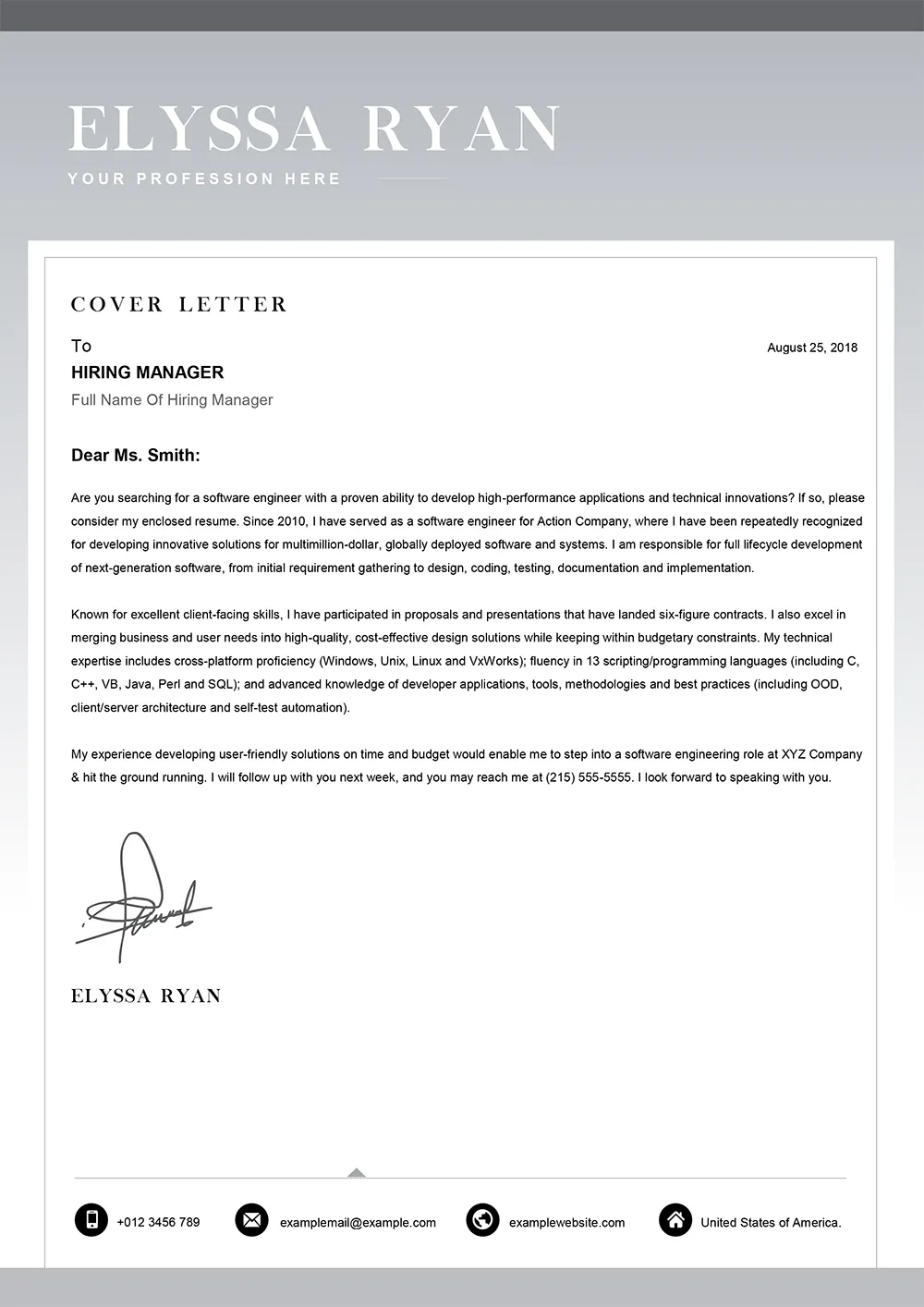
Let’s break down a cover letter. First, make sure that you include your contact information, the date, and the hiring manager’s details. Next, start with an engaging opening paragraph that grabs their attention. In the body paragraphs, highlight your relevant skills and experiences, using examples. Quantify your results whenever possible. Finish with a strong closing paragraph, expressing your enthusiasm and thanking the hiring manager for their time. Finally, proofread and edit your cover letter, making sure that it is completely free of errors. Analyzing example cover letters helps you understand how to structure and write your own.
Conclusion
Mastering the art of writing a cover letter can significantly boost your chances of landing your dream job. By following these tips – tailoring your letter, highlighting your value, showcasing your personality, optimizing for ATS, and proofreading carefully – you can create a cover letter that will make you stand out from the competition and get you noticed by hiring managers. Remember, a cover letter is your chance to make a great first impression. Be sure to take the time to craft a compelling and persuasive letter that will get you one step closer to your career goals.