Why Mentioning Salary in a Cover Letter Matters
Navigating the job market requires a strategic approach, and one crucial aspect often overlooked is how to address salary expectations within your cover letter. While some job seekers hesitate, understanding when and how to include this information can significantly impact your application’s success. Properly addressing salary can demonstrate your understanding of the industry, your value, and your professional communication skills. It can also streamline the application process, saving both you and the potential employer valuable time.
Understanding the Importance of Salary Expectations
Salary expectations are a critical component of any job application. They communicate your understanding of your worth and your financial needs. Including a salary expectation, or the appropriate approach, can set the stage for a successful negotiation later on. It’s about balancing your financial needs with the market value of your skills. A well-considered approach to salary expectations in your cover letter shows professionalism, preparation, and a clear understanding of the role and its requirements.
When to Include Salary Requirements

The decision of whether or not to include a salary requirement in your cover letter often depends on the specific job posting and your personal circumstances. There isn’t a one-size-fits-all answer, but understanding the different scenarios will help you make the most informed decision, maximizing your chances of success. Always align your approach with the job advertisement. If the posting specifically asks for your salary expectations, then providing this information is usually mandatory.
Early in the Cover Letter (First Paragraph)
In some scenarios, particularly if the job posting explicitly requests it, you may include your salary expectation in your opening paragraph. This can immediately establish your alignment with the job’s requirements. This approach signals that you have carefully reviewed the job description and are ready to move forward with the application process. It’s a direct way to indicate that you are seriously interested in the role and meet the criteria outlined by the employer.
Mid-Cover Letter (Body Paragraph)
This strategy can be useful if the job posting doesn’t ask for a salary expectation upfront, but you feel it’s important to address it. You can weave your salary expectations into a discussion of your skills and experiences, especially if they align with what the employer is seeking. This provides context and allows you to justify your expectation based on your qualifications, demonstrating the value you bring to the position. This can often work when you are emphasizing a skill that commands a specific salary in the market.
Near the End (Closing Paragraph)

Including salary expectations in your closing paragraph can be a strategic approach when you want to emphasize your interest in the role while still addressing the financial aspect. This can be used if the job posting doesn’t specifically request a salary. You can express your enthusiasm and then state your salary expectations or indicate that you are open to discussing compensation. This approach allows you to conclude with a direct statement about your salary preferences while leaving the door open for further negotiation.
Different Approaches Based on the Job Posting
The most effective way to address salary in your cover letter is dependent on what the job posting asks for. Employers might specify whether they need a desired salary, a salary range, or if they want you to leave the matter for discussion later. Tailoring your response to the job posting will show your attention to detail and suitability for the position. Always follow the instructions as closely as possible. This adaptability can significantly boost your chances of getting an interview and ultimately the job.
Using a Salary Range
Providing a salary range is a smart tactic that offers some flexibility while still giving the employer an idea of your expectations. Research the average salary for the role in your location and experience level to determine a reasonable range. By giving a range, you demonstrate that you are open to negotiation while also ensuring your salary needs are in line with what the employer is likely offering. It also shows that you have done your homework on industry standards.
Stating ‘Negotiable’

If you are unsure about the salary range or prefer to discuss it later, you can use the word ’negotiable.’ This shows that you are open to discussing compensation based on the role’s responsibilities and the company’s offer. This approach is often useful when you’re very interested in the role, but you want to get a better sense of the complete package before settling on a specific figure. This can work well if the job details are somewhat vague regarding compensation.
Declining to State a Specific Salary
In some cases, it might be appropriate to decline stating a specific salary. This is generally acceptable if the job posting doesn’t ask for it, or if you feel that providing a figure could potentially undervalue your skills. You can express that your salary expectations are in line with industry standards and open to discussion. However, be prepared to discuss your salary expectations at some point during the interview process if you go down this path.
How to Phrase Your Salary Expectations
The language you use to express your salary expectations significantly influences how the employer perceives your application. It’s crucial to be professional, confident, and clear, while also demonstrating flexibility. Avoid any language that might seem demanding or vague. You can tailor the statement to your approach, whether it’s a range, a statement of negotiation, or a statement of knowledge about the market.
Direct and Confident Statements

Using direct and confident language when stating your salary expectations shows your professional approach. You can state your expectation clearly and concisely, such as ‘My salary expectations are in the range of $X to $Y,’ or, if you are open to negotiation, ‘I am open to discussing salary based on the specific responsibilities and requirements of this role.’ The best option will vary depending on the situation and the job posting.
Emphasizing Value and Potential
Frame your salary expectations by highlighting the value you bring to the company and your potential contributions to the role. For instance, you can say, ‘Based on my experience in X and my ability to achieve Y, I am seeking a salary in the range of $X to $Y.’ This language helps to justify your expectation and showcases your understanding of your worth in the marketplace. It aligns your salary expectations with your skills and the value you add, thus making your request more justifiable.
Example Cover Letter Salary Statements
To help you in your cover letter, below are a few examples to give you an idea of the different approaches you can take.
Example 1 Entry-Level Position

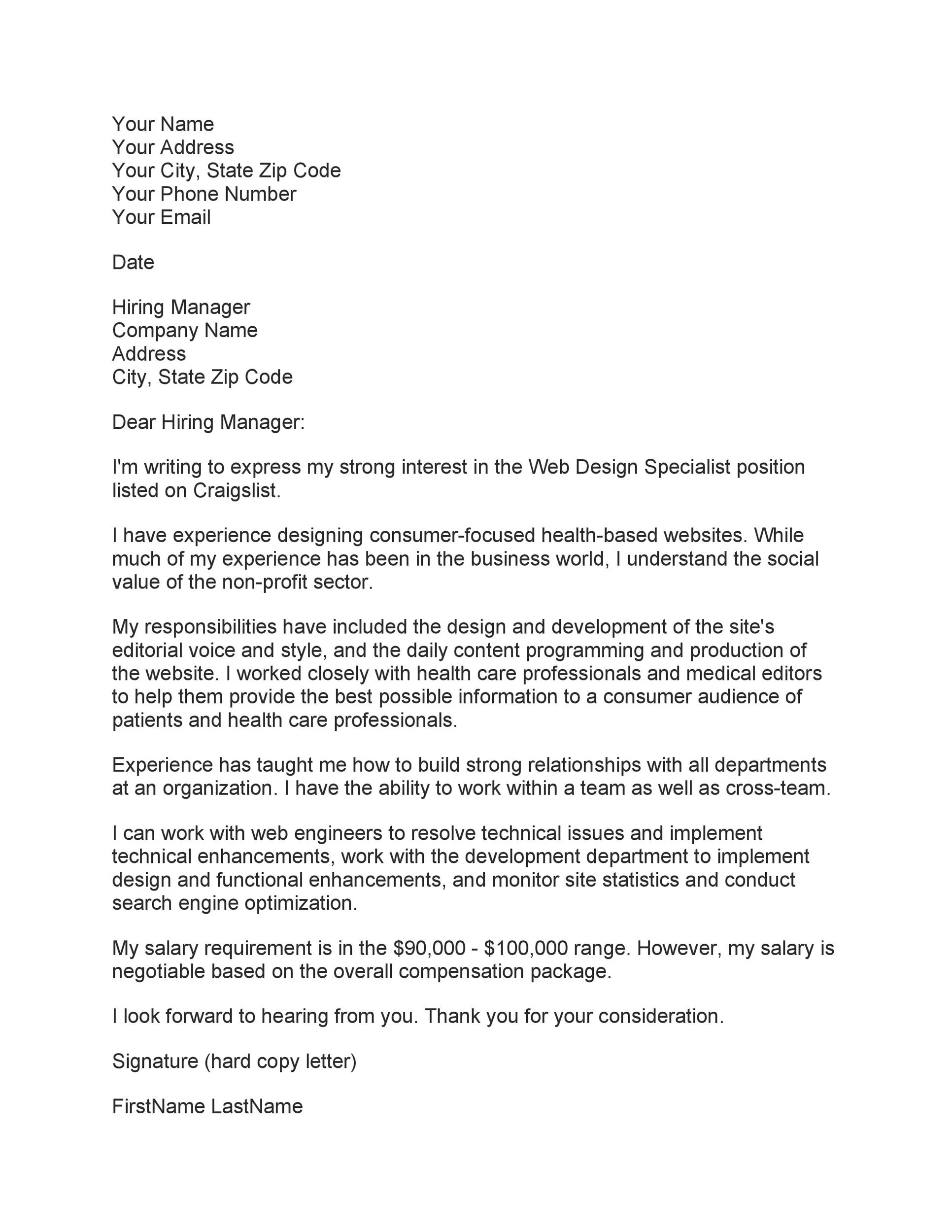
“I am eager to contribute my skills to this role, and my salary expectations are in line with entry-level positions in this field, approximately $XX,XXX to $YY,YYY per year.” This type of response is good as you can also add a statement about being open to discussion and negotiation.
Example 2 Experienced Professional
“Based on my experience and proven track record of achieving X, I am seeking a salary in the range of $XX,XXX to $YY,YYY. I am open to discussing this further, depending on the specifics of the role and the overall compensation package.”
Example 3 Stating Negotiable
“I am open to discussing salary expectations based on the responsibilities of this position and my qualifications. I am very enthusiastic about this opportunity and look forward to discussing the role further with you.” This approach is a good way to emphasize the importance of the role while still making it clear that you’ll consider the compensation package.
Common Mistakes to Avoid
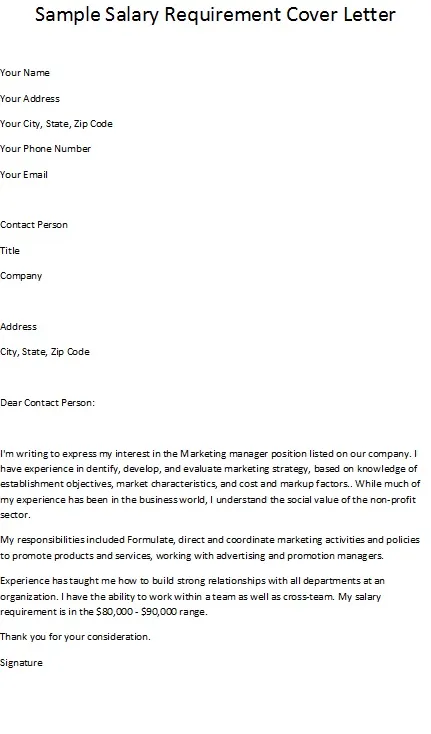
Avoiding common mistakes can greatly improve the impact of your cover letter. Be mindful of what to do and what to avoid. Be as professional as possible and demonstrate the value that you bring.
Giving an Unrealistic Salary
Setting your salary expectations too high can immediately disqualify you, particularly if your experience doesn’t match the requested figure. Research industry standards and market rates to determine a realistic figure that aligns with your qualifications and experience. A reasonable salary expectation is essential for not only getting the job, but for making sure that you’ll be happy in it.
Being Too Vague or Unclear
On the other hand, being too vague can leave the employer wondering if you’re serious or if you’ve done your homework. Avoid statements like ‘competitive salary’ as these are hard to define. If you are going to be open, make sure you have a good reason and a well-reasoned approach.
Forgetting to Research Salary Ranges
Failing to research the appropriate salary range for the role in your location will make you look unprepared, and it can harm your chances. Tools like Glassdoor, Salary.com, and LinkedIn can assist in gathering this data. Researching salary ranges also demonstrates a professional approach. Also, consider your experience level when evaluating the ranges.
The Benefits of Including Salary in Your Cover Letter
Strategically including salary expectations in your cover letter provides several key benefits. The pros and cons are often dependent on the job and your circumstances. Remember to make the best decision based on these factors.
Demonstrating Proactiveness
Providing salary expectations in your cover letter shows that you are organized and prepared. It reflects your dedication to the job application. Employers appreciate candidates who proactively address crucial details, indicating a serious interest in the role and a commitment to the application process. This can create a favorable impression.
Saving Time for Both Parties
Including salary expectations in your cover letter can save time for both you and the employer. It helps filter out positions that do not align with your financial needs, avoiding potential disappointment and saving both you and the employer time in the long run. This is particularly useful for highly sought-after jobs where the competition is very high.
Showing Professionalism
Addressing salary expectations shows professionalism and a solid understanding of the job market. It helps to position you as a serious contender for the position. Providing the information that the employer needs and using professional language shows attention to detail, consideration, and respect for the hiring process.
In conclusion, the effective inclusion of salary expectations in your cover letter can significantly boost your application. Tailor your approach to the job posting, use clear and confident language, and always research industry standards. By avoiding common pitfalls, you can show your value, and improve your chances of getting an interview and securing your desired salary.