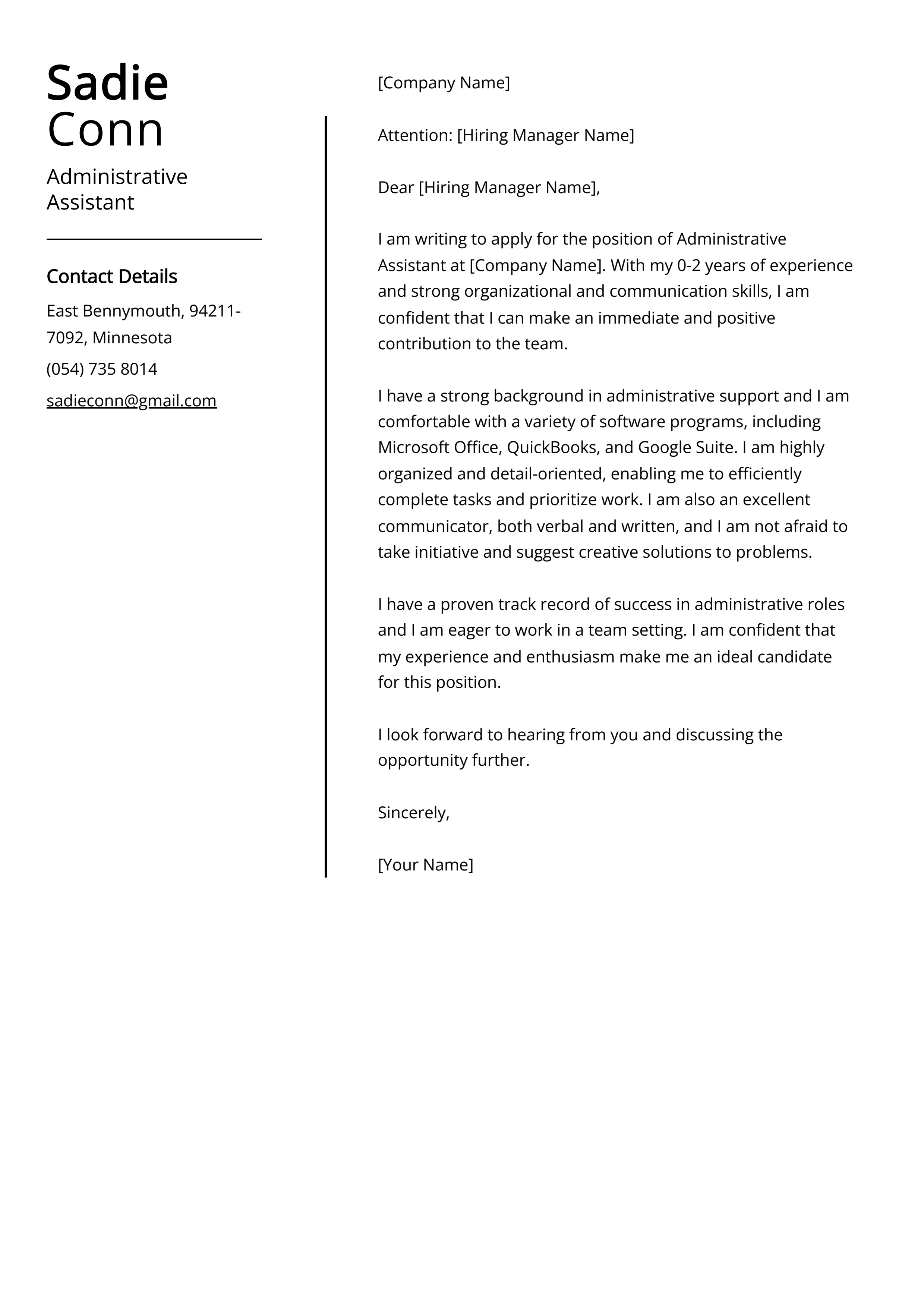
Crafting the Perfect Cover Letter for Administrative Assistant Roles
A well-crafted cover letter is your first opportunity to make a positive impression on a potential employer. For administrative assistant positions, the cover letter serves as a crucial tool to showcase your organizational skills, attention to detail, and ability to communicate effectively. This guide provides a comprehensive cover letter template, equipping you with the knowledge and examples to create a compelling letter that gets you noticed. Understanding the key components and how to tailor your letter is paramount to success.
Understanding the Importance of a Cover Letter
The cover letter is more than just a formality; it’s your personal introduction and a way to explain why you’re the perfect fit for the role. It allows you to elaborate on your resume, providing context and showcasing your personality. Employers often use cover letters to assess your writing skills, attention to detail, and your understanding of the job requirements. A strong cover letter can set you apart from other applicants, especially in a competitive field like administrative assistance.
Highlighting Your Skills and Experience

Your cover letter should highlight the skills and experiences most relevant to the administrative assistant position. Focus on key skills such as communication, organization, time management, and proficiency in relevant software (e.g., Microsoft Office, Google Suite). Provide specific examples of how you’ve used these skills to achieve positive outcomes in previous roles. Quantifiable achievements are particularly effective. For example, mentioning that you improved office efficiency by a certain percentage can be very persuasive.
Key Elements of an Administrative Assistant Cover Letter
Contact Information and Formatting
Begin your cover letter with your contact information (name, address, phone number, email) and the date. Below that, include the hiring manager’s name (if known), title, and the company’s address. Use a professional font like Times New Roman, Arial, or Calibri, and maintain a consistent font size (11 or 12 points). Keep the formatting clean and easy to read, using single-spaced lines with a space between paragraphs. Ensure your letter fits on one page.
Opening Paragraph: Grabbing Their Attention

The opening paragraph is your chance to make a strong first impression. State the position you’re applying for and where you saw the job posting. Briefly mention your enthusiasm for the role and the company. You can also include a compelling sentence or two that showcases your most relevant skill or experience. Aim to capture the reader’s attention and make them want to learn more about you.
Body Paragraphs: Showcasing Your Value
The body of your cover letter is where you demonstrate your value to the employer. Use two or three paragraphs to highlight your key skills, experiences, and accomplishments. Provide specific examples that align with the job requirements. Use action verbs to describe your duties and accomplishments. For example, instead of saying “Responsible for managing schedules,” you could write “Managed complex schedules for a team of 10, coordinating meetings and travel arrangements effectively.” This makes the information more compelling and easier to understand.
Specific Skills and Qualifications
Detail specific skills and qualifications required for the role, such as proficiency in specific software, experience with administrative tasks, or knowledge of office procedures. Be sure to align your skills with the specific requirements mentioned in the job description. If the job requires experience with a particular software, mention your proficiency and provide context or example about how you have used it to solve problems in the past.
Quantifiable Achievements and Results

Whenever possible, quantify your achievements. Instead of saying you improved efficiency, state the percentage by which you improved it. For example, “Streamlined the filing system, resulting in a 15% reduction in time spent retrieving documents.” Numbers add credibility and help the employer understand the impact you can have. This will showcase the value you bring to the organization, making the employer more likely to give you a call back.
Closing Paragraph: Call to Action
In the closing paragraph, reiterate your interest in the position and the company. Express your eagerness to learn more about the opportunity and your enthusiasm for the role. Include a clear call to action, such as “I am available for an interview at your earliest convenience” or “I look forward to hearing from you soon.” Thank the hiring manager for their time and consideration.
Proofreading and Editing: Ensuring Perfection
Before submitting your cover letter, carefully proofread it for any typos, grammatical errors, or formatting inconsistencies. Ask a friend or family member to review it as well. A polished and error-free cover letter demonstrates your attention to detail and professionalism, reflecting the qualities employers seek in an administrative assistant.
Tailoring Your Cover Letter to Each Application

Avoid using a generic cover letter template for every job application. Tailoring your letter to each position is crucial. This involves researching the company, understanding the role’s specific requirements, and highlighting the skills and experiences most relevant to the job description. This shows the employer that you’ve taken the time to understand their needs and are genuinely interested in the opportunity.
Researching the Company and Role
Before writing your cover letter, research the company and the specific role. Visit their website, read their mission statement, and learn about their products, services, and values. This information will help you understand their needs and tailor your cover letter to demonstrate how your skills and experience align with their goals. Understanding their mission also shows your genuine interest in the company culture.
Using Keywords from the Job Description
Carefully review the job description and identify the keywords that describe the required skills, qualifications, and responsibilities. Incorporate these keywords into your cover letter naturally. This will help your application get noticed by applicant tracking systems (ATS) and demonstrate to the hiring manager that you meet the specific requirements of the position. Avoid keyword stuffing; instead, use the keywords within relevant context.
Formatting Tips for Readability

Use clear and concise language. Break up long paragraphs into shorter ones. Use bullet points to highlight key skills or accomplishments. Ensure the formatting is consistent throughout the document. These formatting tips will make your cover letter easy to read and help the hiring manager quickly grasp your qualifications. A well-formatted cover letter shows professionalism and attention to detail.
Avoiding Common Mistakes in Cover Letters
Avoiding common mistakes can significantly increase your chances of success. Be aware of the pitfalls and actively avoid them. Attention to detail and a professional approach will set you apart from the competition, especially as an administrative assistant.
Generic Language and Lack of Personalization
Avoid using generic language that could apply to any job. Tailor your cover letter to each specific role and company. Demonstrate genuine interest in the opportunity by mentioning specific aspects of the company or the role that appeal to you. Personalize your letter by showing that you understand the company’s needs and that you have researched the role.
Typos, Grammatical Errors, and Poor Formatting

Typos, grammatical errors, and poor formatting can create a negative impression and signal a lack of attention to detail. Always proofread your cover letter carefully. Use a grammar checker and ask a friend to review your letter before submitting it. Ensure your formatting is consistent and professional, with appropriate use of fonts, spacing, and bullet points. Proofreading is critical, especially for an administrative assistant.
Focusing on What You Want, Not What You Can Offer
Focus on the value you can bring to the employer, rather than what you want from the job. Highlight your skills, experiences, and accomplishments. Demonstrate how you can contribute to the company’s success. Explain how your skills and qualifications align with the job requirements. Show enthusiasm and showcase the value you will add to the team.
Administrative Assistant Cover Letter Template Examples
The following are examples of how to create an administrative assistant cover letter. These examples are starting points, and you should tailor them to fit your experiences and the specific requirements of the jobs you are applying for. Feel free to adjust the content to make it perfect for the role you are applying for.
Example 1 Cover Letter
Here is an example of a template. [Insert Example 1 Here]
Example 2 Cover Letter
Here is an example of a template. [Insert Example 2 Here]
Example 3 Cover Letter
Here is an example of a template. [Insert Example 3 Here]