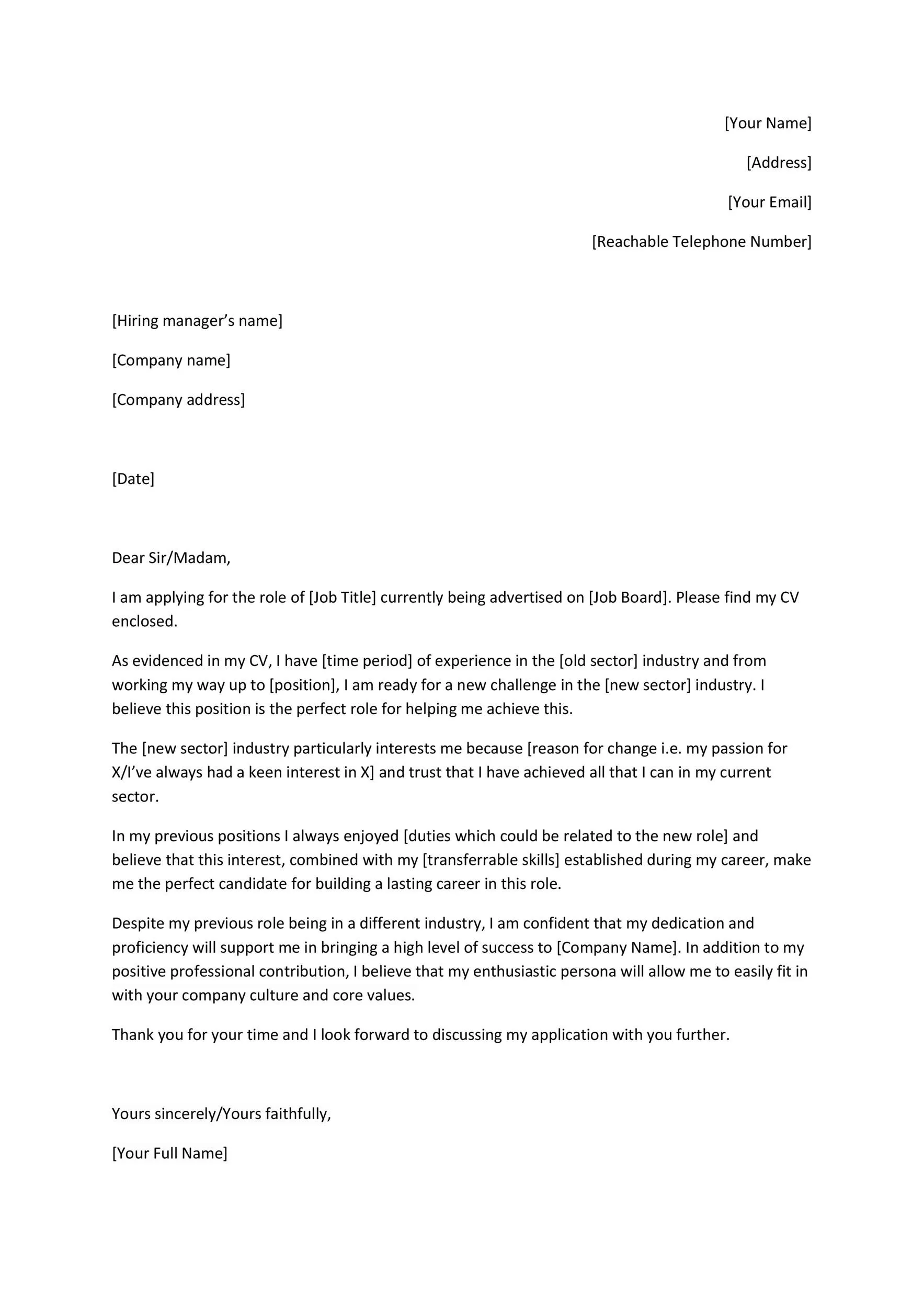
Crafting Your Career Change Cover Letter
A well-crafted cover letter is a crucial tool in your career change journey. It serves as your introduction, and it’s the first chance you have to make a strong impression. Your cover letter should convince potential employers that your skills and experience are a good fit. Because you are transitioning careers, a well-crafted cover letter becomes even more critical. You need to address the career shift, highlight relevant abilities, and express your enthusiasm for the new path. A generic letter simply won’t do; you must show why this change aligns with your long-term goals.
Highlighting Transferable Skills
One of the most effective strategies for a career change cover letter is to emphasize transferable skills. These are the skills you’ve developed in previous roles that are valuable in your target field. Consider what skills you already possess that will benefit you in your new role. Identify these skills, and provide examples of how you used them effectively in your previous jobs. Think about communication, problem-solving, leadership, time management, and teamwork skills. Demonstrating how these skills translate to your new career path will reassure the hiring manager that you can succeed, even without direct experience. This is a key step in getting your foot in the door, one step closer to your dream role.
Identifying Relevant Skills from Previous Roles

To effectively highlight transferable skills, you must identify them. Carefully review the job description for the new role. What skills are specifically mentioned? Then, analyze your past experiences. Which of your responsibilities and achievements demonstrate those desired skills? For example, if the new role requires project management skills, showcase instances where you successfully managed projects in your previous positions. Be specific, and quantify your accomplishments whenever possible. This shows that you not only have the skills, but you also know how to apply them effectively. This detailed approach gives the recruiter a clear picture of what you can bring to the table.
Showcasing Your Passion and Motivation
When changing careers, your passion and motivation are vital selling points. They show the employer that you are committed to the new field and eager to learn and grow. Explain what sparked your interest in the career change. What specifically excites you about the new role or industry? Your cover letter is your chance to tell your story and explain the driving force behind your decision. Be genuine and heartfelt in your expression of enthusiasm. A genuine display of passion will not only make your cover letter more engaging but also demonstrate your eagerness to learn and your commitment to contributing to the company’s success.
Expressing Your Enthusiasm for the New Role
It’s essential to express your enthusiasm for the specific role you’re applying for. Explain why this particular opportunity appeals to you. Do some research about the company and the role to showcase your understanding of their needs and how your skills can contribute. Mention any specific projects, initiatives, or company values that resonate with you. Your enthusiasm will show the hiring manager that you are genuinely interested in the position and that you have put in the effort to learn about the company and the role. This will make your application stand out from others who may not show such a level of interest.
Addressing the Career Change Directly

Don’t shy away from addressing the career change head-on. Acknowledge the shift directly, but frame it positively. Briefly explain your reasons for wanting to make the change, focusing on what you are moving towards rather than what you are leaving behind. This shows that you’ve thoughtfully considered your decision and have a clear plan. By being upfront, you show confidence and a proactive approach. The goal is to transform the career change into a positive attribute, illustrating your adaptability, determination, and willingness to pursue opportunities.
Explaining Your Reason for the Switch
Provide a concise and compelling reason for your career switch. Briefly explain what motivated you to make the change. This is your chance to show that your move isn’t a random decision, but a carefully considered choice. The key is to focus on your aspirations and how the new role aligns with your professional goals. For example, you could mention a long-held interest in the industry, a desire to utilize specific skills, or a passion for the company’s mission. This is where you should express a new purpose that is both motivational and aligned with your goals.
Focusing on the Future and Goals
The focus of your cover letter should be on your future contributions to the company, not just your past experience. Emphasize how your skills and experiences will help you succeed in the new role. Express your excitement about the opportunity to learn and contribute to the company’s goals. This demonstrates that you’re focused on the future and ready to take on new challenges. It reassures the hiring manager that you are motivated to succeed, which can be a compelling asset.
Demonstrating Research and Understanding

Show that you have researched the company, the role, and the industry. Tailor your cover letter to demonstrate that you understand the company’s mission, values, and current projects. Mention specific aspects of the company that align with your interests and career goals. This research can be the key to getting your application noticed. By showing your knowledge and understanding, you prove your commitment and interest in the company. It shows that you see the organization not just as a potential employer, but as a place where you can make a contribution.
Tailoring Your Cover Letter
A generic cover letter is a major pitfall. It’s a sign that you’re sending out mass applications without taking the time to show a genuine interest in each opportunity. Customizing your cover letter for each application is essential for making a strong impression. This tailoring process is a necessary step. Take the time to analyze the job description, identify the key requirements, and align your skills and experience with the specific needs of the role and the company. Demonstrating the understanding shows the recruiter the effort you’re willing to put in.
Researching the Company and Role
Before you even start writing, do your research. Visit the company’s website, read their “about us” section, and look at their recent projects and press releases. Look at the job description carefully, and identify the essential skills and qualifications. Understand the company culture, values, and the specific requirements of the role you’re applying for. The more you know, the better you can demonstrate your suitability. The key is to show that you’re not just looking for any job, but for this job, at this company, because you believe you have what it takes to contribute.
Customizing for Each Application

Once you have your research, customize your cover letter. Start by addressing the hiring manager by name, if possible. Mention something specific about the company or role that interests you, and then adjust your language to match the tone of the company. Highlight the skills and experiences that align with the specific job requirements, and use keywords from the job description. Customize your cover letter as a specific and targeted piece of communication that demonstrates your genuine interest and suitability for the role. This shows the hiring manager that you are truly interested in the opportunity.
Showcasing Achievements and Quantifiable Results
Rather than simply listing your responsibilities, showcase your achievements and results. Use quantifiable data to demonstrate the impact you made in your previous roles. This approach gives the hiring manager concrete evidence of your capabilities and potential. Whenever possible, use numbers, percentages, and specific metrics to highlight your achievements. If you managed a project, mention the budget, timelines, and outcomes. If you improved a process, quantify the results with metrics like increased efficiency, reduced costs, or improved customer satisfaction. This approach is far more compelling than vague statements.
Using Action Verbs and Powerful Language
To make your cover letter more impactful, use action verbs and powerful language. Start each bullet point or sentence with an action verb that describes what you did and what you achieved. This helps to create a dynamic and engaging narrative. The goal is to be concise and to the point. Use strong, active verbs that convey a sense of purpose and drive. For example, use verbs like “managed,” “led,” “achieved,” “implemented,” “improved,” or “increased” to illustrate your accomplishments. This will make your cover letter more compelling and memorable.
Quantifying Your Accomplishments Whenever Possible

Quantifying your accomplishments makes your cover letter much more compelling. Whenever possible, include specific numbers, percentages, and metrics to demonstrate the impact of your work. Instead of saying that you “increased sales,” state that you “increased sales by 15% in one quarter”. This gives the hiring manager tangible evidence of your capabilities and results. Quantifiable achievements make your accomplishments concrete and convincing. For example, if you streamlined a process, state the percentage reduction in time or costs. This data will give a clear picture of your contributions.
Proofreading and Polishing Your Cover Letter
Proofreading and polishing your cover letter is the final, critical step. Even the most compelling content will be undermined by errors in grammar, spelling, or formatting. A polished cover letter shows attention to detail, professionalism, and a genuine interest in the opportunity. Mistakes in your cover letter will give a negative impression. Take the time to read through your cover letter carefully, checking for any errors or inconsistencies. Ensure that the tone is appropriate for the role and the company. Then ask a friend, colleague, or career advisor to review your cover letter.
Checking for Grammar and Spelling Errors
Thoroughly check your cover letter for any grammar or spelling errors. Use a spell checker and grammar checker, but don’t rely on these tools alone. They may miss subtle errors or incorrect word choices. Reading your cover letter aloud is an effective way to catch awkward phrasing. Make sure every sentence flows and the punctuation is correct. Pay attention to capitalization, punctuation, and the overall formatting of your document. A cover letter that is free of errors conveys professionalism and attention to detail, which is essential for making a positive impression.
Ensuring Clarity and Conciseness

Ensure that your cover letter is clear, concise, and easy to read. Avoid using jargon or overly complex language. Use short sentences and paragraphs. Make sure your ideas are well-organized, and your key points are easy to find. By writing in a direct and straightforward manner, you can keep the reader engaged and interested in your application. Clarity and conciseness are especially important when transitioning careers. Show you can clearly communicate your value and motivation for the new role.