Unveiling the Customer Service Cover Letter Secrets
Crafting a compelling customer service cover letter is crucial for landing your dream job. It’s your first impression, a chance to showcase your personality and skills, and a vital tool to distinguish yourself from other applicants. Many candidates underestimate the power of a well-written cover letter, but it’s a golden opportunity to highlight your relevant experiences and demonstrate your enthusiasm for the role. This guide delves into the secrets of creating a customer service cover letter that grabs the attention of hiring managers and sets you apart from the competition. We’ll explore how to emphasize your strengths, tailor your letter to each job application, and ensure your writing style shines through.
Highlighting Your Skills for Customer Service
The best customer service cover letters don’t just list skills, they demonstrate them. Think of it as a showcase of your abilities. Instead of simply stating, ‘I am a good communicator,’ illustrate how you’ve successfully communicated with customers in the past. What situations have you navigated? What outcomes did you achieve? Providing specific examples of how you’ve used your customer service skills will make a memorable impact. You want the hiring manager to picture you in action, successfully handling customer interactions.
Understanding the Customer Service Role

Before writing your cover letter, it’s essential to understand the specific requirements of the customer service role you’re applying for. Customer service encompasses a broad range of responsibilities, from answering basic inquiries to resolving complex issues. Some roles may require technical support skills, while others prioritize sales or complaint resolution. Research the company and the specific job description carefully. Identify the key skills and qualifications the employer is seeking and make sure your cover letter directly addresses these points. This focused approach proves that you’re a good fit and that you’ve put in the effort to understand the position.
Key Skills to Showcase in Your Cover Letter
Customer service roles rely heavily on several core skills. Highlighting these abilities in your cover letter is vital. Demonstrate your capabilities by providing concrete examples and showing how you’ve applied these skills in previous roles or experiences. Consider the following key areas. It’s important to illustrate your proficiency in these areas and provide examples of situations where you’ve applied these skills to achieve positive results.
Communication Skills
Exceptional communication skills are the cornerstone of effective customer service. This includes both verbal and written communication. In your cover letter, provide examples of how you’ve used clear, concise, and empathetic language to resolve customer issues. Describe instances where you’ve successfully explained complex information in an easy-to-understand manner, or where you’ve adjusted your communication style to suit different customers. Mention any experience with active listening, or using positive language to turn a negative situation around. For instance, you might describe a time when you de-escalated an angry customer by actively listening to their concerns and responding in a calm, professional tone.
Problem-Solving Abilities

Customer service representatives often face complex problems that require critical thinking and creative solutions. In your cover letter, showcase your problem-solving abilities by describing situations where you’ve identified the root cause of a customer issue, developed effective solutions, and followed through to ensure customer satisfaction. For example, detail a situation where you used your problem-solving skills to quickly resolve a technical issue, or developed a creative solution to a customer’s unique needs, highlighting the positive outcome for the customer and the company.
Empathy and Patience
Empathy and patience are essential qualities for customer service professionals. Demonstrate your ability to understand and respond to customer emotions, and describe how you’ve remained calm and patient in challenging situations. Highlight instances where you’ve gone the extra mile to understand a customer’s needs, even when the situation was difficult. This demonstrates your genuine concern for customer satisfaction and your ability to build positive relationships. For example, you could describe how you supported a customer through a frustrating issue and provided a satisfactory solution, even after dealing with the customer’s negative emotions.
Technical Proficiency
Many customer service roles require technical proficiency with various software and systems. Mention your experience with relevant tools, such as CRM software, ticketing systems, or communication platforms. If you have experience with specific technologies, like live chat support or phone systems, be sure to mention it. If you don’t have direct experience with a specific software, mention your willingness to learn. Highlight any technical training or certifications, as well as your ability to quickly learn and adapt to new technologies. For example, you could mention experience with a specific CRM, or training courses you have completed to enhance your technical skills.
Tailoring Your Cover Letter

One of the most crucial secrets to a successful customer service cover letter is tailoring it to each specific job. Generic cover letters are easily spotted and often discarded. Instead, carefully review the job description and identify the key skills and qualifications the employer is seeking. Use the same keywords and phrases from the job description in your cover letter. Demonstrate how your experience and skills align with the specific requirements of the role. Customize your cover letter to the specific company and demonstrate that you have taken the time to understand the company’s needs. This shows that you’re not just sending out a generic application, but that you’re genuinely interested in this particular role and company.
Researching the Company Culture
Before you start writing, take the time to research the company’s culture and values. Understanding the company’s mission, vision, and values will help you tailor your cover letter to resonate with the hiring manager. Visit the company’s website, read their ‘About Us’ section, and check their social media profiles to get a sense of their culture. If possible, try to identify what the company values in its employees and highlight these values in your cover letter. Referencing the company’s values or mission shows that you’ve done your homework and that you understand what they are looking for in a customer service representative. This could include mentioning specific examples of how your experience aligns with the company’s values, demonstrating that you understand and respect their culture.
Adapting to the Job Description
Carefully review the job description and extract the key requirements and responsibilities. Then, map these requirements to your own experience and skills. When adapting your cover letter, use the same keywords and phrases from the job description whenever possible. This not only helps you demonstrate that you meet the qualifications but also helps your application get past any applicant tracking systems (ATS) that the company might use. Instead of simply stating ‘I have excellent communication skills’, for example, you might say ‘As demonstrated in my previous role, I excel at communicating clearly and concisely, which is key for resolving customer inquiries.’ This approach is more impactful than a generic statement and demonstrates that you have the specific skills needed for the job.
Structuring Your Customer Service Cover Letter

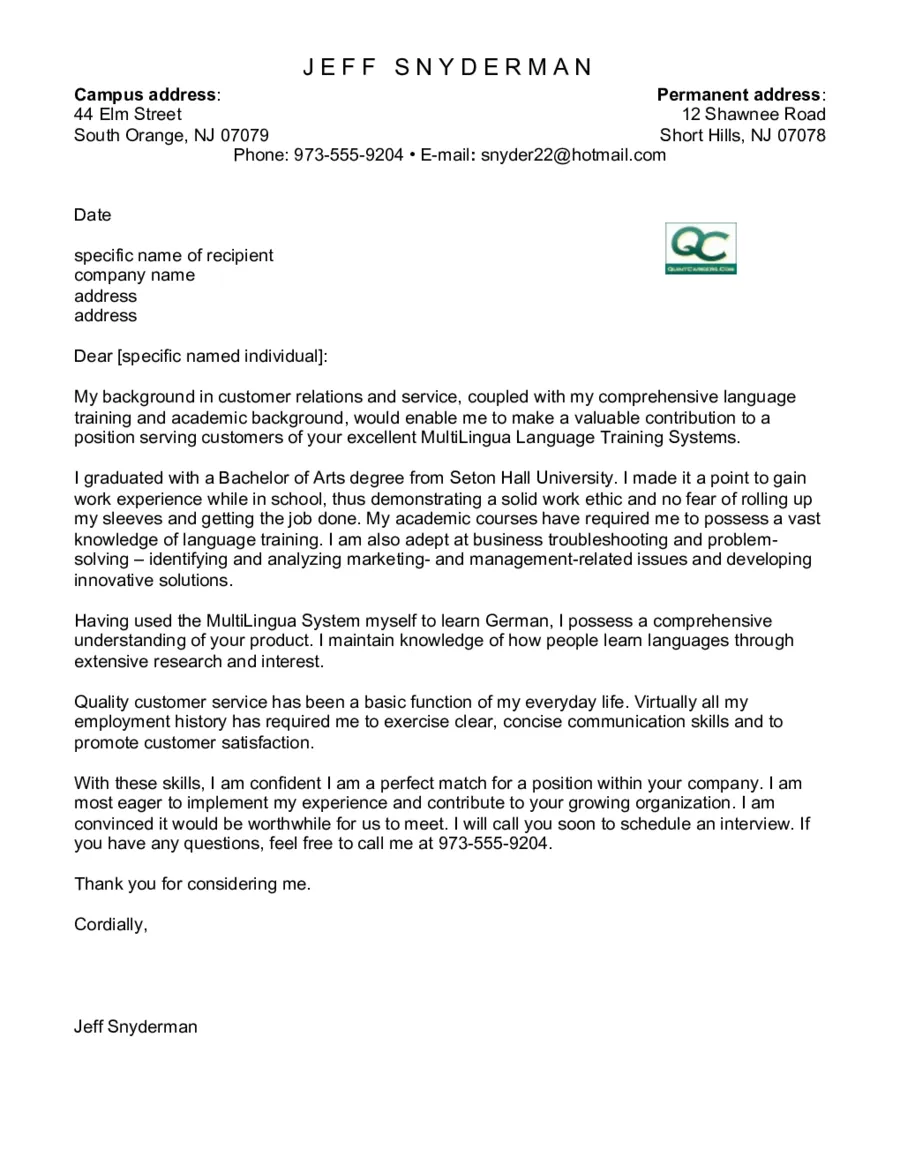
A well-structured cover letter is easy to read and allows the hiring manager to quickly grasp your key qualifications. A standard cover letter should include an opening paragraph, body paragraphs highlighting your skills and experience, and a closing paragraph. Each section should serve a specific purpose and contribute to the overall impact of your application. Clear organization helps the hiring manager easily find the information they need and assess your suitability for the role. A structured approach shows you’re organized, thoughtful, and professional, reflecting the skills needed in a customer service role.
The Opening Paragraph
Your opening paragraph should immediately grab the reader’s attention and introduce yourself. State the position you’re applying for and how you learned about the opportunity. Briefly mention why you are interested in the role and the company. Make sure to show enthusiasm and personality here. You want to make a strong first impression and get the hiring manager excited to read the rest of your letter. A good opening paragraph sets the tone for the entire letter and makes the reader want to learn more about your qualifications. Mentioning a specific company value or a unique aspect of the job that interests you is a great way to start.
Body Paragraphs Highlighting Skills
The body paragraphs are where you demonstrate your skills and experience. Focus on the key requirements of the job description. Use specific examples and quantify your achievements whenever possible. Instead of making generic claims about your skills, back them up with evidence from your previous roles. Use the STAR method (Situation, Task, Action, Result) to provide context and show how you’ve successfully handled customer service situations. This approach provides a structured and clear narrative of your capabilities. Provide details about the situation, your specific task, the actions you took, and the positive result you achieved.
Quantifying Achievements
Whenever possible, quantify your achievements with numbers and statistics. Instead of saying, ‘I improved customer satisfaction,’ say, ‘I increased customer satisfaction scores by 15% in six months by implementing a new feedback system.’ Quantifying your achievements provides concrete evidence of your skills and abilities. Using numbers shows the impact you’ve had in previous roles and helps the hiring manager understand the value you could bring to their company. Consider using metrics like the number of customers you assisted, the reduction in average resolution time, or the increase in positive feedback received. This makes your cover letter more persuasive and demonstrates your tangible contributions.
The Closing Paragraph
Your closing paragraph should reiterate your interest in the role and thank the hiring manager for their time and consideration. Express your enthusiasm for the opportunity and mention your availability for an interview. Keep it brief, professional, and action-oriented. Reiterate your key strengths and highlight why you are a good fit for the company. Including a call to action, such as ‘I look forward to discussing my qualifications further in an interview,’ reinforces your interest. End with a formal closing, such as ‘Sincerely’ or ‘Best regards’, followed by your name and contact information.
Proofreading and Formatting Your Cover Letter
Before you submit your cover letter, proofread it carefully. Check for any typos, grammatical errors, and inconsistencies in formatting. These errors can undermine your credibility and make a negative impression. Read the cover letter aloud to catch any awkward phrasing or unclear sentences. Consider having a friend or colleague review your cover letter for feedback. Ensure your formatting is clean and professional, using a standard font and font size, and using consistent spacing. A well-formatted and error-free cover letter shows attention to detail, which is a highly valued skill in customer service roles.
In conclusion, a standout customer service cover letter is more than just a formality. It is a powerful marketing tool that can significantly increase your chances of landing your dream job. By showcasing your skills, tailoring your letter to each opportunity, and adhering to these secrets, you can make a lasting impression on hiring managers and set yourself apart from the competition. Remember to highlight your communication skills, problem-solving abilities, empathy, and technical proficiency with clear examples. Always proofread carefully and tailor your cover letter to the specific job requirements. Good luck with your job search!