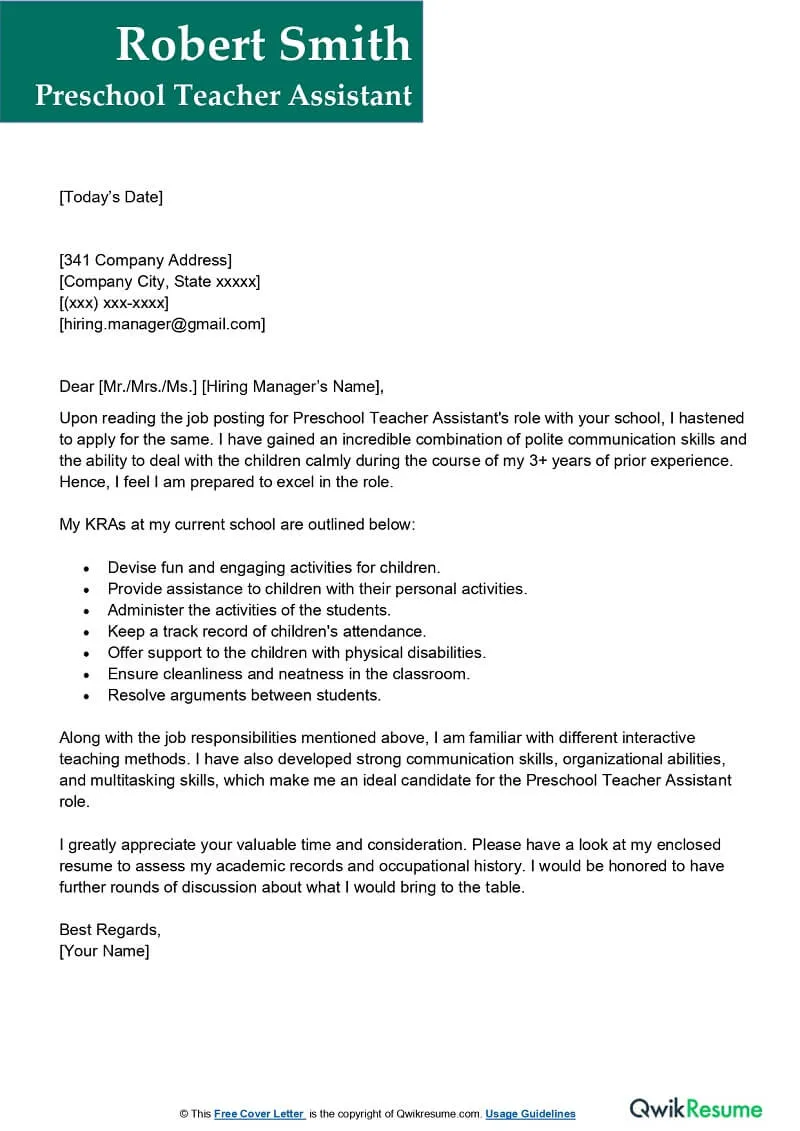
Highlighting Your Skills for a Daycare Assistant Teacher Role
Crafting a compelling cover letter is crucial when applying for a Daycare Assistant Teacher position. Your cover letter is your first introduction to the hiring manager, providing an opportunity to showcase your qualifications and personality. This document should go beyond simply reiterating your resume; it should highlight your unique skills, experiences, and enthusiasm for working with children. A well-written cover letter can significantly increase your chances of landing an interview. It’s your chance to shine and demonstrate why you are the best fit for the role. Remember, the goal is to make a positive first impression and encourage the reader to learn more about you. Proper formatting and clear language are essential to capturing the hiring manager’s attention.
Key Skills to Showcase
Daycare Assistant Teacher positions require a diverse set of skills. Your cover letter should explicitly mention these skills and provide examples of how you’ve used them effectively. Focus on abilities such as patience, creativity, communication, and the ability to create a nurturing environment. Highlight your proficiency in planning age-appropriate activities, managing children’s behavior, and ensuring a safe and engaging classroom. Other important skills include first aid and CPR certification, which are often mandatory. When describing your skills, try to quantify your achievements whenever possible. For instance, rather than saying you ‘managed a classroom,’ you could say ‘managed a classroom of 15 children, implementing successful behavior management strategies.’ Be as specific as possible.
Childcare Experience
Detailing your childcare experience is a critical part of your cover letter. Provide specific examples of your previous roles, whether paid or volunteer. Describe your responsibilities in each role, such as assisting with daily activities, preparing meals, supervising playtime, or helping with arts and crafts. If you have experience working with children of different ages, mention this. Showcase any special projects you led or initiatives you were involved in. If you have experience with specific childcare philosophies or methods, such as Montessori or Reggio Emilia, be sure to highlight this. When describing your experience, emphasize positive outcomes and any improvements you contributed to. The more detail you provide, the better the hiring manager can understand your capabilities.
Educational Background
Include your educational background in your cover letter. Mention any relevant degrees, certifications, or coursework you’ve completed. Highlight any early childhood education courses, child development classes, or related training programs. If you have a CDA (Child Development Associate) credential or any other relevant certifications, make sure to list them prominently. Also, include the name of the institution and the date of completion for each. If you are currently pursuing any education or training, state this as well. Even if your educational background is not directly related to childcare, you can still mention any skills or knowledge you have gained that are relevant to the role. For example, a degree in psychology could highlight your understanding of child behavior.
Structuring Your Cover Letter
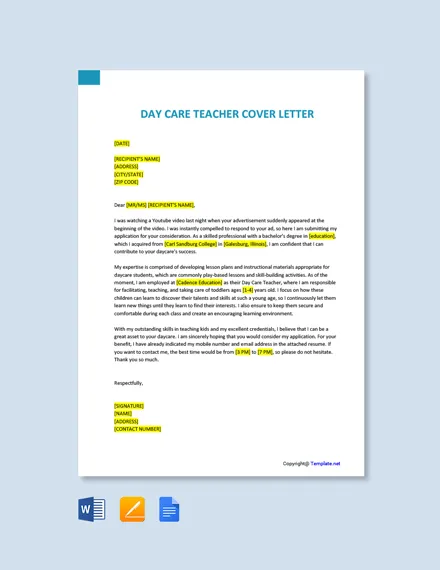
A well-structured cover letter is easy to read and makes a strong impact. It should be concise and tailored to the specific job you are applying for. Always customize your letter for each position, as this shows the hiring manager that you’ve put in the effort to understand the requirements. Use a professional tone and avoid slang or overly casual language. The structure of your cover letter can greatly influence how it’s perceived. The format must be easy to follow, logical, and reflect your personality. The organization must highlight your key strengths and experiences in a way that will interest the hiring manager. The layout and presentation should ensure it’s easily scannable.
Opening Paragraph

The opening paragraph is your opportunity to grab the reader’s attention. State the position you are applying for and where you saw the job posting. Briefly introduce yourself and express your enthusiasm for the role and the daycare. Clearly state why you are interested in the position and what you bring to the table. Avoid generic openings, such as ‘I am writing to apply…’ Instead, try something more engaging, like ‘I am thrilled to apply for the Daycare Assistant Teacher position…’ Mention the daycare’s name if possible, to show you’ve done your research. Your goal is to create a positive first impression.
Body Paragraphs
The body paragraphs are where you delve into your skills, experience, and qualifications. Structure these paragraphs logically, with each one focusing on a key aspect of your profile. Provide specific examples that illustrate your strengths. Use the job description as a guide and address the requirements mentioned. Quantify your achievements whenever possible; for example, ‘Successfully managed a group of 10 toddlers, resulting in a 20% reduction in disciplinary issues.’ Explain how your skills and experience align with the daycare’s needs and values. Show how you can contribute to the daycare’s goals. Support your claims with specific examples. This demonstrates your ability to contribute to the daycare’s success.
Closing Paragraph
The closing paragraph should summarize your key qualifications and reiterate your interest in the position. Thank the hiring manager for their time and consideration. Reiterate your enthusiasm for the role and the daycare. Clearly state that you look forward to hearing from them and are available for an interview. Include a call to action, such as ‘I am eager to discuss my qualifications further in an interview’ or ‘I am available for an interview at your earliest convenience.’ Ensure your contact information is readily available. This final paragraph serves as a gentle reminder and reinforces your desire for the position.
Formatting Your Cover Letter for Daycare Assistant Teachers

The formatting of your cover letter is just as important as the content. A well-formatted letter is easy to read and projects professionalism. Use a standard, easy-to-read font, such as Times New Roman, Arial, or Calibri, in a size between 11 and 12 points. Ensure your margins are consistent (typically 1 inch on all sides) and use single-spacing within paragraphs and double-spacing between paragraphs. Use clear headings and subheadings to organize the information. Keep your paragraphs concise and easy to scan. Use bullet points to highlight key skills or experiences. Avoid excessive use of bolding, underlining, or italics. Proofread your formatting before submitting your application, ensuring it presents a polished image.
Choosing the Right Font and Layout
The right font and layout can significantly improve the readability of your cover letter. Choose a professional and easy-to-read font. Stick to standard fonts like Times New Roman, Arial, or Calibri. Ensure your font size is between 11 and 12 points for optimal readability. A clean layout with ample white space makes your letter more appealing. Use a simple and consistent structure with clear headings and subheadings. Align your text to the left and avoid justifying the text. Keep your paragraphs concise and make use of bullet points to highlight key points or achievements. This makes the information easy to scan. The goal is to provide a visually appealing document that’s easy to read.
Proofreading and Editing
Proofreading and editing are essential steps in creating a flawless cover letter. Before submitting your cover letter, carefully proofread it for any grammatical errors, spelling mistakes, or typos. Read it aloud to catch any awkward phrasing or sentences. Have a friend or family member review your cover letter to provide a fresh perspective and catch any errors you might have missed. Pay close attention to the use of punctuation, ensuring it is consistent and correct. Ensure your contact information is accurate. A well-proofread cover letter demonstrates attention to detail and professionalism. Errors can create a negative impression, so dedicate time to ensuring your cover letter is perfect before submission.
Including a Call to Action

A call to action encourages the hiring manager to take the next step. In your closing paragraph, clearly state that you are available for an interview and provide your contact information. You can also express your enthusiasm for the opportunity and the daycare. For example, you could write: ‘I am eager to discuss my qualifications further and am available for an interview at your earliest convenience.’ or, ‘I am very excited about the Daycare Assistant Teacher position and would love to learn more about the opportunity. Thank you for your time and consideration. I look forward to hearing from you soon.’ A clear call to action makes it easier for the hiring manager to respond, increasing the likelihood of your application succeeding.