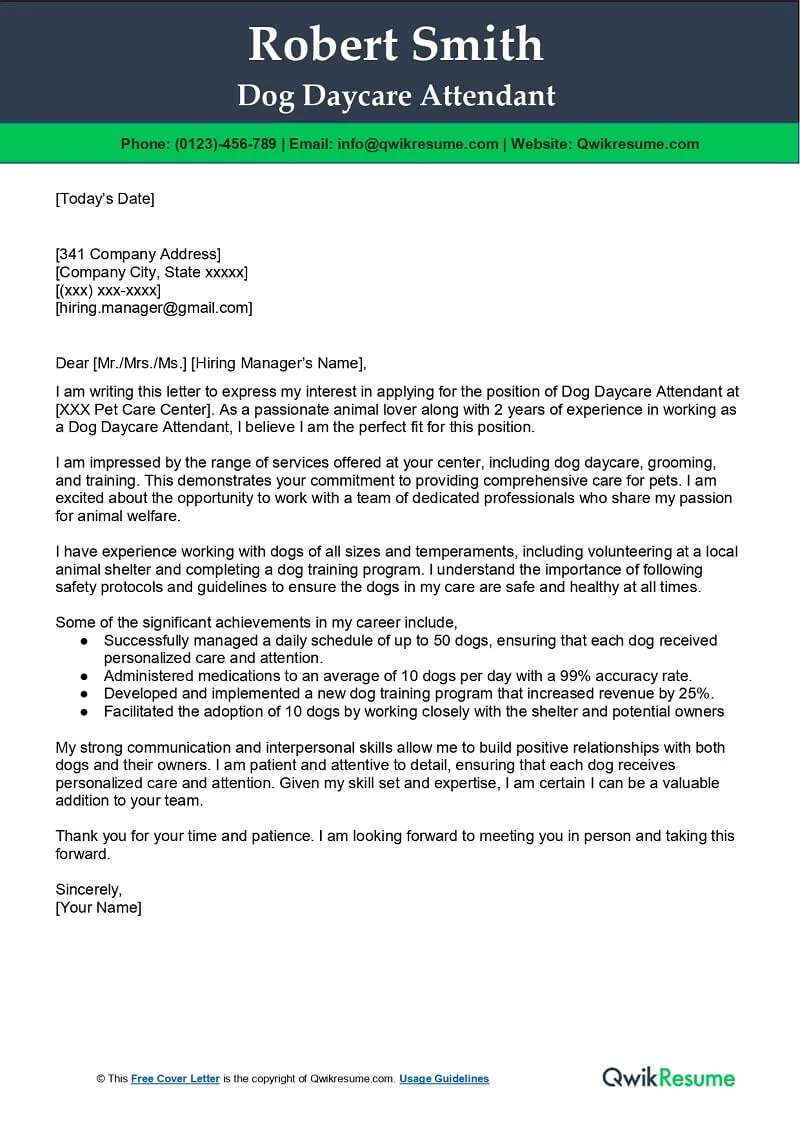
A daycare worker cover letter is your first introduction to a potential employer. It’s more than just a formality it’s your chance to make a strong first impression and demonstrate why you’re the ideal candidate for the job. A well-crafted cover letter, tailored to the specific daycare and position, can significantly increase your chances of landing an interview. This guide will walk you through every step to craft a compelling cover letter that gets you hired. Learn how to showcase your skills, highlight your experience, and express your passion for childcare. Get ready to write a cover letter that sets you apart and opens doors to your dream job. Remember, the goal is to capture the hiring manager’s attention and demonstrate your value from the very beginning.
Crafting Your Daycare Worker Cover Letter
A great cover letter is essential for any daycare worker seeking employment. It provides you with a platform to demonstrate your skills, experience, and passion for childcare. To craft a compelling letter, understanding its purpose, what to include, and how to present it effectively is crucial. This section breaks down the key components of a successful cover letter, helping you make a strong impression on potential employers and stand out from other applicants. By focusing on the right elements and avoiding common pitfalls, you can significantly increase your chances of securing an interview and ultimately, your desired position. Your cover letter is your first step towards a rewarding career.
Understanding the Purpose of a Cover Letter
The primary aim of a cover letter is to introduce yourself, express your interest in a specific position, and persuade the employer to read your resume. It serves as a personalized introduction, going beyond the standard information found in your resume. This allows you to connect your skills and experiences to the specific requirements of the job and the values of the daycare center. A well-written cover letter shows your enthusiasm, attention to detail, and communication skills, all of which are essential qualities for a daycare worker. Think of it as your chance to show your personality and why you are the best fit.
Why is a Cover Letter Important

A cover letter is important for several reasons. Firstly, it provides an opportunity to elaborate on your qualifications. You can provide context to your resume and expand on experiences that are relevant to the job description. Secondly, a cover letter demonstrates your communication skills. It’s a sample of your writing ability and shows how you structure your thoughts. Additionally, a well-crafted letter shows that you have taken the time and effort to personalize your application. This indicates a genuine interest in the position and the daycare. Using a cover letter helps you to stand out from other applicants. A cover letter allows you to explain career gaps, address any concerns, and further highlight your qualifications and eagerness for the position.
What to Include in Your Cover Letter
A strong daycare worker cover letter should include several key elements to make a lasting impression. These elements, when carefully constructed, will showcase your suitability for the role. Make sure the letter reflects your skills and experiences, while also making it easy for the hiring manager to understand who you are and what you bring to the table. Be sure to tailor each letter to the specific daycare and role that you are applying for. A cover letter that is well-structured, detailed, and tailored to the specific job will greatly increase your chances of success. Including all of the right components is a great first step.
Your Contact Information
Start your cover letter by including your full name, address, phone number, and email address. This information should be clearly visible at the top of the letter. Ensure that your email address is professional and easy to read. This allows the hiring manager to easily contact you for an interview. Double-check all the contact details for accuracy to avoid any delays in communication. Make sure your information is easy to find and clearly presented. Correct contact information is crucial for a successful application.
The Hiring Manager’s Contact Information

If possible, address your cover letter to a specific person (e.g., the hiring manager or daycare director) by name. Research the daycare to find out who handles hiring. Use their title and correct spelling of their name. If you can’t find the name, use a general greeting like “Dear Hiring Manager”. Adding their name will immediately grab their attention. This personalization shows that you’ve taken the time to research and are genuinely interested in the daycare. It demonstrates initiative and attention to detail.
A Compelling Opening
Your opening paragraph should immediately grab the hiring manager’s attention. State the specific position you are applying for and how you learned about the opening. Briefly mention why you are interested in the role and the daycare. Expressing genuine enthusiasm at the start can set the tone for the entire letter. Consider mentioning a relevant skill, achievement, or experience that directly aligns with the daycare’s needs. This initial impression will encourage them to read further and learn more about your qualifications and skills. A strong opening paragraph will grab their attention and make them want to keep reading.
Highlighting Your Skills and Experience
The main body of your cover letter should highlight your skills and experience, making a strong case for why you are the best candidate. Clearly explain how your qualifications match the requirements of the job. Use specific examples to demonstrate your abilities. Quantify your achievements whenever possible, and focus on the most relevant skills and experiences. Tailor your letter to the specific job description, emphasizing skills that the daycare values. Highlighting your strengths and showcasing your ability to meet the needs of the role will leave a positive impression. This section is a great opportunity to set yourself apart from other applicants.
Relevant Skills to Showcase

Focus on skills that are directly relevant to the daycare worker position. Include skills such as child care experience, communication, patience, and the ability to create a nurturing environment. Highlight your knowledge of child development, safety procedures, and age-appropriate activities. Mention skills like first aid or CPR certification if you have them. Tailor your skills to the daycare’s needs. Emphasize your ability to work well with children, their parents, and your coworkers. Highlighting the right skills and capabilities is critical to getting hired.
Quantifiable Achievements
Whenever possible, quantify your achievements with numbers and data. For example, instead of saying you “managed classroom activities,” you could say, “Implemented a new activity curriculum, resulting in a 20% increase in child engagement.” Use numbers to demonstrate the impact of your work. Such as, “Supervised and cared for up to 10 children daily.” Quantifiable achievements provide concrete evidence of your abilities. This strengthens your claims and makes your accomplishments more credible. Quantifiable data gives the hiring manager specific, measurable information about your experience and skills.
Showcasing Your Passion for Childcare
Expressing your genuine passion for childcare is crucial. Highlight your love for working with children and your commitment to their well-being and development. Talk about your enthusiasm for creating a positive and supportive environment. Show that you are passionate about this profession and are committed to providing quality care. Convey your dedication to nurturing children and helping them learn. Your enthusiasm can go a long way. A positive attitude will catch the eye of the hiring manager.
Expressing Your Enthusiasm

Enthusiasm can be expressed in many ways. Use positive and upbeat language. Talk about what excites you about working with children. Convey how your values align with the daycare’s mission. Express your eagerness to learn, grow, and contribute to the daycare. Your excitement can capture their attention. Explain why you are excited about the opportunity. This will show your genuine interest in the position and the daycare. Showing your enthusiasm is crucial in setting yourself apart from other applicants.
Providing Specific Examples
Back up your claims with specific examples. Share anecdotes or stories that illustrate your skills, experiences, and enthusiasm. For example, describe a situation where you successfully handled a challenging child. Include details of how you resolved the conflict and what you learned from the experience. Provide examples that demonstrate your ability to connect with children, create engaging activities, and manage a classroom environment. The examples show the hiring manager that you have experience and can handle different situations effectively. Providing specific examples makes your claims more believable.
Formatting and Presentation
The format and presentation of your cover letter are as important as the content. A well-formatted letter is easy to read and shows professionalism. Ensure that your cover letter is visually appealing and well-organized. Proper formatting can make the difference between your application being read and being rejected. This will allow the hiring manager to focus on your content. Follow these tips to get your application seen.
Font and Readability

Choose a professional and easy-to-read font. Common fonts like Times New Roman, Arial, or Calibri are good choices. Use a font size between 10 and 12 points. Use clear and concise language and avoid jargon. Break up large blocks of text with short paragraphs, bullet points, and ample white space. The hiring manager should not have to struggle to read the information you provided. Your writing should be clear and easy to understand. Maintaining readability is essential in ensuring your application is read.
Length of the Cover Letter
Keep your cover letter concise. Aim for a maximum of one page. Focus on the most relevant information and avoid unnecessary details. Be direct and to the point. Highlight only the most important details. Shorter cover letters are easier to read and will grab the reader’s attention quickly. Be sure your letter gets to the point and conveys what you want the hiring manager to know. Make every word count and only include essential details.
Proofreading and Editing
Proofreading and editing are crucial. Ensure your cover letter is free from typos, grammatical errors, and spelling mistakes. Ask someone else to read your letter. This can help you catch any mistakes you might have missed. Run a spell-check and grammar check to help with this. This will make your application look more professional. Proofreading and editing is a critical step in preparing your letter. Proofread before submitting your application to ensure it is free of errors. A flawless letter will have a great effect on the reader.
Common Mistakes to Avoid

Several common mistakes can significantly decrease your chances of getting hired. Being aware of these pitfalls and avoiding them can improve your cover letter. This will ensure that your application stands out. Recognizing and rectifying these errors is important for creating a strong application. The details provided in this section will help to make a great application.
Generic Cover Letters
Avoid using generic cover letters that can be used for any job. Tailor your cover letter to each specific daycare and position. Show that you understand the daycare’s mission and values. Refer to the specific job description. Using a generic letter can make it look like you didn’t care enough to tailor your application. Customize your letter to reflect your genuine interest in the specific job. This will increase your chances of getting hired. Show your unique abilities to stand out from other applicants.
Typos and Grammatical Errors
Typos and grammatical errors can make a negative impression. Always proofread your cover letter carefully. Use spell-check and grammar-check tools. Ask someone else to review your letter for mistakes. Spelling and grammar mistakes may lead to your letter being discarded. A polished cover letter presents you in a professional light. Checking for errors is a step that you must not skip. Errors can detract from your qualifications and skills.
Lack of Personalization
Avoid using a generic greeting such as “To Whom It May Concern.” Research the daycare and address your letter to the hiring manager by name. Show you have an interest in the specific role and daycare. A personalized approach demonstrates your genuine interest in the position. This shows you have invested time and effort in your application. When you personalize your application, you are making the hiring manager want to read your letter.
Tips for Following Up
After submitting your cover letter and resume, follow up with the daycare. Send a polite email or make a phone call within a week or two. Reiterate your interest in the position. Ask about the status of your application. Thank the hiring manager for their time. Following up demonstrates your enthusiasm and initiative. This can leave a positive impression on the hiring manager. Be sure you are kind and polite when following up.
By following these guidelines, you can create a daycare worker cover letter that will help you get hired. Your cover letter is an important piece of your job application. You will be one step closer to your dream job! With a well-crafted letter, you can make a strong first impression, showcase your skills, and secure an interview. Remember to tailor your cover letter to each job, highlight your passion, and always proofread before submitting. Good luck with your job search!