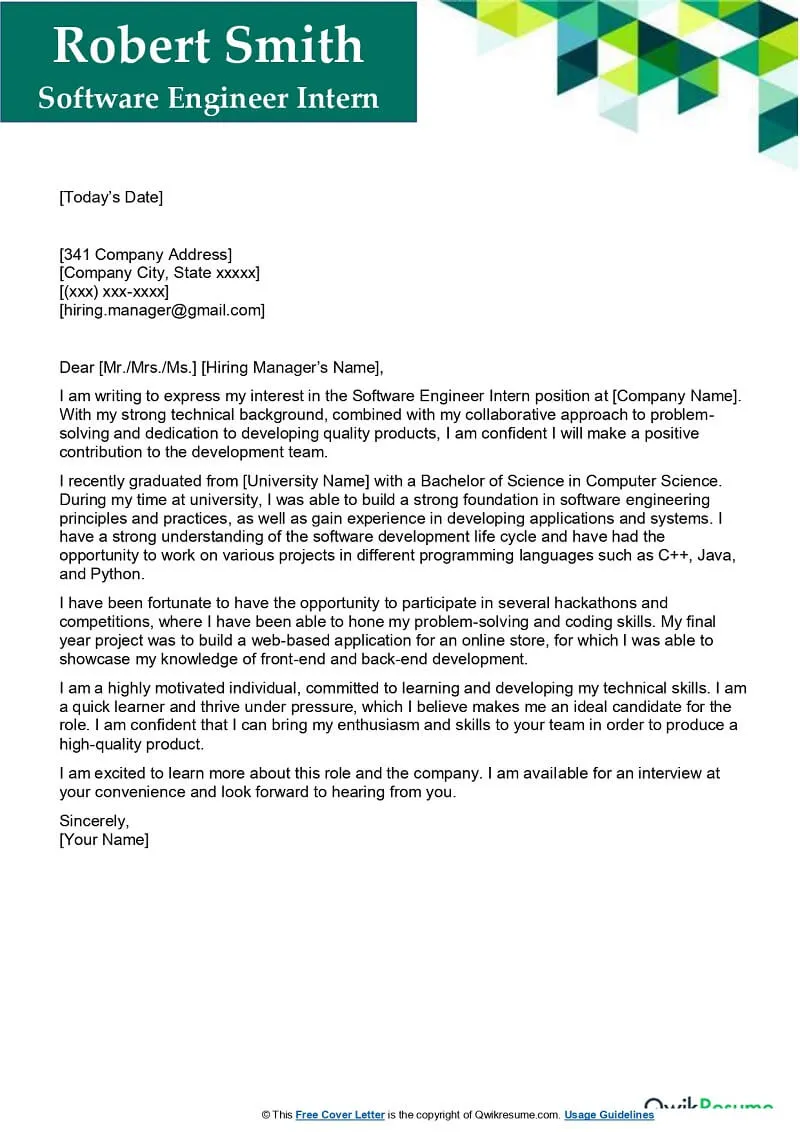
What is an Engineering Internship Cover Letter
An engineering internship cover letter is a crucial document that accompanies your resume when you apply for an internship position in the field of engineering. It serves as your introduction to the hiring manager or recruiter, providing an opportunity to showcase your personality, passion, and relevant skills beyond what is listed on your resume. It is a vital tool for highlighting your suitability for the specific internship and demonstrating your understanding of the company and the role. A well-crafted cover letter can significantly increase your chances of securing an interview.
Why You Need a Strong Cover Letter
In a competitive job market, a strong cover letter is a differentiator. It allows you to personalize your application and connect with the hiring manager on a deeper level. It provides context to your resume, explaining how your skills and experiences align with the internship’s requirements. A compelling cover letter demonstrates your written communication skills, attention to detail, and genuine interest in the opportunity. It can highlight experiences or skills that might not be immediately apparent from your resume, giving you an edge over other candidates and making you more memorable.
Key Components of an Engineering Internship Cover Letter

A well-structured cover letter follows a standard format, making it easy for the reader to understand your qualifications and interest. This section breaks down the essential parts, ensuring a professional and impactful presentation.
Header Information
Your Contact Information
At the top of your cover letter, include your full name, address, phone number, and email address. Ensure your email address is professional and easy to read. This information allows the hiring manager to quickly reach you if they are interested in scheduling an interview.
Date

Below your contact information, include the date you are submitting the cover letter. This helps in keeping track of when the application was sent.
Employer’s Contact Information
Include the hiring manager’s or recruiter’s name, title, and the company’s address. If you cannot find the hiring manager’s name, use a general greeting like ‘Dear Hiring Manager’.
Greeting
Address the hiring manager by name if possible. This demonstrates you’ve done your research and makes your letter more personal. If you don’t know the name, use a professional greeting like ‘Dear Hiring Manager’ or ‘Dear [Company Name] Recruiting Team’.
Body Paragraphs

The body of your cover letter is where you explain why you are a strong candidate for the engineering internship. It consists of several paragraphs, each serving a specific purpose to make your application compelling and professional.
Opening Paragraph
State your purpose
Begin by stating the specific internship you are applying for and where you found the job posting. This immediately clarifies your intent. Mention the company and why you are interested in them, showing that you’ve done your research.
Highlight your interest and enthusiasm

Express your genuine enthusiasm for the internship and the company. Explain what excites you about the opportunity and what you hope to gain from the experience. This demonstrates your motivation and passion.
Second Paragraph
Showcase relevant skills and experiences
Describe your relevant skills and experiences, emphasizing those that align with the internship’s requirements. Mention specific projects, coursework, or extracurricular activities that have prepared you for the role. Use action verbs to describe your contributions and accomplishments.
Quantify your achievements
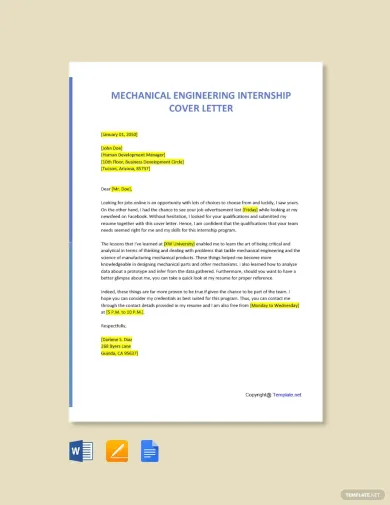
Whenever possible, quantify your achievements with numbers or data. For example, if you improved a process, mention the percentage of improvement. Quantifiable results make your claims more credible and demonstrate your ability to make a tangible impact.
Third Paragraph
Express your knowledge about the company
Demonstrate your understanding of the company’s mission, values, and recent projects. Mention something specific that caught your attention and why you admire the company. This shows that you have done your research and are genuinely interested in the company.
Explain why you’re a good fit

Explain why you are a good fit for the company culture and the internship. Highlight how your skills, experiences, and personality align with the company’s values and the role’s requirements. This shows that you are not just qualified but also a good match for the team.
Closing Paragraph
Reiterate your interest and enthusiasm
Reiterate your strong interest in the internship and the company. Briefly summarize why you believe you are a good fit and express your excitement for the opportunity.
Call to action
Include a call to action, such as expressing your availability for an interview and thanking the hiring manager for their time and consideration. Make it easy for them to take the next step.
Formal Closing and Signature
Use a professional closing such as ‘Sincerely,’ or ‘Best regards,’ followed by your typed name. If you are submitting a physical copy, leave space for your signature above your typed name.
Formatting Tips for Your Cover Letter
Proper formatting is essential for making your cover letter easy to read and professional in appearance. Following these tips will help ensure that your cover letter is well-presented and impactful.
Use a professional font and layout
Choose a professional font such as Times New Roman, Arial, or Calibri. Use a font size between 10 and 12 points for readability. Ensure consistent formatting throughout the document. Use a standard layout with one-inch margins and single-spaced text.
Keep it concise and easy to read
Keep your cover letter to one page. Use concise language and avoid overly complex sentences. Break up large blocks of text with bullet points or short paragraphs to make it easy for the reader to scan and understand your key points.
Proofread carefully
Proofread your cover letter multiple times for any typos, grammatical errors, or inconsistencies. Ask a friend or career advisor to review it as well. Errors can damage your credibility and make a negative impression.
Cover Letter Examples for Different Engineering Fields
Tailoring your cover letter to the specific field of engineering is crucial. This section offers examples for different engineering disciplines, highlighting the key skills and experiences to emphasize.
Civil Engineering
For civil engineering internships, highlight your knowledge of structural design, construction management, and relevant software (e.g., AutoCAD, Civil 3D). Mention any projects where you have applied these skills and emphasize your understanding of safety regulations and environmental sustainability.
Mechanical Engineering
Mechanical engineering cover letters should showcase your skills in areas such as thermodynamics, fluid mechanics, and CAD/CAM. Highlight your experience with design, analysis, and prototyping, and mention any projects where you demonstrated problem-solving abilities and attention to detail.
Electrical Engineering
Electrical engineering cover letters should emphasize your knowledge of circuit design, electronics, and programming. Mention any experience with software like MATLAB or simulation tools, and highlight projects where you have worked with power systems, communication systems, or embedded systems.
Software Engineering
Software engineering cover letters should focus on your programming skills, experience with different programming languages (e.g., Java, Python, C++), and knowledge of software development methodologies. Highlight projects where you developed software, contributed to open-source projects, or demonstrated problem-solving skills in a software context.
Common Mistakes to Avoid
Avoiding common mistakes is crucial for making a positive impression. This section outlines some errors to steer clear of when writing your engineering internship cover letter.
Typos and grammatical errors
Typos and grammatical errors make a bad impression and suggest a lack of attention to detail. Always proofread your cover letter carefully and consider using grammar-checking tools.
Generic cover letters
Sending a generic cover letter that could be used for any internship shows a lack of effort and interest. Customize each letter to the specific internship and company, highlighting your unique qualifications and enthusiasm.
Focusing solely on your needs
Focusing too much on what you want from the internship rather than how you can contribute to the company. Highlight your skills and how you can help the company achieve its goals.
Tips for Tailoring Your Cover Letter
Tailoring your cover letter to each specific job application is essential for maximizing your chances of success. Here are some strategies to help you customize your cover letter effectively.
Research the company and the role
Before writing your cover letter, research the company’s mission, values, and recent projects. Understand the specific requirements and responsibilities of the internship role. This will help you tailor your letter to the company’s needs and show your genuine interest.
Match your skills to the job description
Carefully review the job description and identify the skills and experiences the company is looking for. Highlight your relevant qualifications and provide specific examples of how you have demonstrated those skills in the past. Ensure that your resume and cover letter complement each other.
Use keywords from the job posting
Incorporate keywords from the job posting into your cover letter and resume. This will help your application get noticed by applicant tracking systems (ATS) and demonstrate that you understand the role’s requirements. Use these keywords naturally and relevantly throughout your letter.
Conclusion
A well-crafted cover letter is a powerful tool for securing an engineering internship. By following the guidelines and examples provided, you can create a cover letter that effectively showcases your skills, experiences, and passion for engineering. Tailor your letter to each specific internship, and always proofread carefully. With a strong cover letter, you’ll be well on your way to landing your dream internship and launching your engineering career.