Understanding the Importance of a Cover Letter for Entry Level Engineers
In the competitive world of engineering, securing your first job can be challenging. While your resume showcases your technical skills and educational background, a well-crafted cover letter provides an invaluable opportunity to impress potential employers and distinguish yourself from other candidates. For entry-level engineers, a cover letter is often the first impression you make, allowing you to highlight your passion, enthusiasm, and suitability for the role. It’s a chance to go beyond the facts and figures of your resume and demonstrate your personality, communication skills, and genuine interest in the company and the specific position.
Why a Cover Letter is Crucial
A cover letter serves multiple critical purposes in the job application process. Firstly, it allows you to provide context to your resume. Entry-level engineers may lack extensive work experience, and a cover letter helps you connect your academic achievements, projects, and any relevant internships or volunteer work to the job requirements. Secondly, it allows you to express your unique value proposition. What makes you stand out from the crowd? Your cover letter lets you articulate your skills, experiences, and career goals in a way that a resume alone cannot. Finally, a well-written cover letter demonstrates your communication skills, attention to detail, and your understanding of the company and the role, all of which are highly valued by employers.
Highlighting Your Skills and Experience

As an entry-level engineer, you might be concerned about a perceived lack of experience. However, you possess a wealth of skills and experiences that can be effectively highlighted in your cover letter. This includes technical skills learned through coursework, such as CAD software proficiency, programming languages, and analytical abilities. You can also showcase any hands-on project experience, whether it’s building a robot for a competition, designing a bridge for a class project, or participating in a research project. If you’ve completed any internships or volunteer roles, be sure to describe your responsibilities and what you learned. Remember to tailor your skills and experiences to the specific requirements of the job description to demonstrate your suitability for the role.
Key Components of an Entry Level Engineer Cover Letter
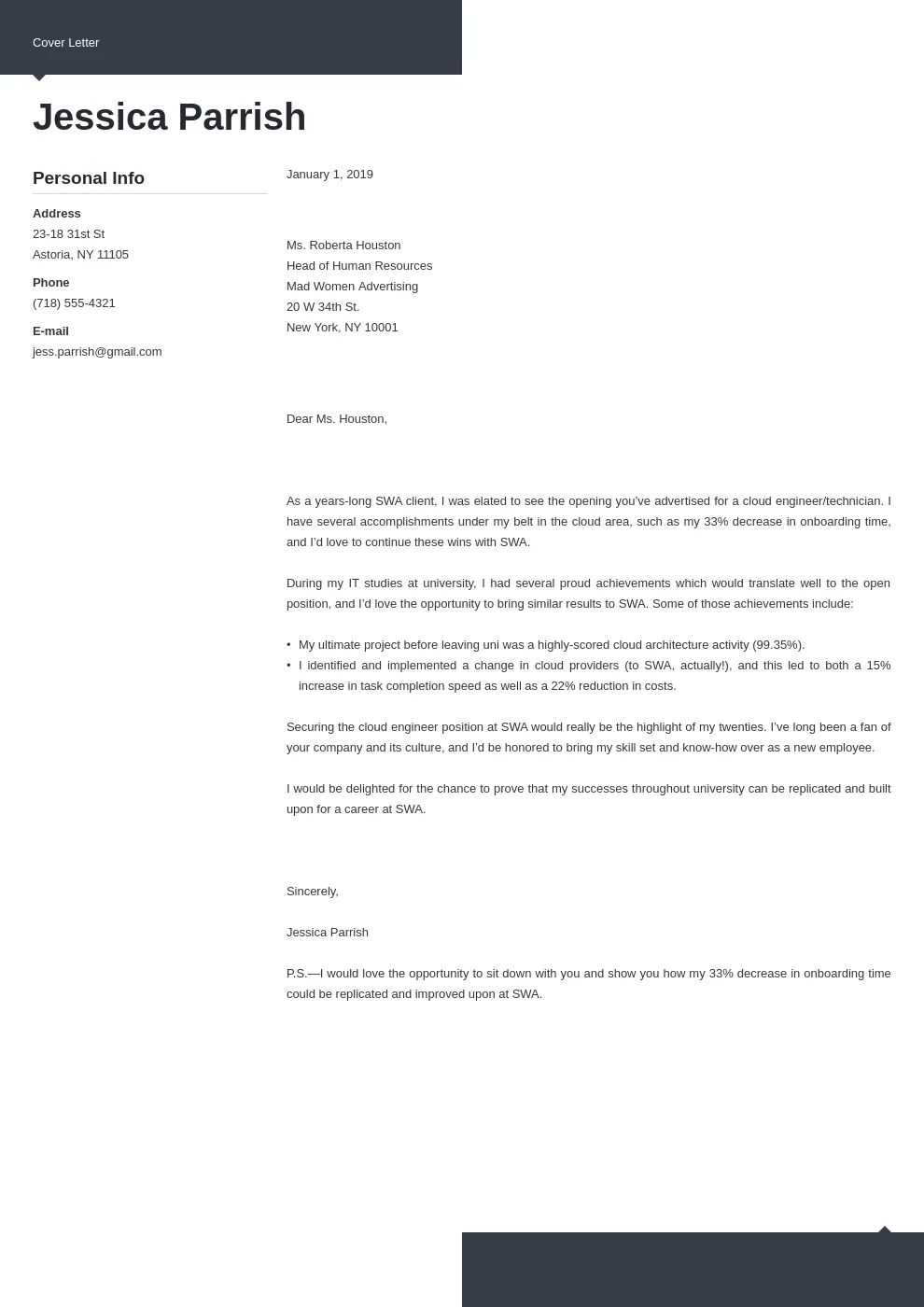
A well-structured cover letter for an entry-level engineer should include several key components. First and foremost is your contact information at the top, including your name, address, phone number, and email address. Then, address the hiring manager directly by name if possible. Next, the body of your letter should highlight your skills, experience, and enthusiasm for the role and the company. Finally, you should conclude with a strong closing statement, expressing your interest in the position and thanking the reader for their time and consideration. Proofread meticulously before sending your application to ensure your cover letter makes a positive impact.
Contact Information and Opening
Begin your cover letter with your contact information, including your name, address, phone number, and professional email address. This ensures that the hiring manager can easily reach you. Then, craft a compelling opening paragraph that grabs the reader’s attention. You should also state the position you are applying for and where you found the job posting. Express your interest in the role and briefly mention why you are a good fit. Demonstrate your awareness of the company’s work and values from the very start.
Address the Hiring Manager Directly
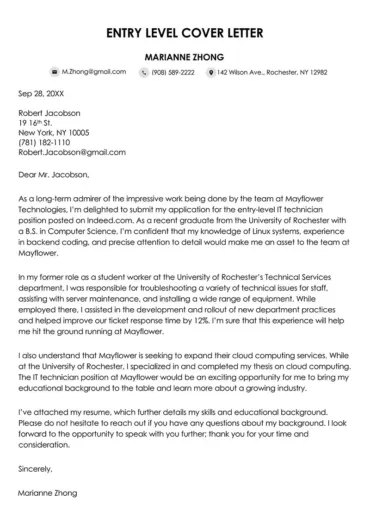
Whenever possible, address your cover letter to a specific person, such as the hiring manager or the recruiter. This shows that you’ve done your research and are genuinely interested in the role. Researching the company’s website, LinkedIn profiles, or job postings can often reveal the name of the person to whom you should address your letter. If you cannot find a specific name, using a general greeting, such as “Dear Hiring Manager”, is acceptable. Tailoring your letter to a specific person demonstrates a level of professionalism that makes a good impression.
Showcasing Your Education and Technical Skills
Your cover letter is the perfect place to emphasize your education and technical skills. Highlight your degree, major, and any specializations or areas of focus. Mention relevant coursework that has prepared you for the role, such as courses in CAD, programming, or specific engineering disciplines. If you are applying for a mechanical engineering role, mention courses like thermodynamics or fluid dynamics. If you are looking for an electrical engineering role, focus on your understanding of circuit analysis or signal processing. Be specific and connect your academic background to the requirements of the job. Ensure your focus is always the job posting.
Mention Relevant Coursework and Projects
Go beyond simply listing your courses. Describe specific projects and assignments that demonstrate your technical skills and problem-solving abilities. Mention any projects where you worked in teams, emphasizing your teamwork skills and ability to collaborate with others. If you have personal projects, such as building your own electronics kit or designing a website, include those as well. Quantify your achievements whenever possible. Instead of saying “I worked on a project,” explain your role, what you accomplished, and the results. For example, “I designed and implemented a control system that improved the efficiency by 15%”.
Emphasizing Soft Skills and Personality

In addition to technical skills, employers also value soft skills. These include communication, teamwork, problem-solving, leadership, and time management. Your cover letter is an excellent opportunity to demonstrate these skills through specific examples. Talk about instances where you’ve successfully worked in a team to solve a complex problem or where you took initiative to lead a project. Share your experiences of how you handled difficult situations or demonstrated effective communication. Be authentic and let your personality shine through, as employers want to hire well-rounded individuals who are also a good cultural fit.
Demonstrating Enthusiasm and Company Fit
Show genuine enthusiasm for the company and the role. Research the company and learn about its mission, values, and recent projects. Mention why you are excited about the opportunity to work there. Explain how your skills and interests align with the company’s goals. If you have used their products or services, mention it in your cover letter. Articulate what makes you a good fit for the company’s culture. When you express your interest and alignment with the job posting and the company’s values, you increase your chances of making a strong first impression.
Tailoring Your Cover Letter to the Job Description
The most effective cover letters are tailored to the specific job description. Generic cover letters that are sent to multiple companies are easy to spot and are often dismissed. Instead, carefully analyze the job requirements and identify the skills and qualifications the employer is seeking. Then, highlight your relevant skills and experiences, making sure to use the same keywords and phrases from the job description. This demonstrates that you’ve read the description carefully and understand what the employer is looking for. This will help you appear to the employer as the best candidate.
Analyzing the Job Requirements

Begin by carefully reading the job description. Identify the key requirements, such as technical skills, experience, and soft skills. Highlight the requirements that match your qualifications. Make a list of these requirements. Identify which of your skills match those requirements. It is important to understand the requirements before you can match your skills to them. This will make the process easier and ensure you are not wasting your time.
Matching Skills and Qualifications
Once you have identified the key requirements, map your skills and experiences to those requirements. For each requirement, provide a specific example from your education, projects, or previous experiences that demonstrates your ability to meet that requirement. Be specific and provide details. For example, if the job description requires experience with CAD software, describe a project where you used the software and what you achieved. Avoid making general claims without providing evidence to support them.
Providing Specific Examples and Achievements
Instead of simply listing your skills, provide specific examples of your achievements. Use the STAR method (Situation, Task, Action, Result) to structure your examples. Describe the situation or challenge you faced, the task you were assigned, the actions you took, and the results you achieved. For instance, “In my senior project, I was tasked with designing a new water filtration system. My actions included conducting research, creating a detailed design, and building a prototype. The result was a system that increased the water flow by 20% while reducing operational costs.”
Quantifying Your Accomplishments

Whenever possible, quantify your accomplishments. Use numbers, percentages, and metrics to demonstrate the impact of your work. Instead of saying “I improved efficiency,” say “I improved efficiency by 15%” or “I reduced costs by $5,000.” Quantifying your accomplishments makes your claims more credible and shows the value you bring to the company. This makes your application stand out.
Formatting and Proofreading Your Cover Letter
The presentation of your cover letter is just as important as its content. A well-formatted and error-free cover letter shows that you pay attention to detail and have excellent communication skills. Choose a professional font and layout. Use clear and concise language. Proofread your cover letter carefully before submitting it. Errors in grammar or spelling will create a negative impression. Reviewing your cover letter before you send it is always the best choice.
Choosing the Right Font and Layout
Use a professional and easy-to-read font such as Times New Roman, Arial, or Calibri. Ensure the font size is between 10 and 12 points. Use standard margins and double-space between paragraphs. Create a clear and organized layout with headings and subheadings to break up the text and make it easier to read. Keep the formatting consistent throughout the document. Ensure that the application process supports your formatting.
Proofreading for Grammar and Spelling Errors

Proofread your cover letter carefully for any grammar or spelling errors. Use a spell-checker, but also read the document aloud to catch any errors that the spell-checker might miss. If possible, ask a friend, family member, or career counselor to review your cover letter for errors. A polished and error-free cover letter demonstrates that you are detail-oriented and have excellent communication skills.
Common Mistakes to Avoid in Your Cover Letter
Avoid some common mistakes that can undermine the effectiveness of your cover letter. These include using generic language, not personalizing the letter, and focusing solely on your responsibilities rather than your accomplishments. Addressing these points will drastically improve your odds of receiving a favorable response. Reviewing your cover letter for these mistakes will help ensure you make a positive impression.
Generic Language and Lack of Personalization
Avoid using generic phrases that could apply to any job or company. Instead, tailor your language to the specific role and company. Show that you have researched the company and understand its mission and values. Avoid using jargon that is not understandable to a general reader. Instead, use simple and clear language that emphasizes your specific skills and the value you bring to the company. Personalize your cover letter to show that you are truly interested in the opportunity.
Focusing Solely on Responsibilities
Focus on your accomplishments and results, not just your responsibilities. Avoid merely listing what you did in previous roles or projects. Highlight what you achieved and the impact of your work. Provide specific examples and quantify your accomplishments whenever possible. This makes your cover letter more compelling and demonstrates your value to the employer. The hiring manager wants to know how you’ll contribute to their organization, not simply what you did in the past.
How to Close Your Cover Letter Effectively
Your closing paragraph is your last chance to leave a strong impression. Express your interest in the position and reiterate why you are a good fit. Thank the reader for their time and consideration, and mention your availability for an interview. Include a call to action. Also, you can mention the best way to contact you, whether it be through email or phone. A well-crafted closing statement is an important part of your cover letter.
Expressing Your Interest and Availability
Reiterate your enthusiasm for the role and the company. State that you are eager to learn more about the opportunity. Mention your availability for an interview. Be clear and concise in your closing. Indicate that you can be available for an interview at their convenience. This will show your commitment to the application process.
Providing Contact Information Again
Include your contact information again, such as your phone number and email address, to make it easy for the hiring manager to reach you. This is especially useful if your contact information is not readily visible in the header. You can also add your LinkedIn profile link to the bottom of your cover letter for easy access. This will provide a convenient reminder. Make sure that it is easy for them to contact you if they choose to do so.