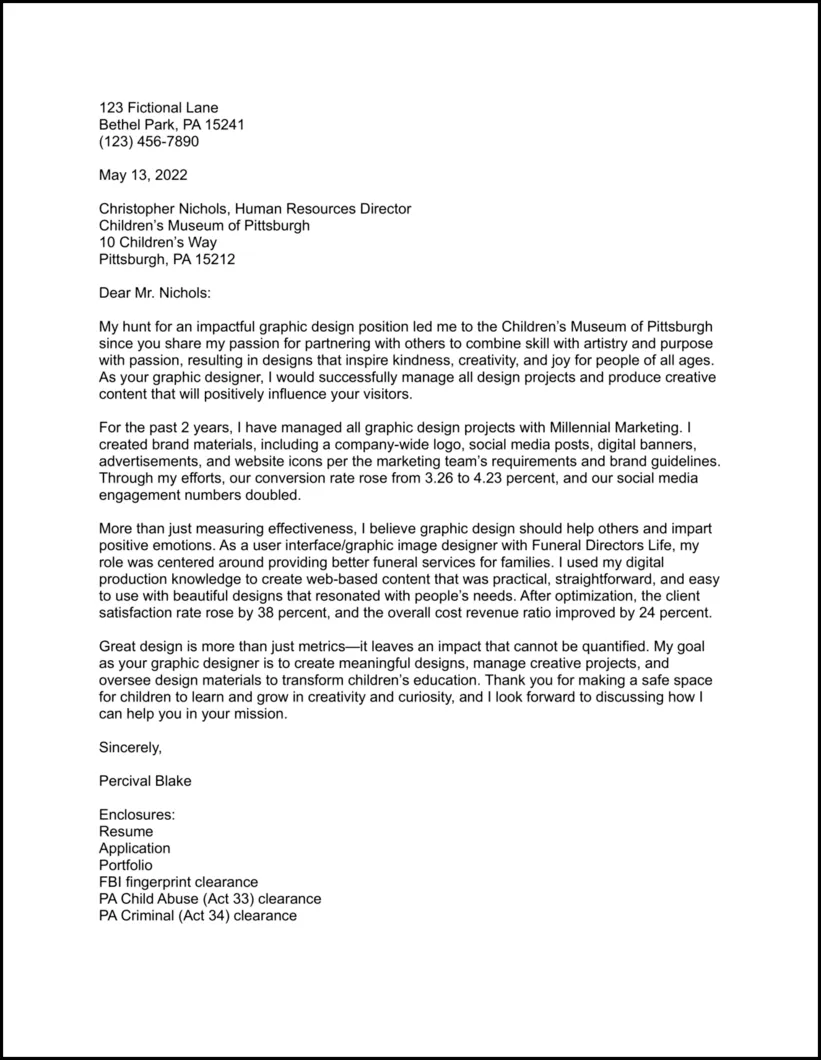
Crafting a Graphic Designer Cover Letter
A cover letter is your first opportunity to make a strong impression on a potential employer. It’s more than just a formality; it’s your chance to showcase your personality, passion for design, and the unique skills you bring to the table. A well-crafted cover letter for a graphic designer should be a visual extension of your portfolio and a testament to your ability to communicate effectively. This guide will walk you through the essential elements of creating a compelling cover letter that grabs attention and sets you apart from the competition. Remember, your cover letter is your voice before you get to speak, so make it count. Let’s dive into the key components and best practices to create a cover letter that truly shines.
Understanding the Purpose of a Cover Letter
The primary purpose of a cover letter is to introduce yourself, highlight your key skills and experience, and express your interest in a specific job or company. Unlike your resume, which provides a factual overview of your career, your cover letter allows you to tell your story and demonstrate why you’re the perfect fit for the role. It’s your chance to connect with the hiring manager on a personal level and showcase your enthusiasm. A well-written cover letter should complement your resume, providing context, elaboration, and a deeper understanding of your qualifications. It is also your opportunity to demonstrate your writing and communication skills, crucial assets for any graphic designer. Use this opportunity to emphasize why you stand out from the other candidates.
Highlighting Your Skills as a Graphic Designer

As a graphic designer, your skills are your most valuable asset. In your cover letter, you must clearly articulate your core competencies. These include proficiency in design software such as Adobe Creative Suite (Photoshop, Illustrator, InDesign), as well as any other relevant tools like Sketch or Figma. Beyond technical skills, highlight your soft skills such as creativity, communication, problem-solving, and attention to detail. Provide specific examples of how you have used these skills to achieve successful outcomes in previous projects. For instance, detail how you transformed a client’s vision into a compelling visual identity or how you improved user engagement through strategic design choices. Tailor your skills to the specific requirements of the job description, emphasizing those that align with the employer’s needs.
Showcasing Your Design Portfolio
Your design portfolio is your most powerful tool, and your cover letter should direct the reader to it. In your cover letter, briefly describe your portfolio and highlight a few key projects that are most relevant to the job you are applying for. Include a link to your online portfolio, making it easy for the hiring manager to view your work. If you have specific design accomplishments that relate to the job description, make sure to highlight them to draw the reader’s attention. Make sure your portfolio is well-organized, visually appealing, and showcases your best work. Also, consider including case studies that demonstrate your design process and the impact of your work. This could include discussing the design challenges and your solution. Make sure that your portfolio link is current and active.
Structuring Your Graphic Design Cover Letter
The structure of your cover letter is crucial to ensure that your message is clear, concise, and easy to follow. Start with a professional header, followed by a personalized greeting. The body of your cover letter should be divided into three main sections: an introduction, the body paragraphs (where you showcase your skills and experience), and a conclusion with a call to action. Each section should serve a specific purpose and contribute to the overall impact of your letter. This structure helps organize your thoughts logically, making it easier for the reader to quickly grasp your key qualifications and enthusiasm for the position. Using clear headings and concise paragraphs, along with proper grammar and punctuation, ensures a polished and professional presentation.
Header and Contact Information

Your header should include your name, contact information (phone number, email address, and a link to your online portfolio or website), and the date. This information should be clearly displayed at the top of the letter, making it easy for the hiring manager to reach you. Consider using a professional font and formatting that matches the overall tone of your cover letter. The header provides a professional first impression and ensures that the hiring manager can easily contact you for an interview. Double-check your contact information to avoid any errors. Ensure the email address is professional and does not include unprofessional nicknames or inappropriate details. Keep the layout clean and organized to maintain a professional look.
Greeting and Introduction
Start your cover letter with a professional greeting, such as “Dear [Hiring Manager Name],” if you know the name of the person reviewing applications. If not, use “Dear Hiring Manager” or “Dear [Company Name] Team.” In your introduction, state the position you are applying for and where you found the job posting. Briefly mention what attracted you to the role and the company. This section should capture the reader’s attention immediately and express your interest in the opportunity. Make the introduction brief, engaging, and tailored to the specific job and company. The opening is critical, so make it count by expressing your enthusiasm and why you’re the right fit.
Body Paragraphs Your Key Selling Points
The body paragraphs are where you showcase your key selling points. Use this section to highlight your relevant skills, experience, and accomplishments. Provide specific examples of how you have used your design skills to achieve successful outcomes in previous projects. Quantify your achievements whenever possible, such as by mentioning the increase in website traffic or the improvement in conversion rates resulting from your designs. Tailor your content to match the requirements of the job description, emphasizing the skills and experience that align with the employer’s needs. Use action verbs and strong language to convey your abilities and passion for design. For example, instead of saying “I was responsible for designing,” you could say, “I designed engaging marketing materials.”
Tailoring Your Cover Letter to the Job

Customize your cover letter for each job application. This means carefully reviewing the job description and identifying the key skills and experience the employer is seeking. Highlight the skills and experiences that match the job requirements. Use keywords from the job description throughout your cover letter. This shows the hiring manager that you have read the job description and understand their needs. Research the company and tailor your letter to reflect your understanding of their brand and values. Demonstrating that you’ve put in the effort to understand the company will leave a positive impression. This personal touch makes your cover letter stand out from generic applications and increases your chances of getting an interview.
Emphasizing Relevant Experience
Focus on the experience most relevant to the job you are applying for. This may involve describing past projects, internships, or freelance work. Mention the scope of the project and your specific responsibilities. Quantify your achievements whenever possible by providing concrete results that demonstrate your impact. For instance, note the number of projects completed, the percentage of increase in a key metric, or any awards or recognition you received. Avoid simply listing your tasks. Instead, provide concise summaries of your accomplishments. Mention any collaborations with clients or other team members. Highlight any projects where you successfully navigated design challenges and describe how you overcame these obstacles to reach the desired outcome.
Demonstrating Design Proficiency
Showcase your technical skills and design expertise by providing specific examples from your portfolio. Refer to particular projects that align with the job’s requirements. Describe your design process for those projects, including the challenges you faced, the creative solutions you implemented, and the results achieved. Highlight any design principles or strategies that you employed. For example, discuss the use of typography, color theory, or user experience principles to create effective designs. If the job requires proficiency in particular design software or styles, be sure to mention those and, if possible, provide examples that demonstrate your mastery. Your ability to create compelling and effective designs is a crucial aspect of your role.
Closing Your Cover Letter

Your closing should reiterate your interest in the position and express your gratitude for the hiring manager’s time and consideration. Briefly summarize your key qualifications and why you are a strong fit for the role. Keep the closing concise and professional. Express your enthusiasm for the opportunity. Reiterate your interest in the position and thank the hiring manager for their time and consideration. Be sure to maintain a professional tone throughout the closing. Your goal is to reaffirm your suitability for the role and leave a positive final impression.
Call to Action
End your cover letter with a clear call to action. This could be a request for an interview or an invitation to review your portfolio. Make it easy for the hiring manager to contact you by including your email and phone number. Express your eagerness to discuss the opportunity further. A call to action encourages the hiring manager to take the next step. Make your call to action clear and concise, such as “I am eager to discuss how my design skills can contribute to your team” or “Thank you for your time. I look forward to hearing from you soon.” Avoid being passive, and take the initiative to indicate your next steps. Make it clear that you’re actively looking forward to the next step in the process.
Proofreading and Editing Your Cover Letter
Before submitting your cover letter, carefully proofread and edit it. Check for grammar errors, spelling mistakes, and typos. Ensure your sentences are clear, concise, and well-structured. Have a friend or colleague review your letter for feedback. Errors can undermine your credibility and show a lack of attention to detail. Ensure your cover letter is free from errors, which reflect poorly on your professionalism and attention to detail. Verify that the tone is appropriate and that your writing style aligns with the company’s culture. A well-edited cover letter shows professionalism and increases your chances of getting noticed.
In conclusion, crafting a compelling cover letter is essential for any graphic designer seeking to impress a potential employer. By following these guidelines, you can create a cover letter that showcases your skills, highlights your portfolio, and ultimately helps you land your dream job. Remember to tailor your cover letter to each specific job application, emphasizing the skills and experience most relevant to the role. Proofread carefully and present your best self. Good luck with your job search!