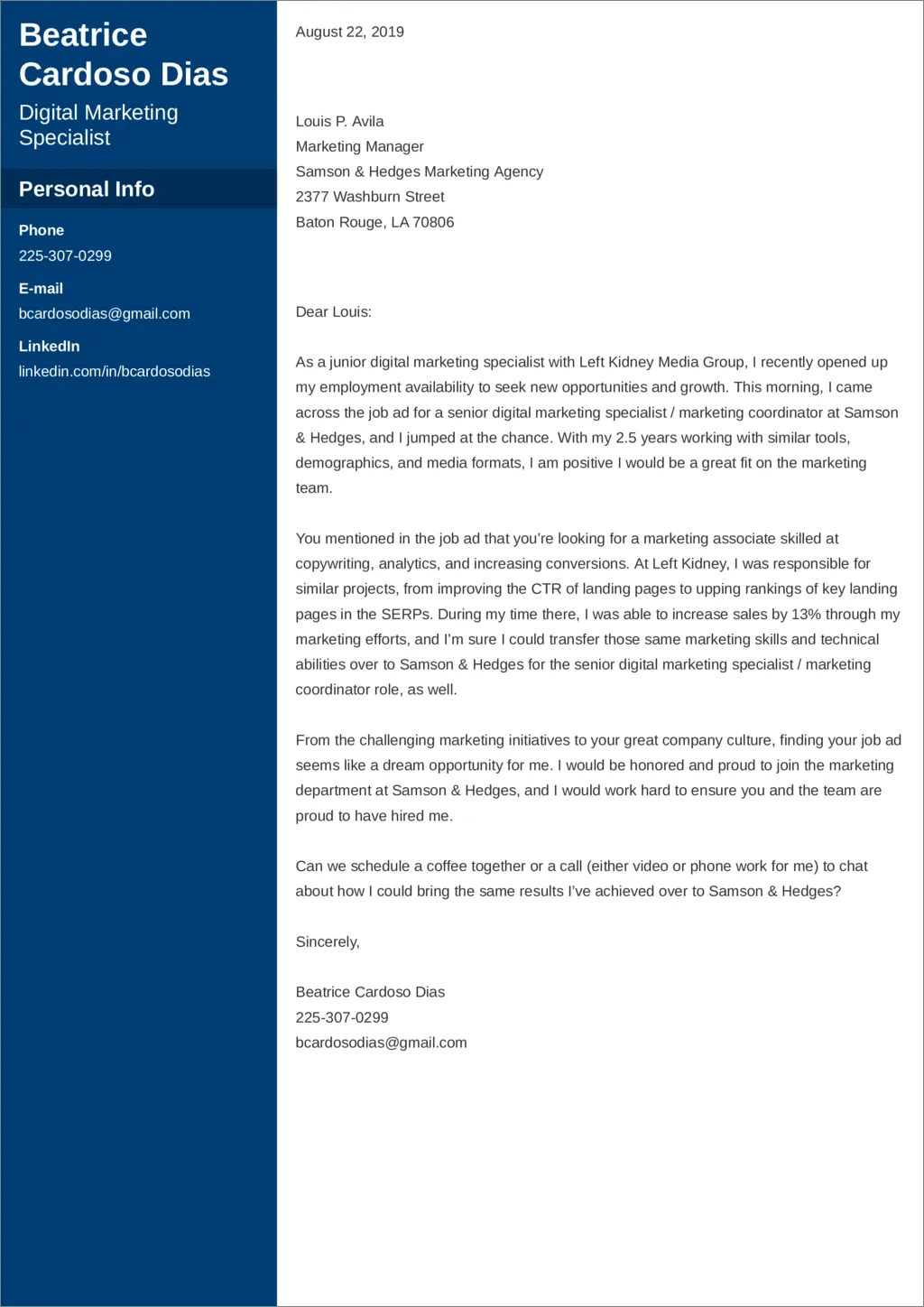
Understand the Purpose of a Cover Letter
A cover letter serves as your introduction to a potential employer, complementing your resume by providing context and personality. Unlike a resume, which is a factual account of your experience, a cover letter allows you to express your enthusiasm, highlight relevant skills, and explain why you’re a perfect fit for the specific role and company. It’s an opportunity to make a strong first impression and persuade the hiring manager to read your resume. The goal is to create a connection that resonates with the reader. This is not just a formality but a strategic tool to set you apart from other applicants.
Highlight Key Achievements and Skills
Before crafting your opening, identify the skills and achievements most relevant to the job. Review the job description carefully and pinpoint the key requirements the employer is seeking. Think about specific examples from your past experiences where you demonstrated those skills or achieved significant results. Quantify your achievements whenever possible using numbers and data to demonstrate the impact you made. This preparation will help you create a compelling opening that immediately grabs the reader’s attention and demonstrates your value.
Tailor the Cover Letter to the Job Description

Generic cover letters are easily identified and often discarded. The most effective cover letters are customized for each position you apply for. Carefully analyze the job description and identify the specific skills, experiences, and qualifications the employer is looking for. Then, tailor your opening to directly address those requirements. Show the hiring manager that you understand their needs and can deliver the desired results. This personalization demonstrates your genuine interest and commitment to the role, increasing the chances of your application moving forward. Tailoring the cover letter is not just about changing the wording but about reflecting the job’s requirements.
Research the Company Before Writing
Demonstrate your genuine interest by researching the company before writing your cover letter. Visit the company’s website, read articles about their recent activities, and check their social media profiles to learn about their mission, values, and culture. This knowledge will enable you to tailor your opening to reflect the company’s specific needs and show that you understand their business. By mentioning specific company initiatives or values in your opening, you can showcase that you’re not just looking for any job but are genuinely interested in working for that particular organization. This effort conveys you are highly motivated.
Crafting a Compelling Opening
The opening of your cover letter is crucial because it’s the first thing a hiring manager sees. It sets the tone and determines whether they will continue reading. A compelling opening should immediately grab the reader’s attention, establish your interest in the position, and briefly highlight your most relevant qualifications. It should also showcase your personality and give a glimpse of what makes you unique. A strong opening can significantly increase your chances of getting your application noticed, so invest time in crafting it carefully and strategically. You must show them why they should keep reading.
Start with a Strong Statement

Instead of a generic greeting, start with a statement that immediately grabs the reader’s attention. This could be a concise summary of your key qualifications, a statement about your enthusiasm for the role, or a brief highlight of a significant achievement relevant to the job. The goal is to make the reader want to learn more. Avoid clichés and aim for originality. For example, you can start by mentioning your specific experience that closely aligns with the job requirements. Use action verbs and focus on the value you bring to the table. A strong statement shows confidence and competence.
Use a Personal Anecdote
If appropriate, start your cover letter with a short, relevant anecdote. This could be a story about how you overcame a challenge, a time you went above and beyond in a previous role, or an experience that demonstrates your passion for the industry or company. The anecdote should be brief, engaging, and directly related to the job or company values. It should also subtly highlight your key skills and achievements. A personal anecdote humanizes your application, making it more memorable and helping the hiring manager connect with you on a personal level. The objective is to make the reader remember your cover letter.
Refer to a Mutual Connection
If you have a mutual connection with someone at the company, leverage that connection to make your cover letter more impactful. Mentioning the connection in your opening can immediately establish a sense of trust and credibility. For example, you could say, ‘I was excited to learn about this opportunity from [Name], a [Position] at [Company].’ Or, ‘I am writing to express my interest in the [Position] position, as recommended by [Name].’ This will give you an edge and make your application stand out. Always ask permission from the connection before mentioning their name.
Express Enthusiasm and Interest

Your cover letter opening should express your enthusiasm and genuine interest in the position and the company. Be specific about why you’re excited about the opportunity. Mention specific aspects of the job description that appeal to you or company initiatives that resonate with your values. Avoid generic statements like ‘I am writing to express my interest’. Instead, use phrases that demonstrate your genuine interest, such as ‘I was particularly drawn to…’, ‘I am excited about the opportunity to…’, or ‘I am eager to contribute to…’. Show, don’t just tell, that you’re interested and excited to be a part of the company.
Structuring the Cover Letter Opening
The structure of your cover letter opening is as important as its content. You need to make it easy for the hiring manager to quickly grasp the key points. A well-structured opening grabs attention and immediately communicates the most important information. Avoid long, convoluted sentences. Keep your language clear, concise, and impactful. Every word in your opening must serve a purpose. The goal is to make the opening a brief but effective summary of your qualifications, your interest, and your value proposition. Good structure helps the reader understand everything with the minimum amount of effort.
Keep it Concise
In today’s fast-paced world, hiring managers often have limited time to review each application. Therefore, your opening should be concise and to the point. Aim to convey your most important points in just a few sentences or a short paragraph. Avoid unnecessary jargon, lengthy explanations, or irrelevant details. Focus on highlighting the most relevant skills and achievements. Use strong verbs and clear language. Concise openings are easier to read and more likely to capture the reader’s attention. Remember, every word counts. The opening’s clarity will show that you respect the reader’s time.
Use Action Verbs

Action verbs bring your cover letter to life and make it more engaging. They convey energy and demonstrate your abilities. Instead of writing ‘I was responsible for’, use action verbs like ‘managed’, ’led’, ‘developed’, ‘implemented’, or ‘achieved’. Action verbs also help you to be more specific and concise. They paint a clear picture of your accomplishments and showcase your skills. Start each sentence with strong action verbs and use them consistently throughout your opening. This approach will make your cover letter more compelling and impactful. Always use active voice.
Maintain a Professional Tone
While it’s important to express enthusiasm and personality, always maintain a professional tone. Avoid slang, overly casual language, or informal greetings. Address the hiring manager correctly using their name and title if possible. Proofread your opening carefully to eliminate any grammatical errors or typos. Your opening is the first impression, and a professional tone demonstrates respect for the company and the position. The professional tone also shows you are serious and that you understand workplace communication. Remember that this is a formal document.
Best Opening Examples
To gain a deeper understanding, review examples of compelling cover letter openings. You can learn from these examples to craft your unique opening. Consider the context, the job requirements, and the company culture. Here are a few examples, each designed for a different scenario, to help illustrate how you can start a cover letter and catch the attention of a recruiter.
Directly State the Position and Your Interest

Example: ‘I am writing to express my enthusiastic interest in the Marketing Manager position at [Company Name], as advertised on [Platform]. With five years of experience leading successful marketing campaigns and a proven track record of increasing brand awareness by 30%, I am confident I can contribute significantly to your team.’ This opening clearly states the position, shows genuine enthusiasm, and provides a brief summary of your qualifications. It immediately tells the hiring manager what you are applying for and highlights your relevant achievements.
Showcase a Relevant Achievement
Example: ‘In my previous role at [Previous Company], I spearheaded a project that increased sales by 20% in six months. I am excited to bring this same level of dedication and results-oriented approach to the [Position] position at [Company Name].’ This opening immediately highlights a key achievement and connects it to the job requirements. It immediately grabs the reader’s attention with a quantifiable result and shows your potential value.
Mention a Company Value that Resonates
Example: ‘I was impressed by [Company Name]’s commitment to innovation, as demonstrated by [Specific Example]. As a [Your Profession] with a passion for [Relevant Skill], I am excited to contribute my skills to a company that values creative problem-solving. This is a win-win.’ This opening demonstrates that you understand the company’s values and explains how you can contribute. This shows that you have done your research and that you are genuinely interested.
Common Mistakes to Avoid

Just as there are effective strategies for writing a compelling opening, there are also common mistakes that can damage your chances. By avoiding these pitfalls, you can significantly improve the impact of your cover letter and increase your odds of being noticed by the hiring manager. This section highlights several of the most common mistakes and provides advice on how to avoid them.
Generic Greetings
Avoid generic greetings like ‘To Whom It May Concern’ or ‘Dear Sir/Madam’. These greetings are impersonal and suggest a lack of effort. Whenever possible, address the hiring manager by name. If you can’t find the hiring manager’s name, try to research it online or call the company to ask. Personalizing your greeting shows you have taken the time to research the company. If you are unable to find a name, use a more professional greeting like ‘Dear Hiring Manager’ or ‘Dear [Department] Team’.
Repeating Resume Information
Your cover letter should complement your resume, not simply repeat its contents. The hiring manager has your resume. Use the cover letter to expand on your key skills and experiences, and provide context. Avoid simply listing your previous roles and responsibilities. Instead, highlight specific achievements, explain how you’ve used your skills to generate results, and showcase your personality. Use the cover letter to tell a story about your career journey. Avoid repeating what is on your resume to show that you have more to offer than just the facts.
Focusing on What You Want
While it’s important to express your interest, avoid focusing solely on what you want from the job. Your cover letter should primarily highlight how you can benefit the company. Demonstrate how your skills and experiences align with the job requirements and how you can contribute to the company’s goals. Focus on what you can bring to the table, the value you can offer, and how you can help the company achieve success. The hiring manager wants to know what you can do for them, not just what you want. Remember to show how your goals and the company’s goals are aligned.
Proofreading and Editing
Finally, proofread and edit your cover letter carefully. Errors in grammar, spelling, or punctuation can create a negative impression and undermine your credibility. Ensure your writing is clear, concise, and error-free. Read your cover letter aloud to catch any awkward phrasing or mistakes. Ask a friend or colleague to proofread it as well. A polished cover letter demonstrates your attention to detail and professionalism. Proofreading ensures your hard work is not lost due to avoidable errors. Taking this step sets you apart from the competition.