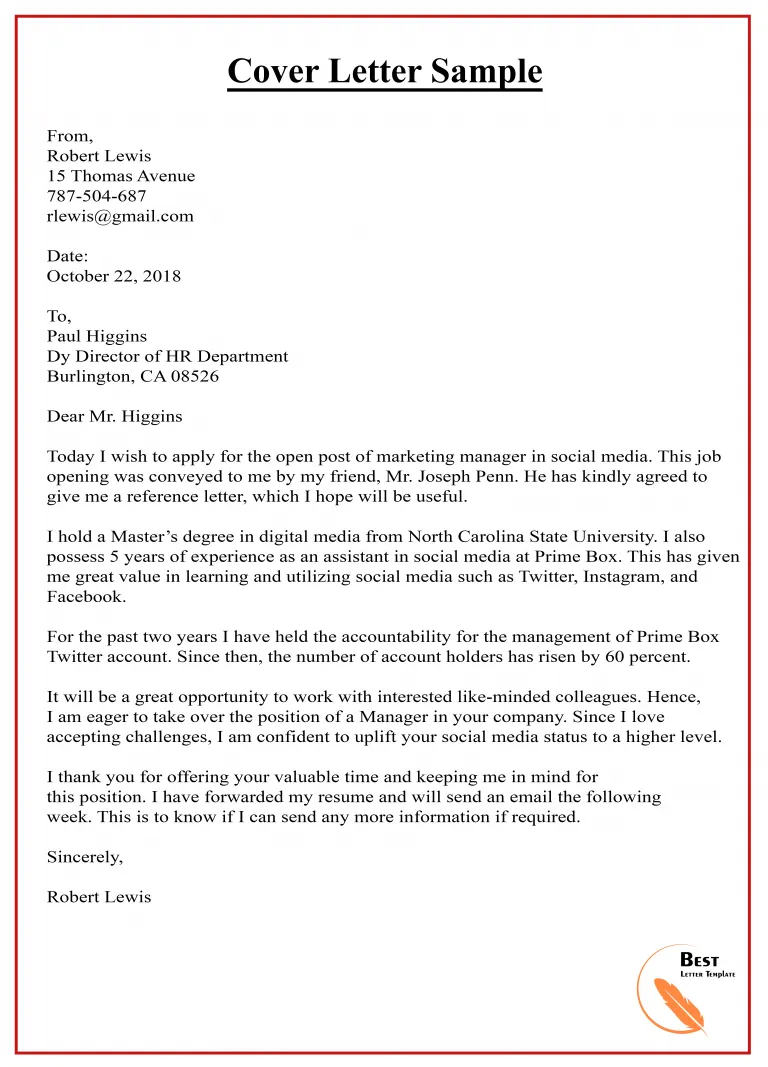
What Is a Cover Letter?
A cover letter is a crucial document that accompanies your resume when you apply for a job. It serves as a personalized introduction, allowing you to highlight your skills, experience, and enthusiasm for the position. Unlike a resume, which provides a factual overview of your qualifications, a cover letter gives you the opportunity to tell a story, explain your motivations, and demonstrate how your unique abilities align with the employer’s needs. It’s your chance to make a strong first impression and persuade the hiring manager that you’re the ideal candidate. A well-crafted cover letter can significantly increase your chances of landing an interview, making it an essential part of any job application strategy.
Why Is the Closing of a Cover Letter Important?
The closing of your cover letter is the final opportunity to make a lasting impression on the hiring manager. It’s the last thing they’ll read before deciding whether to delve further into your application. A strong closing can reinforce your key selling points, reiterate your interest in the position, and provide a clear call to action. Think of it as the final pitch, where you summarize why you’re the best fit and what you want the reader to do next. A weak or generic closing, on the other hand, can undermine the effort you put into the rest of the letter, potentially leading to your application being overlooked. The closing is your final chance to set yourself apart from other applicants and leave a memorable, positive impression.
Elements of a Strong Cover Letter Closing

A compelling cover letter closing consists of several key elements that work together to create a powerful and persuasive message. The most effective closings express genuine enthusiasm for the opportunity, reiterate your value proposition, and clearly state your call to action. These elements ensure that your closing leaves a lasting impact on the reader. By incorporating these components, you can maximize your chances of securing an interview and moving forward in the hiring process.
Express Enthusiasm and Interest
Demonstrating your genuine interest in the position and the company is essential. This shows the hiring manager that you’re not just sending out generic applications. Express your excitement about the opportunity to contribute to the company’s goals and express enthusiasm for the specific role. Mentioning something specific that you admire about the company or the role further personalizes your closing and makes it more memorable. Phrases like “I am eager to contribute my skills to…” or “I am excited about the opportunity to…” can effectively convey your enthusiasm. Make sure your enthusiasm feels authentic and reflects genuine interest.
Restate Your Value Proposition
Briefly summarize your key skills and experiences that make you an ideal fit for the role. This reinforces the value you bring to the company, reminding the hiring manager of your top qualifications. Instead of just repeating what’s in your resume, focus on the most relevant skills and experiences that align with the job requirements. Tailor this section to each application, emphasizing the aspects of your background that best meet the employer’s needs. This helps the hiring manager quickly understand why you are a strong candidate.
Clearly State Your Call to Action

Your call to action is the instruction you provide to the hiring manager. It tells them what you want them to do next. The most common and effective call to action is to request an interview. State that you are available for an interview at their earliest convenience and are eager to discuss your qualifications further. For example, you might write, “I am available for an interview and welcome the opportunity to discuss how I can contribute to your team.” Be polite and professional in your request, making it clear that you are enthusiastic about the next steps in the hiring process.
Proofread and Edit Your Closing
Proofreading and editing your cover letter closing is critical, as it’s the final chance to make a good impression. Errors in grammar, spelling, or punctuation can undermine your credibility and reflect poorly on your attention to detail. Always read through your closing carefully, looking for any mistakes. Consider having a friend or family member review your letter as a fresh pair of eyes can often catch errors you might miss. Proofreading tools can also be very helpful. Ensuring your closing is polished and professional will increase your chances of making a positive impact.
Use Professional Closing Salutations
The closing salutation is the formal farewell at the end of your cover letter. It should be professional and appropriate for the context of your application. Common examples include “Sincerely,” “Best regards,” and “Yours sincerely.” Avoid overly casual or informal closings like “Thanks” or “Cheers” unless you have a pre-existing relationship with the hiring manager. Choose a salutation that reflects the tone of your letter and the industry you’re applying to. Following the salutation, be sure to leave space for your handwritten signature if you’re submitting a hard copy, and type your full name below.
Common Mistakes to Avoid

Several common mistakes can weaken your cover letter closing and diminish your chances of getting an interview. One of the biggest is being too generic. Avoid using generic or canned phrases that don’t specifically relate to the job or the company. Another mistake is not including a clear call to action; always tell the hiring manager what you want them to do next. Additionally, make sure you avoid typos and grammatical errors. Proofread carefully, as mistakes can create a negative impression. Do not use overly casual language, and ensure your closing is tailored to the specific job and company.
Closing Examples for Different Situations
The ideal closing can vary depending on the specific job, company, and your level of experience. It’s helpful to customize your closing to fit the unique circumstances of each application. Knowing a few examples will give you a template that can be tailored easily.
Closing for Entry-Level Positions
When applying for entry-level positions, focus on your enthusiasm, transferable skills, and eagerness to learn. Express your desire to contribute to the team and your willingness to take on new challenges. Highlight your potential and dedication to the company. A good closing for entry-level positions might include a statement about your excitement to begin your career and contribute to the company’s mission. For example, “I am eager to contribute my skills and enthusiasm to your team and am excited about the opportunity to learn and grow within your company.”
Closing for Experienced Professionals

For experienced professionals, your closing should emphasize your accomplishments and how you can immediately benefit the company. Briefly mention the key achievements from your previous roles that are relevant to the job. Show how your skills and experience can solve the company’s specific challenges. In your closing, you might state, “I am confident that my experience in [relevant field] will allow me to make an immediate impact on your team. I am eager to discuss how I can contribute to your company’s continued success. I am available for an interview at your earliest convenience.”
Closing for Specific Industries
Different industries may have different norms and expectations. Research the industry and the company culture to tailor your closing accordingly. For example, in a creative field, a slightly more personalized or creative closing may be appropriate. In a more conservative industry, such as finance, maintain a formal and professional tone. By understanding the specific industry norms, you can make sure that your closing aligns with expectations and maximizes your chances of making a positive impression.
By following these guidelines and tailoring your closing to each specific job application, you can significantly increase your chances of landing an interview and ultimately, getting the job. Remember, the closing is your last opportunity to impress, so make it count.