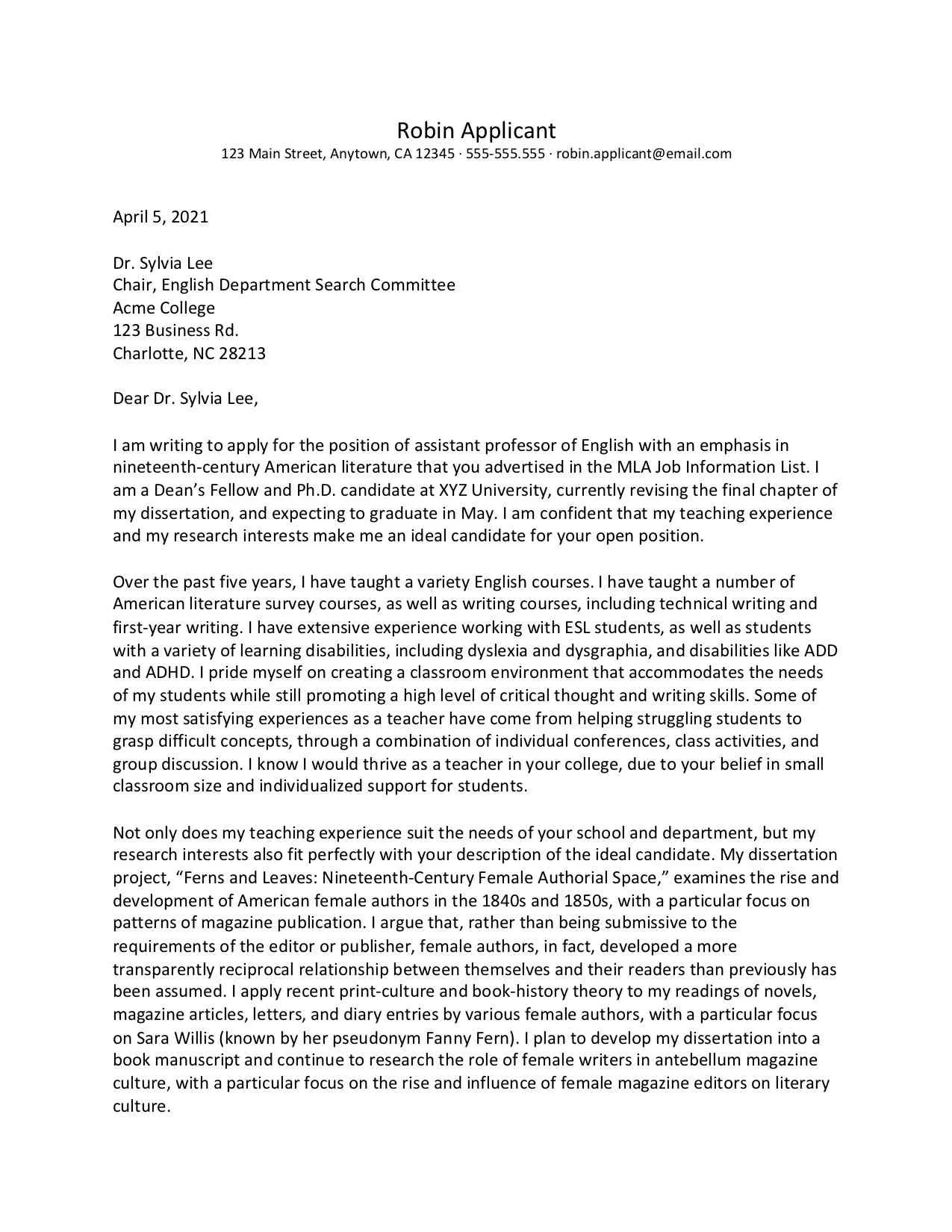
Understanding the Academic Cover Letter
An academic cover letter is a crucial document in the application process for any academic position. It serves as your first introduction to the hiring committee and provides an opportunity to showcase your qualifications, experience, and fit for the role. Unlike a general cover letter, an academic cover letter requires a specific focus on research, teaching, and service. It’s more than just a summary of your CV; it’s a chance to tell a compelling story that highlights your achievements, your potential, and your alignment with the institution’s values and goals. Therefore, crafting a well-written and tailored cover letter is essential for making a strong impression and increasing your chances of securing an interview.
Why a Strong Cover Letter Matters
A strong cover letter can significantly impact your chances of being considered for an academic position. It’s an opportunity to go beyond the basic information in your CV and demonstrate how your skills and experiences align with the specific requirements of the job. The cover letter allows you to explain your research interests in detail, articulate your teaching philosophy, and highlight your contributions to the field. It can also help you address any potential weaknesses in your application or explain gaps in your work history. Furthermore, a well-crafted cover letter shows that you have taken the time to research the institution and understand its needs, demonstrating your genuine interest and commitment to the position.
Key Components of an Academic Cover Letter

Several key components are essential to include in your academic cover letter. These elements work together to create a comprehensive and persuasive narrative. The opening paragraph should state the position you are applying for, where you saw the advertisement, and a brief statement of your interest. Next, your letter should detail your research experience, including your publications, presentations, and grants. Follow this by describing your teaching experience, including courses taught, teaching evaluations, and your teaching philosophy. You must also include details about your skills and experience relevant to the position’s requirements, addressing each point listed in the job description. Conclude your letter with a strong closing paragraph, reiterating your interest and expressing your enthusiasm for the opportunity.
Contact Information and Salutation
Begin your cover letter with your contact information, including your name, address, phone number, and email address. Ensure that your email address is professional. Next, address the letter to the hiring committee chair or the specific person mentioned in the job posting. If you cannot find a specific name, use a general salutation like ‘Dear Search Committee’ or ‘Dear Hiring Committee’. Be sure to double-check the spelling of the recipient’s name and the department’s name. A properly addressed letter shows attention to detail and respect for the application process. This section sets the tone for the rest of the letter and ensures that your application stands out positively from the beginning.
Highlighting Your Research and Publications
Your research accomplishments are central to an academic cover letter, so dedicate a significant portion to highlighting them. Briefly summarize your research interests and explain how they align with the department’s research priorities. Provide specific examples of your research achievements, such as published articles in peer-reviewed journals, conference presentations, and successful grant applications. Quantify your achievements whenever possible; for instance, mention the impact factor of the journals where your work has been published or the amount of funding you have secured. Detail your research methodologies, the significance of your findings, and how your research contributes to the broader field. Showing how your research is innovative and relevant is essential to capturing the hiring committee’s attention.
Emphasizing Teaching Experience and Philosophy

Teaching experience is another critical area to address in your academic cover letter. Describe the courses you have taught, the level of students you have instructed, and any innovative teaching methods you have employed. Include any positive teaching evaluations or awards you have received. Most importantly, articulate your teaching philosophy; this is a statement about your beliefs and approach to teaching, highlighting how you engage students, foster critical thinking, and create a positive learning environment. Mention your approach to curriculum development, assessment methods, and your commitment to student success. Demonstrating a clear and well-thought-out teaching philosophy is crucial for showing that you’re a dedicated and effective educator.
Showcasing Relevant Skills and Experience
Beyond research and teaching, demonstrate any other skills and experiences relevant to the position. This might include experience with grant writing, mentorship, committee work, or outreach activities. Identify skills explicitly mentioned in the job description and explain how your experiences have prepared you for these tasks. If the position requires specific software or equipment proficiency, be sure to list these skills. Show how you can contribute to the department’s overall mission and strategic goals. If you have experience with diversity and inclusion initiatives or have worked with diverse student populations, make sure to highlight it, demonstrating your commitment to creating an inclusive academic environment.
Addressing Specific Requirements of the Position
Carefully review the job description and address each of the required qualifications. Tailor your cover letter to show how your skills and experiences align with the specific requirements of the position. Use the keywords and phrases from the job posting to ensure that your letter is easily understood by the hiring committee. If the job description mentions a specific research area or teaching responsibility, provide detailed examples of your experience in those areas. If the position values community engagement or interdisciplinary collaboration, include any relevant experiences. Show how you can bring value to the department by meeting the stated needs and expectations. This careful attention to detail is what sets a great cover letter apart.
Formatting and Structure for Impact

Pay close attention to the formatting and structure of your cover letter to ensure it is easy to read and visually appealing. Use a professional font, such as Times New Roman, Arial, or Calibri, and maintain consistent formatting throughout the document. Use clear headings and subheadings to organize your thoughts and make the letter easy to scan. Keep the letter concise, typically one to two pages in length. Use a clear and logical flow to present your information, using paragraphs with well-defined topics and transitions. Avoid overly long paragraphs and excessive jargon. This attention to detail demonstrates professionalism and respect for the reader’s time.
Proofreading and Polishing Your Cover Letter
Thoroughly proofread your cover letter for any grammatical errors, spelling mistakes, and typos. A polished cover letter reflects your attention to detail and professionalism. It is best to have multiple people review your letter, as fresh eyes often catch errors that you might miss. Ask colleagues, mentors, or career services professionals to provide feedback on your writing style, clarity, and content. Ensure that your letter flows logically and that your ideas are well-expressed. Check that your contact information and the details of the position you are applying for are correct. Proofreading is a crucial step in making a strong impression. If possible, print a hard copy to review; this often reveals errors that are missed when reading on a screen.
Essential Do’s and Don’ts
Make sure you tailor your cover letter to each position. Do highlight your relevant skills and experiences, and focus on the institution’s needs. Use a professional tone and format. Do keep it concise and easy to read. Avoid generic statements or reusing the same letter for multiple applications. Don’t include information that is not relevant to the position. Do not exceed the recommended length. Do not use overly informal language or excessive jargon. Always proofread and edit your letter before submitting it. By following these do’s and don’ts, you increase your chances of crafting a stellar cover letter that helps you secure an academic position.