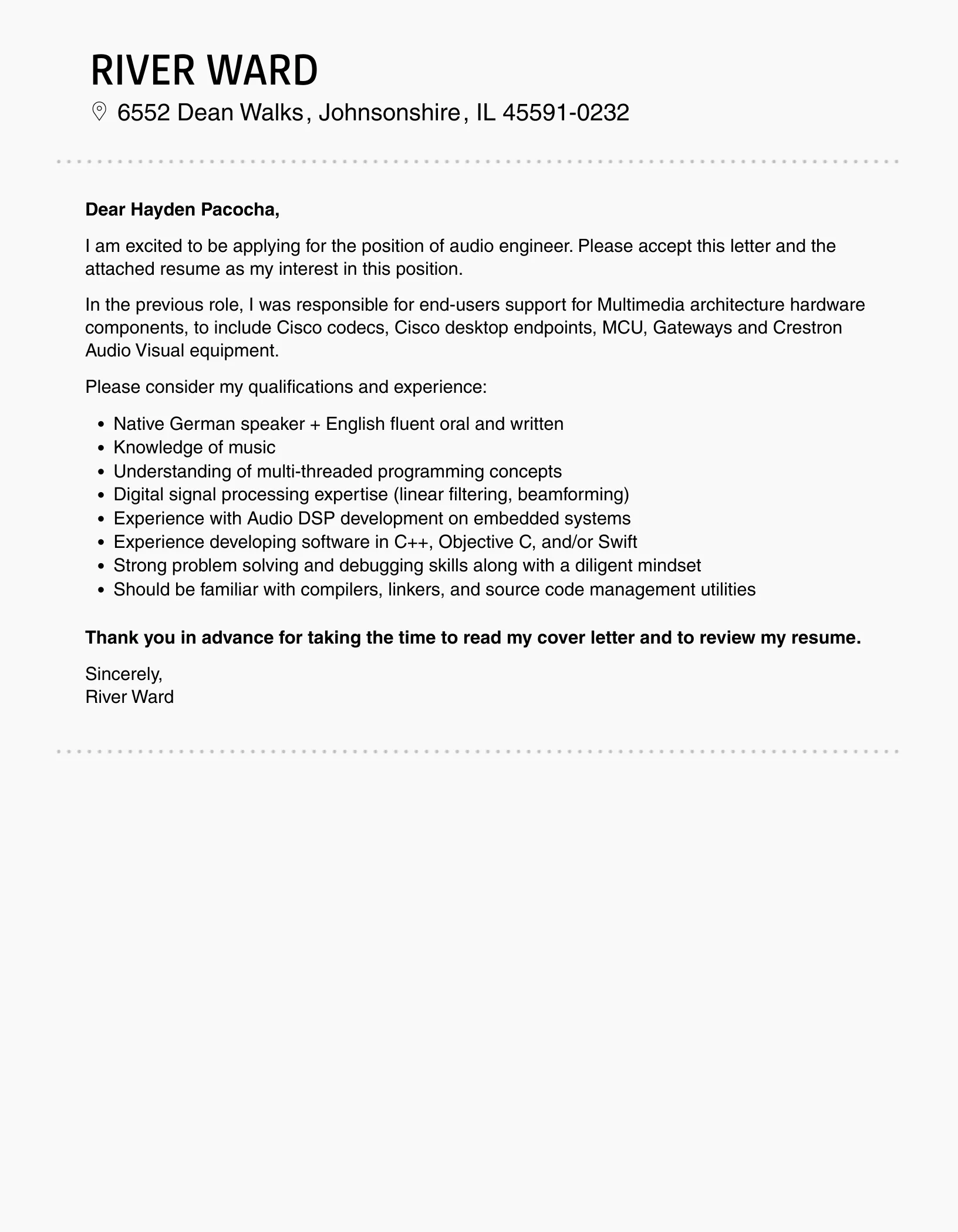
Understand the Purpose of a Cover Letter
A cover letter is your initial opportunity to make a strong impression on a potential employer, going beyond the confines of your resume to showcase your personality, enthusiasm, and specific qualifications for the role of an audio engineer. It serves as a personalized introduction, allowing you to articulate your career aspirations and explain why you are the perfect fit for the company and the position. Unlike a resume, which provides a factual overview of your experience, a cover letter is a narrative, highlighting your unique skills, experiences, and passion for audio engineering, and demonstrates how these align with the specific job requirements. The primary goal is to compel the hiring manager to read your resume, and ultimately, to invite you for an interview. Crafting a compelling cover letter is, therefore, a crucial step in the job application process, demonstrating your commitment and attention to detail, characteristics highly valued in the audio engineering field.
Why a Cover Letter Matters
A cover letter is your chance to shine and highlight why you stand out from other candidates. It allows you to express your enthusiasm for the specific role and the company, going beyond a list of skills to communicate your passion for audio engineering. Furthermore, it offers an opportunity to explain any gaps in your resume or career transitions in a way that a resume cannot. The cover letter gives you a platform to provide context to your experience and demonstrate your personality, which is essential in an industry where collaboration and communication are key. A well-written cover letter reveals your communication skills, your understanding of the industry, and your ability to align your qualifications with the employer’s needs. In essence, it’s a tool to bridge the gap between your qualifications and the employer’s expectations, thereby increasing your chances of getting an interview.
How Cover Letters Complement Resumes

Resumes and cover letters work in tandem to present a complete picture of your qualifications. While your resume offers a concise overview of your work history, skills, and education, the cover letter provides context and narrative, explaining how your experiences and abilities align with the job requirements. The resume lists your achievements, and the cover letter elaborates on them, providing specific examples and showcasing your personality. This combination helps the hiring manager understand not only what you have done but also how you’ve done it and what makes you a valuable candidate. A well-crafted cover letter also allows you to tailor your application to each specific job, emphasizing the skills and experiences most relevant to that particular role, making your application more targeted and effective. The resume offers the facts, and the cover letter tells the story, creating a holistic and compelling narrative of your candidacy for the audio engineer position.
Essential Cover Letter Components
A well-structured cover letter includes several key components that, when combined, present a comprehensive overview of your qualifications and enthusiasm for the position. These elements work together to create a persuasive argument for why you are the best candidate. From your contact information to a compelling closing, each part of the letter contributes to the overall impact. A cover letter, unlike a resume, is a dynamic document; it provides a platform for narrative and personalization, making it a crucial part of your job application strategy. The following sections detail these essential components, highlighting their purpose and how to effectively include them to make a strong impression.
Your Contact Information
At the top of your cover letter, start with your contact information. Include your full name, phone number, email address, and optionally, your LinkedIn profile URL. This ensures the hiring manager can easily contact you if they are interested in your application. Keep the formatting clean and professional, and make sure the information is accurate and up-to-date. Ensuring your contact information is readily available is the first step to making it simple for a potential employer to get in touch. Using a professional email address is also crucial, as it presents you as a serious candidate. This section sets the foundation for a professional application, immediately signaling your readiness to be contacted and to begin the hiring process.
The Hiring Manager’s Contact Info

Directing your cover letter to a specific person can significantly increase your chances of success. Whenever possible, find out the name of the hiring manager or the person in charge of recruitment for the audio engineer position. If you cannot find a name, you can address the letter to the Hiring Manager or the Recruitment Team. This shows that you have taken the initiative to research the company and the role, demonstrating your attention to detail and your genuine interest in the position. Always use the correct title and spelling of the recipient’s name. Personalizing your cover letter with the hiring manager’s name shows your commitment and attention to detail, crucial qualities in the audio engineering field. If you cannot find a specific name, researching the company’s website or LinkedIn profiles can often yield the information you need.
The Salutation
The salutation is your opening greeting, and it sets the tone for the rest of your cover letter. If you know the hiring manager’s name, a formal greeting such as “Dear Mr./Ms./Mx. [Last Name]” is appropriate. If you are unsure of the name, use a general greeting like “Dear Hiring Manager” or “Dear Recruitment Team”. Avoid generic or overly casual greetings, such as “To Whom It May Concern”, as these can appear impersonal. Your salutation should reflect the level of professionalism expected in the audio engineering field. Choose the salutation that best fits your relationship with the company and the job requirements. Always maintain a professional tone. Your salutation is the first impression you make on the reader. It should be both respectful and tailored to the specific job and company.
Highlighting Your Skills & Experience
The core of your cover letter should focus on highlighting your relevant skills and experiences. This section is where you demonstrate how your qualifications match the requirements of the audio engineer position. Go beyond simply listing your skills; provide specific examples of how you have used these skills in previous roles. Be sure to address each key requirement mentioned in the job description. Use strong action verbs to describe your accomplishments, and quantify your achievements whenever possible. This will show the hiring manager that you not only possess the necessary skills but also that you have a proven track record of success. Always align your skills and experiences to match the job requirements. Tailor your examples, showcasing your technical proficiency, problem-solving abilities, and soft skills, such as communication and teamwork.
Tailoring to Audio Engineering

When applying for an audio engineering role, it is crucial to tailor your cover letter to the specifics of the industry and the job you’re applying for. Highlight your technical proficiency with audio equipment, software (Pro Tools, Ableton Live, etc.), and any specialized skills such as mixing, mastering, or sound design. Show your understanding of the audio engineering field. Describe projects that showcase your abilities and knowledge. Mention any specific experiences relevant to the role, whether it be recording, live sound, or post-production work. Demonstrate your ability to adapt to the job’s requirements by adjusting the focus of your letter to match the specific needs outlined by the potential employer. By tailoring your skills and experience to audio engineering, you demonstrate that you are not just qualified, but that you understand the unique demands and expectations of the role.
Showcasing Technical Proficiency
Technical proficiency is the cornerstone of a successful audio engineer’s profile. When writing your cover letter, provide concrete examples of your expertise with audio equipment and software. Mention any specific software you are proficient in, such as Pro Tools, Logic Pro X, Ableton Live, or others. Detail your experience with microphones, mixers, digital audio workstations (DAWs), and other relevant equipment. Include any specialized skills you have, like mixing, mastering, sound design, or live sound engineering. If you have worked on any notable projects or with well-known clients, be sure to mention them. Quantify your experience by mentioning the size or scope of the projects you’ve worked on, such as the number of tracks mixed, the number of events supported, or the scale of the productions. Showcasing your technical proficiency will convince the hiring manager of your capability to perform the job.
Demonstrating Soft Skills
While technical skills are essential, soft skills are equally important for an audio engineer. Communication, teamwork, problem-solving, and time management are all highly valued. In your cover letter, provide examples of how you have demonstrated these soft skills. Highlight your ability to communicate effectively with clients, team members, and other professionals. Share experiences where you have collaborated on projects, resolved technical issues, or managed your time effectively to meet deadlines. Soft skills are key to teamwork and efficient project delivery. Illustrate your problem-solving abilities by detailing instances where you have successfully overcome challenges or found creative solutions to technical problems. The combination of technical expertise and soft skills demonstrates you are not only competent but also a valuable team member and a professional.
Quantifying Achievements

Quantifying your achievements in your cover letter makes your accomplishments more impactful and measurable. Instead of saying you are experienced in mixing, state, “Mixed over 50 tracks for various clients, resulting in a 20% increase in client satisfaction.” Instead of saying you managed projects, write, “Managed audio projects for a team of five engineers, delivering projects on time and within budget 95% of the time.” Use numbers and data to illustrate your accomplishments whenever possible, as it gives the hiring manager a clear understanding of your contributions and the value you can bring to the role. This is the best method to prove your expertise to the employer. By quantifying your achievements, you provide concrete evidence of your capabilities and results, making your application stand out from the competition.
Adding a Compelling Closing
Your closing paragraph is your last opportunity to make a strong impression. This is where you reiterate your interest in the position, express your enthusiasm, and include a call to action. A well-crafted closing can increase your chances of getting an interview and getting the job. Keep the tone professional and enthusiastic, and make sure your closing leaves a lasting positive impression on the hiring manager. This part must confirm your interest in the company and the audio engineering position.
Expressing Enthusiasm
Expressing genuine enthusiasm for the role and the company is a critical part of your closing. Demonstrate that you have researched the company and are excited about the opportunity to contribute to their team. Mention specific aspects of the job or company that appeal to you, showing that you understand the role and how you could fit in. Avoid generic statements like “I am very interested in this position.” Instead, use phrases such as, “I am eager to apply my skills in mixing and mastering to contribute to [Company Name]’s projects” or “I am excited about the opportunity to join [Company Name] and help create high-quality audio experiences.” By conveying your passion, you signal to the hiring manager that you’re not just looking for a job, but that you genuinely want to work for them.
Call to Action

The final step of your cover letter is to include a call to action, which prompts the hiring manager to take the next step, usually scheduling an interview. Clearly state your availability and express your eagerness to discuss your qualifications further. Common phrases include, “I am available for an interview at your earliest convenience” or “I look forward to hearing from you and discussing how I can contribute to your team.” Always thank the hiring manager for their time and consideration. By including a clear and confident call to action, you make it easy for the hiring manager to take the next step and increase your chances of moving forward in the hiring process. This section is the last impression to the potential employer; make it count.
Proofreading and Formatting
The final step in crafting the perfect cover letter is to proofread and format it. Errors in grammar, spelling, or formatting can significantly detract from your application and project a lack of attention to detail. A well-formatted and error-free cover letter will make a positive impression, demonstrating your professionalism and respect for the hiring process. Always review your cover letter meticulously, and consider having a second pair of eyes look over it. Pay attention to the layout, font, and overall appearance to ensure your cover letter is visually appealing and easy to read. Ensure that it is properly formatted. These are the finishing touches that can make the difference between a successful application and one that ends up in the rejection pile.
Ensuring Clarity and Professionalism
Clarity and professionalism are essential to making your cover letter stand out from the crowd. Use clear, concise language and avoid jargon or overly complex sentence structures. Write in a professional tone, avoiding slang, colloquialisms, and overly casual language. Ensure that your cover letter accurately reflects your communication skills and that it demonstrates your ability to write in a professional manner. Ensure that your cover letter is free of grammatical errors, spelling mistakes, and punctuation errors. Use a grammar checker to review your work, and, if possible, have someone else proofread it to catch any errors you might have missed. By ensuring clarity and professionalism, you convey that you are a serious candidate who is prepared to represent the company positively.
Formatting Tips
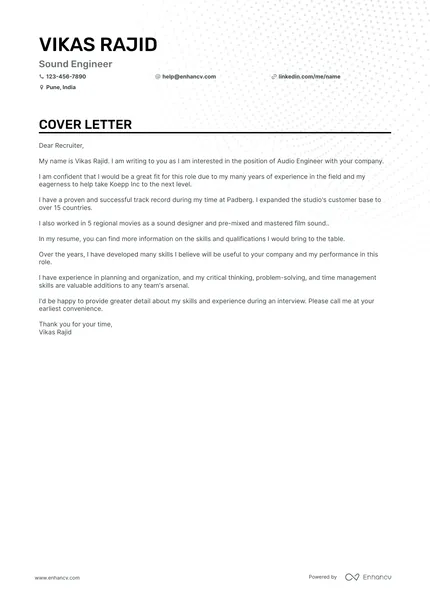
Proper formatting enhances the readability and overall presentation of your cover letter. Use a professional and easy-to-read font such as Times New Roman, Arial, or Calibri, with a font size between 10 and 12 points. Keep your cover letter to one page in length. Use consistent formatting throughout the document, including the alignment of text, spacing, and bullet points. Use appropriate spacing between paragraphs to improve readability. Ensure that your contact information, the hiring manager’s information, and the date are correctly aligned. Use bullet points to highlight your key skills and achievements in a concise and easy-to-read manner. Finally, save your cover letter in a professional format like PDF to maintain its layout. By following these formatting tips, you will create a visually appealing cover letter that is easy for the hiring manager to read and understand.