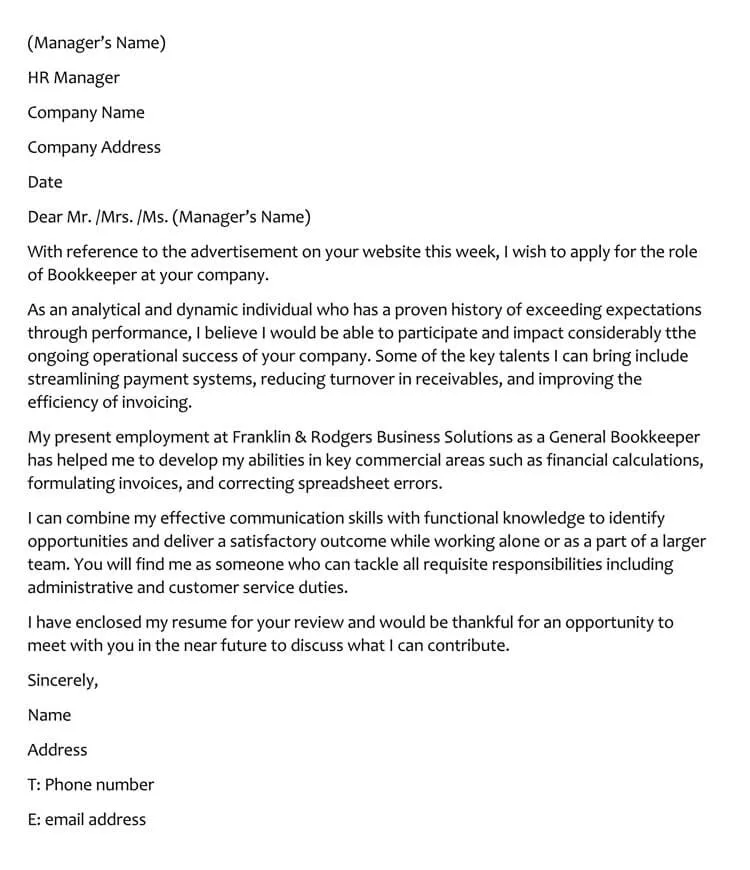
Why a Strong Cover Letter is Crucial for Bookkeepers
In the competitive world of bookkeeping, a well-crafted cover letter can be your key to unlocking new career opportunities. It’s much more than just a formality; it’s your first opportunity to make a positive impression on potential employers. A compelling cover letter provides context to your resume, allowing you to highlight the skills, experience, and personality traits that make you the ideal candidate for the role. It gives you the chance to elaborate on your qualifications, showcase your understanding of the company’s needs, and express your genuine interest in the position. A lackluster cover letter, on the other hand, can lead to immediate rejection, even if your resume is impressive. By taking the time to create a strong and personalized cover letter, you significantly increase your chances of landing an interview and ultimately securing your dream bookkeeping job. Your cover letter is your chance to shine and differentiate yourself from other applicants.
Key Components of a Winning Bookkeeper Cover Letter
Contact Information and Salutation

Begin your cover letter by providing your full contact information, including your name, phone number, email address, and LinkedIn profile URL (if applicable). Directly below your contact information, include the date and the hiring manager’s name and title, if known, along with the company’s address. A personalized salutation, such as “Dear Mr./Ms. [Last Name],” demonstrates that you’ve done your research and are addressing the appropriate individual. If you’re unable to find the hiring manager’s name, a professional greeting like “Dear Hiring Manager” is acceptable. Avoid generic greetings such as “To Whom It May Concern,” as they can make your letter feel impersonal.
Highlighting Your Skills and Experience
The body of your cover letter is where you truly sell yourself. Start by clearly stating the position you’re applying for and how you learned about the opportunity. Then, delve into your relevant skills and experience. Focus on the qualities and abilities most pertinent to the bookkeeping role, such as proficiency in accounting principles, experience with financial statements, accounts payable and receivable, and reconciliation. Use action verbs to describe your accomplishments and responsibilities. Instead of simply stating your duties, quantify your achievements whenever possible, providing specific examples of how you’ve contributed to previous employers’ success. Show, don’t just tell, the value you bring to the table. Also tailor this section specifically to the job requirements.
Quantifiable Achievements
Quantifiable achievements are crucial for demonstrating the impact of your work. Instead of saying “Managed accounts payable,” you could say, “Successfully managed accounts payable for a company with over $1 million in monthly transactions, reducing late payment penalties by 15%.” Or, instead of “Improved efficiency,” state “Implemented a new automated invoicing system, which reduced processing time by 20%.” Use numbers to showcase your effectiveness and the positive results you’ve achieved in previous roles. Include metrics such as the number of accounts managed, the amount of money saved, or the percentage of efficiency improvements. This concrete evidence proves your capabilities to potential employers and provides them with a clear understanding of your value.
Relevant Software Proficiency

In today’s digital age, proficiency in accounting software is essential for bookkeepers. Make sure to list the specific software programs you’re familiar with, such as QuickBooks, Xero, Sage, or any other relevant tools. Mention your level of expertise with each program. If you have any certifications or training related to specific software, make sure to include those as well. Consider the job description and focus on the software packages listed as essential. If the job requires knowledge of a particular system, and you have experience, highlight it prominently. Also, if you are willing to learn new software, you may state this, showing adaptability and a proactive attitude.
Demonstrating Your Understanding of the Role
Show the hiring manager that you understand the specific requirements of the bookkeeping role. This could involve referencing the job description and highlighting how your skills align with their needs. Explain why you’re interested in the position and what aspects of the job appeal to you. Briefly discuss your understanding of the company’s industry, values, and culture. Conduct some research on the company’s website and social media presence to gain insights. This demonstrates your genuine interest and attentiveness to detail. Expressing your awareness of the industry best practices and relevant regulations can also set you apart from other applicants, showing that you’re up-to-date on the latest developments.
Tailoring Your Letter to the Specific Job
Avoid sending out generic cover letters. Tailoring your cover letter to each specific job application is an extremely important step. Carefully review the job description and identify the key skills and qualifications the employer is seeking. Customize your letter to align with these requirements, highlighting the relevant experience and accomplishments that demonstrate your suitability for the role. Use keywords from the job description to make your letter more relevant and easier for the hiring manager to see the connection. Show how your skills and experience specifically meet their needs. By personalizing your letter, you show employers that you’ve taken the time to understand their specific requirements, proving your dedication and seriousness about the opportunity.
Formatting and Proofreading Essentials

Formatting Best Practices
Good formatting is essential for readability and professionalism. Use a clear and easy-to-read font, such as Times New Roman or Arial, with a font size between 10 and 12 points. Maintain consistent formatting throughout your letter, including margins and spacing. Use single spacing within paragraphs and double spacing between paragraphs to make it easier to read. Break up large blocks of text with bullet points or short paragraphs. Keep the letter concise and focused, aiming for a length of no more than one page. Ensure your cover letter is well-organized with clear sections and headings to guide the reader through the content.
Proofreading and Editing Checklist
Proofreading is a non-negotiable step. Errors in grammar, spelling, or punctuation can damage your credibility. Before submitting your cover letter, carefully proofread it multiple times. Use spell-check and grammar-check tools, but don’t rely on them entirely. Read the letter aloud to catch any awkward phrasing or errors that may be missed when reading silently. Ask a friend, family member, or career counselor to review your cover letter for clarity, grammar, and overall impact. Ensure your contact information is correct, and verify that your letter is properly addressed to the hiring manager. Proofreading ensures your cover letter is polished and presents you as a detail-oriented professional.
Call to Action and Closing

Expressing Enthusiasm and Availability
Close your cover letter by expressing your enthusiasm for the opportunity and reiterating your interest in the position. Clearly state your availability for an interview and how they can contact you. Mention that you look forward to hearing from them soon. If possible, you could also briefly restate why you are a good fit for the role. Your closing paragraph should reinforce your interest and encourage the hiring manager to take the next step.
Closing with a Professional Tone
Use a professional closing, such as “Sincerely,” “Best regards,” or “Thank you for your consideration.” Avoid informal closings, such as “Cheers” or “Best.” After your closing, leave space for your signature (if printing a hard copy) and type your full name. Ensure your cover letter is a polished and professional representation of yourself. By following these tips, you can write a cover letter that stands out from the crowd and helps you land your dream bookkeeping job. Remember to tailor the letter to each specific job, highlighting your relevant skills and achievements. Good luck with your application!