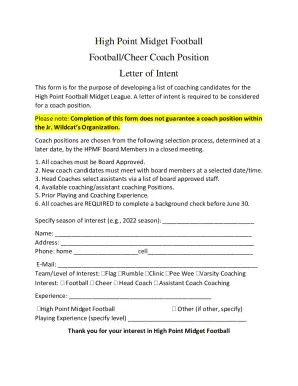
Understanding the Importance of a Cover Letter for Football Coaching
In the competitive world of football coaching, a well-crafted cover letter is your first opportunity to make a lasting impression. It’s more than just a formality; it’s your chance to introduce yourself, highlight your qualifications, and demonstrate your passion for the game. Unlike a resume, which provides a factual overview of your experience, the cover letter allows you to tell your story, showcasing your personality, coaching philosophy, and how you can contribute to the team’s success. A strong cover letter for coaching football can set you apart from other applicants, making you a more compelling candidate. A well-written cover letter helps you make that critical first impression and increases the chances of landing an interview.
What to Include in Your Football Coaching Cover Letter
A comprehensive cover letter should include several key components that collectively present a compelling case for your candidacy. This involves careful planning and the inclusion of pertinent information that aligns with the job requirements and the values of the organization. Each section plays a crucial role in telling your story, demonstrating your abilities, and showing your suitability for the role. Failing to include necessary information could weaken your application. The following sections will guide you through creating a strong and effective cover letter, ensuring that you have the best possible chance of securing the position. The following sections provide a detailed breakdown of each aspect of a great football coaching cover letter.
Your Contact Information

Start with your full name, address, phone number, and professional email address. Ensure your email address is professional; avoid informal or outdated addresses. This information should be easily accessible at the top of the letter, usually left-aligned. This ensures that the hiring manager can easily contact you. Verify that the contact details are accurate and up-to-date to avoid any communication issues. This section is your first opportunity to present yourself professionally and make it easy for the recipient to reach you.
The Date and the Recipient’s Details
Include the current date, followed by the recipient’s name, title, and the school or organization’s name and address. If possible, address the letter to a specific person, such as the Athletic Director or Head Coach. Researching the organization’s website or contacting them beforehand can help you find the correct name. Addressing the letter to a specific person demonstrates that you have taken the initiative to personalize your application. Correctly formatting the recipient’s details shows attention to detail and professionalism, which are crucial traits in a coaching role.
A Compelling Opening
Start with a strong opening that grabs the reader’s attention and clearly states the purpose of your letter. Mention the specific position you are applying for and how you learned about the opportunity. A compelling opening should immediately establish your interest in the position and the organization. You might briefly highlight a key achievement or skill that aligns with the job requirements. Avoid generic phrases; instead, aim to create a memorable introduction that captures the hiring manager’s interest and encourages them to read further. This initial impression will determine whether your application stands out from the competition.
Highlight Your Coaching Experience

Detail your coaching experience, including the teams you have coached, the levels (e.g., high school, college), and the years of experience. Focus on relevant experience that aligns with the job requirements. Describe your roles and responsibilities in each coaching position, providing a clear understanding of your capabilities. Use action verbs to describe your duties and accomplishments. Providing specifics about your past experience will make your application more compelling. This section should present a clear progression of your coaching career. Showcase how your experience has prepared you for the specific coaching position you’re applying for, demonstrating your ability to succeed in the role. Include years of experience, and type of teams you coached.
Detail Your Coaching Philosophy
Articulate your coaching philosophy, including your approach to player development, team strategy, and sportsmanship. Explain how you motivate players, build team culture, and foster a positive environment. Provide specific examples of how you have implemented your coaching philosophy in the past and the results you achieved. Your philosophy should be aligned with the values of the school or organization. Demonstrate your commitment to the holistic development of athletes. A well-defined coaching philosophy showcases your vision, approach, and understanding of the role. This section gives the hiring manager insight into your core values and principles. It’s a crucial part of your application, so take your time in crafting this section.
Showcase Your Achievements and Skills
Provide specific examples of your achievements as a coach, such as championships won, player development successes, or improvements in team performance. Highlight skills relevant to the coaching role, such as communication, leadership, strategic planning, and scouting. Quantify your achievements whenever possible, using numbers and data to support your claims. This is a perfect way to demonstrate your effectiveness. Showcase your ability to positively impact a team. Make a list of achievements and skills, which will help potential employers to consider your application.
Quantify Your Accomplishments

Use numbers and data to support your claims, making your accomplishments more tangible and impactful. Provide specific statistics that demonstrate your success, such as the win-loss record of teams you coached, the number of players who received scholarships, or improvements in key performance metrics. For instance, you might mention that you increased a team’s scoring average by a specific percentage or improved defensive efficiency. Numbers provide a clear picture of your effectiveness and enable the hiring manager to understand the impact of your coaching efforts. Quantifying your accomplishments makes them more credible and memorable, distinguishing you from other candidates.
Mention Relevant Certifications and Training
List all relevant certifications and training programs you have completed, such as certifications from coaching organizations or specific sports training programs. Include any degrees or educational qualifications related to coaching or sports science. Demonstrate your commitment to professional development and your expertise in the field. This showcases your dedication to staying current with the latest coaching techniques and standards. Mentioning these certifications assures the hiring manager that you are qualified to provide a safe and professional coaching environment.
Address the Specific Job Requirements
Carefully review the job description and address the specific requirements listed. Tailor your cover letter to highlight how your qualifications and experience align with the needs of the position. Use keywords from the job description to show that you understand what the employer is looking for. Provide specific examples of how you have met similar requirements in the past. Addressing the job requirements directly demonstrates that you have read the job description, understand the role, and are a good fit for the position. This shows the hiring manager that you pay attention to detail and understand the demands of the job.
Express Your Enthusiasm and Fit

Express your genuine enthusiasm for the position and the organization. Explain why you are particularly interested in this opportunity and what attracts you to the school or team. Highlight how your values align with those of the organization and its mission. Demonstrating your passion for the sport and the specific opportunity can make a lasting impression on the hiring manager. Show that you are genuinely excited about the prospect of joining the team and contributing to its success. The desire and passion for the game and the organization will separate your application from the rest.
The Closing and Call to Action
End your cover letter with a strong closing that reiterates your interest in the position. Thank the hiring manager for their time and consideration. Include a clear call to action, such as stating your availability for an interview and how you can be reached. Express confidence in your ability to contribute to the team’s success. A strong closing leaves a positive impression and prompts the hiring manager to take the next step. Make it easy for the hiring manager to contact you by providing all necessary contact details. The closing should be concise, professional, and leave a lasting positive impression.
Proofreading and Formatting
Proofread your cover letter carefully for any grammatical errors, typos, or formatting inconsistencies. Ensure that your letter is well-organized, with clear headings, paragraphs, and spacing. Use a professional font and maintain a consistent style throughout the document. A polished and well-formatted cover letter reflects your attention to detail and professionalism. Always have someone else review your letter to catch any errors you may have missed. A cover letter that is error-free and well-formatted will make a positive impact on the hiring manager.
Tips for Customizing Your Cover Letter

Tailor your cover letter to each specific job application. Avoid using a generic template. Customization shows that you have taken the time to understand the specific requirements of the position and the values of the organization. Research the school or organization and highlight aspects that resonate with your experience and coaching philosophy. Customize the language and examples to align with the specific needs of the job. Showing the employer that you’re genuinely interested in the role will increase your chances of landing an interview.
Research the School or Organization
Before you begin writing your cover letter, thoroughly research the school or organization. Visit their website, review their mission statement, and learn about their coaching staff and recent achievements. Understanding the organization’s values, culture, and goals will help you tailor your letter to their specific needs. Research can give you an edge. Use the insights you gain from your research to highlight the aspects of the school or organization that resonate with you. This demonstrates your genuine interest in the position and the organization.
Tailor Your Letter to the Specific Position
Carefully review the job description and identify the key requirements, skills, and qualifications. Customize your cover letter to address these specific points. Highlight relevant experiences and achievements that demonstrate your ability to meet the employer’s needs. Tailoring your letter shows that you understand the role and have the necessary skills to be successful. Customize each cover letter, rather than sending the same letter for every job. This increases your chances of landing an interview.
Use Keywords from the Job Description

Incorporate keywords and phrases from the job description into your cover letter. This helps you pass through applicant tracking systems (ATS) and demonstrates that you have the qualifications and experience the employer is seeking. Using keywords shows that you understand the requirements of the role. Incorporate the keywords naturally into your writing, ensuring that the letter flows smoothly and remains engaging. This can significantly boost your chances of being noticed and selected for an interview.
Common Mistakes to Avoid
Avoid common mistakes to ensure your cover letter makes a positive impression. By addressing these mistakes, you will increase your chances of success. Poorly written cover letters can lead to your application being rejected. Make sure your cover letter showcases your skills and helps you move onto the next stage of the application process.
Generic Cover Letters
Do not send generic cover letters that are not tailored to the specific job and organization. Generic letters show a lack of interest and effort. Taking the time to customize your cover letter will show the hiring manager that you are committed to the opportunity and have taken the time to understand the specific needs of the organization. Generic letters do not address specific requirements and fail to highlight your unique qualifications.
Typos and Grammatical Errors

Always proofread your cover letter carefully to eliminate typos and grammatical errors. Errors make you appear unprofessional and careless. Always have someone else review your letter. Proofreading demonstrates your attention to detail and commitment to quality. Poor grammar and typos will leave a negative impression, and hurt your chances of being noticed.
Overly Long Cover Letters
Keep your cover letter concise and to the point. Avoid writing overly long letters that may lose the reader’s interest. Aim for one page, or at most, a page and a half. Keep your language concise and focus on the most important information. Long cover letters can be tiresome to read and will reduce the impact of your message. Ensure your cover letter is clear, concise, and easy to read.
Lying or Exaggerating
Do not lie or exaggerate your qualifications, experience, or achievements. Be honest and accurate in your representations. Exaggerations can be easily discovered and will damage your credibility. Honesty ensures you present yourself authentically and build trust with the hiring manager. False information can lead to the revocation of a job offer.
Sending Without Proofreading
Always proofread your cover letter before sending it. Proofreading ensures your letter is free of errors. Make sure that you are providing a perfect application by proofreading. Errors can hurt your chances of getting the job, and are easy to avoid by proofreading and using spelling and grammar check programs. Always read it over yourself.
Final Thoughts
Writing a compelling cover letter is an essential step in your football coaching job search. Take the time to craft a well-written, customized letter that highlights your skills, experience, and passion for the game. By following these guidelines, you can significantly increase your chances of making a positive impression and securing an interview. Remember that your cover letter is your opportunity to tell your story and showcase your unique qualifications. A great cover letter increases your chances of being hired, so make the effort to make it stand out.
Resources for Cover Letter Writing
There are numerous resources available to help you write a strong cover letter. Utilize online templates, sample cover letters, and career advice websites to gain inspiration and guidance. Consider seeking feedback from career counselors, mentors, or trusted colleagues. Use resources to help you write a great cover letter. Many resources are available to provide you with advice and assistance. Ensure that your cover letter is clear, concise, and effective.