What is a Cover Letter and Why You Need One
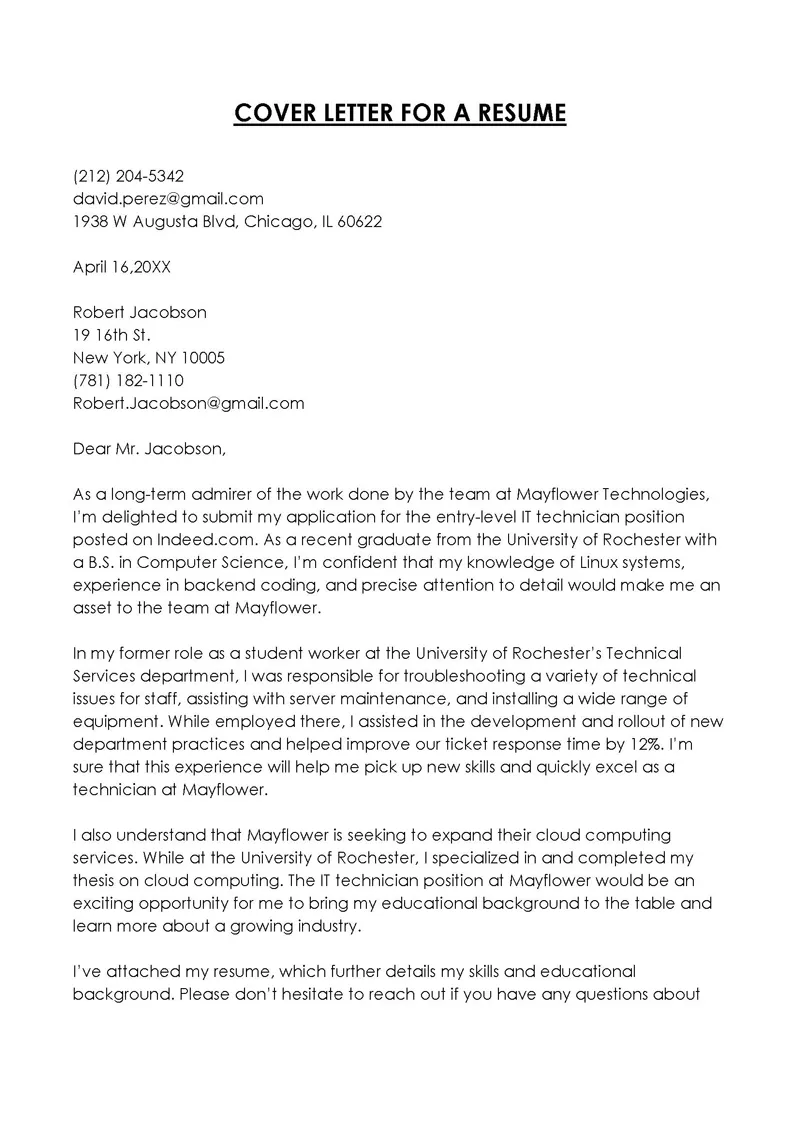
A cover letter is a crucial document that accompanies your resume when applying for a job. It serves as your first introduction to a potential employer, offering you the opportunity to showcase your personality, skills, and enthusiasm in a more personal and detailed manner than your resume alone. It is a chance to explain why you are the ideal candidate for the specific role, providing context and highlighting how your experience aligns with the job requirements. Without a cover letter, you risk missing out on the chance to create a strong first impression and demonstrate your genuine interest in the position.
In today’s competitive job market, a well-crafted cover letter can significantly increase your chances of getting noticed by recruiters and hiring managers. It allows you to differentiate yourself from other applicants by highlighting your unique qualifications and expressing your genuine interest in the company and the role. A cover letter is not just a formality, it’s a strategic tool that can help you land an interview by effectively communicating your value proposition and demonstrating your commitment to the opportunity.
Key Components of a Winning Cover Letter
A successful cover letter comprises several key components that work together to create a compelling narrative. Each section plays a vital role in conveying your qualifications and interest to the employer. It’s essential to pay close attention to each of these elements to ensure that your cover letter makes a positive impact.
Contact Information and Date

Begin your cover letter with your contact information, including your full name, address, phone number, and email address. This allows the hiring manager to easily reach you. Place the date below your contact information, as it is essential for reference. Always use a professional email address and ensure your contact information is accurate and up-to-date. This basic formatting helps to create a clean and easily readable document.
Greeting the Hiring Manager
Address the hiring manager by name whenever possible. Research the company to find the correct name, usually found on the company website or the job posting. A personalized greeting demonstrates that you’ve taken the time to learn about the company and show genuine interest. If you can’t find the hiring manager’s name, use a general greeting like “Dear Hiring Manager” or “Dear [Company Name] Team” to maintain professionalism.
Opening Paragraph Grab Their Attention
Your opening paragraph is your first chance to make a strong impression. Start with a brief, engaging statement that immediately captures the reader’s attention. Clearly state the position you’re applying for and where you found the job posting. Consider mentioning a mutual connection or a specific achievement that aligns with the job requirements. This shows your understanding of the position and your ability to provide value.
Body Paragraphs Sell Your Skills

The body of your cover letter is where you showcase your skills, experience, and accomplishments. Structure your body paragraphs to align with the key requirements of the job description. Provide specific examples of how you’ve used your skills to achieve results in previous roles. Tailor these examples to highlight how your skills meet the needs of the company. Use action verbs to describe your contributions and quantify your achievements to demonstrate your impact.
Highlight Relevant Skills and Experience
Focus on the skills and experiences that are most relevant to the job you’re applying for. Review the job description carefully and identify the key requirements. Then, provide specific examples of how you’ve demonstrated those skills in your past roles. When describing your experience, explain your responsibilities, the actions you took, and the results you achieved. Show how your skills align with the specific needs of the company and the role.
Showcase Achievements with Metrics
Quantify your achievements whenever possible. Use numbers and data to illustrate the impact you’ve made in previous roles. Instead of saying “Improved customer satisfaction,” say “Increased customer satisfaction scores by 15%.” Metrics make your accomplishments more tangible and demonstrate your ability to drive results. This type of information is especially effective in showing the value you can bring to the company.
Closing Paragraph Call to Action

In your closing paragraph, reiterate your interest in the position and express your enthusiasm for the opportunity. Include a call to action, such as stating your availability for an interview or offering to provide additional information. Thank the hiring manager for their time and consideration, and reiterate your contact information. A strong closing paragraph leaves a lasting impression and encourages the hiring manager to take the next step.
Express Your Enthusiasm and Gratitude
Conclude your cover letter by expressing your genuine enthusiasm for the opportunity and your gratitude for the hiring manager’s time and consideration. This shows that you’re excited about the prospect of working at the company and appreciative of the hiring manager’s effort. Expressing your enthusiasm and gratitude leaves a positive and memorable impression.
Formatting and Proofreading Your Cover Letter
Attention to detail is critical when it comes to your cover letter. Formatting and proofreading are essential steps to ensure that your document is professional and polished. Following these guidelines will help you to show you’re a strong candidate.
Choosing the Right Font and Formatting

Select a professional and easy-to-read font, such as Times New Roman, Arial, or Calibri. Use a font size between 10 and 12 points for optimal readability. Maintain consistent formatting throughout your cover letter, including spacing, margins, and alignment. Use clear headings and bullet points to break up the text and make it easier to scan. Ensure your cover letter looks clean and professional.
Proofreading and Editing for Errors
Carefully proofread your cover letter for any grammatical errors, spelling mistakes, or typos. Read it aloud to catch any awkward phrasing or sentence structure issues. Consider having a friend or family member review your cover letter for a second opinion. This will help ensure that your document is error-free and presents you in the best possible light. A polished and accurate cover letter demonstrates your attention to detail.
Customizing Your Cover Letter for Each Job
Generic cover letters are often ineffective. Customizing your cover letter for each job application is crucial for demonstrating your genuine interest and showcasing your relevant skills. Tailoring your letter to each specific role increases your chances of standing out and making a positive impression on the hiring manager. Here is what you should do to customize the cover letter for the job you are applying for.
Researching the Company and Job Description

Before you start writing, research the company to gain a better understanding of its mission, values, and culture. Read the job description carefully and identify the key requirements, skills, and experiences the employer is seeking. Use this information to tailor your cover letter, highlighting the aspects of your background that align with the job’s needs and the company’s values. This shows that you’ve done your homework and are genuinely interested in the role.
Tailoring Your Letter to the Specific Role
Customize your cover letter to align with the specific requirements of the job description. Use the keywords from the job posting to show that you meet the employer’s needs. Explain how your skills and experience make you a strong fit for the role. Avoid using generic phrases and instead provide specific examples of how you’ve demonstrated those skills in the past. Tailoring your cover letter demonstrates your commitment to the position and shows that you have taken the time to understand the company and the job requirements.
By following these guidelines, you can create a cover letter that effectively highlights your qualifications, showcases your enthusiasm, and increases your chances of landing an interview. Remember to tailor your cover letter to each specific job application, and always proofread your document carefully before submitting it.