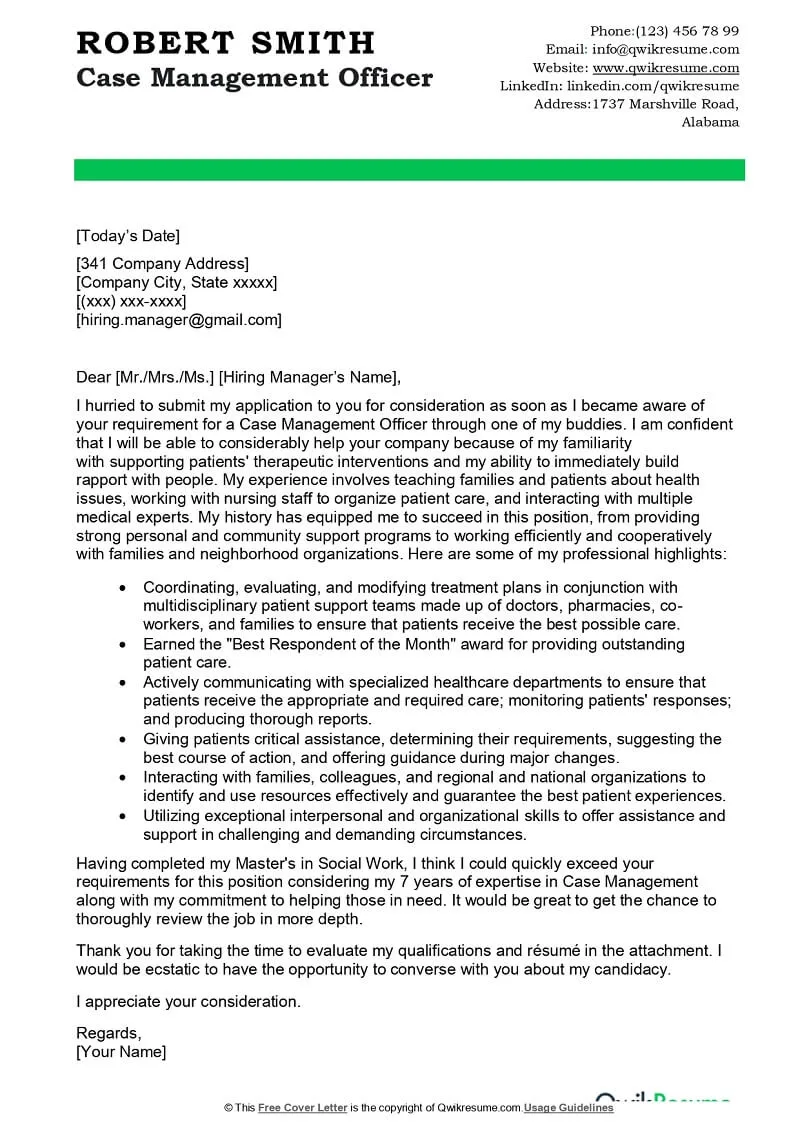
Understanding the Importance of a Case Manager Cover Letter
In the competitive field of case management, a well-crafted cover letter is often the key to unlocking your dream job. It’s not just a formality; it’s your first opportunity to make a lasting impression and showcase your unique qualifications. A compelling cover letter complements your resume, providing a narrative that highlights your skills, experience, and passion for the role. It’s a chance to demonstrate why you are the ideal candidate and how your values align with the organization’s mission. A strong cover letter significantly increases your chances of securing an interview and ultimately, landing the case manager position. This is an important first step, don’t underestimate the power of a cover letter in today’s job market.
Why is a Cover Letter Crucial for Case Managers?
A case manager cover letter is crucial because it allows you to go beyond the bullet points of your resume and create a more personalized narrative. It provides context for your experiences, explaining how your skills translate to the specific needs of the role and the organization. Case management is a field that requires compassion, empathy, and excellent communication skills. Your cover letter is an opportunity to express these qualities and demonstrate your genuine interest in helping others. Employers use the cover letter to get a sense of your personality, your writing ability, and your attention to detail—all essential traits for a successful case manager. Remember that the cover letter showcases your dedication and commitment to the profession.
Key Components of a Successful Case Manager Cover Letter

Contact Information and Professional Greeting
Begin your cover letter with your contact information, including your name, phone number, email address, and LinkedIn profile URL, if applicable. This ensures the hiring manager can easily reach you. Following this, use a professional greeting. Avoid generic greetings like “To Whom It May Concern.” Instead, research the hiring manager’s name and address the letter to them directly. If you’re unable to find a specific name, using “Dear Hiring Manager” is acceptable. This personal touch shows that you’ve taken the time to research the organization and are genuinely interested in the position. It sets a tone of professionalism and respect from the very beginning. See how a simple thing as this can set you apart from other applicants.
How to Tailor Your Cover Letter
One size does not fit all when it comes to cover letters. Always tailor your letter to the specific job description and the organization you’re applying to. Carefully read the job posting and identify the key skills, qualifications, and experience the employer is seeking. Then, highlight the relevant aspects of your background and demonstrate how you meet their specific needs. Use keywords from the job description throughout your letter to show that you’ve understood the requirements. Research the organization’s mission, values, and recent initiatives. Show how your goals align with their mission. This level of personalization demonstrates your genuine interest in the role and the company, making your application stand out. This step is one of the most important, so make sure to do it correctly.
Highlighting Relevant Skills and Experience

The body of your cover letter is where you showcase your skills and experience. Start by clearly stating the position you’re applying for and where you saw the job posting. Then, briefly summarize your relevant experience and qualifications. The core of your letter should focus on highlighting your key skills. Provide specific examples of how you’ve successfully utilized these skills in past roles. Use the STAR method (Situation, Task, Action, Result) to structure your examples, making them compelling and easy to understand. Be sure to quantify your achievements whenever possible. For instance, instead of saying “Managed a caseload of clients,” state “Managed a caseload of 40+ clients, ensuring timely access to resources and a 95% client satisfaction rate.” This level of detail demonstrates your competence and the impact you’ve made in previous roles.
Showcasing Your Case Management Expertise
Clearly articulate your understanding of case management principles and your experience applying them. Highlight your ability to assess client needs, develop care plans, coordinate services, and advocate for clients. Mention any specialized knowledge or certifications relevant to the position, such as experience working with specific populations or proficiency in certain software or tools. Provide concrete examples of how you have successfully navigated complex case scenarios. This could include examples of how you’ve helped clients overcome barriers, achieve their goals, and improve their quality of life. This section needs to show you are an expert and have the skills needed to fulfill the job.
Quantifying Achievements and Impact
Whenever possible, quantify your achievements to demonstrate your impact. Use numbers, percentages, and specific metrics to illustrate your successes. For example, instead of saying “Improved client outcomes,” state “Improved client outcomes by 20% by implementing a new care coordination strategy.” Show how you have contributed to positive changes in your previous roles. Highlight any cost savings, increased efficiency, or improved client satisfaction rates. Quantifiable data makes your accomplishments more credible and helps the hiring manager understand the value you bring. This is also how you get the attention of hiring managers, so make sure to add this into the letter.
Demonstrating Your Passion for Helping Others

Case management is a field driven by compassion and empathy. Your cover letter is the perfect place to express your genuine passion for helping others. Describe your personal motivations for pursuing a career in case management. Share any experiences that have shaped your commitment to this work. Highlight your values and how they align with the organization’s mission. Briefly discuss what you find most rewarding about case management and why you are dedicated to making a positive impact on the lives of others. This personal touch adds depth to your application and helps the hiring manager see you as a person, not just a list of qualifications.
Expressing Your Understanding of the Role and Organization
Demonstrate your knowledge of the role and the organization by referencing the specific responsibilities outlined in the job description. Explain how your skills and experience align with their needs. Research the organization’s mission, values, and programs. Explain why you are drawn to their mission and how your values align with theirs. Showing a genuine interest in the organization is vital. Mention any specific programs or initiatives that resonate with you. This shows the hiring manager that you have taken the time to understand their work and are truly enthusiastic about joining their team. You should also talk about how you will be a great fit.
The Importance of a Strong Closing
End your cover letter with a strong closing statement that reiterates your interest in the position and expresses your eagerness to discuss your qualifications further. Thank the hiring manager for their time and consideration. Clearly state how you plan to follow up, such as by phone or email. Include a call to action, encouraging them to contact you for an interview. Reiterate your enthusiasm for the opportunity and leave a lasting positive impression. This final touch helps reinforce your interest and increases the likelihood of securing an interview. It’s important to end it with confidence so they remember you.
Review and Proofread Your Cover Letter

Before submitting your cover letter, take the time to carefully review and proofread it. Check for any grammatical errors, spelling mistakes, or typos. Ensure that your formatting is consistent and professional. Have a friend or colleague read your letter for feedback. Ask them to check for clarity, coherence, and overall impact. A well-written and error-free cover letter demonstrates attention to detail and professionalism. It makes a positive impression on the hiring manager and increases your chances of getting an interview. Also, make sure your content is well formatted. You can use a tool for this, but manual checking is often best.