Understanding the Retail Cover Letter
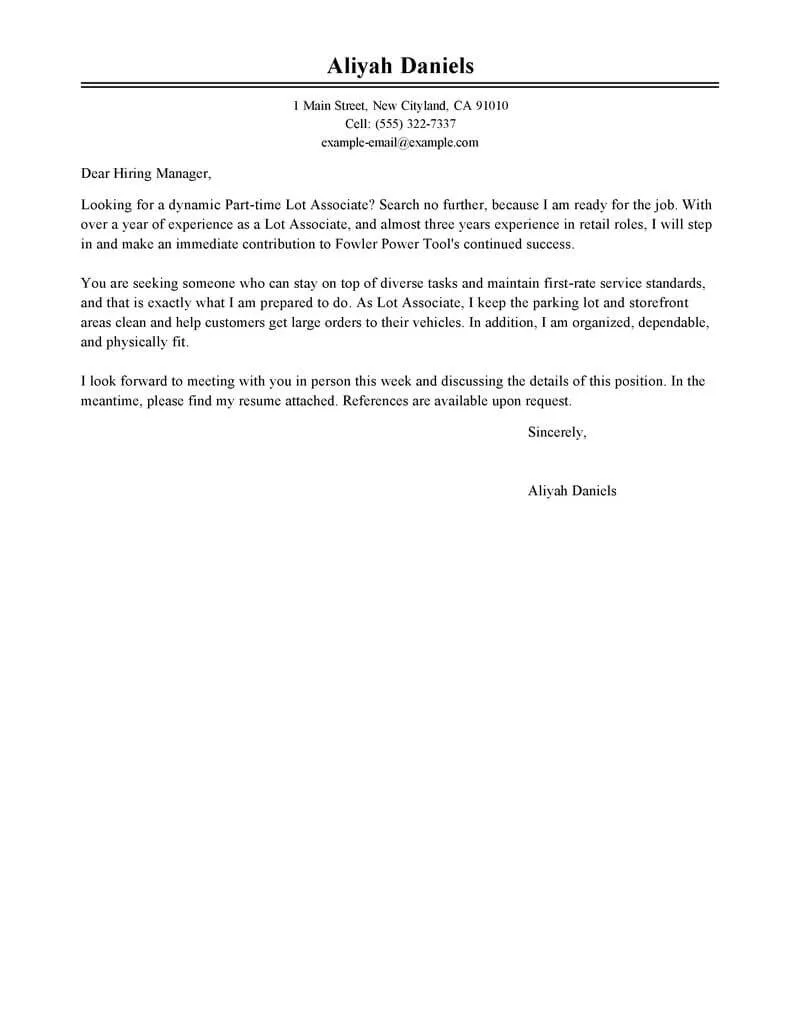
A retail cover letter is your first chance to make a strong impression on a potential employer. It’s a formal document that accompanies your resume, providing a personalized introduction and highlighting why you’re the ideal candidate for the retail job. Unlike a resume, which offers a factual overview of your experience and skills, the cover letter allows you to express your personality, enthusiasm, and understanding of the specific role and company. It gives you an opportunity to explain gaps in your employment history, showcase your passion for the retail industry, and demonstrate how your unique qualifications align with the company’s needs and values. The goal is to compel the hiring manager to read your resume and consider you for an interview.
Why a Cover Letter Matters in Retail
In the competitive retail job market, a well-crafted cover letter can be the key to unlocking your career goals. While some may consider a cover letter optional, it is an invaluable asset, demonstrating your dedication and attention to detail. It allows you to showcase your communication skills, critical in any retail setting where interacting with customers and colleagues is paramount. Furthermore, it provides a space to tailor your application to the specific requirements of the job and the values of the company, going beyond the generic information presented in your resume. A strong cover letter also helps you stand out from other applicants who may only submit a resume, making you more memorable and increasing your chances of securing an interview. It is a vital tool for creating a positive first impression and showing the hiring manager that you are genuinely interested in the position.
Key Components of a Retail Cover Letter

A compelling retail cover letter is not just a summary of your resume; it’s a carefully crafted narrative that showcases your suitability for the role. To create an effective cover letter, it is important to focus on several key components. Start with a professional header, including your contact information, the date, and the recipient’s details. The greeting should be personalized, addressing the hiring manager by name whenever possible. The body of your letter should be divided into clear paragraphs, each serving a specific purpose. The first paragraph should express your enthusiasm for the role and the company. The second should highlight your relevant skills and experiences. The third paragraph can quantify your achievements and demonstrate your value. Finally, the closing should express your gratitude, reiterate your interest, and state your availability for an interview. Proper proofreading and formatting are essential to ensure your letter is polished and professional.
Header and Contact Information
The header of your retail cover letter sets the stage for a professional introduction. Start by including your full name, address, phone number, and email address at the top left or right corner of the document. Ensure your email address is professional and appropriate for job applications. Below your contact information, include the date you are sending the letter. Following the date, address the hiring manager or the specific contact person mentioned in the job posting. If you are unable to find a specific contact, research the company or use a general greeting such as ‘Dear Hiring Manager.’ Accuracy and attention to detail in this section showcase your professionalism and demonstrate that you have taken the time to prepare your application thoroughly. Make sure the formatting is consistent with a clean and easy-to-read font, such as Arial or Times New Roman.
Greeting and Addressing the Hiring Manager
The greeting is the first thing the hiring manager will read, so it is important to set the right tone. Aim for a personalized greeting. If you know the hiring manager’s name, address them directly with ‘Dear Mr./Ms./Mx. [Last Name].’ This shows that you have taken the initiative to research the company and the specific job. If the hiring manager’s name is not available, you can use a professional alternative like ‘Dear Hiring Manager’ or ‘Dear [Company Name] Hiring Team.’ Avoid generic greetings like ‘To Whom It May Concern,’ as they suggest a lack of effort and attention to detail. The greeting should be followed by a comma or colon, depending on your preference. Keep it concise and professional, setting the stage for a compelling and engaging cover letter that grabs the reader’s attention immediately. For example, you can use a formal and professional tone.
Body Paragraph 1 Showcasing Your Enthusiasm

The first paragraph of your retail cover letter should immediately grab the reader’s attention and express your genuine enthusiasm for the position and the company. Start by clearly stating the position you are applying for and where you found the job posting. Following this, express your excitement about the opportunity and the company’s values. Briefly mention what attracted you to the role and why you believe you are a good fit. Show that you have researched the company and understand its mission, products, or services. This demonstrates your proactive approach and genuine interest. Consider highlighting a specific aspect of the company or the job that resonates with you. For example, if you admire a company’s commitment to customer service, mention it to show that you align with its culture. Keep this paragraph concise, but make it impactful, setting a positive tone for the rest of your letter. Your aim is to make the hiring manager want to learn more about you.
Body Paragraph 2 Highlighting Relevant Skills
In the second paragraph, focus on highlighting your relevant skills and experience. Carefully review the job description and identify the key skills and qualifications the employer is seeking. Then, provide specific examples from your past experiences that demonstrate you possess these skills. Instead of simply listing skills, such as ‘customer service’ or ‘sales,’ provide examples of how you have used these skills to achieve results. For instance, describe a time you went above and beyond to assist a customer or a successful sales strategy you implemented. Tailor your examples to the specific requirements of the retail job. If the job emphasizes teamwork, share an experience where you collaborated with colleagues to achieve a common goal. Use action verbs to describe your accomplishments, such as ‘managed,’ ‘assisted,’ ‘resolved,’ and ‘increased.’ Ensure your examples are clear, concise, and directly relevant to the job, showing the hiring manager that you have the abilities they need.
Body Paragraph 3 Quantifying Achievements
The third paragraph should be dedicated to quantifying your achievements. Rather than simply stating what you did, use numbers and data to demonstrate your impact. This could include sales figures, customer satisfaction scores, or any other measurable results that show your contributions. For instance, ‘Increased sales by 15% in Q2 2023’ or ‘Consistently received positive customer feedback, resulting in a 95% satisfaction rating.’ When possible, use metrics that are relevant to the specific job and company. If the job focuses on customer service, highlight metrics related to resolving customer issues or improving customer retention rates. If the job involves sales, focus on your ability to meet or exceed sales targets. Quantifying your achievements makes your claims more credible and provides concrete evidence of your value to the company. This paragraph provides a clear picture of your abilities and the benefits you can bring to the role.
Closing Your Cover Letter Effectively

Your closing paragraph is the last impression you make, so it is essential to end on a strong and positive note. Express your gratitude to the hiring manager for considering your application and taking the time to read your cover letter and resume. Reiterate your interest in the position and the company, reinforcing the enthusiasm you expressed in the opening paragraph. Clearly state your availability for an interview and how they can contact you. You can also mention any follow-up plans, such as your willingness to call to check on the status of your application. Keep your closing concise and professional, using a formal closing such as ‘Sincerely,’ ‘Best regards,’ or ‘Thank you.’ Your goal is to leave the hiring manager with a positive impression and a clear understanding of your eagerness to move forward in the hiring process, making it easy for them to take the next step.
Expressing Gratitude and Next Steps
In your cover letter’s closing, expressing gratitude is a crucial professional courtesy. Thank the hiring manager for their time and consideration, demonstrating your respect for their effort in reviewing your application. Following gratitude, clearly state your interest in the position once more. Reiterate your enthusiasm for the role and the company. Include a call to action by mentioning your availability for an interview. You could say, ‘I am available for an interview at your earliest convenience and look forward to discussing how I can contribute to your team.’ Finally, provide your contact information. Ensure your phone number and email address are readily available, making it easy for the hiring manager to reach you. By combining gratitude, interest, a clear call to action, and readily available contact information, you leave a lasting, professional impression.
Proofreading and Formatting
Proofreading and formatting are critical steps in ensuring your retail cover letter is professional and reflects your attention to detail. Before submitting your application, carefully proofread the entire document for any grammatical errors, spelling mistakes, or typos. Misspellings and grammatical errors can undermine your credibility and make a negative impression. Consider using grammar and spell-checking tools, but also read through the letter manually, as these tools may miss certain errors. Ensure consistent formatting throughout the letter, including font style, size, and spacing. A standard font like Arial or Times New Roman, size 11 or 12, and single-spaced with a blank line between paragraphs are generally recommended. Ensure that your contact information and the recipient’s details are correctly formatted. Double-check your name, address, phone number, and email address. A well-formatted and error-free cover letter demonstrates that you take pride in your work and care about making a positive impression, significantly boosting your chances of getting noticed by the hiring manager.