Understanding the Teacher Assistant Role
A Teacher Assistant (TA) plays a vital role in supporting educators and fostering a positive learning environment. Their responsibilities often include assisting with classroom management, providing one-on-one or small group instruction, preparing learning materials, and supporting students with diverse needs. The role requires patience, strong communication skills, and a genuine passion for helping children succeed. Understanding the core duties of a TA is crucial for crafting a targeted cover letter that highlights your relevant skills and experiences. Being able to articulate your understanding of the position is the first step in demonstrating your suitability for the role. This clarity will set the stage for showcasing your qualifications effectively.
Key Responsibilities of a Teacher Assistant
Teacher Assistants are integral to the smooth operation of a classroom. Key responsibilities typically include assisting the lead teacher with lesson preparation, grading assignments, and supervising students during activities. Many TAs provide individualized support to students who need extra help, whether it’s with academic concepts or behavioral challenges. They also often manage classroom resources, create displays, and communicate with parents. The specific responsibilities can vary depending on the school, grade level, and the teacher’s needs, but the common thread is the commitment to supporting student learning and well-being. Highlight these responsibilities in your cover letter to show that you understand the demands of the job.
Essential Skills for Teacher Assistants

To excel as a Teacher Assistant, several key skills are essential. Strong communication and interpersonal skills are paramount, enabling effective interaction with students, teachers, and parents. Patience, empathy, and the ability to connect with children on a personal level are also critical. Organization and time management are vital for managing classroom tasks and supporting lesson delivery. Other important skills include the ability to adapt to different learning styles, manage conflict, and maintain confidentiality. Your cover letter should showcase how you have successfully utilized these skills in past experiences. This will allow the hiring manager to envision you thriving in the role.
Crafting Your Teacher Assistant Cover Letter
Your cover letter is your opportunity to make a strong first impression and showcase why you are the ideal candidate. A well-crafted cover letter complements your resume by providing context and highlighting your unique qualifications. This is where you can expand on your skills, provide specific examples of your achievements, and express your genuine enthusiasm for the role. Tailoring your cover letter to each specific job application is a critical step. Generic cover letters often fail to capture the attention of hiring managers. Take the time to research the school and position, and customize your letter to reflect your understanding and interest.
Header and Contact Information
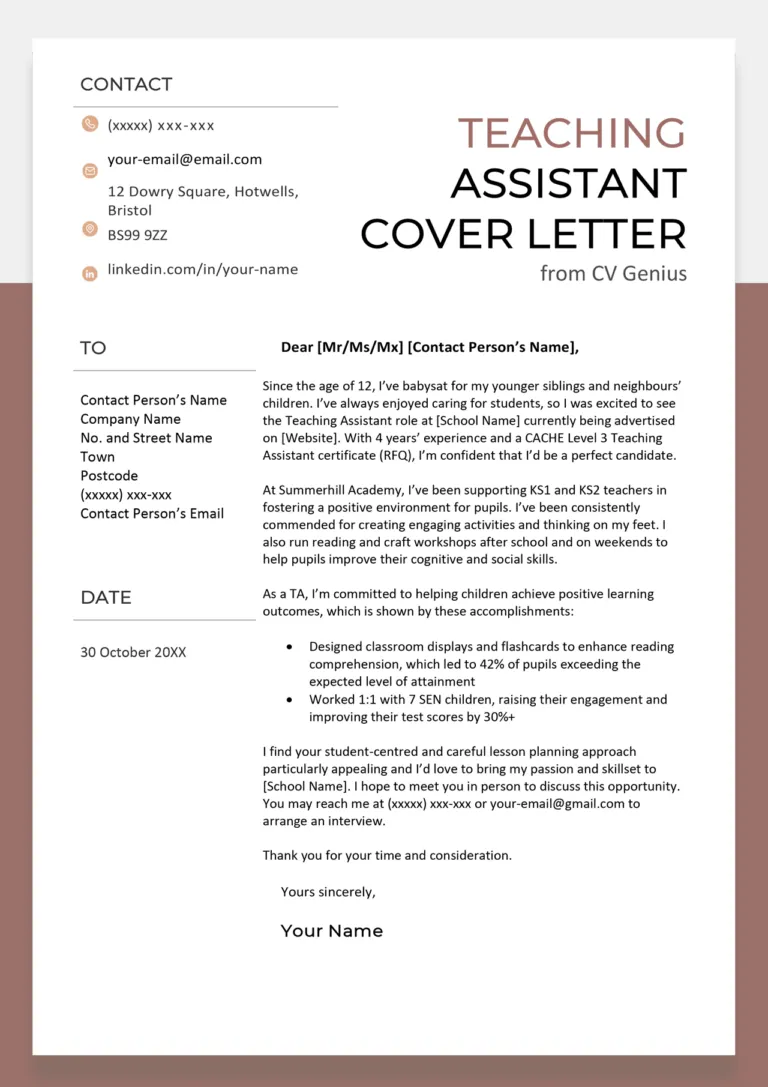
Start with a professional header including your full name, address, phone number, and email address. Include the date and the hiring manager’s name and title if available. If you know the name of the person you are addressing, it adds a personal touch. If you can’t find the hiring manager’s name, use a general greeting like “Dear Hiring Committee” or “Dear [School Name] Hiring Team.” This ensures that your application is addressed correctly and shows your attention to detail.
The Salutation

Address the hiring manager by name whenever possible, using “Dear Mr./Ms./Mx. [Last Name].” This personal touch demonstrates that you’ve done your research and are genuinely interested in the position. If you don’t know the hiring manager’s name, use a professional alternative, such as “Dear Hiring Manager” or “Dear [School Name] Hiring Team.” Avoid generic greetings like “To Whom It May Concern,” as they can make your letter seem impersonal. A well-chosen salutation sets a positive tone for the entire letter.
Writing a Compelling Opening Paragraph
Your opening paragraph should immediately grab the reader’s attention. State the position you are applying for and where you found the job posting. Briefly mention your most relevant skills or experiences. For example, you might start with, “I am writing to express my enthusiastic interest in the Teacher Assistant position at [School Name], as advertised on [Platform].” This opening paragraph should clearly state your intent and draw the reader in, preparing them for the details that will follow. Make it concise, enthusiastic, and targeted to the specific role.
Highlighting Your Skills and Experience
The body of your cover letter is where you provide the most detail, demonstrating how your skills and experience align with the job requirements. Focus on the key responsibilities and qualifications listed in the job description. Provide specific examples to illustrate your abilities and accomplishments. Use action verbs to describe your contributions and quantify your achievements whenever possible. This section should be organized, clear, and easy to read, highlighting your qualifications with impactful examples. Remember to use concrete examples and avoid vague statements.
Showcasing Relevant Experience

Describe your previous experiences that are relevant to the Teacher Assistant role. This could include experience working with children, volunteer work in educational settings, or any roles that required similar skills like communication, organization, or problem-solving. Provide specific details about your responsibilities and accomplishments in each role. Use the STAR method (Situation, Task, Action, Result) to structure your examples. This will allow you to highlight your achievements in a clear and concise manner. Focus on experiences that demonstrate your ability to assist teachers, support students, and manage classroom tasks.
Emphasizing Skills and Qualities
Highlight the skills and qualities that are essential for a Teacher Assistant, such as communication, patience, empathy, and organizational abilities. Provide specific examples of how you have demonstrated these qualities in the past. For instance, describe how you used effective communication to explain a concept to a student or how your organizational skills helped manage classroom resources. Make sure you have tangible instances to back up your claims. Mention skills like adaptability, ability to work in a team, and proficiency in relevant technologies. Align your skills with the job description to demonstrate that you are the perfect fit.
Quantifying Achievements
Whenever possible, quantify your achievements to make your cover letter more impactful. Instead of saying “Improved student performance,” say “Improved student test scores by 15% through targeted tutoring.” Use numbers, percentages, and specific metrics to demonstrate the impact of your contributions. Quantifying your achievements adds credibility and demonstrates the value you can bring to the role. This will allow the hiring manager to quickly understand the positive impact that you have had in previous roles. It showcases that you are results-oriented.
Expressing Your Enthusiasm and Fit

Throughout your cover letter, express your enthusiasm for the position and the school. Explain why you are interested in working as a Teacher Assistant and what motivates you to support students. Show that you have researched the school’s mission and values and that you share their commitment to education. This demonstrates your genuine interest and makes you a more compelling candidate. Being excited about the role is infectious and it lets the hiring manager know you are committed to the job.
Demonstrating Your Passion for Education
Show your passion for education by discussing your interest in supporting students’ learning and development. Highlight any experiences or personal qualities that demonstrate your dedication to helping children succeed. Mention specific educational philosophies or teaching methods that resonate with you. This demonstrates your commitment to education and your understanding of the challenges and rewards of the role. It makes your application more personal and allows the hiring manager to see that you truly care about the well-being of the students.
Tailoring to the Specific School
Tailor your cover letter to the specific school by referencing their mission, values, or any unique programs they offer. Show that you have researched the school and understand their educational philosophy. Highlight how your skills and experience align with the school’s specific needs and goals. This demonstrates your commitment to the school and increases your chances of getting noticed. Personalize the cover letter, which is a great way to illustrate to the hiring manager that you are enthusiastic about this specific role.
Closing Your Cover Letter

The closing paragraph of your cover letter should reiterate your interest and express your enthusiasm for the opportunity. Thank the hiring manager for their time and consideration. Clearly state how you intend to follow up, such as by phone or email. Make sure to include your contact information again. This final section reinforces your key selling points and makes a lasting positive impression. Always proofread this section to ensure it has the desired impact.
The Formal Closing
Use a professional closing, such as “Sincerely,” “Best regards,” or “Thank you.” Avoid casual closings like “Cheers” or “Best.” Your closing should align with the overall tone of your cover letter. Make sure the closing is appropriate for the level of formality. Following your closing, type your full name. If you are sending a printed copy, leave space for your signature above your typed name. This demonstrates professionalism.
Proofreading and Formatting
Proofreading and formatting are essential steps to ensure your cover letter is polished and professional. Carefully review your letter for any grammatical errors, spelling mistakes, or typos. Ensure that your formatting is consistent and easy to read. A well-formatted and error-free cover letter demonstrates your attention to detail and professionalism. This is the last opportunity to give your application a final review, so ensure you check everything. A cover letter full of errors could lead to your application being rejected.
Reviewing for Clarity and Conciseness

Review your cover letter for clarity and conciseness. Make sure your sentences are easy to understand and that your points are well-organized. Avoid jargon and complex language that could confuse the reader. Keep your cover letter focused and to the point. Aim for a one-page letter, unless the job posting specifically requests more. Concise and well-written content is more likely to keep the reader engaged, which is important for a successful application.
Formatting Best Practices
Use a professional font, such as Times New Roman, Arial, or Calibri, in a readable size (11 or 12 points). Use consistent formatting throughout your cover letter. Ensure your margins are set to one inch on all sides. Use single spacing within paragraphs and double spacing between paragraphs. Use clear headings and subheadings to organize your content. These formatting best practices will help the reader easily navigate your cover letter, so it is very important to apply them.
Cover Letter Examples and Templates
Utilizing cover letter examples and templates can be a valuable resource when crafting your own. These resources can provide inspiration, guidance, and structure for your letter. However, make sure to personalize the examples and templates to reflect your unique skills and experiences. Avoid simply copying and pasting content from templates, as this can make your application seem generic. Remember, each role and your experience is unique, so reflect that. It is important to showcase your personality.
Leveraging Sample Cover Letters

Sample cover letters can offer inspiration and guidance, but don’t just copy them. Analyze how the sample letters are structured, what language is used, and how skills and experiences are highlighted. Then, adapt the techniques to showcase your own strengths. Ensure that your personality and skills are evident in the letter. Use the sample letters as a starting point. Customize the content to reflect your unique qualifications and experiences.
Utilizing Templates for Efficiency
Templates can save time by providing a pre-formatted structure. Start with a template that aligns with your needs and then customize it. Adapt the template’s content to fit your background and the job requirements. Make sure the template reflects your personality and style. Remember, your goal is to create a cover letter that stands out. While templates provide a base, personalization is crucial.
Common Mistakes to Avoid
Several common mistakes can undermine your application. Be aware of these pitfalls and take steps to avoid them. Pay attention to detail, and make sure your cover letter is free of errors. A few simple changes can make a huge difference in your cover letter’s impact.
Generic Content
Avoid using generic content that could apply to any job. Tailor your cover letter to the specific requirements of the Teacher Assistant role. Show that you understand the school’s needs and values. Use specific examples to illustrate your qualifications. Generic letters show a lack of interest and do not allow you to show off the qualities that make you the best fit for the role.
Typos and Grammatical Errors
Typos and grammatical errors can undermine your credibility and make your cover letter appear unprofessional. Proofread your cover letter carefully. Use a grammar checker and ask someone else to review it. Errors can send the wrong message to the hiring manager, and they could easily reject your application. Proofreading is a simple step, but it is very important.
Not Tailoring to the Role
Failing to tailor your cover letter to the specific job requirements is another common mistake. Always customize your cover letter to match the skills and experience outlined in the job description. Highlight the skills and experiences that are most relevant to the position. Avoid sending a generic cover letter, as this may show that you don’t care about the particular role. Take the time to customize your cover letter, which will make you stand out from other candidates.
Finalizing and Submitting Your Cover Letter
Before submitting your cover letter, take a few final steps to ensure it is ready. This will help you make the best first impression possible. Go through these steps to improve your application.
Saving Your Cover Letter
Save your cover letter in a professional format, such as PDF, to maintain its formatting and ensure that it is readable on any device. Name your file clearly with your name and the job title, for example, “JaneDoe_TeacherAssistantCoverLetter.” This will ensure that the hiring manager can easily identify your application. Saving it in a professional format will avoid any issues with compatibility. Use this step to ensure that your application can be accessed and read without problems.
Submitting Your Application
Follow the instructions in the job posting for submitting your application. Make sure you include both your cover letter and resume. Double-check that all the required documents are attached and that your application is submitted correctly. Submitting the cover letter and resume together is the best way to improve your chances. Once you apply, follow up as directed. Carefully reviewing and following instructions will ensure that your application is received and considered.