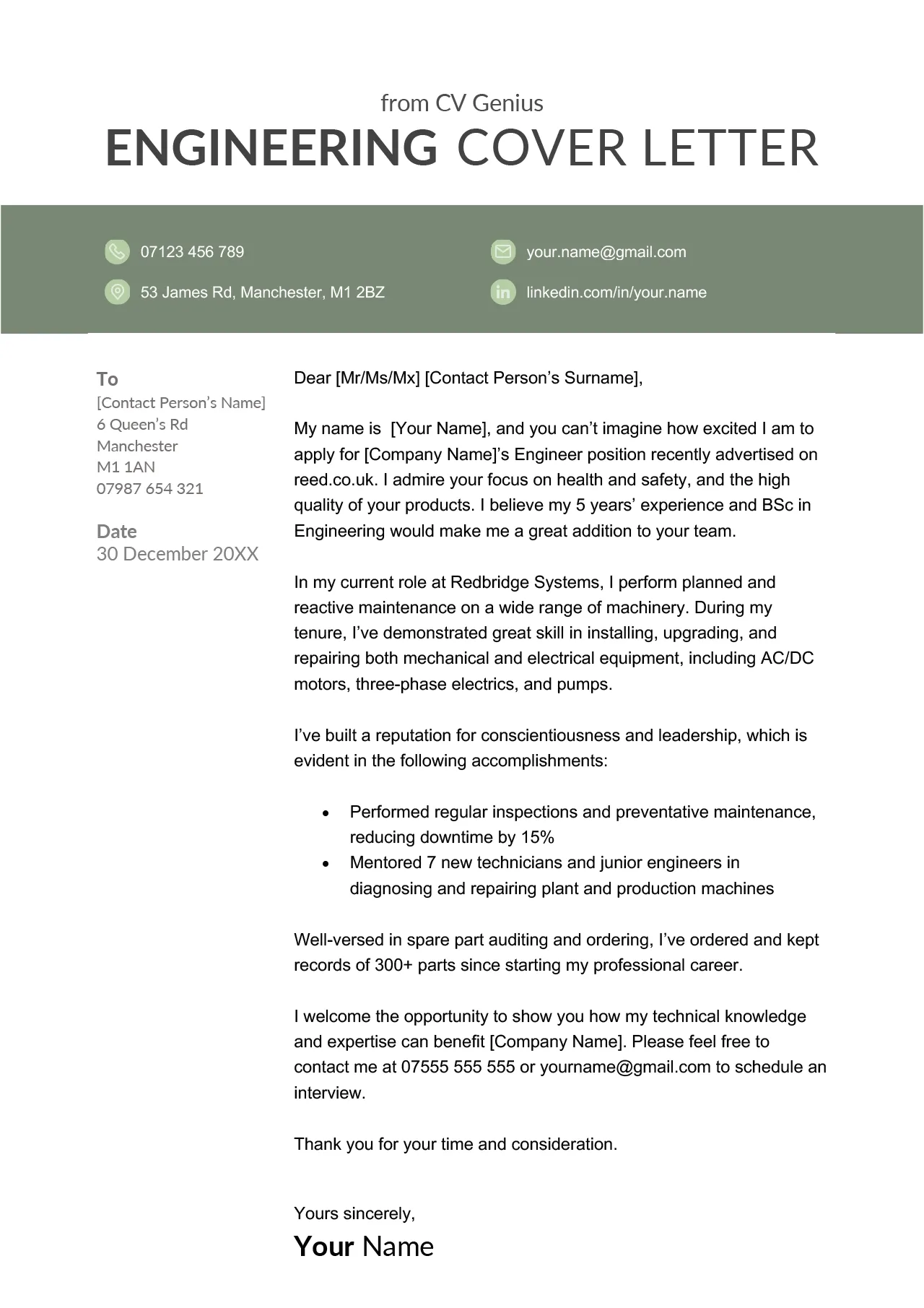
Why a Strong Cover Letter Matters for Engineering Jobs
In the competitive field of engineering, a well-crafted cover letter is your first opportunity to make a strong impression and differentiate yourself from other candidates. While your resume provides a comprehensive overview of your skills and experience, the cover letter allows you to showcase your personality, express your genuine interest in the specific role and company, and articulate why you’re the perfect fit. It is a chance to go beyond the bullet points and connect with the hiring manager on a more personal level. A compelling cover letter demonstrates your communication skills, attention to detail, and your understanding of the job requirements, all of which are crucial attributes for a successful engineer. It’s your chance to make a lasting impression and secure an interview.
Highlighting Your Relevant Skills & Experience
Your cover letter should be a targeted reflection of the skills and experiences most relevant to the specific engineering job you’re applying for. Avoid generic statements and instead, focus on highlighting the experiences and achievements that align with the job description. Think of it as a bridge between your qualifications and the needs of the employer. Carefully review the job posting and identify the key requirements, skills, and experiences the employer is looking for. Then, use your cover letter to demonstrate how your background and qualifications meet those requirements. This strategic approach allows you to present yourself as the ideal candidate by directly addressing the employer’s needs and demonstrating that you understand the role and the company’s objectives.
Key Engineering Skills to Showcase

Engineering roles demand a diverse skill set. Your cover letter needs to emphasize the competencies most pertinent to the position. Highlight a mix of technical skills and soft skills to illustrate your abilities as a well-rounded professional. Tailor the skill sets based on the requirements mentioned in the job description.
Technical Proficiency
Technical skills are the cornerstone of an engineering career. In your cover letter, mention the specific software, tools, and technologies you’re proficient in. Detail any relevant programming languages, CAD software, or simulation tools you have experience with. If the job posting mentions a specific technology, make sure to include it in your cover letter and provide examples of how you have used it in past projects. Illustrate your familiarity with industry standards and any certifications you hold. Your aim is to demonstrate that you possess the technical expertise required to excel in the role. Don’t just list the skills; provide context and show how you’ve applied them.
Analytical and Problem-Solving Skills
Engineers are, at their core, problem-solvers. Your cover letter should showcase your analytical abilities and problem-solving prowess. Describe situations where you’ve successfully identified and resolved engineering challenges. Mention your ability to analyze data, interpret results, and develop effective solutions. Highlight any experience with design, testing, and troubleshooting. Be specific about the methods you used, the results you achieved, and the impact of your solutions. Emphasize your ability to approach complex problems systematically and your ability to think critically and creatively to find innovative solutions. This demonstrates your capability to contribute to the team and drive successful outcomes. (problem-solving-engineering.webp)
Communication and Teamwork Abilities

Engineering is rarely a solitary endeavor; collaboration and communication are key. Your cover letter needs to highlight your ability to work effectively in teams and communicate technical information clearly. Describe instances where you’ve collaborated with colleagues from various disciplines, presented technical findings, or prepared written reports. Mention any leadership roles you’ve held and how you’ve motivated and managed teams. Highlight your ability to articulate complex ideas in a clear and concise manner, both verbally and in writing. Illustrate your experience with project management, conflict resolution, and fostering a positive team environment. This shows that you can contribute to a collaborative and productive work environment. (teamwork-communication-engineering.webp)
Quantifying Your Achievements
Instead of simply listing your responsibilities, use your cover letter to quantify your achievements. This adds credibility and demonstrates the impact you’ve made in previous roles. Using metrics, such as percentages, dollar amounts, or specific project outcomes, helps the hiring manager understand the value you can bring to their organization. It provides concrete evidence of your abilities and provides a clear picture of what you can accomplish. This data helps show that you’re not just capable, but results-driven and capable of delivering measurable value. Use figures to show how you’ve improved efficiency, reduced costs, or increased productivity.
Demonstrating Value with Measurable Results
When detailing your achievements, provide specific, measurable results. Instead of saying, “Improved project efficiency,” say, “Increased project efficiency by 15% by implementing a new workflow.” Quantify your contributions whenever possible. This demonstrates your ability to make a tangible impact and provides the hiring manager with concrete evidence of your capabilities. This makes your accomplishments more memorable and persuasive. It shows the value you bring to the table and sets you apart from other candidates who provide vague or unsubstantiated claims. Showing is always better than telling.
Providing Specific Examples

Back up your claims with specific examples that illustrate your skills and achievements. Briefly describe projects, challenges, and outcomes. Instead of saying, “Led a team,” explain, “Led a team of five engineers in the development of a new product, resulting in a 10% reduction in production costs.” Provide context for your accomplishments. Explain the challenges you faced, the steps you took to overcome them, and the results you achieved. Using concrete examples makes your cover letter more engaging and memorable, demonstrating your ability to apply your skills in real-world situations. This also offers tangible proof of your experience and demonstrates how you have contributed to achieving project goals in previous roles. (engineering-achievements.webp)
Tailoring Your Cover Letter
A generic cover letter is easily recognizable and often disregarded. To truly stand out, you must tailor your cover letter to each specific job you’re applying for. This shows the hiring manager that you have taken the time to research the role and company, and that you genuinely want the position. Tailoring your cover letter demonstrates your genuine interest and helps you create a more impactful first impression. This approach can boost your chances of getting selected for an interview.
Researching the Company and the Role
Before you start writing, research the company and the specific role. Understand the company’s mission, values, and recent projects. Familiarize yourself with the role’s requirements, responsibilities, and the skills the employer is seeking. This research allows you to tailor your letter to showcase how your skills and experiences align with the company’s needs and goals. Visit the company website, read industry publications, and check out their social media profiles to gather relevant information. Understanding the company’s culture will allow you to better reflect on why you would be a good match. Showing you have a grasp of their work can make your letter resonate better and show your commitment to the role.
Matching Your Skills to the Job Requirements

Carefully review the job description and identify the key requirements. Use the language from the job posting in your cover letter to demonstrate that you have the skills and experience they are looking for. Directly address each requirement, providing specific examples of how your skills and experiences align with the role. If the job requires proficiency in a specific software or tool, be sure to mention your experience. This targeted approach demonstrates that you’re a good fit for the role and understand what the employer is looking for. Use the job description as a roadmap, and make sure your cover letter follows the requirements outlined. (engineering-resume-example.webp)
Formatting for Maximum Impact
The format of your cover letter is just as important as its content. A well-formatted cover letter is easy to read, professional, and makes a positive first impression. Ensure that your cover letter is visually appealing and easy for the hiring manager to navigate. Following formatting guidelines is crucial for leaving a positive impression and getting your resume and application reviewed.
Creating a Professional Header and Contact Information
Start with a professional header that includes your name, address, phone number, and email address. This information should be clearly displayed at the top of the page. Use a clean, professional font and maintain consistent formatting throughout the document. Your contact information must be easily accessible. Ensure your email address is professional and that you have a voicemail setup with a professional greeting. This allows the hiring manager to quickly reach you.
Writing a Compelling Opening Paragraph

The opening paragraph is your chance to grab the hiring manager’s attention. Start with a strong statement that expresses your enthusiasm for the position and the company. Briefly mention how you found the job posting and why you’re interested in the role. Clearly state the position you are applying for. The introduction is designed to immediately capture the reader’s interest and set the tone for the rest of the letter. Make sure your first words are captivating and leave the reader eager to learn more. (engineering-cover-letter-tips.webp)
Structuring the Body Paragraphs Effectively
The body paragraphs should highlight your key skills and experiences, providing specific examples to demonstrate your abilities. Structure your paragraphs logically, using clear and concise language. Focus on addressing the requirements outlined in the job description. Use bullet points to organize information and break up large blocks of text. Aim for a conversational tone that showcases your personality and enthusiasm for the role. Each paragraph should focus on a specific point and support your claims with relevant details and examples. This allows the hiring manager to easily understand your key accomplishments.
Concluding with a Strong Call to Action
End your cover letter with a strong call to action. Thank the hiring manager for their time and consideration, and express your eagerness to learn more about the opportunity. Reiterate your interest in the position and mention your availability for an interview. This final paragraph is a chance to reiterate your enthusiasm and make it clear that you’re serious about getting the job. Include your contact information. A strong call to action shows your professionalism and leaves a lasting impression. This also encourages the hiring manager to reach out and take the next step. (cover-letter-formatting.webp)
Common Cover Letter Mistakes to Avoid

Even the most skilled engineers can fall into common cover letter traps. Being aware of these pitfalls can help you avoid them and create a more impactful cover letter. Being mindful of these potential errors can significantly boost your chances of getting selected for an interview.
Using Generic, Uninspired Content
Avoid generic cover letters that could apply to any job. Tailor each letter to the specific role and company. Show that you have a genuine interest in the position and have taken the time to research the company. Don’t reuse the same content for every application. Focus on showing your unique qualifications and why you’re the best fit for the role. Expressing genuine enthusiasm for the specific opportunity and company shows that you are serious about the role. This can significantly improve your chances of securing an interview.
Making Typos and Grammatical Errors
Typos and grammatical errors are a significant turn-off. They make you appear careless and unprofessional. Always proofread your cover letter carefully before submitting it. Use a grammar checker and ask someone else to review it. Check for spelling mistakes, punctuation errors, and awkward phrasing. Make sure the language is professional and the writing flows smoothly. Ensure your cover letter reflects your attention to detail and your ability to communicate effectively. A well-written, error-free cover letter demonstrates your professionalism and respect for the hiring process.
Focusing on Yourself Rather Than the Employer
Focus on the employer’s needs and what you can bring to the table. While it’s important to highlight your skills and experiences, make sure your cover letter focuses on how you can benefit the company. Use the language from the job description to address the employer’s needs directly. Demonstrate how your skills and experiences align with the role and the company’s goals. Show how you’ll contribute to the team and add value to the organization. Frame your accomplishments in terms of the benefits they brought to previous employers. This approach shows that you understand the job requirements and how you can contribute to the company’s success.
Proofreading and Final Review
Before submitting your cover letter, always conduct a thorough review. Proofread for any errors and ensure that your letter is tailored to the specific job. Consider asking a friend or career advisor to review it as well. Take a final look at the document to ensure that your cover letter makes the best possible impression. A final review can help you spot any errors and ensure that your cover letter is polished and professional. A well-written and error-free cover letter can significantly increase your chances of getting an interview.