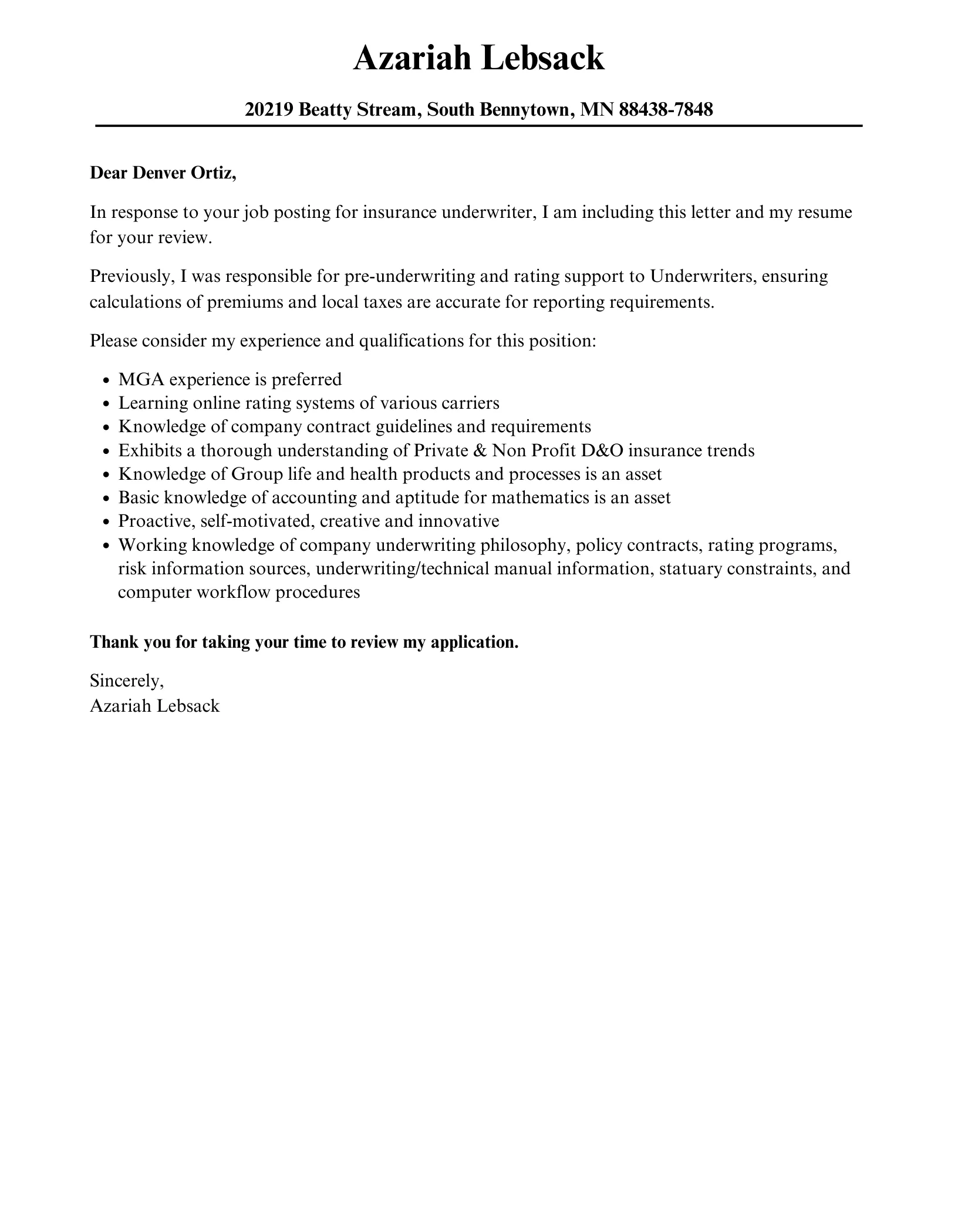
Crafting a compelling insurance underwriter cover letter is crucial for making a positive first impression and securing your desired position. It’s your opportunity to showcase your skills, experience, and enthusiasm, setting you apart from other candidates. This guide provides a comprehensive, step-by-step approach to writing an insurance underwriter cover letter that gets noticed and increases your chances of landing an interview. Follow these instructions to create a cover letter that effectively highlights your qualifications and demonstrates your suitability for the role. With careful attention to detail and a strategic approach, you can significantly enhance your job application and move closer to achieving your career goals as an insurance underwriter. A well-written cover letter can be the key to unlocking opportunities in the competitive field of insurance underwriting.
Insurance Underwriter Cover Letter Essential Sections
A well-structured insurance underwriter cover letter includes several key sections, each serving a specific purpose in conveying your qualifications and interest. These sections work together to present a cohesive and compelling narrative, highlighting your relevant skills and experience. By carefully crafting each part, you can ensure that your letter effectively communicates your value to the hiring manager. From the contact information to the closing, every element plays a vital role in making a strong impression and demonstrating your professionalism and attention to detail. The following sections are essential for an effective cover letter that grabs the reader’s attention and encourages them to review your application in detail.
Contact Information
Accurate and professional contact information is paramount for ensuring the employer can reach you. This section should be clearly formatted and easily accessible. Mistakes here can lead to missed opportunities, so double-check all details for accuracy before submitting your cover letter. Properly presenting your contact details establishes a professional tone and shows the hiring manager that you pay close attention to detail. It is a critical step in making a favorable first impression and demonstrating your readiness to communicate effectively.
Your Information

Start by including your full name, address, phone number, and professional email address. Ensure your email address sounds professional; avoid using informal or outdated usernames. This information should be at the top, left-aligned, or centered for easy readability. The consistency in formatting improves clarity and ensures all necessary contact details are prominently displayed. Correctly providing this information allows the hiring team to easily reach you for further communication regarding your application.
Recipient’s Information
Direct your letter to the hiring manager or the appropriate contact person if possible. Research the company’s website or LinkedIn to find the name and title. Include their name, title, department, company name, and address. Addressing the letter to a specific person demonstrates your initiative and attention to detail, which can make a positive impression. If you cannot find a specific name, use a general greeting such as ‘Dear Hiring Manager,’ but always try to personalize it for better results. It demonstrates your commitment to personalization.
Salutation
Use a professional salutation, such as ‘Dear Mr./Ms. [Last Name]’ if you know the hiring manager’s name. If not, ‘Dear Hiring Manager’ is appropriate. Avoid informal greetings. The salutation sets the tone for the entire letter and is a crucial first step in demonstrating your professionalism and respect for the recipient. Ensure that the salutation correctly addresses the recipient to ensure that the letter begins with a positive and respectful note, helping to set the stage for a successful application.
Body of the Cover Letter

The body of your insurance underwriter cover letter is the core of your message, where you showcase your skills, experience, and enthusiasm for the role. It should be concise, well-organized, and tailored to the specific job description. The way you structure your body paragraphs can significantly impact your ability to engage the reader and make a compelling case for why you are the best candidate. Each paragraph should serve a clear purpose and contribute to the overall narrative of your qualifications and suitability for the position. Use clear and concise language to present your qualifications in a way that is easy to understand and appreciate.
First Paragraph
Start with a strong hook that immediately grabs the reader’s attention. State the position you are applying for and where you found the job posting. Briefly mention what interests you about the company or the role. Keep it concise and to the point, clearly stating your intention and showing enthusiasm. A well-crafted first paragraph sets a positive tone and encourages the hiring manager to read the rest of your letter. This initial section is essential for making a positive first impression and capturing the hiring manager’s attention. Make the hiring manager want to keep reading.
Express Your Interest
Clearly express your interest in the insurance underwriter position and the company. Explain why you are drawn to the opportunity, whether it’s the company’s reputation, its mission, or the specific responsibilities of the role. Demonstrate that you have researched the company and understand its values and goals. This shows that you are genuinely interested in the position and are not simply submitting a generic application. Show the company you are invested in the process by highlighting specific aspects of their work that appeal to you.
Highlight Your Skills and Experience

This is the most important part of your cover letter. Provide specific examples that highlight your relevant skills and experience. Focus on the requirements mentioned in the job description and explain how your qualifications align with them. This should be the main focus of your cover letter. Use strong action verbs and quantify your achievements whenever possible. Include details about your underwriting experience, such as risk assessment, policy review, and claims handling. Make sure to show how your expertise directly benefits the company and the role. You are making a pitch for your skills.
Quantify Your Achievements
Whenever possible, quantify your accomplishments with numbers and data. Instead of saying ‘Improved efficiency,’ state ‘Increased efficiency by 15%.’ Provide concrete examples of how you have contributed to previous employers’ success. Use metrics to illustrate your impact. This makes your claims more credible and shows the hiring manager the tangible value you can bring to the role. Quantifiable achievements show the value and the impact you will bring.
Tailor to the Job Description
Carefully review the job description and tailor your cover letter to match the specific requirements and keywords. Highlight the skills and experiences that the employer is seeking. Customizing your letter shows the hiring manager that you have taken the time to understand the role and are a good fit for the company’s needs. Generic cover letters often get overlooked, so make sure that your application demonstrates a clear understanding of the company’s requirements and expectations. Be as relevant as possible when referring to prior experiences.
Showcase Relevant Skills

Emphasize skills that are relevant to insurance underwriting, such as risk assessment, analytical abilities, attention to detail, and knowledge of insurance policies. Mention any specialized software or systems you are familiar with, such as underwriting platforms. Highlighting these skills provides evidence that you possess the qualities needed to succeed in the role and perform underwriting tasks. This targeted approach helps employers see the direct connection between your skills and their requirements. Make sure to reference the software or programs needed.
Closing
The closing of your cover letter should leave a lasting positive impression. It should reiterate your interest, express gratitude, and include a clear call to action. A well-crafted closing demonstrates professionalism and reinforces your enthusiasm for the role. It is essential for ensuring your cover letter is a persuasive and effective tool in your job application. The closing is your final chance to leave a lasting positive impression on the hiring team and encourage them to consider your application further. Make sure to include a specific request to demonstrate that you’re ready to move to the next stage in the hiring process.
Express Gratitude
Thank the hiring manager for their time and consideration. This shows your appreciation for their attention and reinforces your professionalism. A simple ‘Thank you for your time’ or ‘I appreciate your consideration’ is appropriate. Expressing gratitude is a sign of good manners and respect for the hiring process. By showing appreciation, you enhance your overall professional image and leave a positive final impression.
Call to Action

Include a call to action, such as stating your availability for an interview or expressing your eagerness to discuss your qualifications further. Encourage the hiring manager to take the next step in the hiring process. A specific and direct call to action makes it easier for the hiring manager to know what to do next and can increase your chances of receiving a response. Keep the call to action short and to the point, making it easy for the recipient to take the next step. For example, you could say ‘I am available for an interview at your earliest convenience’ or ‘I look forward to hearing from you soon.’
Formal Closing and Signature
Use a formal closing, such as ‘Sincerely’ or ‘Best regards,’ followed by your typed name. If sending a physical copy, leave space for your signature above your typed name. Always ensure your signature looks professional and is consistent with the rest of the document. Maintaining formality and professionalism in your closing strengthens your overall message and reinforces your attention to detail. By adhering to these guidelines, you can create a cover letter that accurately portrays your capabilities.
Formatting and Proofreading
Proper formatting and meticulous proofreading are essential for presenting a polished and professional insurance underwriter cover letter. These elements significantly contribute to the overall impact of your application. Attention to detail in formatting and proofreading indicates your commitment to quality and increases your chances of making a favorable impression on the hiring manager. These aspects enhance the readability and credibility of your application. Make sure that your letter is easily read and clearly demonstrates your attention to detail.
Font and Spacing

Choose a professional and easy-to-read font, such as Times New Roman, Arial, or Calibri. Use a font size between 10 and 12 points. Ensure consistent spacing throughout the document. Use single spacing within paragraphs and double spacing between paragraphs. These formatting choices improve readability and make your cover letter more appealing to the eye. Consistent and clear formatting contributes to a professional appearance, making the document easier to navigate and understand. Consider how your words will appear to the reader and make it as easy to read as possible.
Proofread Carefully
Thoroughly proofread your cover letter for any grammatical errors, spelling mistakes, and typos. Errors can detract from your credibility and undermine your professionalism. Use a spell checker and grammar checker, but also read the letter carefully yourself, as these tools may not catch all errors. Ask a friend, family member, or career counselor to review your letter for a second opinion. Proofreading is essential for ensuring that your cover letter presents you in the best possible light and does not contain any errors that could negatively impact your application. Carefully proofread the final draft for mistakes.
Review and Revise
After writing your cover letter, review it multiple times, making sure it accurately reflects your skills and experience and is tailored to the specific job. Revise any sections that are unclear or could be improved. Ensure your cover letter effectively communicates your qualifications. A well-written and revised cover letter can significantly increase your chances of securing an interview. Consider all elements to create the strongest impact for the hiring team. Make revisions based on constructive feedback, or from your own observations.
Following these guidelines, you can create a compelling insurance underwriter cover letter that showcases your qualifications and increases your chances of landing your desired position. Remember to customize your letter for each job application and thoroughly proofread it before submitting. Good luck!