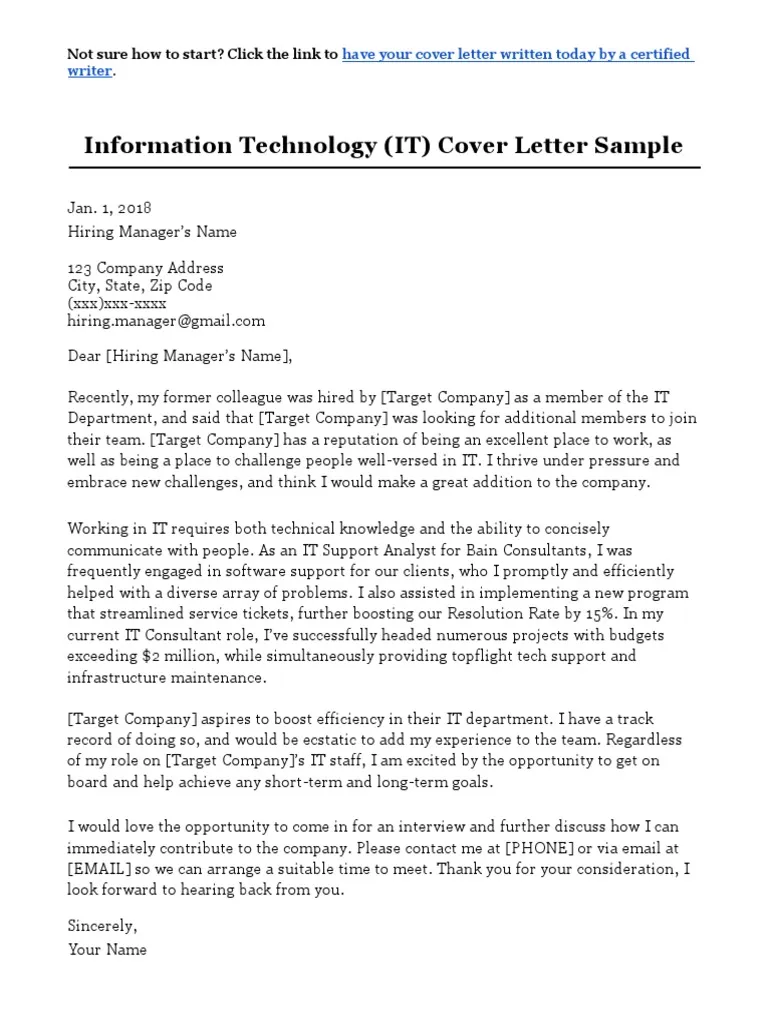
Why an IT Cover Letter Matters
In the competitive landscape of Information Technology, a well-crafted cover letter serves as your initial handshake with potential employers. It’s more than just a formality; it’s your opportunity to make a compelling first impression, highlighting your unique qualifications and demonstrating your genuine interest in the specific role and company. Unlike a resume, which provides a chronological overview of your experience, a cover letter allows you to tell a story, connecting your skills and experiences to the needs of the employer. A strong cover letter helps you stand out from other applicants, humanizes your application, and showcases your personality, making you more than just a list of qualifications and skills. It is your chance to make a lasting impression.
A cover letter helps you to tailor your application to each job. By specifically addressing the requirements outlined in the job description and explaining why you are a good fit, you show that you’ve done your research and are genuinely interested in the role. It is your opportunity to articulate your career aspirations and explain why you’re the best candidate for the job. This targeted approach is crucial in a field where specialized skills and experience are highly valued. With the right cover letter, you can make a strong case for why you deserve an interview and ultimately, the job.
Highlighting Technical Skills
When crafting your IT cover letter, the spotlight must be on your technical prowess. Begin by identifying the key technical skills the employer seeks. Review the job description carefully, making a list of the required skills, and then highlight your matching expertise. For example, if the job demands proficiency in cloud computing, articulate your experience with specific cloud platforms like AWS, Azure, or Google Cloud. Quantify your skill by mentioning the number of years of experience or the types of projects you have worked on using these technologies. It could be that you have experience working with several operating systems, or experience with programming languages such as Python and Java. Your cover letter is where you make it very clear you have the technical skills required for the role.
Furthermore, it’s crucial to provide concrete examples. Instead of merely listing skills, explain how you have applied them in real-world scenarios. Describe projects where you successfully utilized these skills, the challenges you overcame, and the results you achieved. Be specific. For instance, if the job requires experience with network security, you might write about implementing and maintaining firewall systems, mitigating security threats, or ensuring data protection in a previous role. The goal is to demonstrate how your technical skills can translate into tangible value for the employer.
Showcasing Relevant Experience

Your IT cover letter should present a concise and persuasive summary of your professional experience. The focus must be on experiences that align with the specific requirements of the job you are applying for. Start by highlighting your most relevant roles and the organizations where you gained this experience. Rather than providing a comprehensive history, select experiences that directly address the key responsibilities and skills mentioned in the job description. Give brief descriptions of your roles and responsibilities. This approach ensures that the employer immediately sees how your past experiences have prepared you for the position.
When describing your previous roles, emphasize the aspects that are most pertinent to the job you’re targeting. Detail projects, initiatives, and tasks that demonstrate your ability to perform the duties required by the new role. For example, if the job requires experience with database management, discuss your involvement with database design, implementation, maintenance, or performance optimization in your previous roles. The goal is to demonstrate the depth and breadth of your experience in the relevant areas. Provide details that allow the employer to understand your role in the project and the impact of your work, helping them see how you can add value to their team.
Quantifying Achievements in IT
One of the most effective ways to make your IT cover letter stand out is by quantifying your achievements. Numbers provide concrete evidence of your impact and demonstrate the value you brought to previous employers. Start by identifying key accomplishments in your past roles, then try to quantify them using specific metrics. For instance, if you improved system efficiency, mention the percentage of performance improvement or the reduction in downtime. If you implemented a new security protocol, state the number of security breaches prevented. These numbers provide a clear picture of your ability to deliver results and add value to the organization.
Using numbers to quantify your achievements also makes your claims more credible. It shows that your contributions are backed by measurable outcomes rather than just vague assertions. For example, instead of saying “improved network performance,” state “improved network performance by 30% through the implementation of a new routing protocol.” These kinds of quantifiable accomplishments demonstrate your commitment to results and your ability to positively impact the bottom line. It is an excellent way to leave a strong impression on potential employers.
Tailoring Your Cover Letter
Generic cover letters often end up in the digital trash bin. Tailoring your cover letter to each specific job is crucial for demonstrating your genuine interest and qualifications. This process requires careful research and a strategic approach. Begin by thoroughly reviewing the job description, identifying the key requirements, and understanding the company’s mission and values. Use this information to customize your letter. Show that you understand the company’s needs and how your skills and experience align with them.
Highlight specific skills and experiences from your resume that directly address the requirements outlined in the job description. Avoid using generic phrases and instead use language that resonates with the specific job and the company. If possible, mention the company’s products or services and how you have used them or could contribute to their success. Research the company’s recent projects or initiatives and explain how your skills can add value. The personalized touch indicates that you’ve invested time and effort in understanding the opportunity and are genuinely interested in the role.
Emphasizing Soft Skills for IT Roles

While technical skills are undoubtedly important, soft skills are equally critical in the IT field. Highlight your soft skills such as communication, teamwork, problem-solving, and leadership in your cover letter. Employers often look for candidates who can collaborate effectively, communicate technical concepts clearly, and manage projects successfully. When describing your experience, provide specific examples of how you’ve demonstrated these skills in previous roles. For example, if you managed a project, describe how you coordinated a team, resolved conflicts, and ensured the project was delivered on time and within budget. If you’ve identified and solved a critical problem, then state how you went about the situation.
To demonstrate your soft skills, use action verbs that showcase your abilities. Instead of saying you are a good communicator, describe how you presented complex information to non-technical stakeholders, or how you managed a team through difficult situations. Soft skills demonstrate your professionalism and ability to integrate into a team and company culture. They show the interviewer that you are a well-rounded candidate who is capable of handling the demands of a dynamic work environment. By providing evidence of your soft skills, you create a strong impression of your ability to succeed in the role.
Proofreading and Formatting Your Letter
The final step in crafting a winning IT cover letter involves meticulous proofreading and formatting. A well-written, error-free letter demonstrates professionalism, attention to detail, and respect for the employer. Before submitting your cover letter, take the time to carefully proofread it for grammatical errors, typos, and inconsistencies. A single error can undermine the impact of your entire application. Use a spell checker, but also read through the letter multiple times to catch any mistakes the software might miss. Ensure that all names, titles, and company information are correct.
Formatting plays a crucial role in the readability and visual appeal of your cover letter. Choose a clean, professional font like Arial, Times New Roman, or Calibri. Maintain consistent font sizes and spacing throughout the document. Use clear and concise language, and keep paragraphs brief and to the point. Consider using bullet points or numbered lists to highlight key skills or accomplishments, making it easier for the hiring manager to scan the document and grasp the most important information quickly. A well-formatted cover letter is easier to read and will ensure your qualifications are noticed and remembered.