Understanding the Importance of a Job Cover Letter
In the competitive field of engineering, a well-crafted cover letter is your first opportunity to make a lasting impression on a potential employer. It serves as more than just an introduction; it’s a vital tool that allows you to showcase your personality, passion for the field, and how your specific skills and experiences align with the requirements of the job. A cover letter provides a space to elaborate on your qualifications, explain any gaps in your resume, and demonstrate your genuine interest in the company and the specific engineering role. It’s your chance to go beyond the bullet points of your resume and tell a compelling story about why you are the ideal candidate. The importance cannot be overstated, particularly in an industry where technical proficiency is expected, and clear communication is a valuable asset.
Why Cover Letters are Crucial in Engineering
Cover letters are crucial in engineering because they provide context to your resume. Recruiters and hiring managers in engineering firms often receive a large volume of applications. A well-written cover letter helps you stand out from the crowd by providing a personalized narrative that highlights your relevant skills, experiences, and achievements. It allows you to articulate how your technical skills translate into practical solutions and how your problem-solving abilities align with the company’s goals. Furthermore, a cover letter demonstrates your communication skills, which are essential for collaboration, project management, and presenting technical information clearly and concisely. A tailored letter demonstrates your interest in the specific role and the company. This level of detail shows the hiring manager that you’ve done your research and are genuinely interested, setting you apart from generic applicants.
Key Components of a Winning Engineering Cover Letter

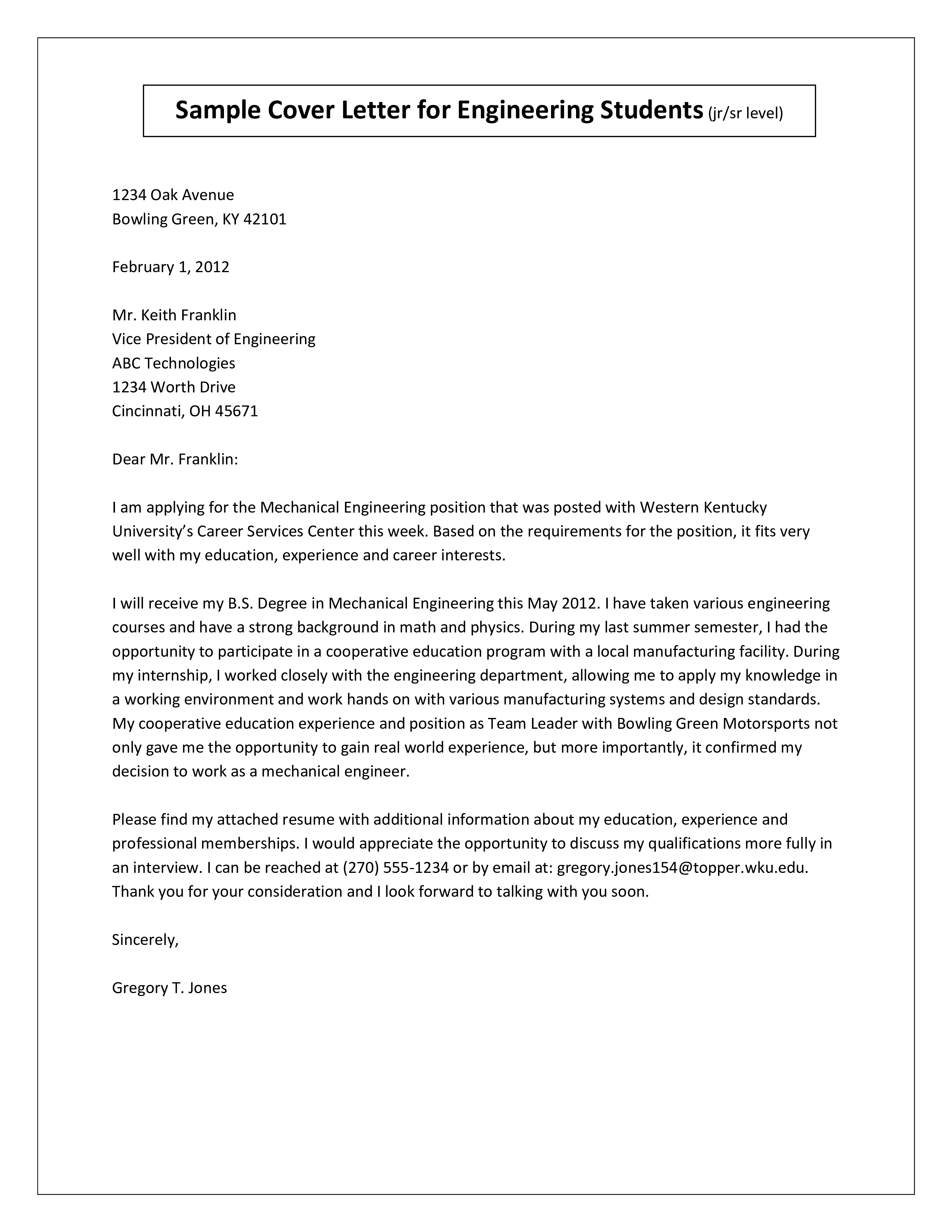
A winning engineering cover letter consists of several key components, each designed to highlight your qualifications and enthusiasm. Begin with your contact information, the date, and the recipient’s details. This sets a professional tone. Follow with a compelling opening paragraph that immediately grabs the reader’s attention. State the position you’re applying for, and briefly mention how you learned about the opportunity. The body of your letter should highlight your skills and experience, quantifying your achievements whenever possible. Tailor your letter to the job description, matching your qualifications to the specific requirements listed. Conclude with a strong closing paragraph that expresses your enthusiasm for the position and includes a call to action, such as offering to provide additional information or schedule an interview.
Contact Information & Salutation
Start your cover letter with your full name, address, phone number, and email address. Following that, include the date and the recipient’s contact information, including their name, title, and the company’s address. When addressing the hiring manager, use a professional salutation such as ‘Dear Mr./Ms./Mx. [Last Name]’. If you are unsure of the hiring manager’s name, you can use ‘Dear Hiring Manager’ or ‘Dear [Department Name] Team’. Ensure accuracy in all contact details to facilitate communication.
Writing a Compelling Opening Paragraph
The opening paragraph is your first opportunity to captivate the reader. Start by stating the position you’re applying for and where you saw the job posting. Then, immediately grab the hiring manager’s attention by briefly mentioning something that makes you stand out. This could be a significant achievement, a relevant skill, or your enthusiasm for the company. Aim to create a hook that encourages the reader to continue reading. Avoid generic introductions; instead, demonstrate your genuine interest and make it clear why you are a good fit. The goal is to create immediate engagement and set the tone for the rest of your letter.
Highlighting Your Skills and Experience

The body of your cover letter should highlight your most relevant skills and experiences. Focus on the qualifications mentioned in the job description and provide examples to demonstrate your proficiency. Use action verbs to describe your responsibilities and accomplishments. For instance, instead of saying ‘Responsible for project management,’ say ‘Managed projects, delivering them 15% under budget and 20% ahead of schedule’. Whenever possible, provide specific examples and quantify your achievements with numbers and data to showcase the impact you’ve made in previous roles. This allows the reader to quickly understand your capabilities and how you can add value to the company.
Quantifying Your Achievements in Engineering
Quantifying your achievements is a critical element in making your cover letter compelling. Instead of vague statements, provide concrete examples that demonstrate the impact of your work. Use numbers, percentages, and data to showcase the results you’ve achieved in previous roles. For example, if you improved efficiency, state by what percentage. If you reduced costs, specify the amount. If you led a team, indicate its size and the project’s success metrics. By quantifying your accomplishments, you provide tangible evidence of your abilities and make your cover letter much more persuasive. The more data you can provide to support your claims, the more convincing your letter will be.
Tailoring Your Cover Letter to the Job
One of the most important steps is tailoring your cover letter to each specific job application. Do not use a generic template; instead, customize your letter to align with the requirements and responsibilities outlined in the job description. Carefully review the job posting and identify the key skills and experiences the employer is seeking. Then, in your cover letter, highlight your relevant qualifications and explain how your background aligns with their needs. This shows the hiring manager that you’ve done your research and are genuinely interested in the specific role and company, making your application stand out from the generic ones. Remember, customization demonstrates attention to detail and a commitment to the opportunity.
Researching the Company and Role

Before writing your cover letter, take the time to research the company and the specific role you’re applying for. Visit the company’s website to learn about its mission, values, and recent projects. Also, review the job description thoroughly to understand the specific responsibilities, required skills, and company culture. Tailor your cover letter to reflect this research by mentioning specific aspects of the company or role that appeal to you. Demonstrating your knowledge of the company and the specific requirements of the role shows your genuine interest and that you’ve taken the time to understand the opportunity.
Demonstrating Your Value Proposition
Clearly articulating your value proposition is essential in your engineering cover letter. Your value proposition is what you offer the company and what sets you apart from other candidates. Briefly explain how your skills and experience align with the company’s needs and how you can contribute to their goals. Highlight your unique strengths and the specific benefits you can bring to the role. This could include your technical expertise, problem-solving abilities, leadership skills, or ability to work effectively in a team. Make it clear how you can add value to the organization.
Formatting and Design Best Practices
Formatting and design are crucial for making your cover letter easy to read and visually appealing. Use a professional font such as Arial, Times New Roman, or Calibri. Choose a font size between 10 and 12 points. Ensure the letter is well-structured with clear sections and appropriate spacing. Use bullet points to list your skills and achievements concisely. Keep the letter to one page, as hiring managers are often pressed for time. Proofread carefully and ensure there are no grammatical errors or typos. A clean, professional layout reflects your attention to detail and commitment to quality, both valuable attributes in the field of engineering.
Using Strong Action Verbs and Keywords
Incorporating strong action verbs and relevant keywords is crucial for capturing the hiring manager’s attention and ensuring your cover letter is seen by applicant tracking systems (ATS). Use action verbs such as ‘managed,’ ‘developed,’ ‘designed,’ ‘implemented,’ ‘analyzed,’ and ’engineered’ to describe your accomplishments. Carefully review the job description and identify the keywords that the employer is looking for. Then, incorporate these keywords naturally throughout your cover letter. By using strong action verbs and relevant keywords, you effectively communicate your skills and experiences and increase the likelihood of your application being noticed and considered.
Proofreading and Editing for Perfection
Proofreading and editing are critical steps in the cover letter writing process. Errors in grammar, spelling, and punctuation can detract from your professionalism and credibility. Before submitting your cover letter, carefully proofread it for any mistakes. It can be helpful to have a friend or colleague review your letter as well, as a fresh pair of eyes can catch errors that you might have missed. Always use spell-check and grammar-check tools, but be sure to review the suggestions carefully. A flawless cover letter demonstrates your attention to detail and commitment to producing high-quality work.
Closing Your Cover Letter Effectively
The closing paragraph of your cover letter is your final opportunity to leave a positive impression. Express your enthusiasm for the opportunity and reiterate your interest in the position. Include a call to action, such as expressing your availability for an interview or offering to provide additional information. Thank the hiring manager for their time and consideration. Use a professional closing, such as ‘Sincerely,’ or ‘Best regards,’ followed by your typed name. The closing should be concise and confident, reinforcing your interest in the position and encouraging the hiring manager to take the next step.
Expressing Enthusiasm and Next Steps

Throughout your cover letter, express your enthusiasm for the position and the company. In the closing paragraph, reiterate your interest and include a call to action. State that you are available for an interview and ready to discuss your qualifications in more detail. Make it easy for the hiring manager to take the next step by providing your contact information and expressing your willingness to answer any questions. A clear and confident closing leaves a lasting impression and increases your chances of moving forward in the application process. It demonstrates your eagerness and proactivity.
Cover Letter Examples & Templates
Utilizing cover letter examples and templates can provide valuable guidance and inspiration as you write your own cover letter. Search online for engineering cover letter examples to get an idea of different formats and styles. Remember to tailor any template to fit your specific experiences and the job requirements. Do not simply copy and paste from a template; instead, use it as a starting point and customize it to showcase your unique qualifications and achievements. A well-written and tailored cover letter will demonstrate your understanding of the industry and your ability to communicate effectively.
Engineering Cover Letter Sample 1
Here is an example of an engineering cover letter sample, showcasing the best practices. [Insert sample here]. The sample should provide a clear example for the candidate.
Engineering Cover Letter Sample 2
Another engineering cover letter example. [Insert sample here]. This sample can offer other examples for the candidate.
Common Mistakes to Avoid in Engineering Cover Letters
Avoiding common mistakes is essential to ensure your cover letter effectively conveys your qualifications and interest. Many applicants make mistakes, so it’s important to recognize what those are and to avoid them. Failing to avoid these errors can make your application seem unprofessional and could lead to rejection.
Ignoring the Job Description
One of the most significant mistakes is ignoring the job description. Tailoring your cover letter to each specific job is crucial. Failing to address the requirements outlined in the job description suggests a lack of attention to detail and a lack of genuine interest in the role. Always carefully review the job posting and highlight your relevant skills and experiences to match the employer’s needs. This shows the hiring manager that you understand the position and are a good fit for the company.
Using Generic Language and Templates
Another common mistake is using generic language and relying heavily on templates without customization. Hiring managers can easily spot a generic cover letter, which conveys a lack of genuine interest and effort. Avoid using cliché phrases and instead write in your own voice, highlighting your unique skills and experiences. While templates can provide a starting point, always customize them to reflect your specific qualifications and the job requirements. Demonstrate your personal style and enthusiasm to make your application stand out from the crowd.
Grammatical Errors and Typos
Grammatical errors and typos can damage your credibility and make your cover letter appear unprofessional. Proofreading carefully is crucial before submitting your application. Take the time to review your letter for any mistakes in grammar, spelling, punctuation, and sentence structure. Have a friend or colleague review your letter as well. A flawless cover letter demonstrates your attention to detail and commitment to producing high-quality work.
Submitting Without Proofreading
Submitting your cover letter without proofreading is a serious mistake. Always proofread your cover letter meticulously before sending it. Check for errors in grammar, spelling, punctuation, and formatting. Use spell-check and grammar-check tools, but also carefully review the suggestions. A poorly proofread cover letter can give the impression that you are careless or not detail-oriented, which is particularly detrimental in the field of engineering. Taking the time to proofread ensures your cover letter is polished and professional, increasing your chances of making a positive impression.