Highlighting Your Expertise
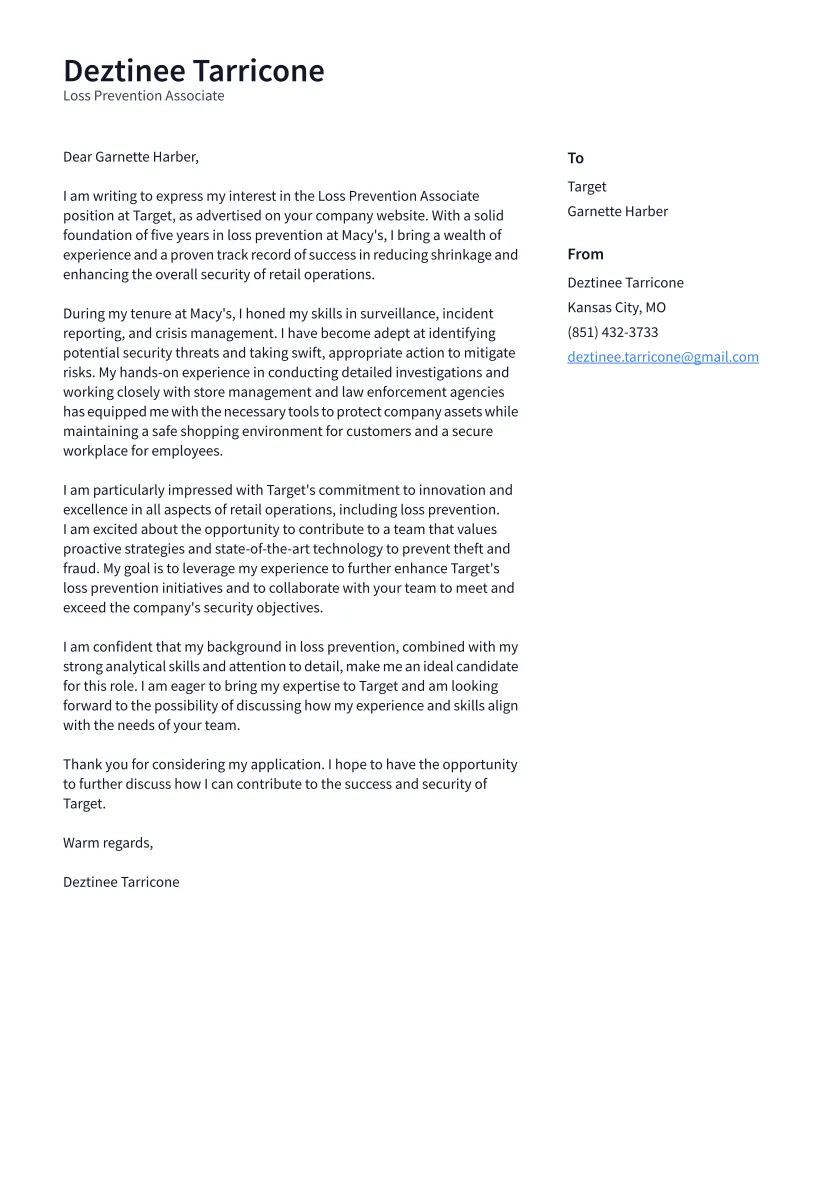
Your cover letter is your first chance to impress a potential employer, especially when applying for a Loss Prevention Manager position. It’s not merely a formality; it’s a crucial marketing tool that allows you to showcase your expertise and demonstrate why you’re the perfect fit. Remember, the goal is to immediately capture the reader’s attention and make them eager to learn more about you and your capabilities. Begin by clearly stating the position you are applying for and where you saw the job advertisement. This sets the context and ensures the hiring manager quickly understands the purpose of your letter. This initial paragraph should be compelling and specific, highlighting what you bring to the table that aligns with the company’s needs.
Quantify Your Achievements
Instead of just listing your responsibilities, quantify your achievements. Use numbers and data to demonstrate the tangible impact you’ve made in previous roles. For example, instead of saying, ‘Improved loss prevention strategies,’ state, ‘Reduced inventory shrinkage by 15% within one year through the implementation of X and Y.’ Providing these specific, measurable results instantly sets you apart from other applicants. The more compelling your quantifiable achievements, the more likely you are to pique the interest of the hiring manager. This data-driven approach helps to establish your credibility and competence right away.
Showcase Relevant Skills

Loss Prevention Manager roles demand a specific skill set. Your cover letter is the perfect place to highlight these abilities. Focus on skills like risk assessment, surveillance techniques, inventory management, and knowledge of security systems. But it’s not just about listing skills; it’s about providing examples of how you’ve successfully applied them. For instance, you could mention how you used your risk assessment skills to identify vulnerabilities and implement preventative measures that reduced losses. Tailoring this section to the job description by matching the required skills will significantly increase your chances of getting an interview. Also include your communication, leadership, and conflict resolution abilities.
Customizing Your Letter
Generic cover letters are easily spotted and often discarded. Customizing your cover letter is not optional – it’s essential. It shows you’ve taken the time to understand the company and the specific requirements of the Loss Prevention Manager position you’re applying for. Generic letters show a lack of genuine interest.
Research the Company
Before writing, thoroughly research the company. Visit their website, read their recent news, and understand their values, mission, and current challenges. This knowledge allows you to tailor your letter to align with their needs. For example, if the company has recently expanded, you can highlight your experience managing loss prevention strategies in a growing environment. Showing that you understand the company’s business demonstrates initiative and genuine interest.
Tailor to the Job Description

Carefully review the job description and identify the key requirements and desired qualifications. Use these keywords and phrases throughout your cover letter to showcase how your skills and experiences match their needs. Focus on the aspects of your background that are most relevant to the position. If the job emphasizes experience with a specific type of security system or loss prevention methodology, ensure you highlight your experience in these areas. Tailoring your letter demonstrates that you’re serious about the role and have the qualifications they seek.
Formatting and Structure
The format and structure of your cover letter are just as important as the content. A well-formatted letter is easy to read and demonstrates professionalism. The layout and organization of your letter provide a first impression, so make sure it’s a good one.
Header and Contact Information
Your header should include your full name, address, phone number, and email address. Make sure the contact information is accurate and professional. If possible, include a link to your LinkedIn profile, which allows the hiring manager to quickly access more information about your background and experience. The header should be clean, well-organized, and easy to find at the top of the letter. Ensure that your email address is professional, using your name or a variation thereof.
Professional Salutation

Start with a professional salutation, such as ‘Dear Mr./Ms./Mx. [Last Name],’ if you know the hiring manager’s name. Researching the hiring manager’s name demonstrates initiative and shows you’ve put effort into the application. If you are unsure of the name, use a professional alternative like ‘Dear Hiring Manager’ or ‘Dear [Company Name] Hiring Team.’ Avoid generic greetings like ‘To Whom It May Concern,’ which can make your letter feel impersonal. Always spell the name correctly; this shows respect and attention to detail.
Body Paragraphs
The body of your cover letter should be concise and focused. Use three or four paragraphs to highlight your key qualifications, quantify your achievements, and demonstrate your understanding of the company’s needs. Each paragraph should have a clear purpose and contribute to the overall message that you are the ideal candidate for the Loss Prevention Manager position. Use strong action verbs to describe your experiences and accomplishments, and always keep the tone professional and engaging. Each paragraph should flow smoothly into the next, creating a cohesive narrative that showcases your suitability for the role.
Closing and Signature
Conclude your letter with a strong closing paragraph that reiterates your interest in the position and expresses your enthusiasm. Thank the hiring manager for their time and consideration. Acknowledge that you look forward to hearing from them soon. The closing paragraph should be brief and leave a positive lasting impression. End with a professional closing, such as ‘Sincerely’ or ‘Best regards,’ followed by your typed name. If submitting a digital cover letter, you can also include your handwritten signature above your typed name.
Proofreading and Editing

Before submitting your cover letter, proofread and edit it carefully. Errors in spelling, grammar, or punctuation can undermine your credibility and reduce your chances of getting an interview. Taking the time to proofread your letter shows attention to detail and professionalism. Always take the time to review the entire letter.
Check for Errors
Carefully check for spelling mistakes, grammatical errors, and punctuation errors. Read the letter aloud to catch awkward phrasing or sentences that don’t flow. Use a grammar and spell checker, but don’t rely solely on it, as it might miss subtle errors. Ensure that all the information is accurate and consistent with your resume and the job description. Review the company name, the hiring manager’s name (if you have it), and the position title to make sure everything is correct.
Get Feedback
Ask a trusted friend, family member, or career counselor to review your cover letter. A fresh pair of eyes can catch errors you might have missed and provide valuable feedback on the clarity, conciseness, and overall impact of your letter. Ask them to assess whether the letter effectively highlights your skills and experience and convinces them that you’re a strong candidate. Consider their suggestions and make any necessary revisions before submitting your application. Getting feedback is one of the most effective ways to ensure your cover letter is polished and professional.