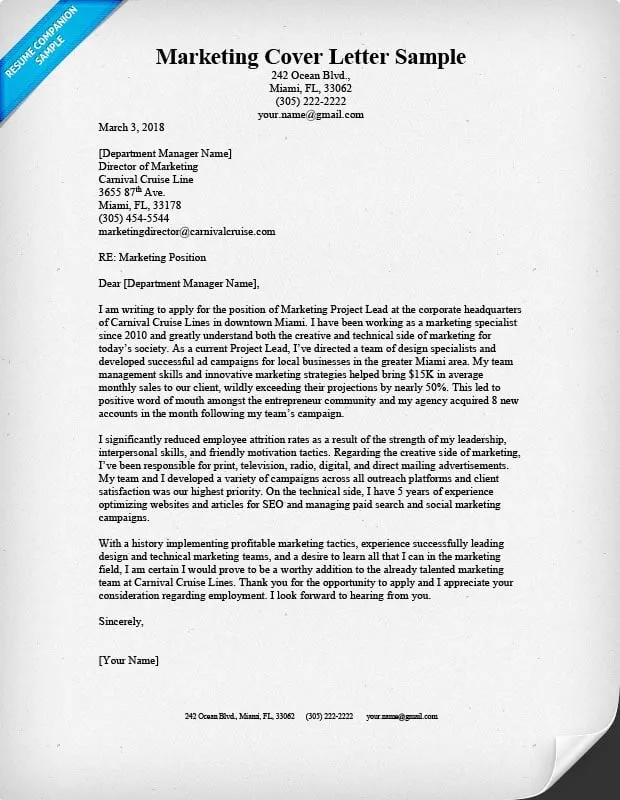
Crafting a Marketing Cover Letter That Captivates
In the competitive world of marketing, a cover letter is more than just a formality; it’s your first impression and a crucial opportunity to showcase your unique value. A well-crafted marketing cover letter can be the key to unlocking your dream job, but many job seekers struggle to make theirs stand out. This guide provides actionable steps to help you create a cover letter that not only grabs attention but also effectively communicates your skills, experience, and passion for marketing. By following these tips, you can transform your cover letter from a mundane document into a powerful tool that gets you noticed by hiring managers and lands you interviews. It’s about more than just listing your qualifications; it’s about telling a compelling story that demonstrates why you are the perfect fit for the role and the company.
Understanding the Purpose of a Marketing Cover Letter
The primary goal of a marketing cover letter is to complement your resume by providing context and personality that a resume often lacks. It’s your chance to explain why you’re interested in the specific role and the company. Unlike a resume, which lists your achievements, your cover letter should demonstrate how your skills align with the company’s needs. The best cover letters go beyond a simple recitation of your qualifications; they tell a story. They should highlight your understanding of the company’s goals, the target audience, and the challenges they face, then explain how you can help solve them. Furthermore, the cover letter allows you to show your communication skills, which are critical in marketing. It’s a sample of your writing style, your ability to connect with an audience, and your understanding of branding. It helps you to stand out in a pile of resumes.
Highlighting Your Marketing Skills and Achievements

Your cover letter should be a showcase of your marketing prowess, using specific examples to demonstrate your skills. Instead of simply stating your skills, provide concrete examples of how you’ve applied those skills to achieve positive outcomes. For instance, instead of saying you’re skilled in social media marketing, describe a campaign you ran that increased engagement by a certain percentage. Focus on achievements over responsibilities; quantify your results whenever possible. Did you increase website traffic, boost sales, or improve brand awareness? Use numbers, percentages, and other metrics to prove your impact. Consider the key skills that are most relevant to the job description and make sure you highlight them. Tailor your examples to resonate with the company’s needs. For example, if the job emphasizes content creation, emphasize your experience in developing blog posts, articles, and other forms of content. If it stresses SEO, highlight your successes in improving search engine rankings.
Showcasing Your Relevant Marketing Experience
The experience section of your cover letter should highlight your past roles and responsibilities, emphasizing those that are most pertinent to the job you’re applying for. Tailor this section to align directly with the requirements listed in the job description. Instead of listing every job you’ve had, concentrate on those that demonstrate your proficiency in the areas the employer values most. Describe your roles and responsibilities in detail, focusing on how you utilized your skills to accomplish tasks and achieve results. Include the specific projects you’ve managed, the campaigns you’ve run, and the marketing strategies you’ve implemented. Moreover, providing context is essential. For instance, for a social media role, mention the platforms you’re familiar with, the strategies you employed, and the outcomes you achieved. For a content marketing role, discuss the types of content you created, the channels you used, and the metrics that demonstrate the effectiveness of your content. The goal is to demonstrate your hands-on experience.
Tailoring Your Cover Letter to the Job Description
One of the most common mistakes job seekers make is sending a generic cover letter. The best cover letters are those that are customized for each job application. Before you start writing, carefully read the job description and identify the key requirements, skills, and qualifications. Use this information to tailor your letter, making sure to emphasize the experiences and abilities that align most closely with the job’s needs. For each job, select the experiences and skills you have that directly address the specific requirements. Do not just rehash the responsibilities listed in your resume; use your cover letter to add color and context. Demonstrate your understanding of the company’s needs by explaining how you can address their challenges and contribute to their success. This could include aligning your past accomplishments with the company’s marketing goals, referencing industry trends relevant to the business, or showcasing your understanding of the target market. Show the hiring manager that you did your homework.
Researching the Company’s Marketing Strategy

Before you begin writing your cover letter, do some research on the company and its marketing strategy. Visit the company’s website, read their blog, and follow them on social media to gain insight into their brand, values, and marketing campaigns. This research will enable you to tailor your cover letter to the company’s specific needs and demonstrate your genuine interest in the position. Analyze their current marketing efforts. Pay attention to their content, social media presence, and overall brand messaging. Identify the company’s target audience, their marketing channels, and the tone of their communications. This knowledge will help you to frame your cover letter in a way that aligns with the company’s culture and objectives. Use this knowledge to show how your skills and experience align with their specific needs. Mention specific campaigns or initiatives you admire, and explain how you could contribute to their success.
Demonstrating Your Knowledge of Marketing Trends
In the rapidly evolving field of marketing, staying abreast of the latest trends is crucial. Your cover letter is a good place to demonstrate your knowledge of emerging trends and how they can be applied to benefit the company. Mention relevant industry trends, such as the use of AI in marketing, the growth of video marketing, or the importance of data-driven decision-making. Discuss how you can leverage these trends to achieve the company’s marketing goals. This could involve suggesting new strategies, recommending innovative tools, or showcasing your understanding of the latest marketing technologies. By demonstrating your awareness of current trends, you signal to the hiring manager that you are forward-thinking and committed to staying ahead of the curve. It positions you as someone who can bring fresh ideas and innovative solutions to the team, making you a more attractive candidate.
Creating a Compelling Opening That Grabs Attention
The opening paragraph of your cover letter is the first chance to capture the reader’s attention and make a strong impression. Avoid generic openings like “I am writing to express my interest…” Instead, start with a hook that immediately showcases your enthusiasm and connects with the company’s mission or a recent achievement. Mention a specific campaign you admire, a recent news item, or an exciting aspect of the job. Briefly state why you are interested in the role, and highlight one or two key skills or achievements that make you an ideal candidate. Make it clear why you are excited about the opportunity. Think of the opening as your elevator pitch—a brief, compelling summary of who you are and why you’re the right person for the job. Your goal is to entice the reader to continue reading. A strong opening sets the stage for a cover letter that stands out from the crowd.
Using Powerful Action Verbs in Your Cover Letter

Action verbs are essential for making your cover letter more engaging and demonstrating your accomplishments. Instead of using passive language, use action verbs to clearly describe what you did and the results you achieved. Examples of effective action verbs include “created,” “managed,” “implemented,” “developed,” “increased,” “improved,” “led,” and “launched.” Use these verbs to highlight your skills and achievements. Show, don’t just tell, what you’ve accomplished. For example, instead of saying “responsible for social media,” say “managed social media campaigns, increasing engagement by 30%.” By using action verbs, you create a vivid picture of your skills and achievements, making your cover letter more compelling and memorable. This helps the reader to easily understand your contributions and the value you bring to the table.
Quantifying Your Marketing Accomplishments
Quantifying your accomplishments makes your cover letter more impactful and demonstrates the tangible results you’ve achieved in previous roles. Provide specific data to illustrate your successes, rather than just stating your responsibilities. Quantifiable achievements provide concrete evidence of your capabilities and show the value you can bring to the new company. Instead of saying you increased sales, specify the percentage increase or the revenue generated. If you improved website traffic, state the exact percentage or number of new visitors. Mention specific metrics such as click-through rates, conversion rates, and return on investment. Quantifying your accomplishments provides compelling evidence of your skills and shows how you can contribute to the company’s success. It also helps the hiring manager visualize your potential impact and the results you can achieve.
Emphasizing Your Passion for Marketing
Marketing is a field where passion and enthusiasm can be powerful assets. In your cover letter, demonstrate your genuine excitement for marketing and your interest in the specific role and company. Share what motivates you in marketing. This could involve discussing your interest in specific marketing strategies, target audiences, or industry trends. Express why you’re drawn to the company, and what specifically excites you about the opportunity. When you demonstrate your passion, you become a more compelling candidate. Your enthusiasm will make you stand out from other applicants. Hiring managers want to recruit people who are genuinely enthusiastic about their work. They want to see that you’re not just looking for a job but are excited about the opportunity to contribute to their team. Passion adds a personal touch to your application, making it more memorable and making the hiring manager want to meet you.
Showcasing Your Understanding of the Company’s Needs

A truly effective cover letter demonstrates your ability to understand the company’s needs and how you can help them achieve their goals. The best way to do this is by researching the company and its current marketing strategy. Mention specific initiatives you could contribute to or challenges you could help address. If the company is launching a new product or entering a new market, discuss your relevant experience and how you can help them succeed. Show how your skills align with their strategic objectives. Explain how you can help the company solve its marketing problems, achieve its sales targets, or improve its brand reputation. This shows the hiring manager that you are a proactive, results-oriented candidate who is prepared to contribute from day one. Demonstrating that you understand their needs makes you a more valuable asset.
Proofreading Your Cover Letter for Errors
Errors in your cover letter can immediately undermine your credibility and make a negative impression on hiring managers. Before submitting your cover letter, it’s essential to proofread it carefully for any grammatical errors, typos, or spelling mistakes. Errors suggest a lack of attention to detail and can imply that you’re not serious about the job. Take your time and carefully review the entire document. Consider having a friend or colleague proofread your cover letter as well. They may catch mistakes that you’ve missed. Use grammar and spell-checking tools to help you, but don’t rely on them completely. These tools can miss errors. Proofreading ensures your cover letter is professional and error-free, which is essential to making a positive impression.
Formatting Your Cover Letter for Readability
The formatting of your cover letter is just as important as its content. A well-formatted letter is easy to read, visually appealing, and professional-looking. Use a standard font, such as Arial or Times New Roman, and make sure it’s easy to read. Use a font size of 11 or 12 points for the body of the letter. Divide your letter into clear paragraphs, with ample white space between them. Use headings and bullet points to break up large blocks of text and make it easier for the reader to scan. Keep the tone professional but engaging. Ensure your cover letter looks clean and organized. This will make a positive impression on the hiring manager and shows your attention to detail.
In conclusion, a standout marketing cover letter is a powerful tool that can help you land your dream job. By crafting a cover letter that grabs attention and effectively showcases your skills, experience, and passion, you can significantly increase your chances of getting noticed by hiring managers. Remember to tailor your letter to each job description, research the company’s marketing strategy, and emphasize your understanding of their needs. Use strong action verbs and quantify your accomplishments to demonstrate your value. Don’t forget to proofread carefully and format your letter for readability. By following these steps, you can create a compelling cover letter that sets you apart from the competition and helps you make a lasting impression.